—“Do you see a new religion being built through the deliberate design of one or a few people, or something that evolves more organically? I think you’re right in that we have all the pieces (Stoicism, Ancestors, Archetypes etc) they just need to be laundered of any “nonsense” and developed into something that holds together that people can use. I see it as something that would have to evolve over time through a distributed effort, and of course be limited by the criteria of what not to do (via negitiva), if that makes sense.”— Andy Lunn
Religions need a framework that contain the basics, and ‘communicators’ reform the message (narratives) over time.
[I]t is in the nature of ambitious young men to rush to an hypothesis of their own construction upon their first few encounters with enlightenment – accompanied by the desperate wish to share their revelation. It is in the nature of great theorists to develop a question or hypothesis, and to survey the great thinkers of history to date, and those similar innovations in related fields, to inform, correct, or falsify that hypothesis – with extraordinary effort and thoroughness – and all but those few we remember, fail.
All of us write to learn. It is the most effective way of learning that we know of. It is easy to fool yourself in your imagination. A little less so in speech. Far harder in the written word. And very challenging in the published word – where your cherished efforts are the subject of misunderstanding, legitimate criticism and often, legitimate ridicule.
We are in a period of change. There is vast pent up demand during these periods. Ours is a more catastrophic period than most due to invasion and population collapse due to the policies of the last century. And so you, like many others, are searching for an answer that the thinkers of the last century, and the present, failed to provide.
We generate demand for types of social orders (the suite of cooperative economies), governments (means of production of commons, insurer of last resort), and rule (decision making of last resort) with the geography, capital, demographics, and military capacity to produce those we desire, and to deny alternatives – by seizing opportunistic moments in time. We do not have undiscovered countries (borderlands, continents) to settle as greenfields under the protection of distant empires. So just as we must work with the people we have, we must work with the opportunities we have, and the social orders that are possible to bring about with them.
At present western advantage in other than demographic distribution has been liquidated through redistribution to the rest of the world. Nationalism is returning – largely in reaction to islamism, the same way we reacted to communism. And as strange as it might seem at the moment, with Chinese leadership, what looks very much like national socialism with communist dress of some sort, is emerging rapidly as the principle model of the 21st century.
There is a reason that libertarian thought consists largely if not entirely of introductory books. There is a reason that geostrategy, economics, law, and war, do not. There is reason all Sovereignty (european aristocracy), Liberty (Anglo), Free City (German), Libertarian (the Pale), and Libertine (French) opportunities existed, and why they no longer do so.
What all of these systems share is Sovereignty of the Individual under our ancient european customary laws (tort), and a Demand for Reciprocity to produce that sovereignty. The result of doing so is Rule of Law. What we differ in, is the GROUP COMPETITIVE STRATEGY, and the POSSIBLE organization of rule, government, economy, and social order within it that allows that social order to survive in competition with the other social orders.
A general fights with the resources available, not the one he wishes to have. A people fight with the social, economic, political, and military order they have, not the one they wish they had. An activist fights with the available conditions by applying, like a general, the most force in the weakest places, to steer a more favorable outcome than the one at present, but not the most optimum he desires. A theorist fights with the knowledge available not the knowledge he wishes he had.
A man is sovereign because he has the power to be so, because he has sufficient insurers to guarantee so. A man has liberty by permission of the sovereign. A man has freedom because he is a more profitable asset to the sovereign than a serf or slave. A man is a serf or slave because he has no alternative. The uniqueness of western civilization is the militia. The organized application of violence, by sovereign men, producing rule of law, and as a consequence, no alternative but markets in every aspect of life. There is no theory you can construct to sell. In the market for sale of political orders, you will find liberty is the want of the few even if its proceeds are the want of the many, and freedom is a synonym for theft from some and gifts to others. There is only one means of producing sovereignty: a sufficient number of men willing to use violence to deprive everyone else of imposing any alternative.
Suggest you watch George Friedman and Peter Zeihan’s videos from this year and last. They are accessible summaries of work from around the world. This will help you understand the environment in which we are producing the upcoming social orders.
IF YOU WANT THE INSTITUTE’S HELP
Our reading list is here and there is none better to choose from: http//Propertarianism.com/reading-list/.
Most if not all of the books, plus hundreds more, are in our library and can be read for free online.
We will be offering courses in “The education you wish you had” beginning in January.
They will include:
The Uniqueness of Western Civilization: European History from the ice age forward.
The Theory and History of The Arts
The Theory and History of the Conduct of War
The Natural Law (of Sovereign Men): The history of our law, and the Strictly Constructed Natural Law of Reciprocity (which is my restatement of hoppe’s german rationalist method in anglo scientific prose)
The Means of Cooperation: Micro, Social(human Capital), and Macro Economics (they way econ should be taught)
The Perfect Government: The various possible political orders given the conditions in which one produces the private and common.
The Group Evolutionary Strategies of Competing Groups, Cultures, and Civilizations
Online Courseware. Video. Short Readings. Assignments(essay). Discussion. Feedback. More Discussion.
This is not feel good material. It is US 300-600 level material. And requires work.
Otherwise, if you have very specific questions I’m available on FB pretty much all the time.
Cheers.
[I]t is in the nature of ambitious young men to rush to an hypothesis of their own construction upon their first few encounters with enlightenment – accompanied by the desperate wish to share their revelation. It is in the nature of great theorists to develop a question or hypothesis, and to survey the great thinkers of history to date, and those similar innovations in related fields, to inform, correct, or falsify that hypothesis – with extraordinary effort and thoroughness – and all but those few we remember, fail.
All of us write to learn. It is the most effective way of learning that we know of. It is easy to fool yourself in your imagination. A little less so in speech. Far harder in the written word. And very challenging in the published word – where your cherished efforts are the subject of misunderstanding, legitimate criticism and often, legitimate ridicule.
We are in a period of change. There is vast pent up demand during these periods. Ours is a more catastrophic period than most due to invasion and population collapse due to the policies of the last century. And so you, like many others, are searching for an answer that the thinkers of the last century, and the present, failed to provide.
We generate demand for types of social orders (the suite of cooperative economies), governments (means of production of commons, insurer of last resort), and rule (decision making of last resort) with the geography, capital, demographics, and military capacity to produce those we desire, and to deny alternatives – by seizing opportunistic moments in time. We do not have undiscovered countries (borderlands, continents) to settle as greenfields under the protection of distant empires. So just as we must work with the people we have, we must work with the opportunities we have, and the social orders that are possible to bring about with them.
At present western advantage in other than demographic distribution has been liquidated through redistribution to the rest of the world. Nationalism is returning – largely in reaction to islamism, the same way we reacted to communism. And as strange as it might seem at the moment, with Chinese leadership, what looks very much like national socialism with communist dress of some sort, is emerging rapidly as the principle model of the 21st century.
There is a reason that libertarian thought consists largely if not entirely of introductory books. There is a reason that geostrategy, economics, law, and war, do not. There is reason all Sovereignty (european aristocracy), Liberty (Anglo), Free City (German), Libertarian (the Pale), and Libertine (French) opportunities existed, and why they no longer do so.
What all of these systems share is Sovereignty of the Individual under our ancient european customary laws (tort), and a Demand for Reciprocity to produce that sovereignty. The result of doing so is Rule of Law. What we differ in, is the GROUP COMPETITIVE STRATEGY, and the POSSIBLE organization of rule, government, economy, and social order within it that allows that social order to survive in competition with the other social orders.
A general fights with the resources available, not the one he wishes to have. A people fight with the social, economic, political, and military order they have, not the one they wish they had. An activist fights with the available conditions by applying, like a general, the most force in the weakest places, to steer a more favorable outcome than the one at present, but not the most optimum he desires. A theorist fights with the knowledge available not the knowledge he wishes he had.
A man is sovereign because he has the power to be so, because he has sufficient insurers to guarantee so. A man has liberty by permission of the sovereign. A man has freedom because he is a more profitable asset to the sovereign than a serf or slave. A man is a serf or slave because he has no alternative. The uniqueness of western civilization is the militia. The organized application of violence, by sovereign men, producing rule of law, and as a consequence, no alternative but markets in every aspect of life. There is no theory you can construct to sell. In the market for sale of political orders, you will find liberty is the want of the few even if its proceeds are the want of the many, and freedom is a synonym for theft from some and gifts to others. There is only one means of producing sovereignty: a sufficient number of men willing to use violence to deprive everyone else of imposing any alternative.
Suggest you watch George Friedman and Peter Zeihan’s videos from this year and last. They are accessible summaries of work from around the world. This will help you understand the environment in which we are producing the upcoming social orders.
IF YOU WANT THE INSTITUTE’S HELP
Our reading list is here and there is none better to choose from: http//Propertarianism.com/reading-list/.
Most if not all of the books, plus hundreds more, are in our library and can be read for free online.
We will be offering courses in “The education you wish you had” beginning in January.
They will include:
The Uniqueness of Western Civilization: European History from the ice age forward.
The Theory and History of The Arts
The Theory and History of the Conduct of War
The Natural Law (of Sovereign Men): The history of our law, and the Strictly Constructed Natural Law of Reciprocity (which is my restatement of hoppe’s german rationalist method in anglo scientific prose)
The Means of Cooperation: Micro, Social(human Capital), and Macro Economics (they way econ should be taught)
The Perfect Government: The various possible political orders given the conditions in which one produces the private and common.
The Group Evolutionary Strategies of Competing Groups, Cultures, and Civilizations
Online Courseware. Video. Short Readings. Assignments(essay). Discussion. Feedback. More Discussion.
This is not feel good material. It is US 300-600 level material. And requires work.
Otherwise, if you have very specific questions I’m available on FB pretty much all the time.
Cheers.
My answer to As a philosopher or theologian, how do you feel when scientists boldly venture into your field, making dogmatic statements? Should what is good for the goose also be good for the gander? https://www.quora.com/As-a-philosopher-or-theologian-how-do-you-feel-when-scientists-boldly-venture-into-your-field-making-dogmatic-statements-Should-what-is-good-for-the-goose-also-be-good-for-the-gander/answer/Curt-Doolittle?srid=u4Qv
Original tweet unavailable — we could not load the text of the post this reply is addressing on X. That usually means the tweet was deleted, the account is protected, or X does not expose it to the account used for archiving. The Original post link below may still open if you view it in X while signed in.
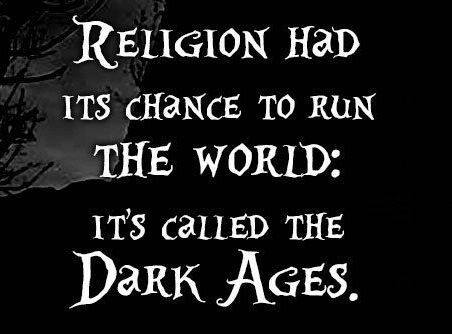
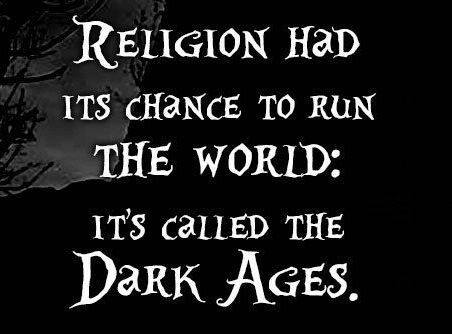
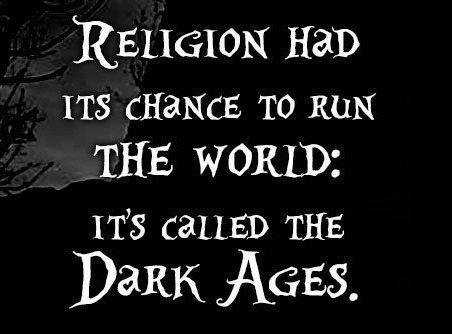
photos_and_videos/TimelinePhotos_43196237263/43717966_10156700531312264_5816261990896631808_n_10156700531302264.jpg Collin Sleuth KnightGood times.Oct 11, 2018 7:57pmGiego CaleiroSays a dark enlightenment advocate :pOct 11, 2018 8:57pmCurt Doolittleah. well. Reaction against marxism/postmodernism/feminism is the the same as restoring abrahamic superstition. It’s a continuation of ending the abrahamic deceits.Oct 12, 2018 4:29amJoe FossDidn’t we call them dark ages because we lacked some archeological and historical documents but have started filling the blanks in in recent decades?
As far as I know, the church has done a lot to preserve and even advance a lot of the knowledge from the classical period until the Renaissance.Oct 12, 2018 8:13amCurt Doolittleread wikipedia
Petrarch
—“The idea of a Dark Age originated with the Tuscan scholar Petrarch in the 1330s.[14][12] Writing of the past, he said: “Amidst the errors there shone forth men of genius; no less keen were their eyes, although they were surrounded by darkness and dense gloom”.[15] Christian writers, including Petrarch himself,[14] had long used traditional metaphors of ‘light versus darkness’ to describe ‘good versus evil’. Petrarch was the first to give the metaphor secular meaning by reversing its application. He now saw Classical Antiquity, so long considered a ‘dark’ age for its lack of Christianity, in the ‘light’ of its cultural achievements, while Petrarch’s own time, allegedly lacking such cultural achievements, was seen as the age of darkness.[14]
From his perspective on the Italian peninsula, Petrarch saw the Roman and classical period as an expression of greatness.[14] He spent much of his time travelling through Europe, rediscovering and republishing classic Latin and Greek texts. He wanted to restore the Latin language to its former purity. Renaissance humanists saw the preceding 900 years as a time of stagnation, with history unfolding not along the religious outline of Saint Augustine’s Six Ages of the World, but in cultural (or secular) terms through progressive development of classical ideals, literature, and art.
Petrarch wrote that history had two periods: the classic period of Greeks and Romans, followed by a time of darkness in which he saw himself living. In around 1343, in the conclusion of his epic Africa, he wrote: “My fate is to live among varied and confusing storms. But for you perhaps, if as I hope and wish you will live long after me, there will follow a better age. This sleep of forgetfulness will not last forever. When the darkness has been dispersed, our descendants can come again in the former pure radiance.”[16] In the 15th century, historians Leonardo Bruni and Flavio Biondo developed a three-tier outline of history. They used Petrarch’s two ages, plus a modern, ‘better age’, which they believed the world had entered. Later the term ‘Middle Ages’ – Latin media tempestas (1469) or medium aevum (1604) – was used to describe the period of supposed decline.[17]”—Oct 12, 2018 9:14amJoe FossWouldn’t it have more to do with the collapse of the Roman Empire and barbarian invasions and less with religion running the world? Seems rash to attribute something so complex to a single root cause which might as well been tangentialOct 12, 2018 9:20amJonathon PattersonThe biggest brained take.Oct 12, 2018 9:23amCurt Doolittlereligion suppresses thought everywhere and at all times.Oct 12, 2018 9:32amJoe FossI’m inclined to agree. Not a religious person myself, but I find atheists all too often up there with vegans in the “annoying cunts” category so I guess I soured on the entire groupOct 12, 2018 10:07amMurphy CellDark ages never actually happened.Oct 12, 2018 10:15amMurphy Cellhttp://blogs.bu.edu/core/2016/10/31/from-history-6-reasons-the-dark-ages-werent-so-dark/Oct 12, 2018 10:18amPatrick HabetsYeah…. “Dark”…. Wow…
Fortunately the enlightenment brought us ultimately “the good stuff”: like usury, materialism, libertarianism ending up in the glorious era of post-modernism.
https://youtu.be/W4p7A0EtZqgOct 12, 2018 11:26amPatrick HabetsIndirectly related, however perhaps clarifing to the above mentioned;
https://youtu.be/yTiztUNrhhMOct 12, 2018 11:35amRyan PétrequinPolitics is a religious phenomenon.Oct 12, 2018 11:44amBrett Stevens@[741197263:2048:Curt Doolittle] Wikipedia is Red propagandaOct 12, 2018 4:13pmKevin WuAll eras have had religion, and all future eras will too.Oct 12, 2018 4:51pmCurt Doolittlewe have one now: marxism-postmodernism-social democracyOct 12, 2018 4:56pmKevin WuBingo.Oct 12, 2018 4:57pmAyham NedalLol the Middle Ages weren’t dark.
I’d advise you to read a little about the Islamic Golden Age and the Carolingian Renaissance.Oct 12, 2018 5:12pmRichard NikoleyNOOOBODY EXPECTS THE SPANISH INQUISITION.Oct 12, 2018 5:22pmJosey WalesThe dark ages probably wasn’t as bad as the crises leading to the RenaissanceOct 12, 2018 5:44pmCorey OvertonActually the churches and monasteries kept a good bit of essential knowledge alive during the dark ages.Oct 12, 2018 5:44pmCurt Doolittlewell, anything that CAN be red propaganda is. that doesn’t mean ALL of it is. ;)Oct 12, 2018 6:43pmChris WojtowiczAre the secular powers who pull the strings today really all that better at running the show? The 20th century was the bloodiest ever—largely due to secular conflicts. Nihilism and despair reign. Men everywhere fall into vice. Anything outside strict incontrovertible science is “just your opinion, man” and so the masses have forgotten everything about human nature. Give me back these “Dark Ages!”Oct 12, 2018 11:45pmDaniel Roland Anderson@[741197263:2048:Curt Doolittle]
And it’s not like you can’t check the citations, eh?
People are funny.Oct 13, 2018 1:06amPatrick Habets@[100009672279790:2048:Richard Nikoley] that’s deep! 👌Oct 13, 2018 9:52amPatrick HabetsIt’s called “dark” for just one reason: labor was higher valued then usury. Furthermore the papal doctrine of the Byzantine dogma of “sicut judaeis non” prevented the manipulation of medieval (mainly Benedictine monastery) principalities. The Renaissance was Kick-started by usury, financed by Venetian moneylenders to the (shabbos goy?) De Medici in Florence. It’s that simple!
In regard of the above mentioned the following hypothesis is perhaps interesting in the light of Ceasar’s true motivation of the Rubicon crossing…
Keep in mind western society is structured upon “Roman” WRITTEN (Sic!) LAW…….
photos_and_videos/TimelinePhotos_SxeO6JU-xg/43717966_10156700531312264_5816261990896631808_n_10156700531302264.jpg Collin Sleuth KnightGood times.Oct 11, 2018, 7:57 PMGiego CaleiroSays a dark enlightenment advocate :pOct 11, 2018, 8:57 PMCurt Doolittleah. well. Reaction against marxism/postmodernism/feminism is the the same as restoring abrahamic superstition. It’s a continuation of ending the abrahamic deceits.Oct 12, 2018, 4:29 AMJoe FossDidn’t we call them dark ages because we lacked some archeological and historical documents but have started filling the blanks in in recent decades?
As far as I know, the church has done a lot to preserve and even advance a lot of the knowledge from the classical period until the Renaissance.Oct 12, 2018, 8:13 AMCurt Doolittleread wikipedia
Petrarch
—“The idea of a Dark Age originated with the Tuscan scholar Petrarch in the 1330s.[14][12] Writing of the past, he said: “Amidst the errors there shone forth men of genius; no less keen were their eyes, although they were surrounded by darkness and dense gloom”.[15] Christian writers, including Petrarch himself,[14] had long used traditional metaphors of ‘light versus darkness’ to describe ‘good versus evil’. Petrarch was the first to give the metaphor secular meaning by reversing its application. He now saw Classical Antiquity, so long considered a ‘dark’ age for its lack of Christianity, in the ‘light’ of its cultural achievements, while Petrarch’s own time, allegedly lacking such cultural achievements, was seen as the age of darkness.[14]
From his perspective on the Italian peninsula, Petrarch saw the Roman and classical period as an expression of greatness.[14] He spent much of his time travelling through Europe, rediscovering and republishing classic Latin and Greek texts. He wanted to restore the Latin language to its former purity. Renaissance humanists saw the preceding 900 years as a time of stagnation, with history unfolding not along the religious outline of Saint Augustine’s Six Ages of the World, but in cultural (or secular) terms through progressive development of classical ideals, literature, and art.
Petrarch wrote that history had two periods: the classic period of Greeks and Romans, followed by a time of darkness in which he saw himself living. In around 1343, in the conclusion of his epic Africa, he wrote: “My fate is to live among varied and confusing storms. But for you perhaps, if as I hope and wish you will live long after me, there will follow a better age. This sleep of forgetfulness will not last forever. When the darkness has been dispersed, our descendants can come again in the former pure radiance.”[16] In the 15th century, historians Leonardo Bruni and Flavio Biondo developed a three-tier outline of history. They used Petrarch’s two ages, plus a modern, ‘better age’, which they believed the world had entered. Later the term ‘Middle Ages’ – Latin media tempestas (1469) or medium aevum (1604) – was used to describe the period of supposed decline.[17]”—Oct 12, 2018, 9:14 AMJoe FossWouldn’t it have more to do with the collapse of the Roman Empire and barbarian invasions and less with religion running the world? Seems rash to attribute something so complex to a single root cause which might as well been tangentialOct 12, 2018, 9:20 AMJonathon PattersonThe biggest brained take.Oct 12, 2018, 9:23 AMCurt Doolittlereligion suppresses thought everywhere and at all times.Oct 12, 2018, 9:32 AMJoe FossI’m inclined to agree. Not a religious person myself, but I find atheists all too often up there with vegans in the “annoying cunts” category so I guess I soured on the entire groupOct 12, 2018, 10:07 AMMurphy CellDark ages never actually happened.Oct 12, 2018, 10:15 AMMurphy Cellhttp://blogs.bu.edu/core/2016/10/31/from-history-6-reasons-the-dark-ages-werent-so-dark/Oct 12, 2018, 10:18 AMPatrick HabetsYeah…. “Dark”…. Wow…
Fortunately the enlightenment brought us ultimately “the good stuff”: like usury, materialism, libertarianism ending up in the glorious era of post-modernism.
https://youtu.be/W4p7A0EtZqgOct 12, 2018, 11:26 AMPatrick HabetsIndirectly related, however perhaps clarifing to the above mentioned;
https://youtu.be/yTiztUNrhhMOct 12, 2018, 11:35 AMBrett StevensCurt Doolittle Wikipedia is Red propagandaOct 12, 2018, 4:13 PMAyham NedalLol the Middle Ages weren’t dark.
I’d advise you to read a little about the Islamic Golden Age and the Carolingian Renaissance.Oct 12, 2018, 5:12 PMRichard NikoleyNOOOBODY EXPECTS THE SPANISH INQUISITION.Oct 12, 2018, 5:22 PMBreaker MorantThe dark ages probably wasn’t as bad as the crises leading to the RenaissanceOct 12, 2018, 5:44 PMCorey OvertonActually the churches and monasteries kept a good bit of essential knowledge alive during the dark ages.Oct 12, 2018, 5:44 PMCurt Doolittlewell, anything that CAN be red propaganda is. that doesn’t mean ALL of it is. ;)Oct 12, 2018, 6:43 PMChris WojtowiczAre the secular powers who pull the strings today really all that better at running the show? The 20th century was the bloodiest ever—largely due to secular conflicts. Nihilism and despair reign. Men everywhere fall into vice. Anything outside strict incontrovertible science is “just your opinion, man” and so the masses have forgotten everything about human nature. Give me back these “Dark Ages!”Oct 12, 2018, 11:45 PMDaniel Roland AndersonCurt Doolittle
And it’s not like you can’t check the citations, eh?
People are funny.Oct 13, 2018, 1:06 AMPatrick HabetsRichard Nikoley that’s deep! 👌Oct 13, 2018, 9:52 AMPatrick HabetsIt’s called “dark” for just one reason: labor was higher valued then usury. Furthermore the papal doctrine of the Byzantine dogma of “sicut judaeis non” prevented the manipulation of medieval (mainly Benedictine monastery) principalities. The Renaissance was Kick-started by usury, financed by Venetian moneylenders to the (shabbos goy?) De Medici in Florence. It’s that simple!
In regard of the above mentioned the following hypothesis is perhaps interesting in the light of Ceasar’s true motivation of the Rubicon crossing…
Keep in mind western society is structured upon “Roman” WRITTEN (Sic!) LAW…….
https://youtu.be/FPfuFM-e8QQOct 13, 2018, 10:03 AM
photos_and_videos/TimelinePhotos_SxeO6JU-xg/43717966_10156700531312264_5816261990896631808_n_10156700531302264.jpg Collin Sleuth KnightGood times.Oct 11, 2018, 7:57 PMGiego CaleiroSays a dark enlightenment advocate :pOct 11, 2018, 8:57 PMCurt Doolittleah. well. Reaction against marxism/postmodernism/feminism is the the same as restoring abrahamic superstition. It’s a continuation of ending the abrahamic deceits.Oct 12, 2018, 4:29 AMJoe FossDidn’t we call them dark ages because we lacked some archeological and historical documents but have started filling the blanks in in recent decades?
As far as I know, the church has done a lot to preserve and even advance a lot of the knowledge from the classical period until the Renaissance.Oct 12, 2018, 8:13 AMCurt Doolittleread wikipedia
Petrarch
—“The idea of a Dark Age originated with the Tuscan scholar Petrarch in the 1330s.[14][12] Writing of the past, he said: “Amidst the errors there shone forth men of genius; no less keen were their eyes, although they were surrounded by darkness and dense gloom”.[15] Christian writers, including Petrarch himself,[14] had long used traditional metaphors of ‘light versus darkness’ to describe ‘good versus evil’. Petrarch was the first to give the metaphor secular meaning by reversing its application. He now saw Classical Antiquity, so long considered a ‘dark’ age for its lack of Christianity, in the ‘light’ of its cultural achievements, while Petrarch’s own time, allegedly lacking such cultural achievements, was seen as the age of darkness.[14]
From his perspective on the Italian peninsula, Petrarch saw the Roman and classical period as an expression of greatness.[14] He spent much of his time travelling through Europe, rediscovering and republishing classic Latin and Greek texts. He wanted to restore the Latin language to its former purity. Renaissance humanists saw the preceding 900 years as a time of stagnation, with history unfolding not along the religious outline of Saint Augustine’s Six Ages of the World, but in cultural (or secular) terms through progressive development of classical ideals, literature, and art.
Petrarch wrote that history had two periods: the classic period of Greeks and Romans, followed by a time of darkness in which he saw himself living. In around 1343, in the conclusion of his epic Africa, he wrote: “My fate is to live among varied and confusing storms. But for you perhaps, if as I hope and wish you will live long after me, there will follow a better age. This sleep of forgetfulness will not last forever. When the darkness has been dispersed, our descendants can come again in the former pure radiance.”[16] In the 15th century, historians Leonardo Bruni and Flavio Biondo developed a three-tier outline of history. They used Petrarch’s two ages, plus a modern, ‘better age’, which they believed the world had entered. Later the term ‘Middle Ages’ – Latin media tempestas (1469) or medium aevum (1604) – was used to describe the period of supposed decline.[17]”—Oct 12, 2018, 9:14 AMJoe FossWouldn’t it have more to do with the collapse of the Roman Empire and barbarian invasions and less with religion running the world? Seems rash to attribute something so complex to a single root cause which might as well been tangentialOct 12, 2018, 9:20 AMJonathon PattersonThe biggest brained take.Oct 12, 2018, 9:23 AMCurt Doolittlereligion suppresses thought everywhere and at all times.Oct 12, 2018, 9:32 AMJoe FossI’m inclined to agree. Not a religious person myself, but I find atheists all too often up there with vegans in the “annoying cunts” category so I guess I soured on the entire groupOct 12, 2018, 10:07 AMMurphy CellDark ages never actually happened.Oct 12, 2018, 10:15 AMMurphy Cellhttp://blogs.bu.edu/core/2016/10/31/from-history-6-reasons-the-dark-ages-werent-so-dark/Oct 12, 2018, 10:18 AMPatrick HabetsYeah…. “Dark”…. Wow…
Fortunately the enlightenment brought us ultimately “the good stuff”: like usury, materialism, libertarianism ending up in the glorious era of post-modernism.
https://youtu.be/W4p7A0EtZqgOct 12, 2018, 11:26 AMPatrick HabetsIndirectly related, however perhaps clarifing to the above mentioned;
https://youtu.be/yTiztUNrhhMOct 12, 2018, 11:35 AMBrett StevensCurt Doolittle Wikipedia is Red propagandaOct 12, 2018, 4:13 PMKevin WuAll eras have had religion, and all future eras will too.Oct 12, 2018, 4:51 PMCurt Doolittlewe have one now: marxism-postmodernism-social democracyOct 12, 2018, 4:56 PMKevin WuBingo.Oct 12, 2018, 4:57 PMAyham NedalLol the Middle Ages weren’t dark.
I’d advise you to read a little about the Islamic Golden Age and the Carolingian Renaissance.Oct 12, 2018, 5:12 PMRichard NikoleyNOOOBODY EXPECTS THE SPANISH INQUISITION.Oct 12, 2018, 5:22 PMJosey WalesThe dark ages probably wasn’t as bad as the crises leading to the RenaissanceOct 12, 2018, 5:44 PMCorey OvertonActually the churches and monasteries kept a good bit of essential knowledge alive during the dark ages.Oct 12, 2018, 5:44 PMCurt Doolittlewell, anything that CAN be red propaganda is. that doesn’t mean ALL of it is. ;)Oct 12, 2018, 6:43 PMChris WojtowiczAre the secular powers who pull the strings today really all that better at running the show? The 20th century was the bloodiest ever—largely due to secular conflicts. Nihilism and despair reign. Men everywhere fall into vice. Anything outside strict incontrovertible science is “just your opinion, man” and so the masses have forgotten everything about human nature. Give me back these “Dark Ages!”Oct 12, 2018, 11:45 PMDaniel Roland AndersonCurt Doolittle
And it’s not like you can’t check the citations, eh?
People are funny.Oct 13, 2018, 1:06 AMPatrick HabetsRichard Nikoley that’s deep! 👌Oct 13, 2018, 9:52 AMPatrick HabetsIt’s called “dark” for just one reason: labor was higher valued then usury. Furthermore the papal doctrine of the Byzantine dogma of “sicut judaeis non” prevented the manipulation of medieval (mainly Benedictine monastery) principalities. The Renaissance was Kick-started by usury, financed by Venetian moneylenders to the (shabbos goy?) De Medici in Florence. It’s that simple!
In regard of the above mentioned the following hypothesis is perhaps interesting in the light of Ceasar’s true motivation of the Rubicon crossing…
Keep in mind western society is structured upon “Roman” WRITTEN (Sic!) LAW…….
https://youtu.be/FPfuFM-e8QQOct 13, 2018, 10:03 AM
—“While I might understand what he says it makes me realize how under educated I am and how much more I need to learn.”— Vinny Vidivicci
[J]ust one note. (a) You were deprived of education purposefully, to make you ignorant, and pliable for the authoritarian ‘Self Anointed’ left. (b) We learned a great deal from the experiments of the 20th century and only now are synthesizing our understanding of it. (c) That understanding is contentious because between women and immigrants we are the minority trying to preserve empirical, nomocratic (rule of law), market, meritocratic civilization. (d) In a division of perception, cognition, memory, labor, negotiation, and advocacy, some of us can specialize in ‘synthesis’ so that others can ‘consume’ our intellectual product. I have a gift, and have been successful enough in business to devote the vast majority of my time to this effort – so you don’t have to. Just as whatever you do, means I don’t have to do it. And this is why ‘nomocratic, market, meritocratic’ civilization works to provide such disproportionate returns – as long as we are truthful, dutiful, and reciprocal with one another.
-hugs brother.