50,000–40,000 ybp – The Upper Paleolithic Revolution: the emergence of “high culture”, new technologies and regionally distinct cultures 13,000 ybp – The Neolithic Revolution, which formed the basis for human civilization to develop. THE WEST IS BORN 1900–1100 BC Indo-European technological revolution … Bronze-Horse-Wheel, Sky Gods, Paternalism, Heroism, individualism, Sovereignty – and our law. … Bronze Age Collapse THE SECOND GENERATION OF THE WEST IS BORN 700–200 BC Celtic and Greek technological revolution … Greek Reason … … Archimedes, Aristotle, Epicurus. … Roman Empire … … Law and Administration … Roman Collapse 0-100 – The First Jewish Revolt Against Civilization … Rabbinical Judaism … Christianity … Islam The Germanic Conquest of Rome 100-500 The Crisis of the Third Century. The Byzantine Conquest On Rome 380 Byzantine Forcible Christianization of Rome 535–540 Gothic Wars THE THIRD GENERATION OF THE WEST IS BORN 300–700 Germano-Slavic technological revolution … 742–814 Charles I, the Great (Charlemagne) … 700- The Forced Conversion of Europeans … —“Charlemagne, King of the Franks, forcibly converted the Saxons from their native Germanic paganism by way of warfare, and law upon conquest. Examples are the Massacre of Verden in 782, when Charlemagne reportedly had 4,500 captive Saxons massacred for rebelling,[9] and the Capitulatio de partibus Saxoniae, a law imposed on conquered Saxons in 785, after another rebellion and destruction of churches and killing of missionary priests and monks,[10] that prescribed death to those who refused to convert to Christianity Forced conversion that occurred after the seventh century generally took place during riots and massacres carried out by mobs and clergy without support of the rulers. In contrast, royal persecutions of Jews from the late eleventh century onward generally took the form of expulsions, with some exceptions, such as conversions of Jews in southern Italy of the 13th century, which were carried out by Dominican Inquisitors but instigated by King Charles II of Naples. … Jews were forced to convert to Christianity by the Crusaders in Lorraine, on the Lower Rhine, in Bavaria and Bohemia, in Mainz and in Worms. (see Rhineland massacres, Worms massacre (1096). During the Northern Crusades against the pagan Balts and Slavs of northern Europe, forced conversions were a widely used tactic, which received papal sanction.[14] These tactics were first adopted during the Wendish Crusade, but became more widespread during the Livonian Crusade and Prussian Crusade, in which tactics included the killing of hostages, massacre, and the devastation of the lands of tribes that had not yet submitted.[15] Most of the populations of these regions were converted only after the repeated rebellion of native populations that did not want to accept Christianity even after initial forced conversion; in Old Prussia, the tactics employed in the initial conquest and subsequent conversion of the territory resulted in the death of most of the native population, whose language consequently became extinct. Upon converting to Christianity in the 10th century, Vladimir the Great, the ruler of Kievan Rus’, ordered Kiev’s citizens to undergo a mass baptism in the Dnieper river. … In the 13th century the pagan populations of the Baltics faced campaigns of forcible conversion by crusading knight corps such as the Livonian Brothers of the Sword and the Teutonic Order, which often meant simply dispossessing these populations of their lands and property. … After Ivan the Terrible’s conquest of the Khanate of Kazan, the Muslim population faced slaughter, expulsion, forced resettlement and conversion to Christianity. … In the 18th century, Elizabeth of Russia launched a campaign of forced conversion of Russia’s non-Orthodox subjects, including Muslims and Jews.[26] “— 930–1200 Medieval technological revolution … 1100 Hanseatic League … 1096–1099 The First Crusade … 1202–1204 After the Fourth Crusade and the Sack of Constantinople (1204), scholars such as William of Moerbeke gained access to the original Greek texts of scientists and philosophers, including Aristotle, Archimedes, Hero of Alexandria and Proclus, that had been preserved in the Byzantine (Eastern Roman) Empire, and translated them directly into Latin. … 1250-1350 The Recovery of Aristotle … … The final decline and collapse of the Byzantine empire in the fifteenth century heightened contact between its scholars and those of the west. Translation into Latin of the full range of Greek classics ensued, including the historians, poets, playwrights and non-Aristotelian philosophers. Manuel Chrysoloras (c. 1355–1415) translated portions of Homer and Plato. Guarino da Verona (1370–1460) translated Strabo and Plutarch. Poggio Bracciolini (1380–1459) translated Xenophon, Diodorus, and Lucian. Francesco Filelfo (1398–1481) translated portions of Plutarch, Xenophon and Lysias. Lorenzo Valla (1407–1457) translated Thucydides and Herodotus. Marsilio Ficino (1433–1499) and his Platonic Academy translated Plato. Poliziano (1454–1494) translated Herodian and portions of Epictetus and Plutarch. Regiomontanus and George of Trebizond translated Ptolemy’s Almagest.[5] Important patrons were Basilios Bessarion (1403–1472) and Pope Nicholas V (1397–1455) … … THE FOURTH GENERATION OF THE WEST IS BORN 1340–1470 Renaissance technological revolution … 1436 The Printing Press … 1453 Fall of Constantinople, … … Roman intellectuals migrate to Italy. … … Venetian trade system collapses. … … Europe invents the age of sail in response. … Age of Discovery begins. … Money flow moves from mediterranean to north sea. 1517 Protestant Reformation. 1562-1598 The Eight Wars Of Religion 1550 – 1750 Financial Commercial Revolution – The Price Revolution: a series of economic events from the second half of the 15th century to the first half of the 17th, the price revolution refers most specifically to the high rate of inflation that characterized the period across Western Europe. Then The Commercial Revolution: a period of European economic expansion, colonialism and mercantilism which lasted from approximately the 16th century until the early 18th century. 1600 The Age of Sciences (Empirical Revolution) … 1600–1740 Agricultural revolution or The British Agricultural Revolution which spurred urbanisation and consequently helped launch the Industrial Revolution. 1700 The Age of Enlightenment … (the french and german counter-revolution against empiricism.) 1780–1840 Industrial and Chemical revolution … 1800 Napoleon Restores the Administrative State … The french destruction of the holy roman empire causing the unifiction of germany. 1850 The Proper Scientific Revolution … The Darwinian Revolution in biology … Menger et al in economics … Maxwell et al in physics 1850 – The Second Jewish Anti-Civilizational Revolution … Boas, Marx, Freud, Cantor, Bohr, … 1914 The European Civil (World) War 1940–1970 Technical revolution … 1930 Gramsci – Frankfurt School War on the West … 1968 Displacement of European Peoples by the Enemy 1975–2020 Third Industrial Revolution – Information ???
Form: Outline
-
Widget – Crimes
The Criminal Spectrum:
1. Criminal Prohibitions. Predation (Physical), Harm:
1. Murder 2. Violence (harm, rape, damage, asymmetry of force) 3. Theft (asymmetry of control) FREEDOM Achieved Upon Suppression.
2. Unethical Prohibitions. Parasitism, Fraud (Informational):
1. Virtue Signaling (claiming, exercising, pretense of virtue without bearing a cost) 2. Pandering (Indulging and Failing to correct false or irreciprocal speech or implications). 3. Hazarding (Baiting, Entrapment), Poisoning the Well (Gossip, Ridicule, Shaming, Rallying, Reputation Destruction, Straw Manning, Heaping of Undue Praise on the undeserving.) 4. Fraud (false information) 5. Omission (Omitting information) 6. Obscurantism (Obscuring information) 7. Obstruction (Inhibiting someone else’s transaction) ETHICALITY Achieved Upon Suppression.
3. Immoral Prohibitions. Free Riding (Social):
1. Profit without contribution to production. 2. Externalization (externalizing costs of any transaction) 3. Free Riding (using externalities for self-benefit) 4. Socializing Losses (externalization to commons) 5. Privatizing Gains (appropriation of commons) MORALITY Achieved Upon Suppression.
4. Political Prohibitions. Conspiracy (Political):
1. Monopoly, Cartel Seeking (or partial monopoly) 2. Rent-Seeking (organizational free-riding) 3. Corruption ( organized rent-seeking) 4. Conspiracy (organized indirect theft) 5. Extortion (Organized direct theft), Blackmail. LIBERTY Achieved Upon Suppression.
5. Military Prohibitions. Warfare (Military):
1. Conversion (Propaganda, Religious or normative theft of norms) 2. Overbreeding 3. Immigration. (dilution of norms, institutions, genes) 4. War (organized violence, strategic, economic, informational, genetic) 5. Conquest. (reorganization of all property and relations) 6. Genocide. (extermination of kin and genetic future) SOVEREIGNTY Achieved Upon Suppression.
6. Prohibition against Evil.
1. The imposition of costs upon the interests of others without intent or incentive for gain, but for the purpose of causing them loss regardless of one’s gain or loss.
-
Widget – Crimes
The Criminal Spectrum:
1. Criminal Prohibitions. Predation (Physical), Harm:
1. Murder 2. Violence (harm, rape, damage, asymmetry of force) 3. Theft (asymmetry of control) FREEDOM Achieved Upon Suppression.
2. Unethical Prohibitions. Parasitism, Fraud (Informational):
1. Virtue Signaling (claiming, exercising, pretense of virtue without bearing a cost) 2. Pandering (Indulging and Failing to correct false or irreciprocal speech or implications). 3. Hazarding (Baiting, Entrapment), Poisoning the Well (Gossip, Ridicule, Shaming, Rallying, Reputation Destruction, Straw Manning, Heaping of Undue Praise on the undeserving.) 4. Fraud (false information) 5. Omission (Omitting information) 6. Obscurantism (Obscuring information) 7. Obstruction (Inhibiting someone else’s transaction) ETHICALITY Achieved Upon Suppression.
3. Immoral Prohibitions. Free Riding (Social):
1. Profit without contribution to production. 2. Externalization (externalizing costs of any transaction) 3. Free Riding (using externalities for self-benefit) 4. Socializing Losses (externalization to commons) 5. Privatizing Gains (appropriation of commons) MORALITY Achieved Upon Suppression.
4. Political Prohibitions. Conspiracy (Political):
1. Monopoly, Cartel Seeking (or partial monopoly) 2. Rent-Seeking (organizational free-riding) 3. Corruption ( organized rent-seeking) 4. Conspiracy (organized indirect theft) 5. Extortion (Organized direct theft), Blackmail. LIBERTY Achieved Upon Suppression.
5. Military Prohibitions. Warfare (Military):
1. Conversion (Propaganda, Religious or normative theft of norms) 2. Overbreeding 3. Immigration. (dilution of norms, institutions, genes) 4. War (organized violence, strategic, economic, informational, genetic) 5. Conquest. (reorganization of all property and relations) 6. Genocide. (extermination of kin and genetic future) SOVEREIGNTY Achieved Upon Suppression.
6. Prohibition against Evil.
1. The imposition of costs upon the interests of others without intent or incentive for gain, but for the purpose of causing them loss regardless of one’s gain or loss.
-
What Do People Mean by Trust in Their Government
WHAT DO PEOPLE MEAN BY TRUST IN THEIR GOVERNMENT by Micah Pezdirtz 1) Confidence in transparency (warranted or not) 2) Consent to policy as comprehended 3) Satisfaction with perceived outcome. (CD: That is constitutional quality. I have to put that in there somewhere. Well done.) === in response to === In the political context, when people are expressing in their government, it only refers to three factors (a) the framing of the debate by the media, academy, state complex, (b) the orderliness or at least comprehensibility of the patterns of speech and (c) the current levels of anxiety for the future. In other words, the academy, state, media, create demand by generation of conflict, just as diversity of race, ethnicity, and class generates conflict, just as ideological competition creates conflict. The state generates conflcit for ATTENTION which gets them POWER. Trust is a synonym for predictability over time.
-
What Do People Mean by Trust in Their Government
WHAT DO PEOPLE MEAN BY TRUST IN THEIR GOVERNMENT by Micah Pezdirtz 1) Confidence in transparency (warranted or not) 2) Consent to policy as comprehended 3) Satisfaction with perceived outcome. (CD: That is constitutional quality. I have to put that in there somewhere. Well done.) === in response to === In the political context, when people are expressing in their government, it only refers to three factors (a) the framing of the debate by the media, academy, state complex, (b) the orderliness or at least comprehensibility of the patterns of speech and (c) the current levels of anxiety for the future. In other words, the academy, state, media, create demand by generation of conflict, just as diversity of race, ethnicity, and class generates conflict, just as ideological competition creates conflict. The state generates conflcit for ATTENTION which gets them POWER. Trust is a synonym for predictability over time.
-
What Do People Mean by Trust in Their Government
WHAT DO PEOPLE MEAN BY TRUST IN THEIR GOVERNMENT by Micah Pezdirtz 1) Confidence in transparency (warranted or not) 2) Consent to policy as comprehended 3) Satisfaction with perceived outcome. (CD: That is constitutional quality. I have to put that in there somewhere. Well done.) === in response to === In the political context, when people are expressing in their government, it only refers to three factors (a) the framing of the debate by the media, academy, state complex, (b) the orderliness or at least comprehensibility of the patterns of speech and (c) the current levels of anxiety for the future. In other words, the academy, state, media, create demand by generation of conflict, just as diversity of race, ethnicity, and class generates conflict, just as ideological competition creates conflict. The state generates conflcit for ATTENTION which gets them POWER. Trust is a synonym for predictability over time.
-
What Do People Mean by Trust in Their Government
WHAT DO PEOPLE MEAN BY TRUST IN THEIR GOVERNMENT by Micah Pezdirtz 1) Confidence in transparency (warranted or not) 2) Consent to policy as comprehended 3) Satisfaction with perceived outcome. (CD: That is constitutional quality. I have to put that in there somewhere. Well done.) === in response to === In the political context, when people are expressing in their government, it only refers to three factors (a) the framing of the debate by the media, academy, state complex, (b) the orderliness or at least comprehensibility of the patterns of speech and (c) the current levels of anxiety for the future. In other words, the academy, state, media, create demand by generation of conflict, just as diversity of race, ethnicity, and class generates conflict, just as ideological competition creates conflict. The state generates conflcit for ATTENTION which gets them POWER. Trust is a synonym for predictability over time.
-
Education.
EDUCATION.
- Fitness, Mindfulness, Craftsmanship, Sport,
Psychology, Friendship, Sociology, Marriage, Education, Children
Reading, writing, oratory, research, presentation, essay, paper, story, script, book.
Grammar imitation, logic by practice, and rhetoric by demonstration.
Fairy Tales, Myths, Heroic Novels, Historical Novels, Biography, History and Geography
Economic History, Technological history, Military History, Political History, Art History
Arithmetic, Accounting, Algebra, Geometry, Calculus, Analysis
Physics, chemistry, biochemistry, biology – ecology, sentience.
Reciprocity, Natural law, economics, politics, group strategy,
- Personal FInance, Family business, small business, medium business, enterprise, industry.
-
Education.
EDUCATION.
- Fitness, Mindfulness, Craftsmanship, Sport,
Psychology, Friendship, Sociology, Marriage, Education, Children
Reading, writing, oratory, research, presentation, essay, paper, story, script, book.
Grammar imitation, logic by practice, and rhetoric by demonstration.
Fairy Tales, Myths, Heroic Novels, Historical Novels, Biography, History and Geography
Economic History, Technological history, Military History, Political History, Art History
Arithmetic, Accounting, Algebra, Geometry, Calculus, Analysis
Physics, chemistry, biochemistry, biology – ecology, sentience.
Reciprocity, Natural law, economics, politics, group strategy,
- Personal FInance, Family business, small business, medium business, enterprise, industry.
-
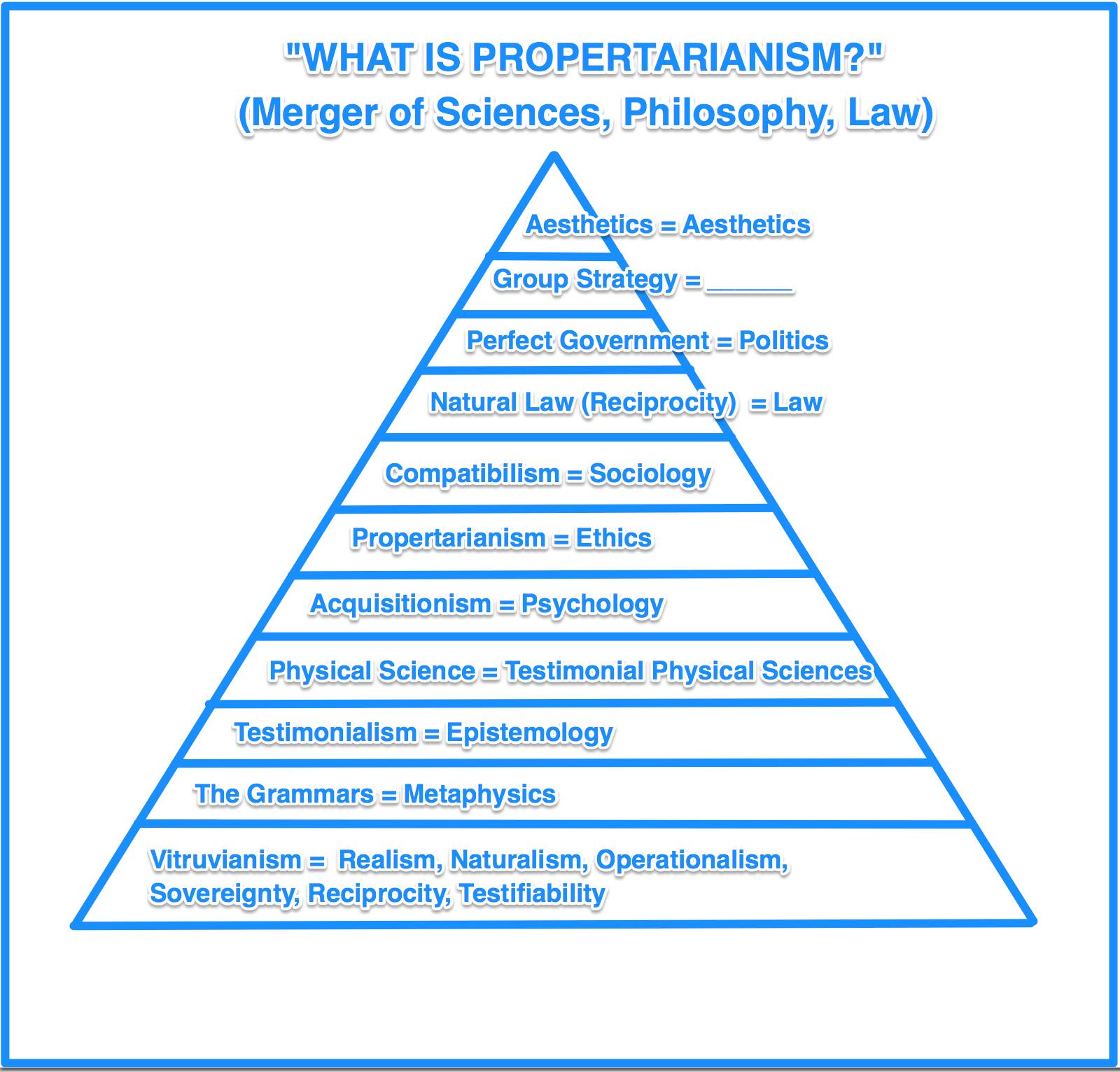
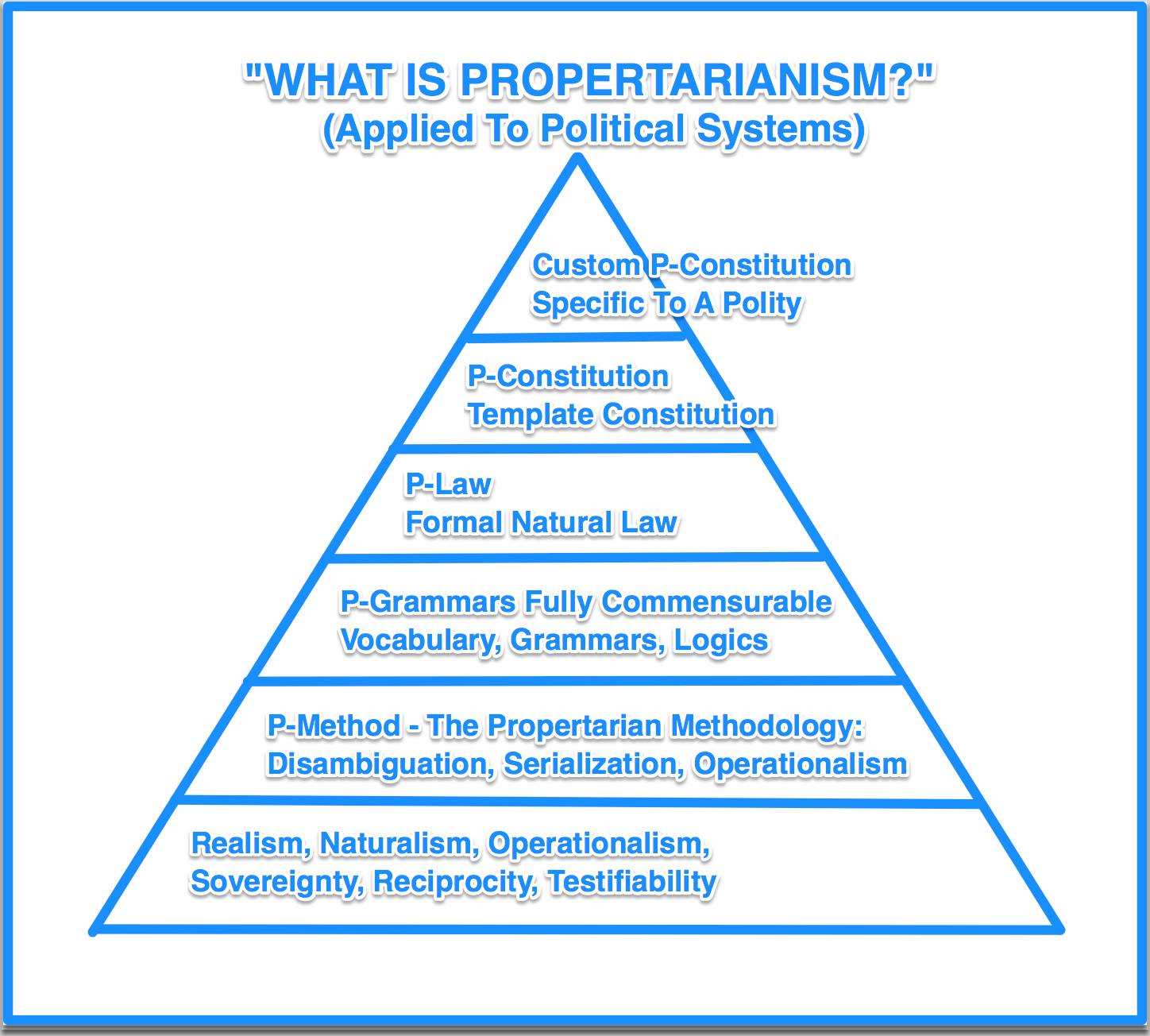
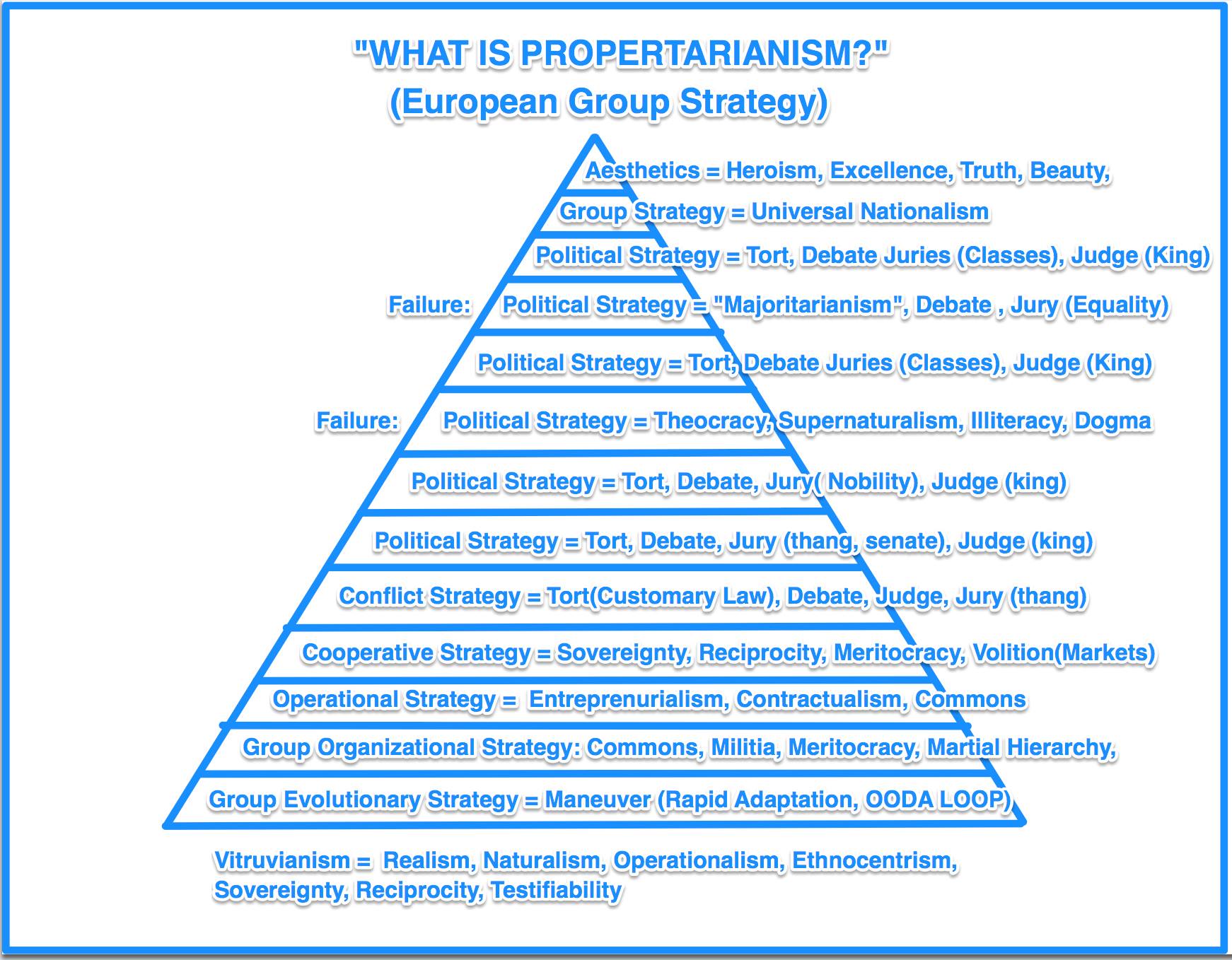
Diagrams: Disambiguating “Propertarianism” Into Its Constituent Components
DISAMBIGUATING “PROPERTARIANISM” INTO ITS CONSTITUENT COMPONENTS
- P – Method
- P – Method to Politics
- P- Politics to Western Civ.