Form: Full Essay

  • The Method – Testimony

    The Method – Testimony

    TESTIMONY

    THE TESTIMONY WE CALL “TRUTH” The Decidability of Testimony

    —“We evolved to negotiate pragmatically not testify truthfully. The reason we need Truth is because it’s counter-intuitive – it provides decidability independent of opinion or value – and so it’s often undesirable.” —

    Deflating the word “True”.

    |Testimony| > Dishonesty(bias, deceit) > Error (ignorance, error) > 
       Meaningful (intuitionistic) > Honesty(rational) > 
          Truthfulness(scientific) > Ideal Truth (imaginary) > 
             Analytic Truth (logical) > Tautological Truth (linguistic).

    The etymology of the word “True” is:

    truth (n.) Old English triewð (West Saxon), treowð (Mercian) “faith, faithfulness, fidelity, loyalty; veracity, quality of being true; pledge, covenant,” from Germanic abstract noun *treuwitho, from Proto-Germanic treuwaz “having or characterized by good faith,” from PIE *drew-o-, a suffixed form of the root *deru- “be firm, solid, steadfast.”, “oak” “Strong as an oak”. true (adj.) Old English triewe (West Saxon), treowe (Mercian) “faithful, trustworthy, honest, steady in adhering to promises, friends, etc.,” from Proto-Germanic *treuwaz “having or characterized by good faith” (source also of Old Frisian triuwi, Dutch getrouw, Old High German gatriuwu, German treu, Old Norse tryggr, Danish tryg, Gothic triggws “faithful, trusty”), from PIE *drew-o-, a suffixed form of the root *deru- “be firm, solid, steadfast.” Sense of “consistent with fact” first recorded c. 1200; that of “real, genuine, not counterfeit” is from late 14c.; that of “conformable to a certain standard” (as true north) is from c. 1550. Of artifacts, “accurately fitted or shaped” it is recorded from late 15c. True-love (n.) is Old English treowlufu. True-born (adj.) first attested 1590s. True-false (adj.) as a type of test question is recorded from 1923. To come true (of dreams, etc.) is from 1819. true (v.) Sense of correspondence. “make true in position, form, or adjustment,” 1841, from true (adj.) in the sense “agreeing with a certain standard.” Related: Trued; truing. (source: from the online etymology dictionary)

    An Action (Verb): We Lack a Primary Verb for “Speaking the Truth” While we have admittedly fuzzy definitions for true and truth, one of the frailties of English and most other IE languages is that they do not have a primary verb for “speak the truth,” as a contrast to lie and lying (v.). As we will observe repeatedly over the course of this book, the lack of a primary verb for Speaking the Truth is but one of many apparent confusions that are cause us so many problems of grammar and vocabulary. In order to solve the problem of the ‘missing term’ we will use the terms “truthful”, “truthfulness”. For example: ‘He lies’, vs. ‘He speaks truthfully’. I’m not adventurous enough with terminology to suggest we use truths and truth as in ‘He truths’, and ‘That’s a truth’, even if it’s not uncommon for us to use “True” and less frequently “Truth” as statements of agreement. A Term of Promise: All Statements are Promissory, With Varying Degrees of Contingency If I say ‘it’s raining’, I am saying “I promise it is raining”. I might say “I think/believe it is raining” which expresses contingency. I might also say “isn’t it raining?” Or “maybe it is raining” to suggest a possibility rather than state a contingency or a promise. Yet we seek to avoid that accountability. The Term Testimony Instead of Promise: ‘Testimonial Truth’ In philosophical discourse the terms ‘promissory’ or ‘performative’ truth are used for similar purposes. But because we are working in the context of law not norm and because we want to distinguish our work from prior authors, we will use the term “Testimony” and “Testimonial Truth”. Only the Conscious (Humans) can Testify or Promise Only those capable of speech (testimony), possessing sentience (feeling) consciousness (reason) and agency (cognitive independence from intuitionistic interference) are cable of making such promises. And not all individuals are possessed of sufficient agency (knowledge, skill, ability) to make such promises – and unfortunately we are not ourselves aware of our own limits. For this reason honestly is insufficient for truth claims. Instead we must perform due diligence against our limitations in order to make truth claims. And to guard against deception we must demand warranty (Or as Taleb argues, ‘skin in the game’.) Not simply because people are deceptive, but because they often lack the agency to speak truthfully having performed due diligence against their frailties. The Degree of Promise in Testimony So when we make a truth claim or state a truth proposition, we are constructing an intersection of three axes;

    1. the demand for decidability given the context of the question we decide
    2. the decidability of the testimony necessary to fulfill that demand
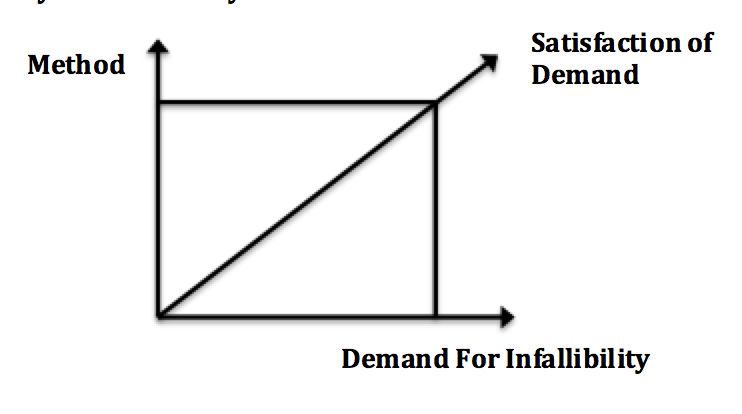
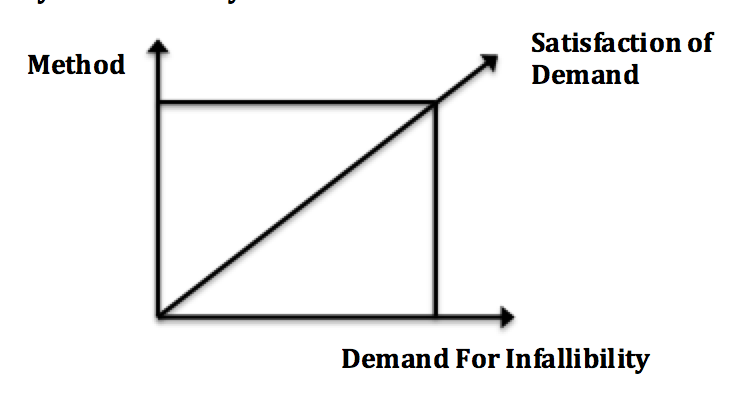
    3. the degree of warranty of due diligence that such testimony is sufficient for decidability, and demand for infallibility

    Our testimony is sufficiently decidable and warrantied for the degree of decidability or not. A Term of Agreement In English grammar we refer to yes and no as a subtype of word we call ‘Agreement’, as in |Word| Noun > Verb > Relation > Agreement. We also use ‘true’ and ‘false’ as methods of ‘agreement’, but agreement on the correspondence of testimony (speech) with reality (existence). So when we say ‘That is true’, we mean ‘I agree with your testimony’. Or less supportively ‘I consent to your testimony’. Or “I promise you will agree with my testimony”, or ‘I cannot disagree with your testimony’. In this sense yes and no, true and false, good and bad are statements of agreement.

    |Agreement| Agree, True, Good < Undecidable > Disagree, False, Bad

    A Point of View We habitually conflate (a) the words uttered by the speaker, with (b) the audience’s judgment of the correspondence of those words with reality, (c) the incentives of the speaker that bias his speech with (d) the sufficiency of decidability for the speaker, (e) the sufficiency of decidability of the audience who may or may not possess the skill, and (f) sufficiency of decidability for the judge who may or must possess such a skill to do so. And in doing so we conflate point of view (speaker, audience, judge), even though those points of view possess different information and different incentives, and different objectives. The audience and the judge must ask, what demand for sufficient decidability is required to answer this question? What degree of due diligence is necessary to claim an answer is honest, truthful, or true – and is it warrantable? And is that degree of honesty, truthfulness or truth sufficient to provide the decidability demanded by the question? In other words, is the testimony decidable true, and is the question decidable given that degree of truth? If not then what is the scale of possible consequence (harm), and what is the possibility of restitution (correction of the error)?

    |Point of View| Speaker (Producer)(Hypothesis) < > 
    Audience (Market)(Theory) > Judge (Court)(Finding of Law)

    So a speaker (voice), author (text), or craftsman (symbols or illustrations), produces a product (hypothesis), that is tested by an audience (market), and negotiated (recursively), and either agreed with (purchased), or disagreed with (boycotted – exited), or submitted to a court (fraud). The Act of Testimony: Copying, Describing, and Reconstructing Speaking Truthfully requires accurately copying (reporting on) existential reality and then representing that copy in thoughts, words, displays, and actions or other symbols, where the audience’s use of those thoughts, words, and symbols reconstructs the same perception of reality as the speaker.

    Challenges of Our Language

    Idealism: The Conflation of Speech (exchange) vs. Text (interpretation) Agreement vs Ideal (normative)( … ) The Correspondence Definition of Truth The most common and reductive definition of truth is ‘correspondence’ – meaning that one’s description corresponds to whatever one refers to by it. Which is deceptively simple until we decompose it. The name Socrates normatively corresponds to a (long dead) skeptical philosopher. The meaning of correspondence: ie: numbers. The word “red” normatively invokes the sufficiently infallible expectation to observe a color in another. (the definition of correspondent truth) The properties, or constant relations, of two words, phrases, sentences, and stories are identical. The properties of the speech, consisting of analogies to experience, produce in the audience the experience of recalling the same perceptions, objects, relations, and conclusions (s) that the speaker recalls and reports upon. These definitions differ from “correspondence with reality” to correspondence with another’s perceptions of reality either directly (sensation), or by instrument, or by imitation of action, or by imitation of imagination and reason. consistent, correspondent, and coherent (with what?) Textualism: Deflationary Definition of Correspondence( … )   For example: 1) “Snow is white” is true if and only if it corresponds to the fact that snow is white. Is then Deflated to: 2) “Snow is white” is true if and only if snow is white. Is then Operationalized to: 3) I promise (or recommend, or suggest the possibility) that my statement “Snow is white” is true, and therefore correspondent with reality, if and only if any randomly selected observer will testify that, as a general rule of arbitrary precision, the color of common snow appears white, and will appear white to other observers, unless otherwise tainted by some other coloring. Is simplified to Testimony: 4) “I promise that you will observe as I have observed that snow appears white.”

    |Commitment| Promise < Recommend the Likelihood 
    < Suggest the Possibility

    And “Snow is White” serves as a convenient Ordinary Language (colloquial) reduction that reduces the computational cost, time, and effort of conveying the same information. As we will see, these reductions are the origins of most sophistry in argument, and philosophy. The Problem of Imperfect Knowledge and Vocabulary Our knowledge of other than the trivial is always incomplete. Language consists of general terms (names of categories that describe distributions of properties), and as such Man cannot know the Ideal Truth even if he speaks it. But he can speak truthfully, and we can test whether his testimony reconstructs an experience we find equally correspondent to the subject. So we can separate the knowable(testimony) from the unknowable (truth) The Problem of The Copula Truth originated with the term testimony. We merely combine the word True with the copula “is” (meaning “I don’t know how it exists”) and conflate the various positions on the truth spectrum out of convenience and ignorance. When we use the verb “to-be”, we use it to obscure one of the following (including my intentional use of the verb to be to refer to “currently acting” (doing) as illustration).

    1 – to overcome limits of less able minds to bear the cost in short term memory of maintaining state while searching for testifiable phrases.

    2 – to save time and effort of grammatical construction among those who share sufficient context that they will not misconstrue our intent.

    3 – to avoid accountability for our testimony (promise).

    4 – to inflate a promise (conduct a pretense of knowledge) by habitual repetition of a convention we do not understand.

    5 – to obscure our ignorance of the relations we testify to (promise).

    6 – to suggest relations that are present but insufficient for fulfillment of our promise.

    7 – to suggest relations that are not present because of ignorance, error, bias, wishful thinking, fictionalism, for the purpose of coercion.

    8 – to suggest relations that are not present for the purpose of deception or fraud. In other words, we use it because of Convenience, Ignorance, Error, Coercion, and Deceit.. The Problem of Blame Avoidance in Prose ( … ) The Problem of Costly Construction. ( … ) The Testimonial Definition of Correspondence. “Agreement”: with text   …. Sufficient fulfillment of demand for infallibility… “Testimony: A Recipe for the Reconstruction of Experience, provided with warranty of due diligence against error, bias, wishful thinking, suggestion, overloading, fictionalism, and deceit.” “Truth: A perfectly parsimonious recipe for the construction of experience given perfect information such that error, bias, wishful thinking, suggestion, overloading, pseudoscience and deceit are impossible.” For the simple reason that language consists of general terms (distributions so to speak), Man cannot know the truth even if he speaks it, but he can speak truthfully, and we can test whether his testimony reconstructs an experience we find equally correspondent to the subject. (Diagram here) demand, promise, agreement, recursively The Certainty of Falsehood and the Contingency of Truthfulness

    |Decidability| Unknown > Undecidable > Truthful > True(All) > False

    Truth: Decidability of the correspondence ( consistency, coherence, completeness, rationality and reciprocity) of the testimony. True: Testimony is decidedly correspondent (consistent, coherent, compete, rational and reciprocal) with the referent. False: Testimony that is decidedly over truth over undecidable over unknown. Falsehood: Decidability of the non-correspondence ( inconsistency, incoherence, and-or incompleteness, rationality and reciprocity) of the testimony. We Can Only Know Statements Are Not False ( … )

    |DECIDABILITY| Incomprehensible > Comprehensible(Decidable) > 
    Possible(Decidable) > Contingent(True, Decidable) > False (Decidable)

    Truth Claims: Justification (Support, Ideal) vs. Truthful Claims: Criticism (Survival, Real) 1) Obverse: We justify moral arguments given the requirement to preserve the disproportionate rewards of Cooperation, without which survival is nearly impossible. Law and Morality are Contractual, informationally complete, and open only to increases in precision – we know the first principles of cooperation. 2) Reverse: We criticize intuitions, hypothesis, theories and laws to remove imagination, error, bias, wishful thinking, and deception from our imaginations in order to identify truth candidates. Reality is Non Contractual, informationally incomplete, and forever open to revision. We do not yet know the fist principles of the universe. The reason it took us so long to identify the meaning of truth (Testimony) was that we evolved from moral and cooperative creatures, and we evolved science from moral, cooperative, and legal (dispute resolution), and therefore justificationary reasoning. Defense Against Infallibility The Degree of Warranty in Testimony (Due Diligence, and Insurance)Restitution as the limit of warranty in Testimony (The range of consequences is not arbitrary – determined by choice, but by liability for consequences as determined by the market (harm).) The Law Alone Provides Decidability Across Full Accounting (real), Testimony, Warranty, and Restitution. Differences in scope between Science, Economics, Law, Literature DEMAND FOR MEANING The problem of meaning (scope of associations) vs truth (limit of mal-associations) DEMAND FOR TRUTH The Demand for Infallibility of One’s Testimony ( … ) Explain the upcoming section listing the dimensions of testimony needed, and the due diligence and warranty given the population and outcomes. PRODUCING SUFFICIENTLY DECIDABLE AND INFALLIBLE TESTIMONY  We possess at least these faculties: Our physical perceptions (perceptions), our intuitionistic and emotional faculties (intuitions), and our intellectual faculties (reason), action (movement) and speech (communication).

    |Faculties| Sense Perception (physical) > 
        Intuition (emotion, impulse, intuition) > 
            Intellect (reason) > action(testing) > 
                speech (testing - communication(via others)).

    Using these faculties, we have produced instrumental means (instrumentation) by which to improve upon ourperception, intuition and reason. 1) Logical (Intellectual)(Comparisons(words))(Results) 1.1 The Differential (Identity and therefore Category) 1.1- Categorical: We may testify to tautology and in that case must speak THE truth. We have no alternative. 1.2 The Logical (internally consistent across categories) 1.2 – Logical: We may testify to internal consistency within a given grammar. As such we speak truthfully if and only if argument (formula, proof) is (exists as) internally consistent (consisting of constant relations between states). When we LOGICAL we mean that one’s argument, justification, or reasoning, follows in the sense that the constant relations of properties, categories, relations, and values, that you’re depending upon are constant for the purposes you suggest, assert, or claim. And generally we separate the logical (necessary) from the rational (choice) 1.3 The Logical Fallacy of Closure. ( …. ) 2) Empirical (Perceivable)(Physical)(Actions)(Consequences) 2.1 The Empirical (Externally Correspondent) – what we call empirical 2.1 – Empirical: We may testify to external correspondence if and only if we find external correspondence, sufficiency and parsimony. When we say ‘EMPIRICAL’ we mean that ones description, argument, justification, or reasoning, has been tested against reality by the use of physical and logical instrumentation to eliminate common errors of perception, bias, reason, logic, and fraud. 2.2 The Operationally Possible (Existentially Possible) – what we call operationally possible. 2.2 – Operational: we may testify to the existential possibility of sequence of operations only if we can describe changes in state of constant relations due to a sequence of operations. When we say ‘SCIENTIFIC’ we mean that ones statements have been tested logically, empirically, rationally, stated operationally, scope complete, and limited, and that the work is warrantied, if by nothing else than reputation and career. (very little work is scientific) 3) Rational (imaginable) (Intuition, Incentives)(choices)(Returns) 3.1 The Rational (Rational Choice) – what we call subjectively testable. When we say ‘RATIONAL’ we mean, it’s a rational or not rational choice by which to obtain desirable outcomes. Rational: We may testify to the rationality of choice if and only if we sympathetically test the incentives under sufficiency and parsimony. Decidability in Choice 1 – Time is limited and a scarcity 2 – Man is a costly form of life in an unpredictable universe. 3 – Man must acquire resources to live within this unpredictable universe. …Emotions are a change in state… cognitive biases are to encourage acquisition despite evidence. 4 – Man Acquires the Physical, Intuitionistic-Emotional, Intellectual, Reproductive, and Social as either gains (increases) or discounts (savings). Man demonstrates that he acquires and defends: 1 – Survival: Life, Time, Rest, Memories, Actions, Social Status, Reputation 2 – Relations: Mates (access to sex/reproduction), Children (genetics), Familial Relations (security), Non-Familial Relations (utility),Consanguineous property (tribal and family ties) 3 – Associations: Organizational Ties (work), Knowledge ties (skills, crafts), Insurance (community) 4 – Signals (Reputation, Status, Self Image) 5 – Several Interests: Those things external to our bodies that we claim a monopoly of control over, having obtained them without imposing costs upon others. 6 – Shareholder Interests: Recorded And Quantified Shareholder Property (physical shares in a tradable asset), 7 – Commons Interests: Commons: Unrecorded and Un-quantified Shareholder Property (shares in commons), Artificial Property: (property created by fiat agreement) Intellectual Property. 8 – Informal (Normative) Interests: Our norms: manners, ethics, morals, myths, and rituals that consist of our social portfolio and which make our social order possible. 9 – Formal Institutional Interests: Formal (Procedural) Institutions: Our institutions: Religion (including the secular religion),Government, Laws. 10 – Man must inventoryhis acquisitions (Possessions, Interests) against the kaleidic unpredictability of the future and the vicissitudes of nature. 11 – Man must defend those interests that he has acquired and inventoried 12 – Man engages in parasitism by:

    1 – harm, violence, murder

    2 – theft,

    3 – extortion, blackmail, racketeering.

    4 – fraud, fraud by obscurantism, fraud by moralizing, fraud by omission,

    5 – free riding, privatization of commons, socialization of losses,

    6 – conspiracy, rent seeking, corruption

    7 – conversion, immigration,

    8 – conquest, war and genocide. Summary of Categories: Violence, Theft, Extortion, Fraud, Externality, Conspiracy 13 – Man must act cooperatively to disproportionately improve acquisition of resources. (Cooperation is in a division of labor is disproportionately more rewarding than any other activity man can engage in.) 14 – Man must cooperate only where it is beneficial and preferable to non-cooperation. As such all cooperative actions or sets of actions, must result in:

    1 – Productive (increases property)

    2 – Fully Informed (without deceit – a form of discounting)

    3 – Warrantied (promise of non parasitism warranty of restitution)

    4 – Voluntary Exchange

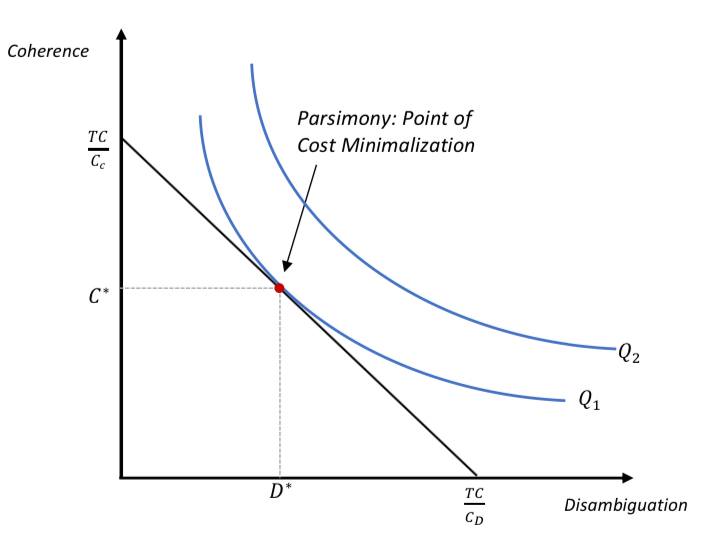
    5 – Free of negative externality (imposes no costs on the property of third parties). 14 – Man must act to preserve and extend cooperation to preserve the disproportionate rewards of acquisition through cooperation. (Cooperation is itself a disproportionately valuable scarcity) Man acts to preserve and extend cooperation by the suppression of parasitism that creates the disincentive to cooperate, and therefore decreases the disproportionate rewards of acquisition through cooperation. (Man evolved necessary and expensive moral intuitions to preserve cooperation – including expensive forms of punishment of offenders.) 16 – Man organizes to increase cooperation, and to increase cooperation on the suppression of parasitism. Man is a Rational (amoral) not moral or immoral actor Incentives to acquire are marginally indifferent (Network of decidability , Hierarchy of decidability, Constant rotation to pursuit of opportunity in time.) Empathize with feelings, sympathize with reason Malincentives in Choice3.2 The Reciprocal and Ethical (Reciprocally Rational Choice) – what we call ‘ethical. (incentives are a substitute for emotions) (emotions are a description of changes in state) (describe subjective testability of incentives) 3.3 The Reciprocal and MoralDecidability in Cooperation ( … ) Harm : Theft (imposition of costs) is decidable. Moral intuitions are not. (…) Decidability in the CriminalDecidability in the EthicalDecidability in The Moral: we may testify to the morality (Crime, ethics, morality) of any action or its consequences by tests of the productive, fully informed, voluntary, (and warrantied) transfer of that which individuals have acted to obtain an interest. Decidability in the AmoralBut Not the Emotional (Values) Note that while we can experience emotions, we cannot testify to them, not just because they are unobservable (testable), but because the evidence is quite clear that our reported experiences and preferences have little to do with our demonstrated behaviors and preferences. Cultural Differences in the Attribution of Emotions to Costs ( … ) Negative consequences, of doing so. 4) The Contractual (Limited, Complete, Parsimonious, and Coherent) The contractual provide warranty that one or more transactions for meaning result in a batch of transactions that is complete (coherent, and complete) 1 – The Complete (Limits, Scope) – what we call ‘fully accounted’ (no or few unlimited general rules of arbitrary precision) The Problem of Full Accounting vs. Cherry Picking and Selection Bias. (that we address all dimensions) (this is what separates the real from the idea) 2 – The Coherent (consistent across the logical, empirical, rational, and complete) this is where parsimony: coherent with actions, reality, matters and why operational language provides a test of coherence. 3 – The Parsimonious. (parsimony) ( discuss parsimony in the dimensions, … address determinism in the universe and cheapest transformation…. And compare with human incentives ) DEFINITION: PARSIMONY “Lowest cost across all dimensions testable by man” EXPANSION – Given human faculties: sense, disambiguation (constant relations), perception(integration-prediction), auto-association-prediction, attention-prediction (will), recursion-prediction, and release of actions; – And dimensions of tests of constant relations: free associative, categorical, logical, empirical, operational, rational choice, reciprocal rational choice, completeness; Parsimony must refer to: “Lowest Cost”, expanded to:

    • the lowest cost (least information), description of a chain of causation
    • surviving tests of: entropy, realism, naturalism, operationalism,
    • and;

    < p style=”padding-left: 30px;”>- bounded rational self-interest: – in the seizure of opportunity, – from the field of identified opportunities, – given the opportunity cost of the opportunity, – determined by competition for the greatest return in the shortest time for the least effort, with the greatest certainty at the lowest risk, – to the point of disequilibrium and subsequent re-equilibration, – eliminating the opportunity from the field of opportunities. < p style=”padding-left: 30px;”>- and – reciprocity (repeating the above) is the only productive rather than parasitic (costly) means of interaction. (- although parasitism and predation are profitable means of interaction, they are consumptive not productive.)

    The difference between: – Testimony (due diligence by self), – Coherence(consistency by audience), – Parsimony(competition by market), … is grammatical (point-of-view), and an application of and conformity to, – the law of epistemology (free association-idea-> hypothesis-surviving > theory-surviving > application-surviving) I can fuss with this a bit to make it as tight as reciprocity and testimony, or any of the other definitions, but ‘skeptical subjective testing against Occam’s Razor serves as the colloquial reduction.
    75580383_2258691500902548_7105323869908500480_n.jpg

    When we say TESTIMONIAL we mean that if your statement is logical, scientific, rational, reciprocal (meaning ethical and moral)l, limited and complete, and that you’ve given a warranty that you’ve done these due diligences, and have put ‘skin in the game’ if you are wrong. Hierarchy of Ten Testifiable Dimensions of Reality So, given our four faculties, we have evolved two tests of each, giving us ten dimensions of reality that we can test. Those Ten Testifiable Dimensions of Reality are:

    1 – Differences (identity)

    2 – Internal Consistency

    3 – External Correspondence

    4 – Operational Construction

    5 – Rational Choice

    6 – Reciprocal Choice (moral, ethical, legal, political)

    7 – Limits (max and min boundaries stated)

    8 – Completeness (completeness, full accounting)

    9 – Coherence

    10 – Parsimony We will use this set of dimensions of actionable and testifiable reality throughout the rest of this book. SUMMARY So when we make a truth claim or state a truth proposition, we are constructing an intersection of four axis;

    1. the demand for decidability given the context of the question we decide
    2. the decidability of the testimony necessary to fulfill that demand
    3. the degree of due diligence that such testimony demands
    4. the degree of warranty that restitution under fallibility demands

    Our testimony is sufficiently decidable, subject to due diligence, and warrantied for the degree of decidability or not. But of due diligence (proof or excuse) or warranty (skin in the game) it is warranty that provides greater insurance. MALINCENTIVES IN TESTIMONY FALSEHOODS

    Ignorance

    Error

    Bias, Wishful thinking FRAUDS

    Loading, Framing, Suggestion,

    Obscurantism, Overloading,

    Fictionalism, Deceit CRIMES

    Murder, Harm, Violence

    Theft

    Fraud, Fraud by Omission RESTITUTION Restitution Upon Failure Warranty cannot be given for more restitution than is possible Law Encompasses All Dimensions of Reality Law requires all dimensions of reality. Truth is determined by law (testimony), all else is a subset of legal testimony, given the subset of reality we are testifying to. ( … list disciplines and how they address subsets of reality … )

    |Disciplines| Law < Cognitive Sciences 
        < Economic and Social Sciences 
            < Physical Sciences and Engineering 
                < Mathematics 
                   < Logics

    DUE DILIGENCE IN TESTIMONY Warranty: One’s Due Diligence Against Demand for Infallibility. If you claim you speak truthfully, you can claim you have done sufficient due diligence to warrant your words against retaliation and demand for restitution or retribution. That is all you can claim. But we can never claim a thing is true if there is more information that can ever be presented that could falsify the claim. When we say something ‘is’ true, we CAN only say that we have done due diligence against it’s falsehood to the best or our knowledge and ability. if you say something ‘is’ true, you must also state how it exists, since ‘is’ refers to existence. We use the verb ‘to be’, especially in the form of ‘is’ to avoid describing how something exists – for rather complicated reasons – including saving of effort, the high cost of changing between experience, intention, action, and observation – a grammatical cost that is quite high for us humans. What we evolved the verb “to be” to mean, is “I promise that you will come to the came conclusion by making the same observation” So to say ‘the cat is black’ is to say ‘if you observe this cat then it will appear black in color.’ This is the only thing you CAN mean, because it is the only existentially possible thing you could mean. We just habituate language out of experience and effort reduction, rather than follow rules of truthfulness of language, which is expensive to learn and speak. So that is what statements mean: they mean that you have made observations of something or other, translated that experience into analogies to experience, then spoken that to another who upon listening recreates the experience through language. He then fails to understand, or requires additional information until he does understand, and the additional information so that he does not err. So just as we accumulate sounds into words, we accumulate experiences generated by words into reconstructions of the speaker’s experience. You can convey truthfulness (tested), honesty(untested), error, bias, wishful thinking, deception and fantasy. But only you can create a statement, so only you are responsible for the truthfulness of your statement. Your statement is not true. You speak truthfully(having tested), honestly(having not), in error, bias, wishful thinking, fantasy, or deception. That is all that is possible. Someone else finds your statement true when they reconstruct the same experience. So whey I say x=y I am saying that I promise you will also find that x=y if you choose to test this. This is all you CAN mean. Now you can say that you speak impulsively, honestly, or truthfully, or something in between. So that you cannot promise that the audience will also come to the same conclusion that you do. That is the difference between information (impulse), hypothesis(honesty), theory(truthfulness). So you can then only promise that what you’re offering is information, honesty, or truthfulness. But one must tell others which we are offering: information, honesty, or truthfulness. So correspondence exists when you have done due diligence on your observation, and when you consequent speech allows your audience to reconstructs your experience, and when they possess sufficient knowledge to do so. In other words the other person may lack the knowledge to reconstruct the experience of correspondence. This does not mean you cannot know a truth candidate. You can. Since you can reconstruct it. But you cannot test it without others with more knowledge. This is why science is a social construct. it is very hard to know the ‘ultimate’ most ‘parsimonious’ truthful statement because it is increasingly hard to possess sufficient information to know if it could produce greater correspondence. So in practicality, if you establish limits on your truthful statement such as “this works for tis circumstance’ then it is fairly easy. But if you say this works for N circumstances this gets increasingly difficult because there is more and more information that you can’t necessarily account for. TRUTH ISN’T COMPLICATED Truth is Not a Complicated Subject (Really) If we research the different definitions of (theories of) truth we will find that they fall into (a) consistent, (b) correspondent, (c) constructible (operational), (d) coherent, and (e) contractual (consensual, normative), and (f) the whether the speaker offers a promise, testimony, and warranty or not. Unfortunately (g) Full Accounting, consisting of limits, completeness and parsimony are rarely discussed as a formal requirement even if all such definitions. This has turned out to be a significant problem in all disciplines because it allows fuzzy definitions and cherry picking, and willful ignorance of consequences. And so the mistaken proposition that there are different theories of truth is simply a failure to articulate each theory of truth as simply those subsets of dimensions of reality that we are testing when we seek to produce a truth claim. In other words: any Truth proposition creates demand for Testimony, Due Diligence and Warranty in those dimensions that the proposition depends upon. There exist only so many dimensions to test, and there are no (and likely will never be) other dimensions – a subject we will address later under The Grammars. For example:

    • In mathematics we require only 1 and 2 – although ostensibly, they should be open to 4, either by direct construction or by deduction from a construction (i.e. a proof of construction or deduction from construction).
    • Logic is a term we will explore in depth later, but in the sense we are discussing the dependence of two or more propositions on the same constant relations, we require 1,2, at least, and as many others that are required by the propositions.
    • In the physical sciences, correspondence requires 1,2,3,4, and 7.
    • Economics should require 1 through 8, even though macro economics is questionably pseudoscientific because it rarely if ever includes 5,6,7. In fact, macro economics is the most notorious for cherry picking of all fields, since the major schools simply arbitrarily choose measures, rather than accounting for the full scope of measures (changes in all forms of capital).
    • In Juridical Dispute, we make use of 1 – 8 out of necessity, since we are discussing human actions in reality.
    • In social science and psychology, we find none of the dimensions made use of, for the simple reason that social scientists do not demand due diligence or warranty of those they survey, and they cannot therefore warranty what they speak. Why? Only demonstrations of preference tell us anything, and reported statements tell us nothing but what we wish to hear. This is why surveys are decreasingly in accuracy, and it’s questionable if they measure anything other than the intentions of the surveyors.

    Note that with the decline of truthful speech in the postmodern era we have simply produced an increasing delta between reported and demonstrated preferences. This pattern, in which we add or remove dimensions of reality given the subject matter of our speech (context) will appear as a constant theme throughout this book. Most of our speech across all our various disciplines consists of including or excluding dimensions of one kind or another so that we produce both content sufficient for communication of meaning, and limiting the scope of that meaning such that we avoid falsehood. And also, we will discover that falsehood is created by either communicating with insufficient and extraneous dimensions. A statement(testimony) is True if its sufficiently consistent, correspondent, coherent, and complete to provide decidability given the context of the question being decided. A statement (testimony) is true if and only if it provides sufficient decidability given the demand for decidability in the context of the decision. TYING IT ALL TOGETHER The spectrum of definitions of truth determines the scope of one’s promise of: identity, consistency, correspondence, existential possibility, rationality, reciprocity, limits, completeness, and parsimony versus the Scope of warranty, demand for Infallibility, scale of Consequence (harm), and possibility of Restitution (correction): The demand for each category of Truth is determined by:

    • Dimensions requiring Warranty of due Diligence
    • Demand for Infallibility
    • Scale of Consequence and
    • Possibility of Restitution

    So if we take the sentence “that’s True”, and fully expand it we end up with: “I promise (or I agree) that (or those) statement(s) consist(s) of constant relations that are (exist as): 1 – non-conflationary (identities), 2 – internally consistent (logical), And; 3 – externally correspondent (empirical), 4 – operationally possible (possible), And; 5 – consisting of rational choices (rational), 6 – that are reciprocal (ethical and moral), And; 7 – that all of the above are coherent (consistent across all of the above), and; 8 – that the claims are limited in scope (to a max and minimum), and; 9 – fully accounted (complete) as a defense against cherry picking, and; 10 – parsimonious (not open to over-extension).   And; 11 – Each dimension has received sufficient due diligence 12 – To satisfy the demand for infallibility; 13 – In the effected population; 14 – Given the scope and scale of the possible consequences; and; 15 – The possibility of restoration and restitution.” Which is so rich in content that it’s no wonder we process truth claims by intuition, and then struggle with the definition rather than attempt to decompose and articulate why we claim statements are either true or not. And worse, why we see so much conflation of the logical, rationalist, scientific, and operational uses of it. Or stated differently: Truth is sufficiently complex a question that it causes overloading, and forces us to rely on intuition. But we are in the process of articulating the means of preventing overloading, and preserving the use of reason. THE SPECTRUM OF TRUTH CLAIMS Next we will define the Truth spectrum so that we begin to see what categories of truth we may claim without ignorance, error or deceit. 1) Tautological Truth (Linguistic):  Domains: Referrers (names): Identity, Mathematics, Logical Equality, Textual Interpretation. Actor: That testimony you give when promising the equality of the properties, relations, and conditionally, the values of two referrers by using two different terms: a circular definition; a statement of equality; or a statement of identity. Observer: An observer of the same phenomenon, and observer (audience) of your description (testimony) would agree that your description provides sufficient infallibility given the demand for infallibility in the given context. Judge: Identity ( Demonstrable, Knowable): A promise of (testimony to) the indifference (lack of difference) between one term, concept, statement, construction, or argument, and another; provided with warranty of due diligence against ignorance, error, bias, wishful thinking, suggestion, obscurantism, fictionalism, deceit, and fraud. Conclusion Tautological truth consists of testimony of internal consistency of constant relations between terms and that is all. It says nothing of external correspondence, operational possibility, rationality, reciprocity, coherence, or limits, completeness, and parsimony. 2) Analytic Truth (Logical): Domains: Axiomatic: Mathematics, Logical Argument, Textual Interpretation. Actor: The testimony you give promising the internal consistency of one or more statements used in the construction of a proof in an axiomatic (declarative) system (grammar). (A Logical Truth). Observer: An observer of the same phenomenon, and observer (audience) of your description (testimony) would agree that your promise of internal consistency (constant relations) provides sufficient infallibility given the demand for infallibility in the given context. Judge: Consistency ( Demonstrable, Knowable): A promise of (testimony to) the preservation of constant relations (internal consistency) across a set of given operations provided with warranty of due diligence against ignorance, error, bias, wishful thinking, suggestion, obscurantism, fictionalism, deceit, and fraud. Conclusion Analytic truth consists of testimony of internal consistency of constant relations between statements, and that is all. It says nothing of external correspondence, operational possibility, rationality, reciprocity, coherence, or limits, completeness, and parsimony. Axiomatic (Systems) grammars, can be declared (arbitrary) and internally consistent, while theoretic must be observed (existential) and externally correspondent, while operational must be actionable (possible). And therefore existentially possible 3) Ideal Truth, The Truth, True (Unknowable, Ideal): Domains: Logic: Identity, Mathematics, Rational Argument, Textual Interpretation, Models. Actor: That testimony (description) you would give, if your knowledge (information) was complete, your language was sufficient, stated without error, cleansed of bias, and absent deceit, within the scope of precision limited to the context of the question you wish to answer; and the promise that another possessed of the same knowledge (information), performing the same due diligence, having the same experiences, would provide the same testimony. (Ideal Truth = Perfect Parsimony.) Observer: An observer of the same phenomenon, (or knowledgeable of the subject matter), and observer (audience) of your description (testimony) would agree that your promise of internal consistency (constant relations), external correspondence, operational possibility, rationality of choice, reciprocity, coherence, limits, scope, and parsimony provides sufficient infallibility given the demand for infallibility in the given context – and anticipating the possibility of future knowledge will falsify it. In other words, the observer estimates the unknown, the demand for infallibility, and the possibility of ignorance, error, bias, and the incentive for fraud, fictionalism, and deceit, versus the actor’s ( speaker’s) warranty (skin in the game). Judge: The Truth( Ideal, Unknowable): A promise of a perfectly parsimonious recipe for the reconstruction of experience given perfect information such that error, bias, wishful thinking, suggestion, overloading, pseudoscience and deceit are impossible. Conclusion As such non trivial ideal truths do not knowingly exist. And we should not engage in the pretense that other than trivial ideal truths exist as other than convenient fictions for the purpose of conveying meaning (teaching, communication), which must then be corrected from truth claims to truthful claims in order to provide warranty against misrepresentation, in the same way a parable using animals does in fact convey meaning, but also requires at the end, we state and extract and directly state the general rule of wisdom, morality, or ethics that the parable conveys by illustrative example. The function use of Ideal Truth is to create an internally consistent model we can use to characterize (just as we do with fictional characters), and provide a cartoonish (simplified ) method of comparing that which is too complex for us to manage without such simplification. As such the test of ideal truth is (a) whether the meaning conveyed is sufficiently infallible for the purpose claimed, and (b) whether it is sufficiently infallible that the the externalities (falsehoods) that the audience might, as a consequence, freely associate, induct, or deduct from it. In other words, that it is free of suggestion or obscurantism. 4) Truthful, Truthfulness (Testimonial, Knowable, “Scientific”): Domains: Speech: Promissory Testimony, Commercial Testimony, Scientific Argument, Scientific Hypothesis, Theory and Law. Actor: that testimony (description) you give if your knowledge (information) is incomplete, your language is insufficient, you have performed due diligence in the elimination of error, imaginary content, wishful thinking, bias, and deceit; within the scope of precision limited to the question you wish to answer; and which you warranty to be so; and the promise that another possessed of the knowledge, performing the same due diligence, having the same experiences, would provide the same testimony. Observer An observer of the same phenomenon, and audience of your testimony would agree that you have demonstrated internal consistency, external correspondence, operational possibility, rationality of choice, reciprocity, coherence, and limits, scope, and parsimony, to provide a warranty of one’s due diligence in the elimination of ignorance, error, bias, wishful thinking, suggestion, obscurantism, fictionalism, deceit, and fraud. Judge: Truthful Testimony ( Demonstrable, Knowable): A promise of Recipe for the Reconstruction of Experience, provided with warranty of due diligence against ignorance, error, bias, wishful thinking, suggestion, obscurantism, fictionalism, deceit, and fraud. Conclusion Truthfulness is the only testimony it is possible to warranty as descriptive of existential reality. Ideal, Analytic, and Tautological Truth are merely testimony to internal consistency (constancy of relations) of expressions (language). So to restate the differences between the True(Ideal, Imaginary) vs. Truthful (Due Diligence, Performative, Real), what is the difference between “Correspondence” and “Reconstruction”? The first is platonic (imaginary), the second operational (real). 5) Honesty (Knowable): Domains: Speech: Interpersonal Testimony, Court Testimony; Reasonable Argument. Actor: that testimony (description) you give with full knowledge that knowledge is incomplete, your language is insufficient, but you have not performed due diligence in the elimination of error and bias, but which you warranty is free of deceit; within the scope of precision limited to the question you wish to answer; and the promise that another possess of the same knowledge (information), performing the same due diligence, having the same experiences, would provide the same testimony. Observer: An observer of the same phenomenon, and audience of your testimony would agree that your description Judge: Honest Testimony (Knowable): A Recipe for the Reconstruction of Experience, provided with warranty of due diligence only against and deceit. It is for the jurists, and the jury to decide if you speak honestly. In practice both judges and juries seek to identify malincentives one the one hand and conformity to norm, tradition, and law on the other, by subjective testing of testimony to detect malincentives that might have been seized or at least influenced behavior. Conclusion Honesty consists of testimony that you do not engage in suggestion, obscurantism, fictionalism, deceit, and fraud. It is a warranty against your pursuit of malincentives no matter how mild. Categories of Honesty

    • Demonstrated Preference: – Evidence of intuition, preference, opinion, and position as demonstrated by your actions, independent of your statements.
    • Honest Testimony () – ( … )
    • Position: (criticism) – a theoretical statement that survives one’s available criticisms about external questions.
    • Opinion: (Justificationism) – a justified uncritical statement given the limits of one’s knowledge about external questions.
    • Preference (rational expression) : a justification of one’s biases (wants).
    • Intuition: (sentimental expression) – an uncritical, un-criticized, response to information that expresses a measure of existing biases (priors).

    6) Meaning(Comprehensible – Allegorical)Domain:Actor:Observer:Judge:Conclusion:7) Pragmatic Truth (Actionable – Rationality)Domain: Personal and interpersonal Decision, Action, Agreement. Actor: The testimony you give promising the correspondence and coherence of one or more statements is sufficiently infallible for the meaning, decision, action, and consequences in the given context. Observer: An observer of the same phenomenon, and observer (audience) of your description (testimony) would agree that your statements provides sufficient correspondence and coherence given the demand for infallibility in the given context. Judge: Consistency ( Demonstrable, Knowable): A promise of (testimony to) the utility of one or more statements due to sufficient correspondence, coherence, and infallibility provided with limited warranty of due diligence against error, bias, wishful thinking, suggestion, overloading, pseudoscience, and deceit.” Conclusion Pragmatic Truth requires nothing other than Actionable or Decidable for the individual or group to obtain it’s want, and sufficiently infallible to provide warranty against irreciprocity (harm) that one might be forced to provide restitution against – regardless of identity, consistency, correspondence, coherence, limits, scope, and parsimony. In other words, true enough to remain blameless. Pragmatic truth is that definition of Truth most people operate by. Only those who must decide insurance of others and restitution in case of irreciprocity (harm), or who seek to compete by argument, or seek to expand our knowledge of the world concern ourselves with the rest. 8) Consensus Truth (“Agreement”, Consensual – Reciprocity)(agreement on paradigm)Domain: Personal and interpersonal Negotiation – Particularly in the context of fictionalism: politics, ideology, philosophy, and religion. Actor: The testimony you give promising the coherence of one or more statements with consensus. Particularly some fictional paradigm. Observer: An observer of the same phenomenon, and observer (audience) of your description (testimony) would agree that your statements are coherent with consensus. Judge: Consistency ( Demonstrable, Knowable): A promise of (testimony to) the adherence of a statement to consensus. Consensus need not require identity, consistency, correspondence, possibility, rationality, reciprocity, limits, completeness or parsimony – only coherence. Conclusion In other words, coherent enough with group consensus to remain blameless. Consensus truth is required for all fictionalisms – particularly religion and ideology. As such consensus truth is not truth whatsoever, but a promise of agreement, conformity, or approval. Religion and Idealism in the ancient world, and Marxism, Feminism, and Postmodernism in the modern world, specifically rely upon Consensus (agreement) for decidability. They cannot survive the tests of consistency, correspondence, rationality of choice, reciprocity in particular, and limits, and completeness. But as ideologies they do not have this purpose. They seek only to gain consensus on means of obtaining power through the vulnerabilities of majority monopoly democracy. In the absence of democracy they seek to cause synchronicity of decision making such that by indirect action in speech (or deception), trade (or theft or fraud), and violence (or shirking or pacifism), they achieve their desired ends. 9) Ordinary Language Speech (Negotiation)Domain: Ordinary Speech Actor: that speech you would utter when in common unwarrantied and unfiltered conversation. Observer: The observer of that speech expecting exchange of information without externality of service or good, or impact upon service or good. Judge: That the speech contains neither promise, nor demand, nor fraud. Conclusion Ordinary language consists entirely of Negotiating for something whether information, option, action, or material. We may or may not be conscious of what we are negotiating for, in large part because it’s often entertainment, attention, status, trust, belonging(approval), alliance – all of which are evolutionary incentives to acquire options on insurance against future risks to the same, no matter how small. Much of the time, when not seeking options, we are seeking information. When not seeking information then cooperation. When we are not seeking cooperation we are seeking gift or exchange. If not then for alliances of some degree or another in the pursuit of some end or other. As such, negotiations vary from deception to negotiation to status production, to option creation to entertainment. And we rely upon the entire spectrum of truth as the discourse at hand demands. Proof Proof of contingent relations = proof of possibility. Proof of inconsistent relations = proof of falsehood. One cannot prove a truth. One can only test it for constant relations at all scales: categorical (idenity-self), logical (internal-others), correspondence (the universe), volition(rational choice), operations(existential possibility), and reciprocity (reciprocal volition), and to do so in operational (measurable) terms, stating limits and inclusivity of scope. This is what is required for due diligence against not only falsehood, but ignorance, error, bias, wishful thinking, suggestion and deceit. The Fallacy of Proof One of the great falsehoods of philosophy: proof. You cannot prove anything, so the question itself is a deception. The questions are un-falsifiable, which is a center position between justifiable and warrantable. Justifiable(excuse) > falsifiable (possible) > demonstrable(empirical) > warrantable (insured) Proofs exist in and only in mathematics, for the simple reason that positional relations (positional names that we call numbers) are by definition and necessity constant relations and cannot be otherwise. There are very few other constant relations. (time is one, and even that is a question of relative position and velocity). We can create certain set arguments. We can identify certain reductio (trivial) necessities just as we can identify certain prime numbers. But the question is fraudulent (a trick) of grammar. Since one cannot prove anything, one can merely justify (non-promissory), provide terms of falsification(promissory), demonstrate(temporal), or insure (Intertemporal) As soon as you admit the criteria of: – deception and fraud – incentive – cost – warranty …. into philosophical argument, we change from philosophy to law, just as when we introduce empiricism into theology, we move into philosophy. REPLACEMENT OF JUSTIFICATION WITH PROSECUTION (FALSIFICATION) PROSECUTORIAL OPERATIONS (WARRANTIES OF DUE DILIGENCE)ATION – INTERROGATABLE)

    |Knowlege| Free association > idea(survives) > 
       hypothesis(survives) > theory(survives) > 
          law(survives) > Identity(tautology)(survives) > 
             differences(consistent and inconsistent relations)(evolves) >
                [Loop].

    PROSECUTORIAL OPERATIONS (WARRANTIES OF DUE DILIGENCE) Falsification(Survival) by Measurement (cardinal, ordinal, decidable)) Decidability under Prosecution: Via Positiva Vs Via Negativa And The Competition Between Both ( … ) constructible vs deducible THE CURE FOR SUGGESTION AND DECEIT. Rationalism was invented to attempt to reconstruct christianity without mysticism. I understand the great deceits. It’s but one of them. Rationalism’s Obscurantism and Scriptural Mysticism are similar techniques. The Contemporary version uses propaganda and repetition. But the technique is reducible to suggestion by loading framing and overloading in all three. Suggestion works. The science says that we can’t even defend ourselves from it even if we work hard at it. This is why we invented analytic philosophy and operational definitions in science. And why I have completed that project with testimonialism and propertarianism. To make suggestion impossible. At least to make it impossible in matters of finance, politics and law where it can be so readily used for ill. Suggestion is necessary or teaching each other by analogy would be impossible. Suggestion is necessary or supposition of intent would be impossible. Supposition of intent is necessary or cooperation is impossible. Cooperation is necessary or a division of labor and exchange is impossible. But in all human cooperation and all transfer there is a difference between suggestion of meaning, and the test of truth. We have been, as normal humans, attempting to define a single test of truth for millennia. But we have failed. Because epistemology requires the transfer of meaning by suggestion, and the test of truth by criticism. As such the single most important solution to communication is to limit the divergence between the means of communicating meaning, and the means of criticizing meaning. This is what I believe we, I, have accomplished: to speak in a manner that the least difference between meaning and truth exists. This is testimonialism. The scientific method is a process of creativity followed by criticism. invention followed by testing. Imagination followed by survival from scrutiny. The easiest way to limit suggestion is to refer to existential operations using a continuous point of view. Operationalism. With the tests of operationalism, we slowly train ourselves to speak the truth, just as we have slowly trained ourselves to speak in the language of science instead of the language of mystical analogy. And the benefits of this truthfulness will be as great as the benefits of science. ==== Satisfying Demand We use the term TRUE for “agreement on correspondence”,

    |TRUTH CLAIM| Undecidable > Possible > Relative > Consensual > 
       Contingent > Probable > Decidable > Necessary > Analytic > 
          Tautological.

    As far as I know, all statements remain contingent, if only for the imprecision of definitions alone. I’ll deflate it further into TESTIMONY, DEMAND, and WARRANTY. TESTIMONY: demand for agreement(x), degree of necessity(y) and degree of warranty(z). DEMAND: I can hold an agreement on correspondence with myself, with someone else, with others, with everyone, with anyone. WARRANTY: I can warranty my testimony corresponds to the possible, probable, contingent, decidable, necessary, analytic, and tautological. And can be possible, personally actionable, collectively actionable, collectively decidable, and collectively irrefutable, and collectively tautological. We use ‘Truth’ for all those purposes: “true enough for the circumstance.” The question is whether one uses then truth that is sufficient for, and therefore survives the demand for, the circumstances. ==== SUMMARY Demand for Decidability Decidability Testimony Due Diligence Warranty Restitution Truth claims are matters of law. COMMUNICATION Transfer of properties by analogy culminating in the transfer of experience (meaning) by the process of “suggestion”. The process of creating shared experiences using symbols – primarily language. TRUTH (reconstruction of same experience) (where the experience corresponds to reality) FALSEHOOD Imagination Error Bias Wishful Thinking Obscurantism Suggestion Deceit SUGGESTION Loading Framing Shaming Rallying Chanting Overloading OVERLOADING Mysticism/Supernaturalism Narrative/Literature Rationalism/Verbalism Pseudoscience/Innumeracy UNLOADING Truthfulness TRUTHFULNESS Due diligence that we have not engaged in deception, or error, bias, wishful thinking, obscurantism, suggestion, and deceit. DUE DILIGENCE We perform due diligence by testing every dimension of knowledge we know how to. (just as we have different mathematics for each of the increasing dimensions): Identity and Category Internal Consistency (logic) External Correspondence (empirical consistency) Existential Possibility (operational definitions) Parsimony, Limits, Full Accounting (limits) Morality (Productive, Fully informed, warrantied, voluntary transfer, limited to externality of the same.) KNOWLEDGE There is only one sequence to knowledge, and all others are false: Perception(observation) -> Free Association(awareness) -> Hypothesis(guess) -> Theory(Due Diligence) -> Law(Survival) -> Tautology(identity/name) -OR- False Knowledge is not a qualifier as some pretend, nor does it or can it convey truth content. It is anything in any state of the process of knowledge evolution that we can observe, are aware of, imagine possible, seems consistent, cannot seem to falsify, that is not yet false. Knowledge: anything that works for the purposes we intend and we cannot yet deem false. SCIENCE Science = due diligence. While we cannot know if we speak the most parsimonious truth, or whether we speak the truth, what we can do THE ECONOMICS OF TRANSFERRING EXPERIENCES (we use scientific language because it imposes the lowest cost of truth testing upon the audience. we avoid scientific language because we wish to impose costs upon the audience. We embrace unscientific language when we want to deceive.) THE CREATIVITY OF MEANING AND THE CRITICISM OF TRUTH (two part process: 1-transfer meaning, 2-test for truth – Reverse, Obverse) RESTITUTION (limiting harm) WARRANTY (skin in the game)   =================== Where does this go? Yields: |Yields|: (Potentials/Forces > Operations > Symmetries) > (Algorithm > Model > Simulation) > (Axiom > Proof) > Law(Model) > (Theory > Paradigm) > (Sentence > Story).   ========================
  • The Method – Grammars

    GRAMMARS OF DECIDABILITY

    The Dimensions

    The Geometry of Our Grammars

    Now that we have completed our journey through creating Dimensions of Decidability using Deflation, Operationalization, Serialization, and Competition, we can:

    • Discover and enumerate the Dimensions extant in our Language.
    • Discover how those dimensions can be combined into Grammars of Decidability.
    • Discover how those grammars can be organized into a spectrum that covers every niche of human communication from physical, perceptual, emotional, intellectual, and imaginary – as well as deception.
    • Discover that our set of grammars illustrate a hierarchy of patterns in the physical universe – and that our understanding of that pattern and our grammars are very nearly complete.
    • Discover that our Language consists of :
      • Continuous Recursive Disambiguation in Real Time (Serial Speech)
      • Using Some Set of Analogies to Experience (Words)
      • Resulting in Transactions (Sentences)
      • That produce Contracts for Meaning (Stories)
      • Within some Set of Dimensions (Physical, Experiential, Imaginary)
    • And that opportunity for Deception (Frauds, Fictions, Fictionalisms) is ever-present.
    • But by limiting our speech (prose) to Operational Grammar ( using constant relations between reality, perceptions, cognition, actions, and consequences), or what we traditionally call “Testimony”, all statements are both objectively and subjectively testable, thereby providing extremely limited opportunity for error, bias, and deceit.
    • And by performing Due Diligence, for consistency, correspondence, existential possibility, rationality of choice, reciprocity, completeness and coherence;
    • We force a Competition for Coherence by which we expose our ignorance and can Warranty our speech is as free of error, bias, and deceit as is possible given our current language knowledge.

    Geometry of Decidability

    (…) (the via negativa pzzle pcs)

    Dimensions Present in our Vocabulary

    Next, we can examine our vocabulary and organize the terms into a series of categories.

    |WORD| > Name(Noun) > Action(Verb) > Relations > Agreements > Noise Words > Code Words. And within each category of word we find multiple dimensions.

    |Name(Noun)| : Proper(Person > Thing > Place > Idea > Perception(sense) > Emotion(value)) > Common (categorical) > Compound > Pronoun > Clarifier (Determiner/Measure) > Property(adjective) >

    |State| State > Event > Action > Experience > Thought

    |Person| First > Second > Third > Abstract

    |Gender| Female < Young Female < Neutral > Young Male > Male.

    |Possession|- Possession (‘s – “apostrophe s” in English) (“Can Own”) > (“Can be owned”) > (Cannot be owned”)

    |Number|- Unique > Countable > Collection/Mass(not worth counting) > Uncountable.

    |Perception|- Concrete(observable 5 Senses) > Emotions(Feelings) > Ideas(Abstr.)

    Or: |Experience| Perceivable > Experience-able > Imaginable

    |Action(Verb)| > Action Property(adverb) > Action Clarifier(Phrasal Verbs) >

    |Knowledge| Unknown > Believed > Known > Undeniable > Tautological

    |Ownership| Undiscovered > Unconvertible > Unconverted > “Homesteaded”(Worked) > Possessed(Fact) > Consensual Property (Agreement) > Normative Property (Habit) > Property Right (Insured by third party) > inalienable(life, memory, imagination, Emotion)

    |Possibility| Impossibility > Contingency(Might) > Possibility(Can) > Necessity(Shall).

    |Permissibility| Impermissible > Permissible(May) > Obligatory(Must).

    |Temporality| Always Been > Has been > is Currently > Will Be > Will Always Be.

    |Gain or Loss| Gain < Neutral > Loss

    |Decidability| Incommensurable > Undecidable > Preferable > Good > True.

    |Relations| Relation (Preposition/Postposition) > Link (Conjunction > Copula ) >

    |Agreements| Agreement(yes-no) >

    |Noise Words| Noise Words(Expletives etc.) >

    |Code Words| code-words(acronyms etc.)What Can We Learn From Those Dimensions? A great deal:

    • Limited Scales Measurement: We tend to consider only a scale of five, in any dimension which mirrors the accuracy of survey responses: a 1-5 scale is about as accurate as one can get, with 1-3 1-5, 1-7 appearing frequently and with a 1-10 scale ratings always reducible to a 1-5 scale with finer graduation to the high end and lower granulation to the low end. This 3,5,7 scale shows up in nearly all aspects of cognition, such as the number of objects we can independently visualize or numbers one can recall. Usually in the seven plus or minus two range.
    • Limited Dimensions To Describe References: There are about as many dimensions in both nouns and verbs: seven. While there are about fourteen dimensions between nouns and verbs, the only complex relationships are:
      • State
      • Perception (Experience)
      • Relations

    But these three sets provide a large set of sensory dimensions for describing our references.

    • State, Perception, and Relation function as Weights and Measures:
      ( … )
    • Dimensions of Negotiation: Other than Perception and Relations, the number of dimensions is surprisingly small. And nearly all can be categorized as necessities of
      • Negotiation and
      • Possession, and
      • Weights and Measures.
    • Dimensions of Possession: Our language contains an extraordinary dedication of dimensions to possession. Given the dimensions above, please note the following:
    • Person, Gender, and Possession are dimensions in our Nouns.
    • Ownership, Permissibility, and Gain or Loss are dimensions in our Verbs.
    • The degree of Warranty of our meaning is implied not stated.

    As we will see later, this emphasis on possession, ownership, and property is necessary for both cooperation and ‘calculation’, and function as the basis of ethics and morality, and our valuation of changes in state of possessions (or interests) the origin of our emotional responses. We are, whether we like it or not, acquisition machines, using language to negotiate cooperation because of the far higher returns on a division of labor than are possibly by individual action. A Change In Paradigm (Ontology) Justification an self and knowledge versus Contract and others and trade and consent.

    Note: For those who have experience with Taxonomies of vocabulary, this categorization is significantly different from Roget’s – and somewhat dehumanizing.

    Words: Measurements and Collections of Measurements (Weights and Measures)  The Contractual Constitution of Meaning (Words, Phrases, Sentences) The Experiential: The Dimensions of Perception (Experience)

    |EXPERIENCE| Physical(external intermaterial) > Perceptual (external-internal) > Emotional(internal) > Mental(imaginary) > Social(external interpersonal) ( … )

    The Real: Dimensions of Reality

    Now, how can we DESCRIBE the universe? With dimensions consisting of constant relations. Now, we are going to make frequent use of these terms ‘dimension’ and ‘dimensions’. And the most simple constant relation we know of is mathematics: the study of positional relations:

    0-Point (Referent)(Identity, anchor referent)(quantity) 1-Line (Distance)(Relations) 2-Area (Ideal)(Sets) 3-Object (Ideal Object) (Space) 4-Time (Velocity) (Change) 5 – N – Pure Relations (Concepts/Categories) 6 – N vs. N’ Relations, (Forces) (Equilibria) 7 – N vs. N’ Intermediate Relations, (Symmetries) 8 – N vs N’ relations between symmetries (Paradigms) 9 – (N vs N’)’ recursive hierarchies of symmetries ad infinitum. (Reality) And we have mathematical techniques for such dimensions.

    0 – Correspondence (referents, identity) 1 – Positional names, Arithmetic, Accounting. (counting) 2 – Mathematics and algebra (Ratios) 3 – Geometry (Space) 4 – Calculus, Finance, Economics. (Change) 5 – Algebraic Geometry (Math of sets of constant relations) 6 – Physics (equilibration) 7 – Lie Groups, (Symmetries, Externalities, Future of Economics) (8 – Grammars) (9 – Paradigms) (stories) (Semantics) (10 – Fictions) (11 – Ideals ) (12 – Dreams) And that we have discovered mathematical techniques for the preservation of constant relations in increasing layers of complexity …. The Dimensions of RelationsDimensions of Meaning: Geometry of Thought, Speech, and Argument (try to explain) (how the mathematical dimensions and the verbal dimension and paradigms and stories…. It’s all dimensions) From any given point, there are an infinite number of vectors. All thoughts can be represented geometrically. But like Mandelbrot’s Fractals, they are not calculable by man, only computable by machines. However, the underlying symmetries (shapes) will be consistent across contexts, for the simple reason that grammars are consistent across contexts (paradigms).

    THE DIMENSIONAL GRAMMARS

    The Periodic Table Of Speech

    |GRAMMARS| Deflationary Grammars < Ordinary Grammars > Inflationary Grammars.Grammars: Overcoming the Problem of Human Scale (necessary because of computational limitations) Use of external resources to render commensurable that which is beyond our abilities. Deflationary Grammars (decidable)

    • Logic of Differences (identity)
    • The Logic of Continuous Relations, Logic of Sets (categories)
    • The Logic of Counting: Counting, Arithmetic, Accounting.
    • The Logic of Positional Relations (measurement): Mathematics (all of it), Equilibrium mathematics (constant relations)
    • The Logic of Algorithms – Computers, simulations (automation)
    • The Logic of Transformations: Physics, chemistry, biology, sentience, reason (transformations)
    • The Logic of Reciprocity, Law, Contract (cooperation) and Economics
    • The Logic of Science: Science, Reporting, Testimony (testimony)

    Ordinary Grammars (practical) So we can at least include these Ordinary Language grammars.

    • Formal or Written
    • Ordinary Conversational (in the commons)
    • Idiomatic Varies by Region, class, discipline, and occupation.

    Inflationary Grammars (meaningful)

    • Narration
    • Story (grammar of stories)
    • Fiction (grammar of fiction)

    Deception Grammars (Under, over, and false loading)

    • Intentional avoidance of due diligence
    • Bias and Wishful thinking,
    • Obscurantism,
    • Suggestion,
    • Fictionalisms

    Conflationary (Fraud) Grammars (overloading, frauds)

    • Pseudoscience ( conflation of magic and technology)
    • Psuedo-rationalism (Pilpul and Critique), (Justificationism en Closure)
    • Pseudo-mythology (conflation of history and myth as well as wisdom and law, as well as real and supernatural)
    • Occult (experiential Fiction)

    The Periodic Table of Grammars

    (Poster Size) Figure 1 The Periodic Table of GrammarsNote: The table is too large for inclusion in this book, in any readable form, but is available online at https://propertarianinstitute.com/grammars where you can download a PDF version, or order a poster online.

    Reorganizing Our Categories of Language

    Semantics Are Limited by and Subordinate To Grammars

    Now Let’s Look at the Rest of Communication Now, Just as mathematics consists in the study of constant relations, at increasing numbers of dimensions, we can perform the same analysis for all other forms of communication. And we will see how all our grammars are organized by the very same means – the organization of constant relations. And then how some deflate relations, so me preserve relations, some inflate relations, some conflate relations. And as such we will see how we use these various grammars to communicate the entire spectrum of reality from the existential to the imaginary. Language –   all same enough that they reflect a common set of abilities and limits of the human brain.   SVO, SOV, VSO, but in all cases we describe states of subjects or changes in states of subjects, and we combine this little stories into ever increasingly complex sentences, paragraphs and stories, and we weave these stories into paradigms and then into networks of paradigms, and those networks of paradigms and stories provide us with context, and that content lessens the computational cost of composing stories, paragraphs, sentences, phrases, and sub-stories consisting of descriptions of state or changes in state – and attach to those stories some value or other. And therefore assist us in making decisions from the most casual and unconscious to the most deliberative and calculative. Context and Precision: Ordinary language varies from formal, meaning low context and high precision, to common to idiomatic, meaning high context low precision. The lower the precision the higher the context the more suggestion is created by the speaker and the more substitution is required of the audience. Dialects. Within languages we create Dialects – regional, class, and occupational. These vary in paradigms, vocabulary, values, morphology and phonology, but most often preserve the same syntax: rules of sentence construction. Across these dialects, and across all languages and dialects, we have produced various technological variations in grammar (paradigm?), meaning rules of word and sentence construction, which in turn limit the vocabulary, the paradigm, the logic within the paradigm, and the grammar and syntax of statements, sentences, paragraphs, arguments, stories and ever increasing stories within the paradigm. And Speech itself consists of a hierarchical repetition of increasing complexity:

    |Speech| Word > Phrase > Clause > Sentence(Subject + Predicate=Story) > Paragraph(story) > Grammar of Science > Grammar of Narrative > Grammar of Stories(Story) > Grammar of Story > Story, “all the way up”.Organizing Language So we can organize (or rather we have no choice but to organize) something like a hierarchy such as:

    1 – Universal Grammar: recursively limited differences, similarities in all available dimensions.

    2 – Dimensional Grammars (Dimensional Semantics?): Deflationary (real) < Ordinary (experiential) > Inflationary (Ideal) > Conflationary (supernatural)

    3 – Languages

    4 – Ordinary Language Grammars

    5 – Semantics (Paradigms)

    6 – Dialects

    7 – Idioms and expletives etc. Anglo Analytic deflationary and scientific as a reformation of law versus continental conflationary and philosophical as a reformation of religion. Deflationary Literature Markets versus Conflationary Literature Monopolies ( … )

    Meaning (Grammars of Meaning?)

    THE ART OF SUGGESTION

    The Two Faces of Suggestion ( … ) The transfer of knowledge is dependent upon at least ten “supply demand” curves. Such that the contract (exchange) of knowledge is a function of the costs involved in an exchange. In other words, some communication is low cost and some is worthwhile, and some is very costly, and some is prohibitively costly, and some is simply impossible no matter what is done. So transfer of knowledge is one of the most complex human endeavors in no small part because of high causal density with diverse means of increasing costs.

    |METHOD| Suggest > Communicate(illustrate) > Explain > Teach > Train(Repetition) > Saturate(Immersion)

    ie: Cost—>+

    |LEARNING| Learns through inference (145+) < Learns through Suggestion(135+) < Learns through Illustration (125+) < Learns through Explanation (115+) < Learns through Teaching (105+) < Learns through Training (95+) < Learns through Immersion (85+) < Learning challenged (85-)

    ie: Cost—>+

    |ABILITY| Same Sigma > .5 Sigma > 1 Sigma(helpful) > 1.5 Sigma > 2 Sigma (Difficult)> 2.5 Sigma > 3 Sigma(~Impossible) > 3.5 Sigma > 4 Sigma(~Inconceivable)

    ie: Cost—>+

    |CONTEXT| Enemies(resisting cooperation) > Negotiation (exploring cooperation) > Discovery (cooperation) > Pedagogy (education) > Court/Jury(dispute resolution)

    ie: Cost (Consequence) —>+

    |MODEL| Impulsive(emotive) > Intuitionistic(sympathetic) > Reasonable(verbal)* > Logical-Rational(internally consistent)* > Scientific(Externally consistent) > Ratio-Scientific (Internal and external) > Testimonial (Complete)

    ie: Cost—>+

    |PRIORS| Prior Technical Knowledge < Prior Specific Knowledge* < Prior General Knowledge < Limited General Knowledge

    ie: Cost—>+

    |CONTENT| Identical < Near Identical < Analogistic < Novel < Counter Intuitive < Counter Investment < Counter Status(signal) Investment

    ie: Cost—>+

    |TRUST| Suggestibility(False Positive) > Honest-Reasonable(Exchange Positive) > “Dunning Kruger(False Negative)”

    ie: Cost—>+

    |STRATEGY| Seeking to Understand > Seeking to Disagree > Seeking to Falsify > Seeking to Deny* > Denial.

    ie: Cost—>+

    |HONESTY| Intellectual honesty > Intellectual skepticism > Intellectual Dishonesty*.

    ie: Cost—>+ This (large) set of causal relations, illustrates the difficulty in the range of communication problems Suggesting > Communicating(illustrate) > Explaining > Teaching > Training(Repetition). And illustrates why it’s simply false to say that if one cannot understand it, one cannot explain it. Instead, it is, that all other causal axis being equal, one should be able to explain a phenomenon to a peer. But as the difference in peerage increases the problem of communication even if all participants are intellectually honest

    The Grammars

    We use different words for pretentious purposes – largely we don’t know better. So let’s clear up the difference between a religion, an ideology, a philosophy, a logic and a science.

    The NARRATIVES

    (STORY/CHANGE IN STATE/TRANSACTION)

    |NARRATIVE(Story)| Name > Change in State > Description > History (Recipe) > Idealism(Substitution) > Fiction(suggestion) > Myth > Supernatural > Occult > Free Association.WarfareWar is a scientific not emotional process. It is only the men at the bottom who need inspiration. And it is the foot-soldier at the bottom whose tenacity most determines a battle. So the relationship between the top and the bottom is necessary, and this is why non-martial polities cannot compete with martial polities – we fight together even if we conceptualize differently. Wisdom Literature (… ) Religion A Religion provides mindfulness – which is increasingly necessary outside of the simplicity of tribal life of hunter gatherers. Mindfulness increases trust and our ability to cooperate peacefully in larger and larger numbers. A religion provides not only decidability on social interactions, but mindfulness so that we can cope with stresses of all kinds in an increasingly uncertain world. A religion relies on an internally coherent set of rules, myths, rituals, and festivals, but its neither logical nor empirical. Mythology ( … ) Doctrines (Laws) ( … ) Oath ( … ) Costs (Rituals) ( … ) Feast ( … ) Festivals ( … ) – A RELIGION consists of any set of ideas of justification which require belief in, testimony to, or action according to, one or more falsehoods as a cost of inclusion and use. 1) A religion consists of a set of myths and rules the purpose of which is to resist outsiders, and to set limits on behavior or to be treated as an outsider and deprived of opportunity and insurance of the in-group. Hence most religions evolve with the weak, who have no means of competition except resistance and exclusion. Theology Belief A Belief, or a Set of Beliefs provides an individual or group with a strategy for achieving personal objectives, a set of methods of decidability, and a moral defense (rationalization ) for our behavior if we are criticized. Mythology (…) Myth – (INTERTEMPORAL) Wisdom Literature (in my opinion the proper forum for teaching wisdom) – Inflationary vocabulary, grammar, and reality. Ideology An Ideology provides an emotional incentive to act in favor of political change under democracy. An ideology provides political decidability for interest groups. An ideology relies upon correspondence with a prejudice, shared by a group with self-perceived common interests. It need not be either rational nor empirical, since the purpose of ideology, like religion, is to make logical and empirical criticism impossible – or at least too costly to prosecute. – AN IDEOLOGY consist of any set of ideas that agitate, motivate, or inspire achievement of political ends under majoritarian (monopoly) democracy. An ideology need not be internally consistent externally correspondent, or existentially possible. It need only motivate individuals to act in furtherance of policy. 2) An ideology consists of a set of ideas the purpose of which is to excite subclasses to act under democracy to obtain political power. Ideologies are used to obtain followers. Likewise followers, follow ideologies. Hence most ideologies if not all ideologies are lower and working class ideologies, and most followers from the lower and working classes.

    Philosophy

    3) A philosophical system provides criteria for making judgments in the pursuit of preferences. Philosophies are used to obtain peers. Likewise peers seek philosophies with which to pursue preferences together with their peers. hence all philosophies are class philosophies, and most philosophies are middle class philosophies. A Philosophy provides a coherent JUSTIFICATIONARY system of decidability within a domain of interest. Philosophy relies upon tests of internal consistency we call logical grammars. A Philosophy need be internally consistent, non contradictory, coherent, even if only marginally correspondent to reality. A philosophy answers the questions of preference and good. In practice it is very hard to claim that philosophy has practiced the pursuit of truth. (more harm appears to have been done by novelists, philosophers an prophets than good, and more good by historians and scientists than harm. We can easily claim that philosophy has practiced the pursuit of choice and decidability. But if we claim philosophy has sought to produce truth we would have a harder time demarcating between science and philosophy. And my understanding of the point of demarcation between science and philosophy is the difference between choice and decidability – or rather the preferable and the good versus the true. And as you will discover, my understanding is that the velocity of human existential transcendence – meaning the development of human agency both physical, emotional, and intellectual, and both individual and cooperative – is dependent upon the difference between the decidable truth and the practiced falsehoods. As such I separate the grammars, from the operations, from the testimonies, from the fictions. Meaning that I separate logical grammars of testimony, from operational recipes such as the sciences, from wisdom literature such as histories, from the literature of persuasion and conflict we call philosophies, fictions, and religions. In this sense while I have combined philosophy, law, science, logic, and grammar into a single commensurable language, you will find that I frequently criticize those who have done all the damage to this world, with little contribution to the good of it. And in that sense I will come across as an anti-philosopher of sorts who has appropriated some of the content of philosophy while excoriating vast categories of it, as dishonest, manipulative, and harmful to man. – A PHILOSOPHY consists of any set of internally consistent ideas of decidability which justify pursuit of personal preferences or group goods. And so: If we define philosophy (positive and literary) as the search for methods of decidability within a domain of preference, and If we define truth (negative and descriptive) as the search for methods of decidability across all domains regardless of preference. Then: We find that positive or literary philosophy(fiction or philosophy) informs, suggestsopportunities, and justifies preferences for the purpose of forming cooperation and alliances between individuals and groups. We find that negative or juridical philosophy(truth or law) decides, states limits, and discounts preferences, for the purpose of resolving conflicts between individuals and groups. The Natural Law of Reciprocity, is a negative, descriptive, juridical science, not a fictional literature.

    Literature

    A Fiction (Story) Now, you wouldn’t assume that there exists a formal grammar to the structure of narratives but there is. And it consists of just ‘changes in state, all the way up.’ Just as reality consists of changes in state of dimensions. And if we look at Fiction (Stories) we see many permutations of changes in state: nothing more than sequences of changes in state. (re: Vonnegut). And only three endings: Happy, Unhappy, and Tragedy. |ENDINGS| Happy > Unhappy > Tragedy And only six paths to combine to achieve those endings: 1) “Rags to Riches” (rise – a rise in happiness), 2) “Tragedy”, or “riches to rags” (fall – a fall in happiness), 3) “Man in a hole” (fall–rise), 4) “Icarus” (rise–fall), 5) “Cinderella” (rise–fall–rise) 6) “Oedipus” (fall–rise–fall) |PLOTS | Fall-Rise-Fall < Fall-Rise < Fall < |STATE| > Rise > Rise-Fall > Rise-Fall-Rise. And a number of ( … ) So our language consists of not much more than the names (references) and changes in state of some set of marginally indifferent constant relations, using some combination of physical, emotional, and intellectual senses. And we can create increasingly complex words that themselves constitute micro-paradigms. And in doing so weave together extraordinarily complex sets of categories, relations, changes in state – where one of those changes in state is our ‘value’ – generally expressed as an emotional response.

    A History

    SPEECH

    • A Story
    • A Chapter
    • A Sentence
    • A Phrase
    • A Word
    • A Sound
    • A Narrative (Story, Recipe)
    • A Description (Story) Present
    • A Testimony (story) past.

    A Narration ( … ) A Description ( … ) Testimony A Testimony provides a warranty of due diligence against ignorance, error, bias, wishful thinking, suggestion, obscurantism, Fictionalism, and deceit. A testimony answers questions of liability against falsehood.

    • Only sentient beings can make truth claims because only sentient beings can give testimony.
    • All truth claims can and must exist as testimony.
    • A truth claim can be false (disagreeable)

    Testimonial or Complete Science – operationalism. Ordinary Language ( … ) Traditions A Traditional OrderofHabits (or group evolutionary strategy) provides a group with an evolutionary strategy necessary for survival and in the world and competition against others with different strategies. They consist at least, in a portfolio of metaphysical value judgments and carriers (users) of these habits rarely if ever understand or are even aware of, alternatives to these prejudices. Norms A Normative Order of Habits provides a group with means of preserving the traditional order within the current demographic, social, economic, political, and military context. This set of habits need not be understood, coherent, rationally articulated but merely practiced. They consist, at least, in manners, ethics, morals, and laws. – MARKET, TRADITION, NORM, HABIT consist of … (Demonstrated results…) Laws: Commands, Legislations 5) A legal system provides a means of resolving differences so that a group can cooperate in the production of generations, goods and services. Legal systems are used to rule others. But require strength to enforce. Hence most legal systems are the product of the upper classes that rule by force, and make use of scientific, philosophical, ideological, and religious systems to speak to classes while ruling them with law and violence. Natural Law ( … ) (Record of conflicts settled…) – NATURAL LAW of RECIPROCITY (Tort), was produced scientifically (empirically) by trial and error, through the resolution of disputes across personal preferences, group goods, norms, traditions, and intuitions, cumulating always and everywhere that decidability is provided by property, and property consists in the demonstrated investment of human action or inaction anything whether genetic, material, behavioral, or informational. A Discipline or Field of Study (Network of Paradigms) 4) A scientific system provides for making truthful (true) statements for the description of operations (transformations instate). Scientific systems are used to decide, create, invent, and to provide power over nature and man. Hence, science . Hence science is a largely professional or upper middle class philosophy. A specialization in the division of labor in the market for the production of knowledge. (usually a difference in operations and scale)

    • A Demonstration (reality)
    • A Recipe (protocol…)
    • An Action
    • An Input, Output

    Science

    • A Paradigm in Science or ‘-ism’ in Philosophy, provides a system of decidability in an area of exploration, investigation, and research.   Either a network of theories or justifications that are used to make decisions in pursuit of research. Wherever possible I choose the scientific term because it is less likely to have been inflated and conflated. And I have chosen the term paradigm for that reason.
    • An Hypothesis
    • A Theory(Story, Opportunity, Search Algorithm) – A Test (Warranty) against Impossibility
    • A theory of possibility by falsification
    • A Law

    Science, Physical Science, or Empiricism (deflation) of imagination, but absent operations. (Search for Laws(avgs) and Operations(causes)) A Science provides a CRITICAL means of decidability across all domains regardless of convention, interest or preference (Philosophy, Norm, Religion, or Ideology). A Science relies in the very least, upon tests of:

    • Categorical consistency, i.e. all differences
    • Internal (logical) consistency, i.e. all logics (Deflationary Grammars)
    • External (empirical) consistency, and (Correlative)
    • Existential (operational) consistency,

    Under Propertarianism (Testimonialism) it must also include tests of

    • Rational consistency (rational choice), and
    • Reciprocal consistency (reciprocity of rational choice).

    And we require limits.

    • Scope consistency (full accounting),
    • Parsimony (Deflation), and
    • Commensurable Consistency(Coherence).

    – A SCIENCE consists of any set of ideas that provide decidability independent of personal preference or group goods, by the systematic elimination of ignorance, error, bias, wishful thinking, suggestion, obscurantism, Fictionalism, and deceit, by the use of measurement and record of actions – demonstrations versus words.

    TRANSFORMATIONS

    Physics, Engineering, Chemistry, Biology, Medicine, Protocols (… )

    CALCULATIONS

    Algorithms, Accounting, Mathematics, and Logic Algorithms (Processes)

    • A Simulation (program)
    • An Algorithm (Procedure)
    • A Calculation (transformation of inputs into outputs) but with deduction.

    Accounting (Transactions)

    • A Balance Sheet
    • An Income Statement
    • A General Ledger
    • A Ledger
    • A Journal
    • An Entry
    • An inventory item.

    Mathematics (Measurements)

    • A Model (mathematic)
    • A Computation (lacking deduction) (information is closed)
    • A Formula

    – MATHEMATICS consists of a deflationary grammar of decidability consisting purely of competition between positional names under the preservation of ratios providing a single axis of decidability: position, but in N dimensions, providing commensurability between any set of positional relations of any number of dimensions. The Logics (words)

    • A Proposition
    • An Axiom
    • A Statement
    • A Proof (Operations, Cost, Recipe) – A Test (Warranty) of Possibility

    A proof of possibility by construction. ( … ) A proof of internal consistency ( … ) – A LOGIC consists of any deflationary grammar of decidability that assists in the falsification by competition of one or more constant relations between states. (Note that one proves nothing logically other than internal consistency, because all premises of external correspondence are forever contingent.) The Logics. We use the word logic ‘loosely’, I have to get across the difference between the multiple uses of the term: The Rationalisms (Justificationisms)

    • A Justification
    • A Statement
    • An Argument

    Rationalism is often contrasted with empiricism. The empiricist view holds that all ideas come to us a posterior through experience; either through the external senses or through such inner sensations as pain and gratification. The empiricist essentially believes that knowledge is based on or derived directly from experience. The rationalist believes we come to knowledge a priori – through the use of logic – and is thus independent of sensory experience. Rationalism consists of adopting one of these three claims

    1. The Intuition/Deduction Thesis,
    2. The Innate Knowledge Thesis, or
    3. The Innate Concept Thesis.

    In addition, rationalists can choose to adopt the claims of Indispensability of Reason and or the Superiority of Reason – although one can be a rationalist without adopting either thesis. Logic (formal grammar of decidability) Logic, via-positiva, consists of the use of deflation, organization, and competition to test the survivability of statements) which ( scientifically), consists in the preservation of constant relations in the differences in dimensions available to human action, perception, and experience. Those constant relations are possible because of a deterministic (non-random) universe – at least at various scales. Conversely, via-negativa, we can say that the function of logic is to eliminate ignorance, error, bias, assumption of knowledge, wishful thinking, suggestion, obscurantism, and deceit from our free associations. Which I’m sure is a mouthful. A logic requires at least:

    • The assumption of deterministic Universe (constant relations) within the scope(limits) of the context.
    • Constant Referents (Names)
    • A competition between the properties, relation and values two or more referents.
    • Preservation of Constant relations by grammar
    • Commensurability (or network of commensurability) of referents
    • Transformation Operators
    • Comparison operators
    • At least ternary logic || Incomparable > Undecidable > Contingent > True(not false) > False (highest certainty is falsehood)
    • For proofs, only Binary Logic: Unknown or False > True for purpose of deduction. Note that falsehood has greater certainty than truth.

    Arbitrary(Normative) or Descriptive(Necessary)? Is a logic – a means of preserving constant relations – Axiomatic and Arbitrary in a Meaningful Paradigm,? Or is it Natural Law and Correspondent in an Existential Paradigm? If descriptive, what dimensions of reality can we identify?

    • Logic of Differences (logic proper)
    • Logic of Categories of Constant Relations (cumulative differences) (identity)
    • Logic of Constant Positional Relations (mathematics)
    • Logic of Physical (Natural) Operations (changes in state/time)
    • Logic (Operations) of Physical Human Action
    • Logic (Operations) of Incentives using Property in Toto
    • Logic (Operations) of Cooperation using Reciprocity
    • Logic (Operations) of Contingent Relations(Language)
    • Logic (Operations) Of Testimony given all of the above. (coherence, scope, limits, parsimony)

    A Formal Logic. (I’m going to define formal logic as a dimensionally limited grammar – a grammar which limits vocabulary by limiting semantics).  Formal logic consists of the study of inference with purely formal content. An inference possesses a purely formal content if it can be expressed as a particular application of a wholly abstract rule, that is, a rule that is not about any particular thing or property. In many definitions of logic, logical inference and inference with purely formal content are the same. This does not render the notion of informal logic vacuous, because no formal logic captures all of the nuances of natural language. We can identify at least two uses of formal logic:

    • The construction of discursive proof (or possibility of construction) or disproof about the world using the logic of internal consistency through exclusive reliance on argumentative closure.   Mathematics, Law, and Norms rely upon justificationary reasoning. (Science, like evolution, does not. It relies on survivability whether we can explain the causes or not).
    • Philosophical Logic, Rationalism or Justificationism: The use of Textualism (interpretation) for the interpretation of scripture and law (Pilpul, Interpretation). Generally the attempt at closure rather than appeal to the next higher dimension where there is more information. Non contradiction can be seen as a variation of the liar’s paradox.

    To interpret legal precedent or legislation without return to the legislature or judge of record – in which case, again, the construction of said sentences constituted a failure of the authors to produce grammatically complete sentences – or the attempt by prosecutor, defense, and judge to create new law. To interpret Scripture or other Wisdom Literature under the pretext that it consists of law, history, or science, or any kind of truth – in which case, like interpreting the law, we see only a failure of the authors to produce grammatically complete sentences, open to current knowledge, and we seek to create what is not there. To construct deceptions by appeals to authority by making use of the ignorance of the audience, the malice of the interpreter, and, once again, the failure of the authors to produce grammatically complete sentences (and paragraphs). Much of our time will be spent falsifying and replacing the …. Symboliclogic consists of the study of symbolic abstractions that capture the formal features of logical inference. Symbolic logic is often divided into two main branches: propositional logic and predicate logic. We can think of modal and propositional logic as ….. Mathematicallogic consists in of extension of symbolic logic into other areas, in particular to the study of model theory, proof theory, set theory, and recursion theory.”— A Turing, Programmatic, or Algorithmic Logic: The addition of control structure differentiates programmatic logic from mathematical logic. As a consequence the problem of closure increases by the addition of the halting problem.  Logic of Language: The study of the rules of language, the rules of logic and the rules of grammar, and how grammar and syntax function to produce logical statements for the simple reason that what we think of as logic – differences, within a sentence – is reasonably intuitive to us, even if that logic fails us in the comprehension of arguments (and deceits). Syntax is the study of sentences and their structure, and the constructions within sentences. Syntax tells us what goes where in a sentence. Grammar is the general term referring to the set of rules in a given language including syntax , morphology, phonology, while syntax studies sentence structures. My preference would be to improve clarity, by redefining grammar as phonology(sounds) and morphology (words), and Syntax for Sentences. So that I could speak of Vocabulary and Syntax. (hmmm….)   Because a language consists of vocabulary consisting of morphology and phonology, organized into sentences through syntax. (hmmm….) Modal Logic – we can think of as the symbolic logic of grammar – qualification or refinement. I think of it as the logic of verb properties. To discover the operations and therefore universal grammar of human beings through analysis of language. In this sense, the study of such grammars constitutes an investigatory cognitive science. I rely on cognitive science, (neural networks and the structure of the brain) for most of my work. And so I see logic as nothing more than our ability to determine differences. But when those differences are organized into a language we develop this wonderful thing called grammar: the organization of the flow of information between individuals according to predictable rules. Language is an interesting problem because it’s serialized and very parsimonious and informationally dense, even if it can easily informationally imprecise, ranging from burdensome low context and high precision, to lazy high context and low precision. Yet our minds produce a continuous stream of possibilities that we must transform into that which can be communicated serially in speech. Investigation of the brain: The use of language to study of cognitive ability of the human brain – and perhaps all brains, given the vocabulary, and the grammatical and syntactical rules the speaker is capable of. Investigation of reality: The use of language, including semantics (meaning), vocabulary , grammar, phonology, morphology and syntax to investigate reality. This is the ‘verbal’ and primacy of reason strategy. And it is in contrast with the scientific and engineering investigation of reality, by investigation of actions. As we will see later on when we discuss the table of grammars, the various disciplines all have produced deflated vocabularies, deflationary grammar, and syntax that identifiably if not predictably reflect reality. Conversely, there exist some disciplines that reflect only fictions. And not surprisingly, those fictions exist largely in the pseudosciences we refer to as social science. So as an empirical judgment it is very hard to suggest that these grammars are fictional or arbitrary, and very difficult to deny that our language – at least Germanic languages – reflect and therefore allow us to represent the various dimensions of reality. As a side note, I was fairly hostile to the philosophy of language producing any result until I’d read kripke. And I have found that language does reflect reality – because cognitive science, analysis of language, and physical science have shown me so. But because I am principally concerned with the elimination of error, bias, and especially deceit, leaving us only truthful voluntary cooperation and exchange, I remain hostile to it for empirical reasons. Which is the next topic (empirical differences). Empirical difference between the two ….. Informal Logic: The use of Vocabulary, Grammar, Logic(Logic Cognitive Bias, and Fallacy), Correspondence, Ethics, Morality and Rhetoric for the production and falsification of arguments.  –“Informal logic is the study of natural language arguments. The study of fallacies is an important branch of informal logic. Since much informal argument is not strictly speaking deductive – on some conceptions of logic, informal logic is not logic at all.”—

    TypeSituation Arguers’ GoalDialogue Goal
    DiscoveryNeed for ExplanationFind a HypothesisTest a Hypo- thesis
    InformationNeed InformationAcquire InfoExchange Info
    EducationTransfer InfoShared Understanding
    JustificationNeed to Have ProofVerify EvidenceProve Hypothesis
    DeliberationPractical ChoiceFit Goals and ActionsDecide Action
    PersuasionConflict of OpinionPersuade Other PartyResolve Issue
    NegotiationSearch for common InterestsSecure InterestsSettle Issue
    ProsecutionConflict in FactExpose the other PartyCessation, Punishment or restitution
    TestimonyWarranty of Due Diligence against conflictObtain and preserve unearned premium or discountElimination of retaliation, punishment, restitution via truth
    DeceptionReciprocity, Conflict, Punishment AvoidanceFraudDeceive via falsehood
    DistributionUndermine Opponents interestsPoisoning the wellOpportunity for increase in conflict
    EristicAvoid argumentAttack an Opponent, or interestsPreserve Conflict

    Table 1 Table of Dialog Conditions and Goals

    Closure

    The Problem of Closure: There Isn’t Any. Closure. Close or Not Closed (Open). The question of closure. Given a set S, grammar G, and set of operations O, all operations O in that grammar G, upon that set S, will produce a member of that set S in grammar G.   In formal logic, it refers to that output set that can be deduced from the given input set. For reasons I won’t go into here, very few systems of operations and values are closed. In fact, only the most reductive (simple) systems can be. Closure is important for at least these six reasons.

    1. that arguments or proofs in any simple system (sets, grammar, and operations) must be solved by appeal to a containing system (sets, grammar, and operations) – or rather system using more information than available in the current system. You will see me use the problem of closure to explain testimonial truth, and to undermine philosophical rationalism, just as we have undermined theological rationalism.
    2. That closure creates one form of symmetry (shape), but that all sets of operations on all sets produce symmetries because of the variations in the sets, and variations in the possible combinations of operations.
    3. Language is not closed. I hate this non operational term, but “discrete infinity” refers to the property of such things as language to produce an infinite set of discrete sound combinations – at least within sets of paradigmatic assumptions about the world.
    4. That the mind is able to identify symmetries, and produce paradigms, of ever increasing scales, as long as those scales are reducible – even if thru training – to an analogy to experience that are commensurable within our senses, and where we can compare differences and therefore make decisions with.
    5. As such while the set of operations possible within the physical universe is limited, there is no limit to what man can understand through the creating of disciplines (paradigms) of commensurability.
    6. And the principle problem in our development is limiting the difference between our cognitive biases and the state of our knowledge, and those symmetry’s for which we can produce paradigms that are possible and or useful within the universe. But otherwise our ability to understand and manipulate the universe is limited only by our ability to develop means of harnessing the energy to take actions that produce transformations.

    Knowledge is never closed because of the cognitive window of action at any given scale of knowledge. As such, Language is never closed. It may be true that we can know the full set of operations possible in the existing universe at each cumulative scale. But, assuming we possess the ability to harness increasing scales of energy, then what we might be able to construct in this universe through though physical, intuitionistic, rational, calculative, and computational means is …. As far as I can tell, not closed. What is closed, and what is measurable, is the information necessary to cause change in state in the human mind. I am not quite sure, but Nassim Taleb seems to have been struggling to discover this value, although, like me, he has finally come around to warranty rather than measurement – and I think the search is futile at any scale other than the one he has already produced (meaning, logarithmic or big, and therefore economically impossible) if for no other reason than the information sets available to us are not sufficient. Yet when we develop general artificial intelligence we will develop some measure or other of that information. If I had another life to live I might work on that problem. It’s interesting. So while the volume of information necessary for humans to identify opportunities for changes in state may remain constant, the use of increasingly complex concepts preserves that ability regardless of scale. More on this later. As such, it is not clear that we will experience any ‘limit’ to cognition as long as – like every other scale of the universe – new symmetries (meaning objects of consideration) never cease to emerge.

    THE PATTERN

    Fields, Symmetries, and Generations Given a six sided die, and the single operation “roll the die”, we can produce a noisy distribution of : 1(x1), 2(x1), 3(x1), 4(x1), 5(x1), 6(x1). Given two six sided dice, and the single operation “roll the dice and sum the results”, we can produce a noisy distribution of: 2(x1), 3(x2), 4(x3), 5(x4), 6(x5), 7(x6), 8(x5), 9(x4), 10(x3), 11(x2), 12(x1). The difference between the one-die and two-die distributions is that while the results of rolling one die are equidistributed between 1 and 6, with two dice the results of rolling can produce more combinations that sum to 7 than there are that sum to 2 and 12, and therefor the results are normally distributed: in a bell curve. We can produce the same results with logic instead of numbers: For example, we can take the two words “Even” and “Odd”, and define two operations: “addition” and “multiplication”. Then apply the operations to all pairs: Even + Even = Even, Even + Odd = Odd + Even = Odd, Odd + Odd = Even, Even x Even = Even x Odd = Odd x Even = Even, Odd x Odd = Odd. (… geometric, scalar vectors … from every point, infinite points….) And we can produce the same set of results with any grammatically correct operations on a set, given the operations possible on the set; including the set of Ordinary Language using ordinary language grammar. Although, unlike our simple examples using dice, the set of combinations of ordinary language is not closed, and so the number of combinations is infinite. So any grammar applied to a set, allows us to produce a distribution of results, and a density (frequency) of results. In mathematics this result set is called a ‘field’. A field consists of all the possible results of a set of operations on a set’s members, that are selected from the range of possible operations on those set members. So in any set of results there will be a range of very dense, less dense, sparse, and empty spaces in the set’s distribution. Constructability Now those ‘holes’ in the distribution are notconstructible with the set and operations available to us. So, not everything can be described using the set with the available operations in every grammar. Conversely, we can create a set of operations describing those symmetries (patterns), whether we are referring to holes or densities. There are things we cannot say then. But by and large, nearly anything we can say that consists of constant relations between existence, perception, cognition, and action, is possible to say – if we possess the knowledge. And conversely: that which does not consist of constant relations between existence, perception, cognition, and action can be said but not said constructively: meaning operationally. So that is why people resort to those terms that are not operational: to compensate for your lack of knowledge, to compensate for their lack of knowledge, to levy pretense of knowledge when they do not possess it, or to deceive despite possessing that knowledge. Deducibility |Estimating| Description > Deduction > Induction > Abduction > Guessing > Free Association. In fact, the virtue of fields is that they assist us in finding those symmetries – albeit with a lot of work. That’s because some results are neither constructible or deducible from a construction, except by via-negativa trial and error. (Limits of Deduction) Symmetries as Externalities In most if not all of these sets, we will discover symmetries (patterns), including patterns of density and patterns of emptiness, and then patterns of relations between those patterns. These holes and densities consist of the consequences of the operations we performed on the set of references we’ve chosen. So, for example, when we make purchases with money, and observe the resulting financial and economic data, there are patterns within the consequences of the operation we call ‘exchange’ of the set ‘goods and services’. Those consequences appear as patterns in the financial and economic data – as a pattern of holes, distributions, and densities, that we call price, volume, profit, and loss. And so for the sake of discussion, I’m going to adopt the term externalities from the discipline of economics to describe those unintended or accidental patterns that emerge from the operations we call ‘transactions’ on the set of ‘goods, services and information’. Meaning that Externalities consist of Symmetries produced by our economic cooperation. It’s these externalities (for example, losses, and profits) that as a consequence determine the behavior of businesses, then industries, then markets – not the individual transactions. The Natural World: Generations of Operations At this moment we do not yet understand the fundamental Forces of the universe. But we have discovered a set of the fundamental Particles that those forces produce. And, of those particles that have mass, we have a fairly deep understanding of the Elements (Matter) in the periodic table of elements, that those particles that have mass produce. We have at least scratched the surface of the Molecules that those elements can combine produce. We have barely scratched the surface of the Organic Molecules that those elements can produce. We have only recently begun to understand how those molecules construct organs of Life. We increasingly understand how RNA and DNA construct life forms, although the complexity of that process is so vast that we can spot only correlations not yet operations. It is questionable how much we understand of sentience and consciousness or speech processing, but an understanding of reason, calculation and computation are available through introspection. Universe > Forces > Particles > Elements > Molecules > Organic Molecules > Life(cells) > Sentience > Consciousness > Speech > Reason > Calculation > Computation And Assumptions (Metaphysics) > Psychology (Acquisition) > Sociology(Cooperation) > ( Norms > Traditions > Laws) > Markets > Informal Institutions > Politics(formal institutions) > Education(Religion) > Group Strategy(War) At each stage of complexity, some set of possible operations produces potentials (densities) for yet another set of possible operations, as well as weaker distributions and holes that do not provide opportunities for yet another set of operations. So for the sake of our discussion we’re going to refer to each stage as an Operational Generation. Operational Generations as Disciplines The various Sciences (disciplines) mirror these Operational Generations. Each discipline seeks to discover the operations and sets (objects, states) that complete the grammar of the discipline. (Categories, properties, relations, values, and Operations, and Externalities (Symmetries)). Commensurability Across Grammars Unfortunately, some of these disciplines are very old – like mathematics – and some are quite new – like genetics. Some are fairly scientific (chemistry most of all) and some are merely storytelling if not outright deceits (psychology and sociology). In mathematics we find archaic (supernatural) terms left over from Mathematical Platonism. In the sciences we use awkward non-operational names for phenomenon and processes – often peoples names. In economics we use the term ‘rents and rent-seeking’ for what is a form of parasitism or corruption. In psychology and sociology the terms are by and large no better than fairy tale fictions with no basis in science whatsoever. By converting the terminology in each discipline to purely operational prose, we create commensurability across disciplines. And with that commensurability we can rapidly improve the ease of learning them. We can identify that which they claim to understand but do not. And identify what they claim that is outright false.

    OPERATIONAL GRAMMAR

    Operational grammar leaves holes. Operations Language Continuous recursive disambiguation resulting in a series of transactions, culminating in a contract for meaning. Convergence In this era, as in prior eras, the world has been converging on common weights and measures: the common languages of science, of technology, of business, of contract of accounting rules, a common trade law – at least at the international level of cooperation. The current financial system of fiat money, central banks, and reserves, allows relative commensurability of worldwide trade. However, those convergences tend to occur both within and across commercial and legal fields, but only within fields – thereby preserving incommensurability of language across all fields. And within fields they converge on old habits that preserve obscurant language.

    SOME OF OUR MODELS ARE WRONG: THEY ARE DISCONTIGUOUS WITH REALITY

    Metaphysics Logic MathematicsPsychology (acquisitionism)Sociology (propertarianism)Economics Law (Natural law of reciprocity)Politics (the production of commons)Strategy (group competitive strategy)Religion ( production of commensurability)

    EXPLANATION

    Current knowledge ….. my understanding….. Constant vs contingent vs inconsistent vs non-relations. Recursive Continuous Disambiguation vs Scale of Set of Constant Relations(density) Cumulation of association vs falsification of associations Computational efficiency. State Persistence vs breadth search, vs depth search We cannot know the intelligence of distant ancestors. Planning a series of steps in sequence must emerge – which requires recursion. Consciousness must emerge, meaning, the ability to compare states. Cooperation must emerge, meaning, the ability to empathize with intent. At some point we must develop sufficient computational ability to manipulate our bodies in some way that allows for unambiguous communication, or a means of continuous disambiguation, that is fast enough for one another to make use of in real time, and easy enough for one another to retain. And at some point, given sufficient computational ability, memory, and state persistence independent of recursion, language must emerge. At some point the value of such communication much be such that the cost of it is offset by the rewards of it. And we should see a cliff in history where there is a dramatic change when we did develop those abilities. And we do see it – rather recently. But language requires a system of measurement. The system of measurement is limited by our senses. And as such meaning refers to a set of measurements, eventually reducible to analogies to human experience. So while semantic content (measurements) must vary from species to species, grammar (continuous recursive disambiguation) should be universal in the sense that it varies predictably with computational abilities. We can understand a child, a person with 60IQ, 70IQ and so on, up to 200+ IQ. But as far as I can tell the set of measurements (basis of semantics) remain the same, and all that changes is the scope of the state persisted, the depth of recursion, and the density and distance of relations, and the ability to model (forecast). In other words, simple people are in fact simply ‘more simple’ in the density of content of their semantics, use of grammar, and models (Stories) that they can construct with them. So universal grammar as a set of computational minimums and efficiencies, should always exist, and human universal grammar as universal grammar limited to human measurements (semantics), does exist. And any organism with sufficient computational (neural) capacity, should develop some means of communication using some variation of universal grammar, and some sense-perception – action dependent semantics.

  • The Method – Grammars

    GRAMMARS OF DECIDABILITY

    The Dimensions

    The Geometry of Our Grammars

    Now that we have completed our journey through creating Dimensions of Decidability using Deflation, Operationalization, Serialization, and Competition, we can:

    • Discover and enumerate the Dimensions extant in our Language.
    • Discover how those dimensions can be combined into Grammars of Decidability.
    • Discover how those grammars can be organized into a spectrum that covers every niche of human communication from physical, perceptual, emotional, intellectual, and imaginary – as well as deception.
    • Discover that our set of grammars illustrate a hierarchy of patterns in the physical universe – and that our understanding of that pattern and our grammars are very nearly complete.
    • Discover that our Language consists of :
      • Continuous Recursive Disambiguation in Real Time (Serial Speech)
      • Using Some Set of Analogies to Experience (Words)
      • Resulting in Transactions (Sentences)
      • That produce Contracts for Meaning (Stories)
      • Within some Set of Dimensions (Physical, Experiential, Imaginary)
    • And that opportunity for Deception (Frauds, Fictions, Fictionalisms) is ever-present.
    • But by limiting our speech (prose) to Operational Grammar ( using constant relations between reality, perceptions, cognition, actions, and consequences), or what we traditionally call “Testimony”, all statements are both objectively and subjectively testable, thereby providing extremely limited opportunity for error, bias, and deceit.
    • And by performing Due Diligence, for consistency, correspondence, existential possibility, rationality of choice, reciprocity, completeness and coherence;
    • We force a Competition for Coherence by which we expose our ignorance and can Warranty our speech is as free of error, bias, and deceit as is possible given our current language knowledge.

    Geometry of Decidability

    (…) (the via negativa pzzle pcs)

    Dimensions Present in our Vocabulary

    Next, we can examine our vocabulary and organize the terms into a series of categories.

    |WORD| > Name(Noun) > Action(Verb) > Relations > Agreements > Noise Words > Code Words. And within each category of word we find multiple dimensions.

    |Name(Noun)| : Proper(Person > Thing > Place > Idea > Perception(sense) > Emotion(value)) > Common (categorical) > Compound > Pronoun > Clarifier (Determiner/Measure) > Property(adjective) >

    |State| State > Event > Action > Experience > Thought

    |Person| First > Second > Third > Abstract

    |Gender| Female < Young Female < Neutral > Young Male > Male.

    |Possession|- Possession (‘s – “apostrophe s” in English) (“Can Own”) > (“Can be owned”) > (Cannot be owned”)

    |Number|- Unique > Countable > Collection/Mass(not worth counting) > Uncountable.

    |Perception|- Concrete(observable 5 Senses) > Emotions(Feelings) > Ideas(Abstr.)

    Or: |Experience| Perceivable > Experience-able > Imaginable

    |Action(Verb)| > Action Property(adverb) > Action Clarifier(Phrasal Verbs) >

    |Knowledge| Unknown > Believed > Known > Undeniable > Tautological

    |Ownership| Undiscovered > Unconvertible > Unconverted > “Homesteaded”(Worked) > Possessed(Fact) > Consensual Property (Agreement) > Normative Property (Habit) > Property Right (Insured by third party) > inalienable(life, memory, imagination, Emotion)

    |Possibility| Impossibility > Contingency(Might) > Possibility(Can) > Necessity(Shall).

    |Permissibility| Impermissible > Permissible(May) > Obligatory(Must).

    |Temporality| Always Been > Has been > is Currently > Will Be > Will Always Be.

    |Gain or Loss| Gain < Neutral > Loss

    |Decidability| Incommensurable > Undecidable > Preferable > Good > True.

    |Relations| Relation (Preposition/Postposition) > Link (Conjunction > Copula ) >

    |Agreements| Agreement(yes-no) >

    |Noise Words| Noise Words(Expletives etc.) >

    |Code Words| code-words(acronyms etc.)What Can We Learn From Those Dimensions? A great deal:

    • Limited Scales Measurement: We tend to consider only a scale of five, in any dimension which mirrors the accuracy of survey responses: a 1-5 scale is about as accurate as one can get, with 1-3 1-5, 1-7 appearing frequently and with a 1-10 scale ratings always reducible to a 1-5 scale with finer graduation to the high end and lower granulation to the low end. This 3,5,7 scale shows up in nearly all aspects of cognition, such as the number of objects we can independently visualize or numbers one can recall. Usually in the seven plus or minus two range.
    • Limited Dimensions To Describe References: There are about as many dimensions in both nouns and verbs: seven. While there are about fourteen dimensions between nouns and verbs, the only complex relationships are:
      • State
      • Perception (Experience)
      • Relations

    But these three sets provide a large set of sensory dimensions for describing our references.

    • State, Perception, and Relation function as Weights and Measures:
      ( … )
    • Dimensions of Negotiation: Other than Perception and Relations, the number of dimensions is surprisingly small. And nearly all can be categorized as necessities of
      • Negotiation and
      • Possession, and
      • Weights and Measures.
    • Dimensions of Possession: Our language contains an extraordinary dedication of dimensions to possession. Given the dimensions above, please note the following:
    • Person, Gender, and Possession are dimensions in our Nouns.
    • Ownership, Permissibility, and Gain or Loss are dimensions in our Verbs.
    • The degree of Warranty of our meaning is implied not stated.

    As we will see later, this emphasis on possession, ownership, and property is necessary for both cooperation and ‘calculation’, and function as the basis of ethics and morality, and our valuation of changes in state of possessions (or interests) the origin of our emotional responses. We are, whether we like it or not, acquisition machines, using language to negotiate cooperation because of the far higher returns on a division of labor than are possibly by individual action. A Change In Paradigm (Ontology) Justification an self and knowledge versus Contract and others and trade and consent.

    Note: For those who have experience with Taxonomies of vocabulary, this categorization is significantly different from Roget’s – and somewhat dehumanizing.

    Words: Measurements and Collections of Measurements (Weights and Measures)  The Contractual Constitution of Meaning (Words, Phrases, Sentences) The Experiential: The Dimensions of Perception (Experience)

    |EXPERIENCE| Physical(external intermaterial) > Perceptual (external-internal) > Emotional(internal) > Mental(imaginary) > Social(external interpersonal) ( … )

    The Real: Dimensions of Reality

    Now, how can we DESCRIBE the universe? With dimensions consisting of constant relations. Now, we are going to make frequent use of these terms ‘dimension’ and ‘dimensions’. And the most simple constant relation we know of is mathematics: the study of positional relations:

    0-Point (Referent)(Identity, anchor referent)(quantity) 1-Line (Distance)(Relations) 2-Area (Ideal)(Sets) 3-Object (Ideal Object) (Space) 4-Time (Velocity) (Change) 5 – N – Pure Relations (Concepts/Categories) 6 – N vs. N’ Relations, (Forces) (Equilibria) 7 – N vs. N’ Intermediate Relations, (Symmetries) 8 – N vs N’ relations between symmetries (Paradigms) 9 – (N vs N’)’ recursive hierarchies of symmetries ad infinitum. (Reality) And we have mathematical techniques for such dimensions.

    0 – Correspondence (referents, identity) 1 – Positional names, Arithmetic, Accounting. (counting) 2 – Mathematics and algebra (Ratios) 3 – Geometry (Space) 4 – Calculus, Finance, Economics. (Change) 5 – Algebraic Geometry (Math of sets of constant relations) 6 – Physics (equilibration) 7 – Lie Groups, (Symmetries, Externalities, Future of Economics) (8 – Grammars) (9 – Paradigms) (stories) (Semantics) (10 – Fictions) (11 – Ideals ) (12 – Dreams) And that we have discovered mathematical techniques for the preservation of constant relations in increasing layers of complexity …. The Dimensions of RelationsDimensions of Meaning: Geometry of Thought, Speech, and Argument (try to explain) (how the mathematical dimensions and the verbal dimension and paradigms and stories…. It’s all dimensions) From any given point, there are an infinite number of vectors. All thoughts can be represented geometrically. But like Mandelbrot’s Fractals, they are not calculable by man, only computable by machines. However, the underlying symmetries (shapes) will be consistent across contexts, for the simple reason that grammars are consistent across contexts (paradigms).

    THE DIMENSIONAL GRAMMARS

    The Periodic Table Of Speech

    |GRAMMARS| Deflationary Grammars < Ordinary Grammars > Inflationary Grammars.Grammars: Overcoming the Problem of Human Scale (necessary because of computational limitations) Use of external resources to render commensurable that which is beyond our abilities. Deflationary Grammars (decidable)

    • Logic of Differences (identity)
    • The Logic of Continuous Relations, Logic of Sets (categories)
    • The Logic of Counting: Counting, Arithmetic, Accounting.
    • The Logic of Positional Relations (measurement): Mathematics (all of it), Equilibrium mathematics (constant relations)
    • The Logic of Algorithms – Computers, simulations (automation)
    • The Logic of Transformations: Physics, chemistry, biology, sentience, reason (transformations)
    • The Logic of Reciprocity, Law, Contract (cooperation) and Economics
    • The Logic of Science: Science, Reporting, Testimony (testimony)

    Ordinary Grammars (practical) So we can at least include these Ordinary Language grammars.

    • Formal or Written
    • Ordinary Conversational (in the commons)
    • Idiomatic Varies by Region, class, discipline, and occupation.

    Inflationary Grammars (meaningful)

    • Narration
    • Story (grammar of stories)
    • Fiction (grammar of fiction)

    Deception Grammars (Under, over, and false loading)

    • Intentional avoidance of due diligence
    • Bias and Wishful thinking,
    • Obscurantism,
    • Suggestion,
    • Fictionalisms

    Conflationary (Fraud) Grammars (overloading, frauds)

    • Pseudoscience ( conflation of magic and technology)
    • Psuedo-rationalism (Pilpul and Critique), (Justificationism en Closure)
    • Pseudo-mythology (conflation of history and myth as well as wisdom and law, as well as real and supernatural)
    • Occult (experiential Fiction)

    The Periodic Table of Grammars

    (Poster Size) Figure 1 The Periodic Table of GrammarsNote: The table is too large for inclusion in this book, in any readable form, but is available online at https://propertarianinstitute.com/grammars where you can download a PDF version, or order a poster online.

    Reorganizing Our Categories of Language

    Semantics Are Limited by and Subordinate To Grammars

    Now Let’s Look at the Rest of Communication Now, Just as mathematics consists in the study of constant relations, at increasing numbers of dimensions, we can perform the same analysis for all other forms of communication. And we will see how all our grammars are organized by the very same means – the organization of constant relations. And then how some deflate relations, so me preserve relations, some inflate relations, some conflate relations. And as such we will see how we use these various grammars to communicate the entire spectrum of reality from the existential to the imaginary. Language –   all same enough that they reflect a common set of abilities and limits of the human brain.   SVO, SOV, VSO, but in all cases we describe states of subjects or changes in states of subjects, and we combine this little stories into ever increasingly complex sentences, paragraphs and stories, and we weave these stories into paradigms and then into networks of paradigms, and those networks of paradigms and stories provide us with context, and that content lessens the computational cost of composing stories, paragraphs, sentences, phrases, and sub-stories consisting of descriptions of state or changes in state – and attach to those stories some value or other. And therefore assist us in making decisions from the most casual and unconscious to the most deliberative and calculative. Context and Precision: Ordinary language varies from formal, meaning low context and high precision, to common to idiomatic, meaning high context low precision. The lower the precision the higher the context the more suggestion is created by the speaker and the more substitution is required of the audience. Dialects. Within languages we create Dialects – regional, class, and occupational. These vary in paradigms, vocabulary, values, morphology and phonology, but most often preserve the same syntax: rules of sentence construction. Across these dialects, and across all languages and dialects, we have produced various technological variations in grammar (paradigm?), meaning rules of word and sentence construction, which in turn limit the vocabulary, the paradigm, the logic within the paradigm, and the grammar and syntax of statements, sentences, paragraphs, arguments, stories and ever increasing stories within the paradigm. And Speech itself consists of a hierarchical repetition of increasing complexity:

    |Speech| Word > Phrase > Clause > Sentence(Subject + Predicate=Story) > Paragraph(story) > Grammar of Science > Grammar of Narrative > Grammar of Stories(Story) > Grammar of Story > Story, “all the way up”.Organizing Language So we can organize (or rather we have no choice but to organize) something like a hierarchy such as:

    1 – Universal Grammar: recursively limited differences, similarities in all available dimensions.

    2 – Dimensional Grammars (Dimensional Semantics?): Deflationary (real) < Ordinary (experiential) > Inflationary (Ideal) > Conflationary (supernatural)

    3 – Languages

    4 – Ordinary Language Grammars

    5 – Semantics (Paradigms)

    6 – Dialects

    7 – Idioms and expletives etc. Anglo Analytic deflationary and scientific as a reformation of law versus continental conflationary and philosophical as a reformation of religion. Deflationary Literature Markets versus Conflationary Literature Monopolies ( … )

    Meaning (Grammars of Meaning?)

    THE ART OF SUGGESTION

    The Two Faces of Suggestion ( … ) The transfer of knowledge is dependent upon at least ten “supply demand” curves. Such that the contract (exchange) of knowledge is a function of the costs involved in an exchange. In other words, some communication is low cost and some is worthwhile, and some is very costly, and some is prohibitively costly, and some is simply impossible no matter what is done. So transfer of knowledge is one of the most complex human endeavors in no small part because of high causal density with diverse means of increasing costs.

    |METHOD| Suggest > Communicate(illustrate) > Explain > Teach > Train(Repetition) > Saturate(Immersion)

    ie: Cost—>+

    |LEARNING| Learns through inference (145+) < Learns through Suggestion(135+) < Learns through Illustration (125+) < Learns through Explanation (115+) < Learns through Teaching (105+) < Learns through Training (95+) < Learns through Immersion (85+) < Learning challenged (85-)

    ie: Cost—>+

    |ABILITY| Same Sigma > .5 Sigma > 1 Sigma(helpful) > 1.5 Sigma > 2 Sigma (Difficult)> 2.5 Sigma > 3 Sigma(~Impossible) > 3.5 Sigma > 4 Sigma(~Inconceivable)

    ie: Cost—>+

    |CONTEXT| Enemies(resisting cooperation) > Negotiation (exploring cooperation) > Discovery (cooperation) > Pedagogy (education) > Court/Jury(dispute resolution)

    ie: Cost (Consequence) —>+

    |MODEL| Impulsive(emotive) > Intuitionistic(sympathetic) > Reasonable(verbal)* > Logical-Rational(internally consistent)* > Scientific(Externally consistent) > Ratio-Scientific (Internal and external) > Testimonial (Complete)

    ie: Cost—>+

    |PRIORS| Prior Technical Knowledge < Prior Specific Knowledge* < Prior General Knowledge < Limited General Knowledge

    ie: Cost—>+

    |CONTENT| Identical < Near Identical < Analogistic < Novel < Counter Intuitive < Counter Investment < Counter Status(signal) Investment

    ie: Cost—>+

    |TRUST| Suggestibility(False Positive) > Honest-Reasonable(Exchange Positive) > “Dunning Kruger(False Negative)”

    ie: Cost—>+

    |STRATEGY| Seeking to Understand > Seeking to Disagree > Seeking to Falsify > Seeking to Deny* > Denial.

    ie: Cost—>+

    |HONESTY| Intellectual honesty > Intellectual skepticism > Intellectual Dishonesty*.

    ie: Cost—>+ This (large) set of causal relations, illustrates the difficulty in the range of communication problems Suggesting > Communicating(illustrate) > Explaining > Teaching > Training(Repetition). And illustrates why it’s simply false to say that if one cannot understand it, one cannot explain it. Instead, it is, that all other causal axis being equal, one should be able to explain a phenomenon to a peer. But as the difference in peerage increases the problem of communication even if all participants are intellectually honest

    The Grammars

    We use different words for pretentious purposes – largely we don’t know better. So let’s clear up the difference between a religion, an ideology, a philosophy, a logic and a science.

    The NARRATIVES

    (STORY/CHANGE IN STATE/TRANSACTION)

    |NARRATIVE(Story)| Name > Change in State > Description > History (Recipe) > Idealism(Substitution) > Fiction(suggestion) > Myth > Supernatural > Occult > Free Association.WarfareWar is a scientific not emotional process. It is only the men at the bottom who need inspiration. And it is the foot-soldier at the bottom whose tenacity most determines a battle. So the relationship between the top and the bottom is necessary, and this is why non-martial polities cannot compete with martial polities – we fight together even if we conceptualize differently. Wisdom Literature (… ) Religion A Religion provides mindfulness – which is increasingly necessary outside of the simplicity of tribal life of hunter gatherers. Mindfulness increases trust and our ability to cooperate peacefully in larger and larger numbers. A religion provides not only decidability on social interactions, but mindfulness so that we can cope with stresses of all kinds in an increasingly uncertain world. A religion relies on an internally coherent set of rules, myths, rituals, and festivals, but its neither logical nor empirical. Mythology ( … ) Doctrines (Laws) ( … ) Oath ( … ) Costs (Rituals) ( … ) Feast ( … ) Festivals ( … ) – A RELIGION consists of any set of ideas of justification which require belief in, testimony to, or action according to, one or more falsehoods as a cost of inclusion and use. 1) A religion consists of a set of myths and rules the purpose of which is to resist outsiders, and to set limits on behavior or to be treated as an outsider and deprived of opportunity and insurance of the in-group. Hence most religions evolve with the weak, who have no means of competition except resistance and exclusion. Theology Belief A Belief, or a Set of Beliefs provides an individual or group with a strategy for achieving personal objectives, a set of methods of decidability, and a moral defense (rationalization ) for our behavior if we are criticized. Mythology (…) Myth – (INTERTEMPORAL) Wisdom Literature (in my opinion the proper forum for teaching wisdom) – Inflationary vocabulary, grammar, and reality. Ideology An Ideology provides an emotional incentive to act in favor of political change under democracy. An ideology provides political decidability for interest groups. An ideology relies upon correspondence with a prejudice, shared by a group with self-perceived common interests. It need not be either rational nor empirical, since the purpose of ideology, like religion, is to make logical and empirical criticism impossible – or at least too costly to prosecute. – AN IDEOLOGY consist of any set of ideas that agitate, motivate, or inspire achievement of political ends under majoritarian (monopoly) democracy. An ideology need not be internally consistent externally correspondent, or existentially possible. It need only motivate individuals to act in furtherance of policy. 2) An ideology consists of a set of ideas the purpose of which is to excite subclasses to act under democracy to obtain political power. Ideologies are used to obtain followers. Likewise followers, follow ideologies. Hence most ideologies if not all ideologies are lower and working class ideologies, and most followers from the lower and working classes.

    Philosophy

    3) A philosophical system provides criteria for making judgments in the pursuit of preferences. Philosophies are used to obtain peers. Likewise peers seek philosophies with which to pursue preferences together with their peers. hence all philosophies are class philosophies, and most philosophies are middle class philosophies. A Philosophy provides a coherent JUSTIFICATIONARY system of decidability within a domain of interest. Philosophy relies upon tests of internal consistency we call logical grammars. A Philosophy need be internally consistent, non contradictory, coherent, even if only marginally correspondent to reality. A philosophy answers the questions of preference and good. In practice it is very hard to claim that philosophy has practiced the pursuit of truth. (more harm appears to have been done by novelists, philosophers an prophets than good, and more good by historians and scientists than harm. We can easily claim that philosophy has practiced the pursuit of choice and decidability. But if we claim philosophy has sought to produce truth we would have a harder time demarcating between science and philosophy. And my understanding of the point of demarcation between science and philosophy is the difference between choice and decidability – or rather the preferable and the good versus the true. And as you will discover, my understanding is that the velocity of human existential transcendence – meaning the development of human agency both physical, emotional, and intellectual, and both individual and cooperative – is dependent upon the difference between the decidable truth and the practiced falsehoods. As such I separate the grammars, from the operations, from the testimonies, from the fictions. Meaning that I separate logical grammars of testimony, from operational recipes such as the sciences, from wisdom literature such as histories, from the literature of persuasion and conflict we call philosophies, fictions, and religions. In this sense while I have combined philosophy, law, science, logic, and grammar into a single commensurable language, you will find that I frequently criticize those who have done all the damage to this world, with little contribution to the good of it. And in that sense I will come across as an anti-philosopher of sorts who has appropriated some of the content of philosophy while excoriating vast categories of it, as dishonest, manipulative, and harmful to man. – A PHILOSOPHY consists of any set of internally consistent ideas of decidability which justify pursuit of personal preferences or group goods. And so: If we define philosophy (positive and literary) as the search for methods of decidability within a domain of preference, and If we define truth (negative and descriptive) as the search for methods of decidability across all domains regardless of preference. Then: We find that positive or literary philosophy(fiction or philosophy) informs, suggestsopportunities, and justifies preferences for the purpose of forming cooperation and alliances between individuals and groups. We find that negative or juridical philosophy(truth or law) decides, states limits, and discounts preferences, for the purpose of resolving conflicts between individuals and groups. The Natural Law of Reciprocity, is a negative, descriptive, juridical science, not a fictional literature.

    Literature

    A Fiction (Story) Now, you wouldn’t assume that there exists a formal grammar to the structure of narratives but there is. And it consists of just ‘changes in state, all the way up.’ Just as reality consists of changes in state of dimensions. And if we look at Fiction (Stories) we see many permutations of changes in state: nothing more than sequences of changes in state. (re: Vonnegut). And only three endings: Happy, Unhappy, and Tragedy. |ENDINGS| Happy > Unhappy > Tragedy And only six paths to combine to achieve those endings: 1) “Rags to Riches” (rise – a rise in happiness), 2) “Tragedy”, or “riches to rags” (fall – a fall in happiness), 3) “Man in a hole” (fall–rise), 4) “Icarus” (rise–fall), 5) “Cinderella” (rise–fall–rise) 6) “Oedipus” (fall–rise–fall) |PLOTS | Fall-Rise-Fall < Fall-Rise < Fall < |STATE| > Rise > Rise-Fall > Rise-Fall-Rise. And a number of ( … ) So our language consists of not much more than the names (references) and changes in state of some set of marginally indifferent constant relations, using some combination of physical, emotional, and intellectual senses. And we can create increasingly complex words that themselves constitute micro-paradigms. And in doing so weave together extraordinarily complex sets of categories, relations, changes in state – where one of those changes in state is our ‘value’ – generally expressed as an emotional response.

    A History

    SPEECH

    • A Story
    • A Chapter
    • A Sentence
    • A Phrase
    • A Word
    • A Sound
    • A Narrative (Story, Recipe)
    • A Description (Story) Present
    • A Testimony (story) past.

    A Narration ( … ) A Description ( … ) Testimony A Testimony provides a warranty of due diligence against ignorance, error, bias, wishful thinking, suggestion, obscurantism, Fictionalism, and deceit. A testimony answers questions of liability against falsehood.

    • Only sentient beings can make truth claims because only sentient beings can give testimony.
    • All truth claims can and must exist as testimony.
    • A truth claim can be false (disagreeable)

    Testimonial or Complete Science – operationalism. Ordinary Language ( … ) Traditions A Traditional OrderofHabits (or group evolutionary strategy) provides a group with an evolutionary strategy necessary for survival and in the world and competition against others with different strategies. They consist at least, in a portfolio of metaphysical value judgments and carriers (users) of these habits rarely if ever understand or are even aware of, alternatives to these prejudices. Norms A Normative Order of Habits provides a group with means of preserving the traditional order within the current demographic, social, economic, political, and military context. This set of habits need not be understood, coherent, rationally articulated but merely practiced. They consist, at least, in manners, ethics, morals, and laws. – MARKET, TRADITION, NORM, HABIT consist of … (Demonstrated results…) Laws: Commands, Legislations 5) A legal system provides a means of resolving differences so that a group can cooperate in the production of generations, goods and services. Legal systems are used to rule others. But require strength to enforce. Hence most legal systems are the product of the upper classes that rule by force, and make use of scientific, philosophical, ideological, and religious systems to speak to classes while ruling them with law and violence. Natural Law ( … ) (Record of conflicts settled…) – NATURAL LAW of RECIPROCITY (Tort), was produced scientifically (empirically) by trial and error, through the resolution of disputes across personal preferences, group goods, norms, traditions, and intuitions, cumulating always and everywhere that decidability is provided by property, and property consists in the demonstrated investment of human action or inaction anything whether genetic, material, behavioral, or informational. A Discipline or Field of Study (Network of Paradigms) 4) A scientific system provides for making truthful (true) statements for the description of operations (transformations instate). Scientific systems are used to decide, create, invent, and to provide power over nature and man. Hence, science . Hence science is a largely professional or upper middle class philosophy. A specialization in the division of labor in the market for the production of knowledge. (usually a difference in operations and scale)

    • A Demonstration (reality)
    • A Recipe (protocol…)
    • An Action
    • An Input, Output

    Science

    • A Paradigm in Science or ‘-ism’ in Philosophy, provides a system of decidability in an area of exploration, investigation, and research.   Either a network of theories or justifications that are used to make decisions in pursuit of research. Wherever possible I choose the scientific term because it is less likely to have been inflated and conflated. And I have chosen the term paradigm for that reason.
    • An Hypothesis
    • A Theory(Story, Opportunity, Search Algorithm) – A Test (Warranty) against Impossibility
    • A theory of possibility by falsification
    • A Law

    Science, Physical Science, or Empiricism (deflation) of imagination, but absent operations. (Search for Laws(avgs) and Operations(causes)) A Science provides a CRITICAL means of decidability across all domains regardless of convention, interest or preference (Philosophy, Norm, Religion, or Ideology). A Science relies in the very least, upon tests of:

    • Categorical consistency, i.e. all differences
    • Internal (logical) consistency, i.e. all logics (Deflationary Grammars)
    • External (empirical) consistency, and (Correlative)
    • Existential (operational) consistency,

    Under Propertarianism (Testimonialism) it must also include tests of

    • Rational consistency (rational choice), and
    • Reciprocal consistency (reciprocity of rational choice).

    And we require limits.

    • Scope consistency (full accounting),
    • Parsimony (Deflation), and
    • Commensurable Consistency(Coherence).

    – A SCIENCE consists of any set of ideas that provide decidability independent of personal preference or group goods, by the systematic elimination of ignorance, error, bias, wishful thinking, suggestion, obscurantism, Fictionalism, and deceit, by the use of measurement and record of actions – demonstrations versus words.

    TRANSFORMATIONS

    Physics, Engineering, Chemistry, Biology, Medicine, Protocols (… )

    CALCULATIONS

    Algorithms, Accounting, Mathematics, and Logic Algorithms (Processes)

    • A Simulation (program)
    • An Algorithm (Procedure)
    • A Calculation (transformation of inputs into outputs) but with deduction.

    Accounting (Transactions)

    • A Balance Sheet
    • An Income Statement
    • A General Ledger
    • A Ledger
    • A Journal
    • An Entry
    • An inventory item.

    Mathematics (Measurements)

    • A Model (mathematic)
    • A Computation (lacking deduction) (information is closed)
    • A Formula

    – MATHEMATICS consists of a deflationary grammar of decidability consisting purely of competition between positional names under the preservation of ratios providing a single axis of decidability: position, but in N dimensions, providing commensurability between any set of positional relations of any number of dimensions. The Logics (words)

    • A Proposition
    • An Axiom
    • A Statement
    • A Proof (Operations, Cost, Recipe) – A Test (Warranty) of Possibility

    A proof of possibility by construction. ( … ) A proof of internal consistency ( … ) – A LOGIC consists of any deflationary grammar of decidability that assists in the falsification by competition of one or more constant relations between states. (Note that one proves nothing logically other than internal consistency, because all premises of external correspondence are forever contingent.) The Logics. We use the word logic ‘loosely’, I have to get across the difference between the multiple uses of the term: The Rationalisms (Justificationisms)

    • A Justification
    • A Statement
    • An Argument

    Rationalism is often contrasted with empiricism. The empiricist view holds that all ideas come to us a posterior through experience; either through the external senses or through such inner sensations as pain and gratification. The empiricist essentially believes that knowledge is based on or derived directly from experience. The rationalist believes we come to knowledge a priori – through the use of logic – and is thus independent of sensory experience. Rationalism consists of adopting one of these three claims

    1. The Intuition/Deduction Thesis,
    2. The Innate Knowledge Thesis, or
    3. The Innate Concept Thesis.

    In addition, rationalists can choose to adopt the claims of Indispensability of Reason and or the Superiority of Reason – although one can be a rationalist without adopting either thesis. Logic (formal grammar of decidability) Logic, via-positiva, consists of the use of deflation, organization, and competition to test the survivability of statements) which ( scientifically), consists in the preservation of constant relations in the differences in dimensions available to human action, perception, and experience. Those constant relations are possible because of a deterministic (non-random) universe – at least at various scales. Conversely, via-negativa, we can say that the function of logic is to eliminate ignorance, error, bias, assumption of knowledge, wishful thinking, suggestion, obscurantism, and deceit from our free associations. Which I’m sure is a mouthful. A logic requires at least:

    • The assumption of deterministic Universe (constant relations) within the scope(limits) of the context.
    • Constant Referents (Names)
    • A competition between the properties, relation and values two or more referents.
    • Preservation of Constant relations by grammar
    • Commensurability (or network of commensurability) of referents
    • Transformation Operators
    • Comparison operators
    • At least ternary logic || Incomparable > Undecidable > Contingent > True(not false) > False (highest certainty is falsehood)
    • For proofs, only Binary Logic: Unknown or False > True for purpose of deduction. Note that falsehood has greater certainty than truth.

    Arbitrary(Normative) or Descriptive(Necessary)? Is a logic – a means of preserving constant relations – Axiomatic and Arbitrary in a Meaningful Paradigm,? Or is it Natural Law and Correspondent in an Existential Paradigm? If descriptive, what dimensions of reality can we identify?

    • Logic of Differences (logic proper)
    • Logic of Categories of Constant Relations (cumulative differences) (identity)
    • Logic of Constant Positional Relations (mathematics)
    • Logic of Physical (Natural) Operations (changes in state/time)
    • Logic (Operations) of Physical Human Action
    • Logic (Operations) of Incentives using Property in Toto
    • Logic (Operations) of Cooperation using Reciprocity
    • Logic (Operations) of Contingent Relations(Language)
    • Logic (Operations) Of Testimony given all of the above. (coherence, scope, limits, parsimony)

    A Formal Logic. (I’m going to define formal logic as a dimensionally limited grammar – a grammar which limits vocabulary by limiting semantics).  Formal logic consists of the study of inference with purely formal content. An inference possesses a purely formal content if it can be expressed as a particular application of a wholly abstract rule, that is, a rule that is not about any particular thing or property. In many definitions of logic, logical inference and inference with purely formal content are the same. This does not render the notion of informal logic vacuous, because no formal logic captures all of the nuances of natural language. We can identify at least two uses of formal logic:

    • The construction of discursive proof (or possibility of construction) or disproof about the world using the logic of internal consistency through exclusive reliance on argumentative closure.   Mathematics, Law, and Norms rely upon justificationary reasoning. (Science, like evolution, does not. It relies on survivability whether we can explain the causes or not).
    • Philosophical Logic, Rationalism or Justificationism: The use of Textualism (interpretation) for the interpretation of scripture and law (Pilpul, Interpretation). Generally the attempt at closure rather than appeal to the next higher dimension where there is more information. Non contradiction can be seen as a variation of the liar’s paradox.

    To interpret legal precedent or legislation without return to the legislature or judge of record – in which case, again, the construction of said sentences constituted a failure of the authors to produce grammatically complete sentences – or the attempt by prosecutor, defense, and judge to create new law. To interpret Scripture or other Wisdom Literature under the pretext that it consists of law, history, or science, or any kind of truth – in which case, like interpreting the law, we see only a failure of the authors to produce grammatically complete sentences, open to current knowledge, and we seek to create what is not there. To construct deceptions by appeals to authority by making use of the ignorance of the audience, the malice of the interpreter, and, once again, the failure of the authors to produce grammatically complete sentences (and paragraphs). Much of our time will be spent falsifying and replacing the …. Symboliclogic consists of the study of symbolic abstractions that capture the formal features of logical inference. Symbolic logic is often divided into two main branches: propositional logic and predicate logic. We can think of modal and propositional logic as ….. Mathematicallogic consists in of extension of symbolic logic into other areas, in particular to the study of model theory, proof theory, set theory, and recursion theory.”— A Turing, Programmatic, or Algorithmic Logic: The addition of control structure differentiates programmatic logic from mathematical logic. As a consequence the problem of closure increases by the addition of the halting problem.  Logic of Language: The study of the rules of language, the rules of logic and the rules of grammar, and how grammar and syntax function to produce logical statements for the simple reason that what we think of as logic – differences, within a sentence – is reasonably intuitive to us, even if that logic fails us in the comprehension of arguments (and deceits). Syntax is the study of sentences and their structure, and the constructions within sentences. Syntax tells us what goes where in a sentence. Grammar is the general term referring to the set of rules in a given language including syntax , morphology, phonology, while syntax studies sentence structures. My preference would be to improve clarity, by redefining grammar as phonology(sounds) and morphology (words), and Syntax for Sentences. So that I could speak of Vocabulary and Syntax. (hmmm….)   Because a language consists of vocabulary consisting of morphology and phonology, organized into sentences through syntax. (hmmm….) Modal Logic – we can think of as the symbolic logic of grammar – qualification or refinement. I think of it as the logic of verb properties. To discover the operations and therefore universal grammar of human beings through analysis of language. In this sense, the study of such grammars constitutes an investigatory cognitive science. I rely on cognitive science, (neural networks and the structure of the brain) for most of my work. And so I see logic as nothing more than our ability to determine differences. But when those differences are organized into a language we develop this wonderful thing called grammar: the organization of the flow of information between individuals according to predictable rules. Language is an interesting problem because it’s serialized and very parsimonious and informationally dense, even if it can easily informationally imprecise, ranging from burdensome low context and high precision, to lazy high context and low precision. Yet our minds produce a continuous stream of possibilities that we must transform into that which can be communicated serially in speech. Investigation of the brain: The use of language to study of cognitive ability of the human brain – and perhaps all brains, given the vocabulary, and the grammatical and syntactical rules the speaker is capable of. Investigation of reality: The use of language, including semantics (meaning), vocabulary , grammar, phonology, morphology and syntax to investigate reality. This is the ‘verbal’ and primacy of reason strategy. And it is in contrast with the scientific and engineering investigation of reality, by investigation of actions. As we will see later on when we discuss the table of grammars, the various disciplines all have produced deflated vocabularies, deflationary grammar, and syntax that identifiably if not predictably reflect reality. Conversely, there exist some disciplines that reflect only fictions. And not surprisingly, those fictions exist largely in the pseudosciences we refer to as social science. So as an empirical judgment it is very hard to suggest that these grammars are fictional or arbitrary, and very difficult to deny that our language – at least Germanic languages – reflect and therefore allow us to represent the various dimensions of reality. As a side note, I was fairly hostile to the philosophy of language producing any result until I’d read kripke. And I have found that language does reflect reality – because cognitive science, analysis of language, and physical science have shown me so. But because I am principally concerned with the elimination of error, bias, and especially deceit, leaving us only truthful voluntary cooperation and exchange, I remain hostile to it for empirical reasons. Which is the next topic (empirical differences). Empirical difference between the two ….. Informal Logic: The use of Vocabulary, Grammar, Logic(Logic Cognitive Bias, and Fallacy), Correspondence, Ethics, Morality and Rhetoric for the production and falsification of arguments.  –“Informal logic is the study of natural language arguments. The study of fallacies is an important branch of informal logic. Since much informal argument is not strictly speaking deductive – on some conceptions of logic, informal logic is not logic at all.”—

    TypeSituation Arguers’ GoalDialogue Goal
    DiscoveryNeed for ExplanationFind a HypothesisTest a Hypo- thesis
    InformationNeed InformationAcquire InfoExchange Info
    EducationTransfer InfoShared Understanding
    JustificationNeed to Have ProofVerify EvidenceProve Hypothesis
    DeliberationPractical ChoiceFit Goals and ActionsDecide Action
    PersuasionConflict of OpinionPersuade Other PartyResolve Issue
    NegotiationSearch for common InterestsSecure InterestsSettle Issue
    ProsecutionConflict in FactExpose the other PartyCessation, Punishment or restitution
    TestimonyWarranty of Due Diligence against conflictObtain and preserve unearned premium or discountElimination of retaliation, punishment, restitution via truth
    DeceptionReciprocity, Conflict, Punishment AvoidanceFraudDeceive via falsehood
    DistributionUndermine Opponents interestsPoisoning the wellOpportunity for increase in conflict
    EristicAvoid argumentAttack an Opponent, or interestsPreserve Conflict

    Table 1 Table of Dialog Conditions and Goals

    Closure

    The Problem of Closure: There Isn’t Any. Closure. Close or Not Closed (Open). The question of closure. Given a set S, grammar G, and set of operations O, all operations O in that grammar G, upon that set S, will produce a member of that set S in grammar G.   In formal logic, it refers to that output set that can be deduced from the given input set. For reasons I won’t go into here, very few systems of operations and values are closed. In fact, only the most reductive (simple) systems can be. Closure is important for at least these six reasons.

    1. that arguments or proofs in any simple system (sets, grammar, and operations) must be solved by appeal to a containing system (sets, grammar, and operations) – or rather system using more information than available in the current system. You will see me use the problem of closure to explain testimonial truth, and to undermine philosophical rationalism, just as we have undermined theological rationalism.
    2. That closure creates one form of symmetry (shape), but that all sets of operations on all sets produce symmetries because of the variations in the sets, and variations in the possible combinations of operations.
    3. Language is not closed. I hate this non operational term, but “discrete infinity” refers to the property of such things as language to produce an infinite set of discrete sound combinations – at least within sets of paradigmatic assumptions about the world.
    4. That the mind is able to identify symmetries, and produce paradigms, of ever increasing scales, as long as those scales are reducible – even if thru training – to an analogy to experience that are commensurable within our senses, and where we can compare differences and therefore make decisions with.
    5. As such while the set of operations possible within the physical universe is limited, there is no limit to what man can understand through the creating of disciplines (paradigms) of commensurability.
    6. And the principle problem in our development is limiting the difference between our cognitive biases and the state of our knowledge, and those symmetry’s for which we can produce paradigms that are possible and or useful within the universe. But otherwise our ability to understand and manipulate the universe is limited only by our ability to develop means of harnessing the energy to take actions that produce transformations.

    Knowledge is never closed because of the cognitive window of action at any given scale of knowledge. As such, Language is never closed. It may be true that we can know the full set of operations possible in the existing universe at each cumulative scale. But, assuming we possess the ability to harness increasing scales of energy, then what we might be able to construct in this universe through though physical, intuitionistic, rational, calculative, and computational means is …. As far as I can tell, not closed. What is closed, and what is measurable, is the information necessary to cause change in state in the human mind. I am not quite sure, but Nassim Taleb seems to have been struggling to discover this value, although, like me, he has finally come around to warranty rather than measurement – and I think the search is futile at any scale other than the one he has already produced (meaning, logarithmic or big, and therefore economically impossible) if for no other reason than the information sets available to us are not sufficient. Yet when we develop general artificial intelligence we will develop some measure or other of that information. If I had another life to live I might work on that problem. It’s interesting. So while the volume of information necessary for humans to identify opportunities for changes in state may remain constant, the use of increasingly complex concepts preserves that ability regardless of scale. More on this later. As such, it is not clear that we will experience any ‘limit’ to cognition as long as – like every other scale of the universe – new symmetries (meaning objects of consideration) never cease to emerge.

    THE PATTERN

    Fields, Symmetries, and Generations Given a six sided die, and the single operation “roll the die”, we can produce a noisy distribution of : 1(x1), 2(x1), 3(x1), 4(x1), 5(x1), 6(x1). Given two six sided dice, and the single operation “roll the dice and sum the results”, we can produce a noisy distribution of: 2(x1), 3(x2), 4(x3), 5(x4), 6(x5), 7(x6), 8(x5), 9(x4), 10(x3), 11(x2), 12(x1). The difference between the one-die and two-die distributions is that while the results of rolling one die are equidistributed between 1 and 6, with two dice the results of rolling can produce more combinations that sum to 7 than there are that sum to 2 and 12, and therefor the results are normally distributed: in a bell curve. We can produce the same results with logic instead of numbers: For example, we can take the two words “Even” and “Odd”, and define two operations: “addition” and “multiplication”. Then apply the operations to all pairs: Even + Even = Even, Even + Odd = Odd + Even = Odd, Odd + Odd = Even, Even x Even = Even x Odd = Odd x Even = Even, Odd x Odd = Odd. (… geometric, scalar vectors … from every point, infinite points….) And we can produce the same set of results with any grammatically correct operations on a set, given the operations possible on the set; including the set of Ordinary Language using ordinary language grammar. Although, unlike our simple examples using dice, the set of combinations of ordinary language is not closed, and so the number of combinations is infinite. So any grammar applied to a set, allows us to produce a distribution of results, and a density (frequency) of results. In mathematics this result set is called a ‘field’. A field consists of all the possible results of a set of operations on a set’s members, that are selected from the range of possible operations on those set members. So in any set of results there will be a range of very dense, less dense, sparse, and empty spaces in the set’s distribution. Constructability Now those ‘holes’ in the distribution are notconstructible with the set and operations available to us. So, not everything can be described using the set with the available operations in every grammar. Conversely, we can create a set of operations describing those symmetries (patterns), whether we are referring to holes or densities. There are things we cannot say then. But by and large, nearly anything we can say that consists of constant relations between existence, perception, cognition, and action, is possible to say – if we possess the knowledge. And conversely: that which does not consist of constant relations between existence, perception, cognition, and action can be said but not said constructively: meaning operationally. So that is why people resort to those terms that are not operational: to compensate for your lack of knowledge, to compensate for their lack of knowledge, to levy pretense of knowledge when they do not possess it, or to deceive despite possessing that knowledge. Deducibility |Estimating| Description > Deduction > Induction > Abduction > Guessing > Free Association. In fact, the virtue of fields is that they assist us in finding those symmetries – albeit with a lot of work. That’s because some results are neither constructible or deducible from a construction, except by via-negativa trial and error. (Limits of Deduction) Symmetries as Externalities In most if not all of these sets, we will discover symmetries (patterns), including patterns of density and patterns of emptiness, and then patterns of relations between those patterns. These holes and densities consist of the consequences of the operations we performed on the set of references we’ve chosen. So, for example, when we make purchases with money, and observe the resulting financial and economic data, there are patterns within the consequences of the operation we call ‘exchange’ of the set ‘goods and services’. Those consequences appear as patterns in the financial and economic data – as a pattern of holes, distributions, and densities, that we call price, volume, profit, and loss. And so for the sake of discussion, I’m going to adopt the term externalities from the discipline of economics to describe those unintended or accidental patterns that emerge from the operations we call ‘transactions’ on the set of ‘goods, services and information’. Meaning that Externalities consist of Symmetries produced by our economic cooperation. It’s these externalities (for example, losses, and profits) that as a consequence determine the behavior of businesses, then industries, then markets – not the individual transactions. The Natural World: Generations of Operations At this moment we do not yet understand the fundamental Forces of the universe. But we have discovered a set of the fundamental Particles that those forces produce. And, of those particles that have mass, we have a fairly deep understanding of the Elements (Matter) in the periodic table of elements, that those particles that have mass produce. We have at least scratched the surface of the Molecules that those elements can combine produce. We have barely scratched the surface of the Organic Molecules that those elements can produce. We have only recently begun to understand how those molecules construct organs of Life. We increasingly understand how RNA and DNA construct life forms, although the complexity of that process is so vast that we can spot only correlations not yet operations. It is questionable how much we understand of sentience and consciousness or speech processing, but an understanding of reason, calculation and computation are available through introspection. Universe > Forces > Particles > Elements > Molecules > Organic Molecules > Life(cells) > Sentience > Consciousness > Speech > Reason > Calculation > Computation And Assumptions (Metaphysics) > Psychology (Acquisition) > Sociology(Cooperation) > ( Norms > Traditions > Laws) > Markets > Informal Institutions > Politics(formal institutions) > Education(Religion) > Group Strategy(War) At each stage of complexity, some set of possible operations produces potentials (densities) for yet another set of possible operations, as well as weaker distributions and holes that do not provide opportunities for yet another set of operations. So for the sake of our discussion we’re going to refer to each stage as an Operational Generation. Operational Generations as Disciplines The various Sciences (disciplines) mirror these Operational Generations. Each discipline seeks to discover the operations and sets (objects, states) that complete the grammar of the discipline. (Categories, properties, relations, values, and Operations, and Externalities (Symmetries)). Commensurability Across Grammars Unfortunately, some of these disciplines are very old – like mathematics – and some are quite new – like genetics. Some are fairly scientific (chemistry most of all) and some are merely storytelling if not outright deceits (psychology and sociology). In mathematics we find archaic (supernatural) terms left over from Mathematical Platonism. In the sciences we use awkward non-operational names for phenomenon and processes – often peoples names. In economics we use the term ‘rents and rent-seeking’ for what is a form of parasitism or corruption. In psychology and sociology the terms are by and large no better than fairy tale fictions with no basis in science whatsoever. By converting the terminology in each discipline to purely operational prose, we create commensurability across disciplines. And with that commensurability we can rapidly improve the ease of learning them. We can identify that which they claim to understand but do not. And identify what they claim that is outright false.

    OPERATIONAL GRAMMAR

    Operational grammar leaves holes. Operations Language Continuous recursive disambiguation resulting in a series of transactions, culminating in a contract for meaning. Convergence In this era, as in prior eras, the world has been converging on common weights and measures: the common languages of science, of technology, of business, of contract of accounting rules, a common trade law – at least at the international level of cooperation. The current financial system of fiat money, central banks, and reserves, allows relative commensurability of worldwide trade. However, those convergences tend to occur both within and across commercial and legal fields, but only within fields – thereby preserving incommensurability of language across all fields. And within fields they converge on old habits that preserve obscurant language.

    SOME OF OUR MODELS ARE WRONG: THEY ARE DISCONTIGUOUS WITH REALITY

    Metaphysics Logic MathematicsPsychology (acquisitionism)Sociology (propertarianism)Economics Law (Natural law of reciprocity)Politics (the production of commons)Strategy (group competitive strategy)Religion ( production of commensurability)

    EXPLANATION

    Current knowledge ….. my understanding….. Constant vs contingent vs inconsistent vs non-relations. Recursive Continuous Disambiguation vs Scale of Set of Constant Relations(density) Cumulation of association vs falsification of associations Computational efficiency. State Persistence vs breadth search, vs depth search We cannot know the intelligence of distant ancestors. Planning a series of steps in sequence must emerge – which requires recursion. Consciousness must emerge, meaning, the ability to compare states. Cooperation must emerge, meaning, the ability to empathize with intent. At some point we must develop sufficient computational ability to manipulate our bodies in some way that allows for unambiguous communication, or a means of continuous disambiguation, that is fast enough for one another to make use of in real time, and easy enough for one another to retain. And at some point, given sufficient computational ability, memory, and state persistence independent of recursion, language must emerge. At some point the value of such communication much be such that the cost of it is offset by the rewards of it. And we should see a cliff in history where there is a dramatic change when we did develop those abilities. And we do see it – rather recently. But language requires a system of measurement. The system of measurement is limited by our senses. And as such meaning refers to a set of measurements, eventually reducible to analogies to human experience. So while semantic content (measurements) must vary from species to species, grammar (continuous recursive disambiguation) should be universal in the sense that it varies predictably with computational abilities. We can understand a child, a person with 60IQ, 70IQ and so on, up to 200+ IQ. But as far as I can tell the set of measurements (basis of semantics) remain the same, and all that changes is the scope of the state persisted, the depth of recursion, and the density and distance of relations, and the ability to model (forecast). In other words, simple people are in fact simply ‘more simple’ in the density of content of their semantics, use of grammar, and models (Stories) that they can construct with them. So universal grammar as a set of computational minimums and efficiencies, should always exist, and human universal grammar as universal grammar limited to human measurements (semantics), does exist. And any organism with sufficient computational (neural) capacity, should develop some means of communication using some variation of universal grammar, and some sense-perception – action dependent semantics.

  • The Method – Decidability

    The Method – Decidability

    DECIDABILITY

    Precision, Completeness, and Decidability

    “Well, my take is that the brain evolved for graceful improvement and graceful failure of decidability.” [N]ow that we understand our journey, we can begin with the methodology. There are three parts to it:

    • Decidability via Disambiguation, Deflation, Operationalization, Serialization, and Competition. (Terms)
    • Strict Construction of Transactions, in a Contract for Meaning (Statements) and;
    • Due Diligence Against Ignorance, Error, Bias, and Deceit ( where due diligence requires tests of correspondence, consistency, possibility, rationality, reciprocity, completeness and coherence).

    These chapters will contain lots of definitions. You won’t have to retain them the first time. We’ll repeat them over and over again. And we will summarize them at the end of each chapter. And then repeat summaries at the end of chapters until you see how everything fits together neatly. So think of our work together as building familiarity with terms, series, checklists, and processes, until we produce a complete outline of the methodology, that you can refer back to until you have internalized it. In this chapter we will cover Decidability, Disambiguation, Deflation, Operational-ization, Serialization and Competition. The rest of the methodology will follow in subsequent chapters.

    Decidability (action)

    The Satisfaction of Demand For Infallibility

    A question (or statement) is Decidable (true or false: consistent, correspondent, possible; good or bad, and sufficient) if (a) an algorithm (argument, or set of operations) exists within the limits of the system (domain: set of axioms, rules, theories) that one can use to produce a decision and (b) if sufficient information for the decision is present within the system such that, (c) one need not appeal to either information outside of the system, or DISCRETION (INTUITION, VALUES) to supply information necessary to DECIDE. Ergo, if DISCRETION (choice) is unnecessary, a proposition is DECIDABLE. If Discretion is necessary then the question may be DISCRETIONARY (subjective choice) but it is not DECIDABLE (objective). Or for the most reductive version: the subjective requires appeal to intuition (judgment) and the objective requires only appeal to present information.

    |Choice| Decidable > Discretionary(opinion) > Choice(preference, presumed good) > Random Selection (undecidable) > In-actionable The purpose of our method is to produce decidability as a means of circumventing the dependence on discretion and choice. By our diligent production of decidability we produce a value independent universal language of testimony in all subjects; but particularly in the subjects most vulnerable to discretionary impulse: cooperation, ethics, morality, and politics.

    Note: This emphasis on decidability explains the difference between rule of law (decidable) and rule by discretion (undecidable, and therefore subjective discretion or choice are required). If discretion is required, then it is rule by discretion (choice) if not, then rule of law.

    Demand For Increasingly Infallible Decidability In an effort to avoid the mistake of relying upon an Ideal Type, we will describe a spectrum, or ordered hierarchy of Demand for DECIDABILITY. That way we do not ask the universe to fit our definition, but that we provide a definition that corresponds to decidability in all cases we can perceive in the universe. Spectrum of Decidability:

    1. Intelligible: Decidable enough to imagine a conceptual relationship
    2. Reasonable: Decidable enough for me to feel confident about my decision (that it will satisfy my needs, and is not a waste of time, energy, resource )
    3. Actionable: Decidable enough for me to take actions that produce positive results.
    4. Moral: Decidable enough for me to not cause others to react negatively to me, if they have knowledge of my actions.
    5. Normative: Decidable enough to resolve a conflict without subjective opinion among my fellow people with similar values.
    6. Judicial: Decidable enough to resolve a conflict without subjective opinion across different peoples with different values.
    7. Scientific: Decidable regardless of all opinions or perspectives (‘True’)
    8. Logical: Decidable out of physical or logical necessity
    9. Tautological: Decidably identical in properties (referents) if not references (terms).

    So to borrow the one of many terms from Economics, we can see in this series (list) a market demand for increasingly infallible decidability.

    The Methods of Decidability We can also separate the actions of intuiting (intuition), from reasoning (all processes of the mind), from rationalism (justification), from calculation (in the wider sense – transformation of inputs into outputs) from computation (algorithm).

    |DECIDABLE| Unintelligible(Incomprehensible) > Intelligible(Comprehensible) > Possible (actionable) > Preferable > Good (Normative, Moral) > Decidable(Judicial) > True (scientific) > Analytically True (logical) > Tautologically True (Tautological)

    and    

    |COGNITION| Comprehensible > Imaginable > Reasonable > Rational > Calculable > Computational > Identical

    and

    |METHOD| Experiential(emotional) > Rational (law : Social or Contractual) Theoretic (science: existential) > Axiomatic(logic: mental) > Each of these methods of reasoning depends upon a different degree of demand for the infallibility of decidability. So when we say we can decide a question, we mean it satisfies the demand for the infallibility of decidability.

    Note: This technique, where we test the satisfaction of demand for infallibility, will frame most of our thinking, and it is the principle difference between logical, philosophical, scientific, and legal thought. That is because it is the most complete of logical, philosophical, scientific, and legal thought.

    Producing Decidability

    The Deflationary Method

    Deflation And Disambiguation The technique we will use is Deflation and Disambiguation, where we use the term deflation as in conflation, and “de-conflation”, and where we use disambiguation as in ambiguous and unambiguous. These terms function as an evolution of the terms ‘analytic’ or ‘analytical’; meaning “to break into constituent parts”. However, instead of breaking into constituent parts, we break terms into Series, Spectra, Tables, Hierarchies, or Graphs of one or more Constant Relations through a process of (a) competition and (b) reduction to commensurable measurements (terms) we call operational language (or grammar). The purpose of deflation is to both limit the constant relations in our definitions to those that are decidable, and eliminate constant relations that are unnecessary for decidability. As a consequence of deflation we will produce multiple opportunities for comparison and decidability. And as such we will increase our chances of both confirmation and falsification.   Although, as we will discover later, it is falsification, not confirmation that provide us with greater decidability.   

    How We Deflate Language

    Dimensions, Dimensions, and Dimensions

    |DEFLATING| Constant Relations > Operational Terms > Competition in Series > Competition between SeriesThe Problem of Continuous Recursive Disambiguation We seek to satisfy the Demand for the infallibility of decidability. For historical reasons we tend to think in terms of creating meaning, but the process we use when speaking is the use of symbols to produce continuously recursive disambiguation. This ‘success by the negative’ or ‘via-negativa’ will be another of the central themes of our work. So to produce a stream of language AND to understand a stream of language we accumulate names of some set of constant relations(words) and helpers (words) that assist in the relations between those words, and by the accumulation of names and relations we reduce by speaking and restore by listening, a model (network of constant relations) that satisfies the demand for infallibility of decidability.

    |Understanding| Free Association -> Hypothesis -> (repeat) -> (Demand for Infallibility Satisfied. OR Not Satisfied)Continuous Recursive Disambiguation At Scale We make use of this same process at scale, in what we call ‘epistemology’ or ‘the continuous recursive falsification and therefore survival of demand for infallibility of decidability. The Process of Satisfying Demand for Infallibility of a Statement (Knowledge):

    • Free Association -> Test of Survivability of Inquiry (way-finding).
    • Hypothesis -> Test of survivability of Fitness, in personal falsification.
    • Theory -> Test survivability of Possibility in Applied
    • Law -> Test of Survivability of Application in the Market
    • Convention -> Test of Survivability of Habituation in the Market
    • Metaphysical Value Judgment -> Test of Survivability of Integration in the Market for application

    So whether as individual thinking through a problem in our minds, or as speaker and audience, as groups, as markets, as societies, as mankind, we test our ideas by a process of continuous competition for infallibility in the market for ideas that survive increasing scope of application. The Problem of Suggestion: Substitution, Conflation, and Ambiguity Every word (symbol) we speak in every stream of words, produces free association in the audience. We ‘suggest’ meaning with our expressions, sounds, words, phrases, sentences, narratives, and arguments. Then we continuously strive to disambiguate these suggestions until the other party demonstrates we have satisfied (at present) the demand for infallibility sufficiently to convey meaning (a contract for meaning. An agreement on experiences.) When someone says ‘I understand’ they convey acceptance of your offer (contract) for meaning within the limits of the demand for infallibility, in the given context. Unfortunately, in our optimism, we fail to perform due diligence with one another, and often let the conversation evolve until we confirm (justify) or disconfirm (falsify) our network of meaning and break the prior contract for meaning. More, unfortunately, even without our optimism, we may simply lack the vocabulary, grammars, and paradigms, to convey what we imagine we understand despite our inability to articulate it. And most unfortunately, it is quite easy to use the process of suggestion to force the audience to substitute a falsehood, conflate one circumstance with another, or inflate the scope, intensity, or values. In other words – it’s very easy to lie. And the only way of circumventing the problem of suggestion is due diligence: trying to falsify what we’ve understood. The positive solution to this problem is ‘seek to understand’ rather than agree. This is relatively expensive and puts the burden on the audience. The negative is ‘skepticism’ – which is cheaper and requires less knowledge, and puts the burden on the speaker. One way, the other, or both, are often required to produce a contract for meaning. The practical reality is, that this job falls always to the person better informed. The unfortunate problem is that the person most informed may have malincentives. If that is the case then no matter what due diligence we make use of, only warranty sufficient to cover the costs of failing to satisfy the demand for infallibility will provide us with decidability, to agree on a contingent contract for meaning. Note: As we continue this journey together the use of the language of law, contract, and economics will eliminate most of the weaknesses of moral and philosophical language, and provide you with a much superior model for analysis at the cost of more ‘steps’. Starting with Terms: Comparisons are costly. The more complex the comparison the more costly. We have a natural tendency to reduce the cost of composing speech and accumulating understanding. Some cultures use languages with a very large number of terms. Some languages use a very small number of terms. Large numbers of terms limit the need for suggestion. Small numbers of terms increase the need for suggestion. We describe this difference between High Context, Low Precision language of fewer terms and loose grammar, with Low Context, High Precision language with many terms and strict grammar. English is a low context, high precision language with strict grammar. Asian languages are high context, low precision. To westerners they are poetic. To Asians, western languages are burdensome. Same for our writing. Asian languages require more context and interpretation. Germanic languages little context. In effect, high context languages are stories, while low context languages are recipes. Germanic languages are military, engineering, and scientific languages. Whereas east Asian languages are moral, literary, and poetic languages. That said, it only takes about 300 words to satisfy travel demands in nearly any language. And in English around 1000 words are all that is necessary for interpersonal non-technical communication. However, even in our low context high precision language we tend to seek words with wide general meaning on one hand, or ideal meaning on the other, and rely on suggestion and context to relieve the burden of composing continuously recursive disambiguating prose. That leads us to the problem of general and ideal types. The Problem of Ideal Types Ideal types are constructs or concepts which create a paradigm by which to compare phenomenon and ideas. However, it turns out that a single stereotype, or paradigm encourages us to try to ‘fit’ data to model, and in doing so engage in various forms of conflation and inflation, that introduces error and bias. The Use of Series for Precision We will use series (spectra) of related words or phrases to describe a concept consisting of one or more constant relations from beginning to end. A series (spectrum) puts terms in competition with one another and forces us to choose which term refers to which properties. This competition prevents us from the ‘fitting’, conflating, and inflating we use with ideal types. Note: If you habituate the practice of converting ideals into one or more series (spectra) your reasoning will dramatically improve. Disambiguation of our Consciousness: Our Faculties We possess at least these faculties: Our physical senses (perceptions), our intuitionistic and emotional faculties (emotions, intuitions, imagination), and our conscious and cognitive faculties (thought, reason, calculation), and we can put them to use (test them) by producing action (movement) and that subset of actions we call speech (communication). We have no control over our senses. We have intuitions that are outside our control, though can train our intuitions a bit, but intuition is not open to introspection. We can train our reason and much of our reason is open to introspection. We can act, even if not introspectively decompose how we cause our body to act. We can speak and introspect our use of language, and even think in language. This difference between involuntary sensation, |Faculties| Perception (physical) > Intuition (emotion, impulse, intuition) > Cognition (thought, imagination, reason) > Action(testing) > Speech (testing – communication(via others)). Experiences: We will define our Experience as consisting of the combined results of Perception, Intuition, and Cognition as they change or remain constant over time. 1 – Our Perceptions with our Five Senses: sight, sound, touch, taste, and smell. 2 – Our Intuitions: Emotion, Intuition (including prediction), Imagination. 3 – Our Cognitions: Free Association (daydreaming), Thought, Reason, Calculation

    |Experience| Perception > Intuition > Cognition > Action -> (repeat)

    CORRESPONDENCE AND CONSISTENCY

    THE TESTS OF CONSISTENCY, INCONSISTENCY, AND CONTRADICTION The problem of Correspondence, Consistency, and Coherence Correspondence in language, more complex relations to name.

    • Numbers are very simple, despite the ‘magic’ (technically ‘idealism’) mathematicians attribute to them. Numbers refer to names of positions. When we create numbers of any size we are using ‘positional naming’. That’s it. Number means name for a position. That’s all. If you have ten children in your family, all born in some order, and all having different names, if you memorize that order then you can use the children’s names as positions in order, and build your decimal numbering system with those positional names instead of the ones we use. (Yes, people do such things).
    • When we ‘count’ we use the names of positions to refer to that count. Three refers to the third position. One hundred to the one hundredth position. We us the term Ordinal when we refer to positions. We use the term Cardinal when we refer to
    • We can count anything we choose to, that can be counted. Some things are countable and some are not. For example, trees are countable, but we resort to stand, grove and forest when counting is impractical. It’s possible to count grains of wheat, but impractical. It’s not possible to count water other than perhaps drops. Instead we use weight or volume to count that which is impractical or impossible to count.
    • When we count something countable, we say the positional name refers to some set of that something. And that relationship between number(name) and referent(what we’re counting) is correspondence. The beauty of numbers is that because they are so simple (meaning nothing but position) we can use them to correspond to almost anything we can imagine that is countable or countable by some measure.
    • Now the problem is, what if we say ‘men? Well, that’s a very broadly correspondent. It’s all humans that are not female or children. If we say “this apple”, “my older brother Thomas”, or “The Moon” those are very precise names that are narrowly correspondent with some set of constant relations.
    • When we say “a horse” we refer to a category of relations that we have learned to association with the term ‘horse’ from experience, testimony and fiction. When we say “unicorn” we refer to a set of constant relations we have learned partly from experience (horse, wings, horn, flying), or testimony, but when combined from only from fiction. In this case a horse is meaningful and correspondent with reality. And a unicorn is internally consistent with a fiction, but not externally correspondent with reality. This is the difference between internal consistency of ideas and words (such that no contradiction or falsehood exists), and words and ideas externally correspondent with existence (such that no non-correspondence exists). This distinction assists us in clarifying the relationship between consistent (internally: between words and imagination that can imagined) and correspondent (between words and reality that can be perceived.).

    |Speech| Incoherent (no contract for meaning possible) > Coherent (contract for meaning possible) > Verbally Consistent (words or symbols and their constant relations are non contradictory) > Perceivably Correspondent (words and symbols correspond with the constant relations

    | Coherent | … sufficient for meaning | Internally Consistent | … sufficient for demand | Externally Correspondent | … sufficient for demand So the problem with correspondence is satisfaction of the demand for infallibility in the given context, in the current contract for meaning (coherence, consistency, correspondence). When we use a name (referrer) does it satisfy the demand for disambiguity we imply infallible by the term ‘identity’? Or does it leave open the possibility of suggestion, conflation, or inflation? If we cannot satisfy the demand for infallibility of decidability, we can only perform by due diligence (present) or demand warranty (future).  

    COMMENSURABILITY

    PRODUCING CONSISTENCY, CORRESPONDENCE, AND COHERENCE The Problem of Commensurability Then we have the problem of the differences between apples and oranges. Both our countable, but they are not identical. Two things are commensurable when they are measurable using the same standard of measurement. 1) Numbers render countable objects commensurable 2) Units of Measure render weights and volumes commensurable. 3) Measurements render spatial commensurable 4) Physics renders physical actions commensurable. 5) Money and prices render goods and services commensurable 6) Property renders cooperation (ethics, morals, politics) commensurable 7) Names render categories of properties commensurable. 8) Categories render sets of properties commensurable. 9) Properties render sets of constant relations commensurable. The The Commensurability of Observability The Commensurability of Actions The Commensurability of Sensations The Incommensurability of Values Commensurability of terms vs referents No longer measure a third   Calculable (Calculability) (once commensurable then calculable) Man As The Measure Of All Things To Man …Faculties Produce Measurements ( …. )  Actions Create Commensurability….. Everything can be described by the actions required to describe it. (stories, recipes). If a thing can be described by the senses, intuitions, or reason, it can be explained in terms of senses. If a thing cannot be described by the senses intuitions or reason, it can be explained by the means of reducing it to an analogy to experience: measurements. Language Consists of Measurements All language consists of a series of measurements the purpose of which is to produce continuously recursive disambiguation in the audience, sufficient to satisfy the demand for infallibility given the context of the promise made. Man is the measure of all things to man, and language consists of parsimonious (true), accurate (sufficient), poetic(analogical but sufficient), inaccurate (insufficient) or deceitful measurements, that produce a stream of experiences of continuous recursive disambiguation (precision) in the audience such that their demand for infallibility of correspondence in the context is met – or not.   Testimony (Speech) consisting of Measurements can be Tested. ( … ) Producing Terms Producing Terms That Are Measurements Production of Unambiguous Terms and Operational Definitions that are Testable     Deflation (Deconflation and Disambiguation) We deflate into the identical, comparable (differential), measurable, and commensurable, and separate the observable and testifiable (Senses), from the arguable and testable (Cognitions), from the arbitrary, preferential, and opined (Intuitions).   Differentiation (Identity) Producing Comparability, Measurability, Commensurability, and Identity.   Comparability Measurability Commensurability Identity   Which is a verbose way of asking “Which one of these things is not like the others” about the Sensory, Intuitionistic, and Cognitive differences, until no conflation remains. Something vs. Nothing: We can perceive the change between Something and Nothing.   Something, Nothing, Everything ( … )  

    |Existence| (Nothing = Everything) > Something (subset)Time (change in time: story): To Perceive either State or Change in State we perceive the passage of Time. Without Time, we cannot speak of constant relations, because we cannot perceive either constant relations or changes in state that would falsify those freely associated relations. Change in Time ( … ) State (A story of Continuity): We can Perceive and generate an experience only over changes in time. Constant relations in time when those relations might differ. State depends upon time, time depends upon some utility. Change in State ( … ) Change (A Story of Change): We perceive Change (differences) our senses and intuitions. We exert some degree of guidance of our cognitions. Change ( … ) difference in perception. Constant, Inconstant, and Contingent Relations: We perceive constant relations and changes in constant relations over time.   Constant Relations 1 : properties constant within a referent 2 : properties shared between two or more referents. 3 : properties remaining constant between two or more states.   Inconstant Relations 1 : properties not constant within a referent 2 : properties not shared between two or more referents. 3 : properties not constant between two or more states.   Contingent Relations 1 : properties contingent within a referent 2 : properties contingently shared between two or more referents. 3 : properties contingently between two or more states.   Continuous Accumulation: We accumulate the indistinquishable (emotions, intuitions) that are not open to introspection,   Continuous Recursion (Comparison and Competition): we recursively     Competition for Excitement: (of neurons)    Limits Limits to Comprehension   accumulation of association vs falsification of associations   Computational efficiency.   State Persistence vs breadth search, vs depth search   Continuous Recursive Disambiguation vs Scale of Set of Constant Relations(density)       Names Properties, Categories, and their Names     Properties (A Story of Constant Relations) ( … ) analogy to experience – A construction of a combination of experiences. (sense(physical), intuition, and mind (reason, will)     Categories (a Story of Properties, Relations, and Values) ( … )    

    |Collections| Senses collect in > Experiences (sets) collect in> Properties (names of sets) collect in > Categories (names of sets) Name, Noun, Referrer vs. Referent (social, contract, index, efficiency)   Identity (uniqueness) Identity consists of some set of marginally indifferent properties in constant relations that persists over some period of time.   PropertyCategory (Types) Marginal differences in state of collection (set or subset) of constant relations in Time sufficient to satisfy the demand for disambiguation in the context at hand.   Name Noun Referrer Referent   Names refer to categories, identities, or properties consisting either of what we operationally define them to mean, or what we negotiate them to mean, or what the market for terms has determined that they mean. Time Time is our only Resource Our first resource is time. Our evolution of action, sentience, intelligence, cooperation, division of labor, and development writing, narrative, numbers, money, accounting, reason, law and science serve to produce increasing returns on time. When we increase our numbers in physical space we decrease opportunity costs (time). When we increase incremental suppression of parasitism and free riding, we decrease transaction costs (time). trades, money, savings, store time – time to trade with others. 1 — Time is limited and the only infinite scarcity2 — Man is a costly form of life in an unpredictable universe.

    “We are not wealthier than cavemen, we have merely made everything infinitely cheaper.”

    Defeating Time( … ) Subtraction of the Time Dimension   For example, numbers consist of names of positions, which by virtue or order maintain constant relations. We then manipulate accounts (balances, expressions, variables) by maintaining ratios (constant relations) and call that process ‘mathematics’. We generally perform this set of ratio-transformations in a particular sequence, always trying to simplify or rearrange. But what we rarely consider is that unless we specifically account for it most mathematics ignores time – which is its principle benefit to us outside of commensurability: time. Time and Production Cycles from the Trivial to the Grand. ( … ) “Harmonies or disharmonies” between short, medium, and long We cannot know the intelligence of distant ancestors. Planning a series of steps in sequence must emerge – which requires recursion. Consciousness must emerge, meaning, the ability to compare states. Cooperation must emerge, meaning, the ability to empathize with intent. At some point we must develop sufficient computational ability to manipulate our bodies in some way that allows for unambiguous communication, or a means of continuous disambiguation, that is fast enough for one another to make use of in real time, and easy enough for one another to retain. And at some point, given sufficient computational ability, memory, and state persistence independent of recursion, language must emerge. At some point the value of such communication much be such that the cost of it is offset by the rewards of it. And we should see a cliff in history where there is a dramatic change when we did develop those abilities. And we do see it – rather recently. But language requires a system of measurement. The system of measurement is limited by our senses. And as such meaning refers to a set of measurements, eventually reducible to analogies to human experience. So while semantic content (measurements) must vary from species to species, grammar (continuous recursive disambiguation) should be universal in the sense that it varies predictably with computational abilities. We can understand a child, a person with 60IQ, 70IQ and so on, up to 200+ IQ. But as far as I can tell the set of measurements (basis of semantics) remain the same, and all that changes is the scope of the state persisted, the depth of recursion, and the density and distance of relations, and the ability to model (forecast). In other words, simple people are in fact simply ‘more simple’ in the density of content of their semantics, use of grammar, and models (Stories) that they can construct with them. So universal grammar as a set of computational minimums and efficiencies, should always exist, and human universal grammar as universal grammar limited to human measurements (semantics), does exist. And any organism with sufficient computational (neural) capacity, should develop some means of communication using some variation of universal grammar, and some sense-perception – action dependent semantics. The Problem of Constant Relations All human thought consists of the physical production of constant yet contingent relations in neurons. That is all neurons can store: constant yet contingent relations. Relations between stimuli. Those relations begin with stimuli and through sequential layers, accumulate in increasingly combinatory relations, and through iterations, in real time, create a ‘persistence of vision’ (a model or models) that we experience as the culmination of continuous stimulation of our senses, and the admixture of those senses with upward associations, and downward models. When we refer to consciousness, we refer our ability to judge continuous differences between changes in state produced by the iterations of stimuli, memory, and synthesis into models. Neurons can fire two hundred times a second. It takes about one hundred milliseconds to cause your body to physically act (depending upon the distance). It takes about a half a second to react to a scare. It takes approximately one half to three seconds of continuous stimulation to construct a new model (waking up, experiencing a surprise, or walking into a new room). And the persistence of vision effect (on memory) has a half life of something on the order of half a second. Although variation in short term memory is one of the abilities that vastly differentiates us. When someone uses the term logical they mean (whether they understand it or not), that the network of constant relations between the universe, the perception of stimuli, their neural memory (relations), memory (categories) and models (networks of categories), remains consistent (internally), correspondent (externally), and coherent (free of conflict or contradiction). Identity Consists of a set of Constant Relations (Properties) – all the way up and all the way down from the senses to our ideas. Identity is discovered by free association, followed by elimination of non-constant relations. (falsification) Commensurability can be produced by use of a third reference that renders more than one referent measurable by another. (money, length, space, volume, current). Numbers consist of nothing more than names of positions and as such can refer to any constant positional relation, and as such we achieve scale independence. And as such numbers allow us to produce commensurability of most if not all phenomenon. All complex phenomenon consists of multiple, and often very dense causal relations and produce semi-constant intermediary relations. And we put our primary effort into determining which of those relations both direct and intermediary contribute to the production of changes in state and which of them do not.   Constant Perceptions, Constant Actions, Constant Incentives, and Inconstant Values Humans possess marginally indifferent senses, emotions, and physical capabilities – at least in the sense that we differ in amplitude rather than existence. And for this reason we can imitate (act), sympathize (think), and empathize (feel) one another’s actions, thoughts, and emotions sufficiently to cooperate on means and ends. But it rarely occurs to us that while we cannot equate our valuations and therefore emotions that reflect those valuations, and we cannot equate our understanding unless reduced to a series of simple decidable propositions, we CAN equate actions, the five senses, and simple logical vs. illogical relations. And as such, we CAN equate any statements represented as a series of actions that change state. In other words, just as prices consist of money and numbers, and those prices create commensurability between goods, so can our perceptions and actions produce statements that provide commensurability regardless of our knowledge, understanding, and ability. The Problem of (permanent) Contingency of Relations   Differences: Competition vs. Comparison, vs. Commensurability

    1. a) Competition: Without competition (comparison, differences) we have no means of distinction and without distinction we cannot make a choice.
    2. b) Constant Relations: Referrers, Properties, relations, and values are determined by marginally indifferent, comparable, or commensurable Constant Relations vs Inconstant Relations between states.

    Forms of competition:

    |Comparable|: Identical > Indifferent(in context/limits) > Marginally Indifferent > comparable > commensurable(via intermediary measure) > incommensurable (different) The problem of selection (withholding) The problem of suggestion The Problem of Inflation, The Problem of ConflationThe Utility of DeflationThe Problem of Ambiguity and Utility of Disambiguation Disambiguation by Context Disambiguation by Association Disambiguation by Disassociation  

    SERIALIZATION OF TERMS

     Organizing into Series, Spectra, Tables, Trees. Get Many Synonyms of shared relations.Starting and Ending with Limits (…)  

    OPERATIONAL DEFINITIONS OF TERMS

      (constant relations)(subjectively testable)(changes in state in time)(sequentially testable)   Example: Given the series:

    |Impositions| Criminal > Ethical > Moral > Evil 

    Competition

    (d) Equilibrating forces between series. (e) The evolutionary result of competition between sets of equilibrating forces. The Market Competition for Meaning (Positiva) (epistemic process)

    |Meaning| Utterances > Construction > Falsification > Agreement > Warranty.   DEFINITION OF MEANING MEANING (dimensional definition) (a) normative content (relations) (market) (b) habitual content (relations) (personal) (c) intentional content (relations) (d) extended (externalities) content (relations) (e) important (value) content (relations)   A network of relations(associations) reducible to a network of analogies to experience. Where experience can refer to any combination of physical, emotional, and mental experiences.   ETYMOLOGY: “INTEND” “intend, have in mind,” Old English mænan “to mean, intend, signify; tell, say; complain, lament,” from West Germanic *mainijan (source also of Old Frisian mena “to signify,” Old Saxon menian “to intend, signify, make known,” Dutch menen, German meinen “think, suppose, be of the opinion”), from PIE *meino- “opinion, intent” (source also of Old Church Slavonic meniti “to think, have an opinion,” Old Irish mian “wish, desire,” Welsh mwyn “enjoyment”), perhaps from root *men- (1) “to think.” Conversational question you know what I mean? attested by 1834. ( …. ) consisting of relations.   Stimulation by the Physical, Emotional, Intellectual (Christmas Tree Lights) (variances by agency) (agency as ‘distance’) Competition between via-Positiva and via-NegativaMarket Competition Provides Survival Market Competition Between HemispheresThe Two Faces of Suggestion (necessary for meaning)(vulnerability to deceit) Triangulation (estimation)Iterative Triangulation (estimation) “Market Competition”  

    Dimensions

      (THESE SERIES SERVE AS DIMENSIONS) Dimension: a series of terms (states) consisting of constant relations, organized in a scale – preferably from lower to upper limit. In computer science a Dimension Table refers to a range of possible values, usually in some order, sharing constant relations: a table of values. (Between sets of constant relations) Paradigm (Network, Frame)(Networks of commensurability) ( internally consistent networks of commensurability) (may not be consistent with other paradigms) (correspondent or non-correspondent) Convergence: Language of Testimony, the language of Science: Operationalism Truth: The Most Parsimonious Paradigm (…) Story: Continuous Recursive Disambiguation ( … ) Generative Grammar, Universal Grammar ( … ) In the 1950s Chomsky used |computability| Babbage > Boole > Turing > Chomsky to produce ‘generative’ or algorithmic grammar. Note that it is irrelevant in generative grammar whether or not a grammar is closed. Note that in what we will do here in Testimonialism is not rely on self-closure as in logic , but on transactional sentences as in programming, accounting, and if we are lucky, one day soon – law. Neural Economy / Computational Efficiency ( … ) Story as Transaction (exchange) (all the way up and down)A Grammar: A grammar is….

  • The Method – Decidability

    The Method – Decidability

    DECIDABILITY

    Precision, Completeness, and Decidability

    “Well, my take is that the brain evolved for graceful improvement and graceful failure of decidability.” [N]ow that we understand our journey, we can begin with the methodology. There are three parts to it:

    • Decidability via Disambiguation, Deflation, Operationalization, Serialization, and Competition. (Terms)
    • Strict Construction of Transactions, in a Contract for Meaning (Statements) and;
    • Due Diligence Against Ignorance, Error, Bias, and Deceit ( where due diligence requires tests of correspondence, consistency, possibility, rationality, reciprocity, completeness and coherence).

    These chapters will contain lots of definitions. You won’t have to retain them the first time. We’ll repeat them over and over again. And we will summarize them at the end of each chapter. And then repeat summaries at the end of chapters until you see how everything fits together neatly. So think of our work together as building familiarity with terms, series, checklists, and processes, until we produce a complete outline of the methodology, that you can refer back to until you have internalized it. In this chapter we will cover Decidability, Disambiguation, Deflation, Operational-ization, Serialization and Competition. The rest of the methodology will follow in subsequent chapters.

    Decidability (action)

    The Satisfaction of Demand For Infallibility

    A question (or statement) is Decidable (true or false: consistent, correspondent, possible; good or bad, and sufficient) if (a) an algorithm (argument, or set of operations) exists within the limits of the system (domain: set of axioms, rules, theories) that one can use to produce a decision and (b) if sufficient information for the decision is present within the system such that, (c) one need not appeal to either information outside of the system, or DISCRETION (INTUITION, VALUES) to supply information necessary to DECIDE. Ergo, if DISCRETION (choice) is unnecessary, a proposition is DECIDABLE. If Discretion is necessary then the question may be DISCRETIONARY (subjective choice) but it is not DECIDABLE (objective). Or for the most reductive version: the subjective requires appeal to intuition (judgment) and the objective requires only appeal to present information.

    |Choice| Decidable > Discretionary(opinion) > Choice(preference, presumed good) > Random Selection (undecidable) > In-actionable The purpose of our method is to produce decidability as a means of circumventing the dependence on discretion and choice. By our diligent production of decidability we produce a value independent universal language of testimony in all subjects; but particularly in the subjects most vulnerable to discretionary impulse: cooperation, ethics, morality, and politics.

    Note: This emphasis on decidability explains the difference between rule of law (decidable) and rule by discretion (undecidable, and therefore subjective discretion or choice are required). If discretion is required, then it is rule by discretion (choice) if not, then rule of law.

    Demand For Increasingly Infallible Decidability In an effort to avoid the mistake of relying upon an Ideal Type, we will describe a spectrum, or ordered hierarchy of Demand for DECIDABILITY. That way we do not ask the universe to fit our definition, but that we provide a definition that corresponds to decidability in all cases we can perceive in the universe. Spectrum of Decidability:

    1. Intelligible: Decidable enough to imagine a conceptual relationship
    2. Reasonable: Decidable enough for me to feel confident about my decision (that it will satisfy my needs, and is not a waste of time, energy, resource )
    3. Actionable: Decidable enough for me to take actions that produce positive results.
    4. Moral: Decidable enough for me to not cause others to react negatively to me, if they have knowledge of my actions.
    5. Normative: Decidable enough to resolve a conflict without subjective opinion among my fellow people with similar values.
    6. Judicial: Decidable enough to resolve a conflict without subjective opinion across different peoples with different values.
    7. Scientific: Decidable regardless of all opinions or perspectives (‘True’)
    8. Logical: Decidable out of physical or logical necessity
    9. Tautological: Decidably identical in properties (referents) if not references (terms).

    So to borrow the one of many terms from Economics, we can see in this series (list) a market demand for increasingly infallible decidability.

    The Methods of Decidability We can also separate the actions of intuiting (intuition), from reasoning (all processes of the mind), from rationalism (justification), from calculation (in the wider sense – transformation of inputs into outputs) from computation (algorithm).

    |DECIDABLE| Unintelligible(Incomprehensible) > Intelligible(Comprehensible) > Possible (actionable) > Preferable > Good (Normative, Moral) > Decidable(Judicial) > True (scientific) > Analytically True (logical) > Tautologically True (Tautological)

    and    

    |COGNITION| Comprehensible > Imaginable > Reasonable > Rational > Calculable > Computational > Identical

    and

    |METHOD| Experiential(emotional) > Rational (law : Social or Contractual) Theoretic (science: existential) > Axiomatic(logic: mental) > Each of these methods of reasoning depends upon a different degree of demand for the infallibility of decidability. So when we say we can decide a question, we mean it satisfies the demand for the infallibility of decidability.

    Note: This technique, where we test the satisfaction of demand for infallibility, will frame most of our thinking, and it is the principle difference between logical, philosophical, scientific, and legal thought. That is because it is the most complete of logical, philosophical, scientific, and legal thought.

    Producing Decidability

    The Deflationary Method

    Deflation And Disambiguation The technique we will use is Deflation and Disambiguation, where we use the term deflation as in conflation, and “de-conflation”, and where we use disambiguation as in ambiguous and unambiguous. These terms function as an evolution of the terms ‘analytic’ or ‘analytical’; meaning “to break into constituent parts”. However, instead of breaking into constituent parts, we break terms into Series, Spectra, Tables, Hierarchies, or Graphs of one or more Constant Relations through a process of (a) competition and (b) reduction to commensurable measurements (terms) we call operational language (or grammar). The purpose of deflation is to both limit the constant relations in our definitions to those that are decidable, and eliminate constant relations that are unnecessary for decidability. As a consequence of deflation we will produce multiple opportunities for comparison and decidability. And as such we will increase our chances of both confirmation and falsification.   Although, as we will discover later, it is falsification, not confirmation that provide us with greater decidability.   

    How We Deflate Language

    Dimensions, Dimensions, and Dimensions

    |DEFLATING| Constant Relations > Operational Terms > Competition in Series > Competition between SeriesThe Problem of Continuous Recursive Disambiguation We seek to satisfy the Demand for the infallibility of decidability. For historical reasons we tend to think in terms of creating meaning, but the process we use when speaking is the use of symbols to produce continuously recursive disambiguation. This ‘success by the negative’ or ‘via-negativa’ will be another of the central themes of our work. So to produce a stream of language AND to understand a stream of language we accumulate names of some set of constant relations(words) and helpers (words) that assist in the relations between those words, and by the accumulation of names and relations we reduce by speaking and restore by listening, a model (network of constant relations) that satisfies the demand for infallibility of decidability.

    |Understanding| Free Association -> Hypothesis -> (repeat) -> (Demand for Infallibility Satisfied. OR Not Satisfied)Continuous Recursive Disambiguation At Scale We make use of this same process at scale, in what we call ‘epistemology’ or ‘the continuous recursive falsification and therefore survival of demand for infallibility of decidability. The Process of Satisfying Demand for Infallibility of a Statement (Knowledge):

    • Free Association -> Test of Survivability of Inquiry (way-finding).
    • Hypothesis -> Test of survivability of Fitness, in personal falsification.
    • Theory -> Test survivability of Possibility in Applied
    • Law -> Test of Survivability of Application in the Market
    • Convention -> Test of Survivability of Habituation in the Market
    • Metaphysical Value Judgment -> Test of Survivability of Integration in the Market for application

    So whether as individual thinking through a problem in our minds, or as speaker and audience, as groups, as markets, as societies, as mankind, we test our ideas by a process of continuous competition for infallibility in the market for ideas that survive increasing scope of application. The Problem of Suggestion: Substitution, Conflation, and Ambiguity Every word (symbol) we speak in every stream of words, produces free association in the audience. We ‘suggest’ meaning with our expressions, sounds, words, phrases, sentences, narratives, and arguments. Then we continuously strive to disambiguate these suggestions until the other party demonstrates we have satisfied (at present) the demand for infallibility sufficiently to convey meaning (a contract for meaning. An agreement on experiences.) When someone says ‘I understand’ they convey acceptance of your offer (contract) for meaning within the limits of the demand for infallibility, in the given context. Unfortunately, in our optimism, we fail to perform due diligence with one another, and often let the conversation evolve until we confirm (justify) or disconfirm (falsify) our network of meaning and break the prior contract for meaning. More, unfortunately, even without our optimism, we may simply lack the vocabulary, grammars, and paradigms, to convey what we imagine we understand despite our inability to articulate it. And most unfortunately, it is quite easy to use the process of suggestion to force the audience to substitute a falsehood, conflate one circumstance with another, or inflate the scope, intensity, or values. In other words – it’s very easy to lie. And the only way of circumventing the problem of suggestion is due diligence: trying to falsify what we’ve understood. The positive solution to this problem is ‘seek to understand’ rather than agree. This is relatively expensive and puts the burden on the audience. The negative is ‘skepticism’ – which is cheaper and requires less knowledge, and puts the burden on the speaker. One way, the other, or both, are often required to produce a contract for meaning. The practical reality is, that this job falls always to the person better informed. The unfortunate problem is that the person most informed may have malincentives. If that is the case then no matter what due diligence we make use of, only warranty sufficient to cover the costs of failing to satisfy the demand for infallibility will provide us with decidability, to agree on a contingent contract for meaning. Note: As we continue this journey together the use of the language of law, contract, and economics will eliminate most of the weaknesses of moral and philosophical language, and provide you with a much superior model for analysis at the cost of more ‘steps’. Starting with Terms: Comparisons are costly. The more complex the comparison the more costly. We have a natural tendency to reduce the cost of composing speech and accumulating understanding. Some cultures use languages with a very large number of terms. Some languages use a very small number of terms. Large numbers of terms limit the need for suggestion. Small numbers of terms increase the need for suggestion. We describe this difference between High Context, Low Precision language of fewer terms and loose grammar, with Low Context, High Precision language with many terms and strict grammar. English is a low context, high precision language with strict grammar. Asian languages are high context, low precision. To westerners they are poetic. To Asians, western languages are burdensome. Same for our writing. Asian languages require more context and interpretation. Germanic languages little context. In effect, high context languages are stories, while low context languages are recipes. Germanic languages are military, engineering, and scientific languages. Whereas east Asian languages are moral, literary, and poetic languages. That said, it only takes about 300 words to satisfy travel demands in nearly any language. And in English around 1000 words are all that is necessary for interpersonal non-technical communication. However, even in our low context high precision language we tend to seek words with wide general meaning on one hand, or ideal meaning on the other, and rely on suggestion and context to relieve the burden of composing continuously recursive disambiguating prose. That leads us to the problem of general and ideal types. The Problem of Ideal Types Ideal types are constructs or concepts which create a paradigm by which to compare phenomenon and ideas. However, it turns out that a single stereotype, or paradigm encourages us to try to ‘fit’ data to model, and in doing so engage in various forms of conflation and inflation, that introduces error and bias. The Use of Series for Precision We will use series (spectra) of related words or phrases to describe a concept consisting of one or more constant relations from beginning to end. A series (spectrum) puts terms in competition with one another and forces us to choose which term refers to which properties. This competition prevents us from the ‘fitting’, conflating, and inflating we use with ideal types. Note: If you habituate the practice of converting ideals into one or more series (spectra) your reasoning will dramatically improve. Disambiguation of our Consciousness: Our Faculties We possess at least these faculties: Our physical senses (perceptions), our intuitionistic and emotional faculties (emotions, intuitions, imagination), and our conscious and cognitive faculties (thought, reason, calculation), and we can put them to use (test them) by producing action (movement) and that subset of actions we call speech (communication). We have no control over our senses. We have intuitions that are outside our control, though can train our intuitions a bit, but intuition is not open to introspection. We can train our reason and much of our reason is open to introspection. We can act, even if not introspectively decompose how we cause our body to act. We can speak and introspect our use of language, and even think in language. This difference between involuntary sensation, |Faculties| Perception (physical) > Intuition (emotion, impulse, intuition) > Cognition (thought, imagination, reason) > Action(testing) > Speech (testing – communication(via others)). Experiences: We will define our Experience as consisting of the combined results of Perception, Intuition, and Cognition as they change or remain constant over time. 1 – Our Perceptions with our Five Senses: sight, sound, touch, taste, and smell. 2 – Our Intuitions: Emotion, Intuition (including prediction), Imagination. 3 – Our Cognitions: Free Association (daydreaming), Thought, Reason, Calculation

    |Experience| Perception > Intuition > Cognition > Action -> (repeat)

    CORRESPONDENCE AND CONSISTENCY

    THE TESTS OF CONSISTENCY, INCONSISTENCY, AND CONTRADICTION The problem of Correspondence, Consistency, and Coherence Correspondence in language, more complex relations to name.

    • Numbers are very simple, despite the ‘magic’ (technically ‘idealism’) mathematicians attribute to them. Numbers refer to names of positions. When we create numbers of any size we are using ‘positional naming’. That’s it. Number means name for a position. That’s all. If you have ten children in your family, all born in some order, and all having different names, if you memorize that order then you can use the children’s names as positions in order, and build your decimal numbering system with those positional names instead of the ones we use. (Yes, people do such things).
    • When we ‘count’ we use the names of positions to refer to that count. Three refers to the third position. One hundred to the one hundredth position. We us the term Ordinal when we refer to positions. We use the term Cardinal when we refer to
    • We can count anything we choose to, that can be counted. Some things are countable and some are not. For example, trees are countable, but we resort to stand, grove and forest when counting is impractical. It’s possible to count grains of wheat, but impractical. It’s not possible to count water other than perhaps drops. Instead we use weight or volume to count that which is impractical or impossible to count.
    • When we count something countable, we say the positional name refers to some set of that something. And that relationship between number(name) and referent(what we’re counting) is correspondence. The beauty of numbers is that because they are so simple (meaning nothing but position) we can use them to correspond to almost anything we can imagine that is countable or countable by some measure.
    • Now the problem is, what if we say ‘men? Well, that’s a very broadly correspondent. It’s all humans that are not female or children. If we say “this apple”, “my older brother Thomas”, or “The Moon” those are very precise names that are narrowly correspondent with some set of constant relations.
    • When we say “a horse” we refer to a category of relations that we have learned to association with the term ‘horse’ from experience, testimony and fiction. When we say “unicorn” we refer to a set of constant relations we have learned partly from experience (horse, wings, horn, flying), or testimony, but when combined from only from fiction. In this case a horse is meaningful and correspondent with reality. And a unicorn is internally consistent with a fiction, but not externally correspondent with reality. This is the difference between internal consistency of ideas and words (such that no contradiction or falsehood exists), and words and ideas externally correspondent with existence (such that no non-correspondence exists). This distinction assists us in clarifying the relationship between consistent (internally: between words and imagination that can imagined) and correspondent (between words and reality that can be perceived.).

    |Speech| Incoherent (no contract for meaning possible) > Coherent (contract for meaning possible) > Verbally Consistent (words or symbols and their constant relations are non contradictory) > Perceivably Correspondent (words and symbols correspond with the constant relations

    | Coherent | … sufficient for meaning | Internally Consistent | … sufficient for demand | Externally Correspondent | … sufficient for demand So the problem with correspondence is satisfaction of the demand for infallibility in the given context, in the current contract for meaning (coherence, consistency, correspondence). When we use a name (referrer) does it satisfy the demand for disambiguity we imply infallible by the term ‘identity’? Or does it leave open the possibility of suggestion, conflation, or inflation? If we cannot satisfy the demand for infallibility of decidability, we can only perform by due diligence (present) or demand warranty (future).  

    COMMENSURABILITY

    PRODUCING CONSISTENCY, CORRESPONDENCE, AND COHERENCE The Problem of Commensurability Then we have the problem of the differences between apples and oranges. Both our countable, but they are not identical. Two things are commensurable when they are measurable using the same standard of measurement. 1) Numbers render countable objects commensurable 2) Units of Measure render weights and volumes commensurable. 3) Measurements render spatial commensurable 4) Physics renders physical actions commensurable. 5) Money and prices render goods and services commensurable 6) Property renders cooperation (ethics, morals, politics) commensurable 7) Names render categories of properties commensurable. 8) Categories render sets of properties commensurable. 9) Properties render sets of constant relations commensurable. The The Commensurability of Observability The Commensurability of Actions The Commensurability of Sensations The Incommensurability of Values Commensurability of terms vs referents No longer measure a third   Calculable (Calculability) (once commensurable then calculable) Man As The Measure Of All Things To Man …Faculties Produce Measurements ( …. )  Actions Create Commensurability….. Everything can be described by the actions required to describe it. (stories, recipes). If a thing can be described by the senses, intuitions, or reason, it can be explained in terms of senses. If a thing cannot be described by the senses intuitions or reason, it can be explained by the means of reducing it to an analogy to experience: measurements. Language Consists of Measurements All language consists of a series of measurements the purpose of which is to produce continuously recursive disambiguation in the audience, sufficient to satisfy the demand for infallibility given the context of the promise made. Man is the measure of all things to man, and language consists of parsimonious (true), accurate (sufficient), poetic(analogical but sufficient), inaccurate (insufficient) or deceitful measurements, that produce a stream of experiences of continuous recursive disambiguation (precision) in the audience such that their demand for infallibility of correspondence in the context is met – or not.   Testimony (Speech) consisting of Measurements can be Tested. ( … ) Producing Terms Producing Terms That Are Measurements Production of Unambiguous Terms and Operational Definitions that are Testable     Deflation (Deconflation and Disambiguation) We deflate into the identical, comparable (differential), measurable, and commensurable, and separate the observable and testifiable (Senses), from the arguable and testable (Cognitions), from the arbitrary, preferential, and opined (Intuitions).   Differentiation (Identity) Producing Comparability, Measurability, Commensurability, and Identity.   Comparability Measurability Commensurability Identity   Which is a verbose way of asking “Which one of these things is not like the others” about the Sensory, Intuitionistic, and Cognitive differences, until no conflation remains. Something vs. Nothing: We can perceive the change between Something and Nothing.   Something, Nothing, Everything ( … )  

    |Existence| (Nothing = Everything) > Something (subset)Time (change in time: story): To Perceive either State or Change in State we perceive the passage of Time. Without Time, we cannot speak of constant relations, because we cannot perceive either constant relations or changes in state that would falsify those freely associated relations. Change in Time ( … ) State (A story of Continuity): We can Perceive and generate an experience only over changes in time. Constant relations in time when those relations might differ. State depends upon time, time depends upon some utility. Change in State ( … ) Change (A Story of Change): We perceive Change (differences) our senses and intuitions. We exert some degree of guidance of our cognitions. Change ( … ) difference in perception. Constant, Inconstant, and Contingent Relations: We perceive constant relations and changes in constant relations over time.   Constant Relations 1 : properties constant within a referent 2 : properties shared between two or more referents. 3 : properties remaining constant between two or more states.   Inconstant Relations 1 : properties not constant within a referent 2 : properties not shared between two or more referents. 3 : properties not constant between two or more states.   Contingent Relations 1 : properties contingent within a referent 2 : properties contingently shared between two or more referents. 3 : properties contingently between two or more states.   Continuous Accumulation: We accumulate the indistinquishable (emotions, intuitions) that are not open to introspection,   Continuous Recursion (Comparison and Competition): we recursively     Competition for Excitement: (of neurons)    Limits Limits to Comprehension   accumulation of association vs falsification of associations   Computational efficiency.   State Persistence vs breadth search, vs depth search   Continuous Recursive Disambiguation vs Scale of Set of Constant Relations(density)       Names Properties, Categories, and their Names     Properties (A Story of Constant Relations) ( … ) analogy to experience – A construction of a combination of experiences. (sense(physical), intuition, and mind (reason, will)     Categories (a Story of Properties, Relations, and Values) ( … )    

    |Collections| Senses collect in > Experiences (sets) collect in> Properties (names of sets) collect in > Categories (names of sets) Name, Noun, Referrer vs. Referent (social, contract, index, efficiency)   Identity (uniqueness) Identity consists of some set of marginally indifferent properties in constant relations that persists over some period of time.   PropertyCategory (Types) Marginal differences in state of collection (set or subset) of constant relations in Time sufficient to satisfy the demand for disambiguation in the context at hand.   Name Noun Referrer Referent   Names refer to categories, identities, or properties consisting either of what we operationally define them to mean, or what we negotiate them to mean, or what the market for terms has determined that they mean. Time Time is our only Resource Our first resource is time. Our evolution of action, sentience, intelligence, cooperation, division of labor, and development writing, narrative, numbers, money, accounting, reason, law and science serve to produce increasing returns on time. When we increase our numbers in physical space we decrease opportunity costs (time). When we increase incremental suppression of parasitism and free riding, we decrease transaction costs (time). trades, money, savings, store time – time to trade with others. 1 — Time is limited and the only infinite scarcity2 — Man is a costly form of life in an unpredictable universe.

    “We are not wealthier than cavemen, we have merely made everything infinitely cheaper.”

    Defeating Time( … ) Subtraction of the Time Dimension   For example, numbers consist of names of positions, which by virtue or order maintain constant relations. We then manipulate accounts (balances, expressions, variables) by maintaining ratios (constant relations) and call that process ‘mathematics’. We generally perform this set of ratio-transformations in a particular sequence, always trying to simplify or rearrange. But what we rarely consider is that unless we specifically account for it most mathematics ignores time – which is its principle benefit to us outside of commensurability: time. Time and Production Cycles from the Trivial to the Grand. ( … ) “Harmonies or disharmonies” between short, medium, and long We cannot know the intelligence of distant ancestors. Planning a series of steps in sequence must emerge – which requires recursion. Consciousness must emerge, meaning, the ability to compare states. Cooperation must emerge, meaning, the ability to empathize with intent. At some point we must develop sufficient computational ability to manipulate our bodies in some way that allows for unambiguous communication, or a means of continuous disambiguation, that is fast enough for one another to make use of in real time, and easy enough for one another to retain. And at some point, given sufficient computational ability, memory, and state persistence independent of recursion, language must emerge. At some point the value of such communication much be such that the cost of it is offset by the rewards of it. And we should see a cliff in history where there is a dramatic change when we did develop those abilities. And we do see it – rather recently. But language requires a system of measurement. The system of measurement is limited by our senses. And as such meaning refers to a set of measurements, eventually reducible to analogies to human experience. So while semantic content (measurements) must vary from species to species, grammar (continuous recursive disambiguation) should be universal in the sense that it varies predictably with computational abilities. We can understand a child, a person with 60IQ, 70IQ and so on, up to 200+ IQ. But as far as I can tell the set of measurements (basis of semantics) remain the same, and all that changes is the scope of the state persisted, the depth of recursion, and the density and distance of relations, and the ability to model (forecast). In other words, simple people are in fact simply ‘more simple’ in the density of content of their semantics, use of grammar, and models (Stories) that they can construct with them. So universal grammar as a set of computational minimums and efficiencies, should always exist, and human universal grammar as universal grammar limited to human measurements (semantics), does exist. And any organism with sufficient computational (neural) capacity, should develop some means of communication using some variation of universal grammar, and some sense-perception – action dependent semantics. The Problem of Constant Relations All human thought consists of the physical production of constant yet contingent relations in neurons. That is all neurons can store: constant yet contingent relations. Relations between stimuli. Those relations begin with stimuli and through sequential layers, accumulate in increasingly combinatory relations, and through iterations, in real time, create a ‘persistence of vision’ (a model or models) that we experience as the culmination of continuous stimulation of our senses, and the admixture of those senses with upward associations, and downward models. When we refer to consciousness, we refer our ability to judge continuous differences between changes in state produced by the iterations of stimuli, memory, and synthesis into models. Neurons can fire two hundred times a second. It takes about one hundred milliseconds to cause your body to physically act (depending upon the distance). It takes about a half a second to react to a scare. It takes approximately one half to three seconds of continuous stimulation to construct a new model (waking up, experiencing a surprise, or walking into a new room). And the persistence of vision effect (on memory) has a half life of something on the order of half a second. Although variation in short term memory is one of the abilities that vastly differentiates us. When someone uses the term logical they mean (whether they understand it or not), that the network of constant relations between the universe, the perception of stimuli, their neural memory (relations), memory (categories) and models (networks of categories), remains consistent (internally), correspondent (externally), and coherent (free of conflict or contradiction). Identity Consists of a set of Constant Relations (Properties) – all the way up and all the way down from the senses to our ideas. Identity is discovered by free association, followed by elimination of non-constant relations. (falsification) Commensurability can be produced by use of a third reference that renders more than one referent measurable by another. (money, length, space, volume, current). Numbers consist of nothing more than names of positions and as such can refer to any constant positional relation, and as such we achieve scale independence. And as such numbers allow us to produce commensurability of most if not all phenomenon. All complex phenomenon consists of multiple, and often very dense causal relations and produce semi-constant intermediary relations. And we put our primary effort into determining which of those relations both direct and intermediary contribute to the production of changes in state and which of them do not.   Constant Perceptions, Constant Actions, Constant Incentives, and Inconstant Values Humans possess marginally indifferent senses, emotions, and physical capabilities – at least in the sense that we differ in amplitude rather than existence. And for this reason we can imitate (act), sympathize (think), and empathize (feel) one another’s actions, thoughts, and emotions sufficiently to cooperate on means and ends. But it rarely occurs to us that while we cannot equate our valuations and therefore emotions that reflect those valuations, and we cannot equate our understanding unless reduced to a series of simple decidable propositions, we CAN equate actions, the five senses, and simple logical vs. illogical relations. And as such, we CAN equate any statements represented as a series of actions that change state. In other words, just as prices consist of money and numbers, and those prices create commensurability between goods, so can our perceptions and actions produce statements that provide commensurability regardless of our knowledge, understanding, and ability. The Problem of (permanent) Contingency of Relations   Differences: Competition vs. Comparison, vs. Commensurability

    1. a) Competition: Without competition (comparison, differences) we have no means of distinction and without distinction we cannot make a choice.
    2. b) Constant Relations: Referrers, Properties, relations, and values are determined by marginally indifferent, comparable, or commensurable Constant Relations vs Inconstant Relations between states.

    Forms of competition:

    |Comparable|: Identical > Indifferent(in context/limits) > Marginally Indifferent > comparable > commensurable(via intermediary measure) > incommensurable (different) The problem of selection (withholding) The problem of suggestion The Problem of Inflation, The Problem of ConflationThe Utility of DeflationThe Problem of Ambiguity and Utility of Disambiguation Disambiguation by Context Disambiguation by Association Disambiguation by Disassociation  

    SERIALIZATION OF TERMS

     Organizing into Series, Spectra, Tables, Trees. Get Many Synonyms of shared relations.Starting and Ending with Limits (…)  

    OPERATIONAL DEFINITIONS OF TERMS

      (constant relations)(subjectively testable)(changes in state in time)(sequentially testable)   Example: Given the series:

    |Impositions| Criminal > Ethical > Moral > Evil 

    Competition

    (d) Equilibrating forces between series. (e) The evolutionary result of competition between sets of equilibrating forces. The Market Competition for Meaning (Positiva) (epistemic process)

    |Meaning| Utterances > Construction > Falsification > Agreement > Warranty.   DEFINITION OF MEANING MEANING (dimensional definition) (a) normative content (relations) (market) (b) habitual content (relations) (personal) (c) intentional content (relations) (d) extended (externalities) content (relations) (e) important (value) content (relations)   A network of relations(associations) reducible to a network of analogies to experience. Where experience can refer to any combination of physical, emotional, and mental experiences.   ETYMOLOGY: “INTEND” “intend, have in mind,” Old English mænan “to mean, intend, signify; tell, say; complain, lament,” from West Germanic *mainijan (source also of Old Frisian mena “to signify,” Old Saxon menian “to intend, signify, make known,” Dutch menen, German meinen “think, suppose, be of the opinion”), from PIE *meino- “opinion, intent” (source also of Old Church Slavonic meniti “to think, have an opinion,” Old Irish mian “wish, desire,” Welsh mwyn “enjoyment”), perhaps from root *men- (1) “to think.” Conversational question you know what I mean? attested by 1834. ( …. ) consisting of relations.   Stimulation by the Physical, Emotional, Intellectual (Christmas Tree Lights) (variances by agency) (agency as ‘distance’) Competition between via-Positiva and via-NegativaMarket Competition Provides Survival Market Competition Between HemispheresThe Two Faces of Suggestion (necessary for meaning)(vulnerability to deceit) Triangulation (estimation)Iterative Triangulation (estimation) “Market Competition”  

    Dimensions

      (THESE SERIES SERVE AS DIMENSIONS) Dimension: a series of terms (states) consisting of constant relations, organized in a scale – preferably from lower to upper limit. In computer science a Dimension Table refers to a range of possible values, usually in some order, sharing constant relations: a table of values. (Between sets of constant relations) Paradigm (Network, Frame)(Networks of commensurability) ( internally consistent networks of commensurability) (may not be consistent with other paradigms) (correspondent or non-correspondent) Convergence: Language of Testimony, the language of Science: Operationalism Truth: The Most Parsimonious Paradigm (…) Story: Continuous Recursive Disambiguation ( … ) Generative Grammar, Universal Grammar ( … ) In the 1950s Chomsky used |computability| Babbage > Boole > Turing > Chomsky to produce ‘generative’ or algorithmic grammar. Note that it is irrelevant in generative grammar whether or not a grammar is closed. Note that in what we will do here in Testimonialism is not rely on self-closure as in logic , but on transactional sentences as in programming, accounting, and if we are lucky, one day soon – law. Neural Economy / Computational Efficiency ( … ) Story as Transaction (exchange) (all the way up and down)A Grammar: A grammar is….

  • “Propertarianism for Dummies”

    (writing is in progress …)

    What is Propertarianism?

    The Most Frequent Complaint

    The most frequent complaint from both readers and viewers is that they want to quickly understand this thing we call Propertarianism – and I’ve repeatedly failed to answer the question in a way that people who are not advanced degree holders in the philosophy of science, economics, law, or politics can understand. And everyone says ‘get to the point’. So if I get to the point I’ll say: It’s the completion of the scientific method – which almost certainly means nothing to most of you – and even if you think it does, I promise you that you don’t understand – because your understanding of the scientific method is almost certainly incomplete. I didn’t understand the scope of consequences that would result from completing it either. And that’s why Propertarianism is complicated: because the consequences of completing that method affect every discipline.   And one of the other consequences is that it explains includes our present social and political conflict, and how to solve it. So the minimum reason you want to understand my work is to understand and perhaps solve the present conflict.  And, hopefully, that’s enough to tempt you into following along with me. If it doesn’t then our current conflict is in even more desperate condition. So, It’s the completion of the scientific method, and its extension from the physical sciences to the human sciences – or what we call the soft sciences of language, psychology, sociology, politics, group strategy, including ethics, law, and economics. The result is a vocabulary and grammar – meaning a vocabulary and sentence structure – that serves as a system of measurement across all human disciplines. And you’ll discover pretty quickly how close that grammar is to mathematics – especially to geometry. And if you have experience with logic, in the sense of how we study the logics in philosophy, you might discover how it solves problems logics couldn’t. And if you have experience with programming you’ll understand just why that’s so. And if you also understood a bit of law and a bit of economics it will all fit together quickly. But for most of you, think about it as a programming language for describing the world, rather than for programming a computer to simulate an artificial world. Because really – that’s what it is. It’s a bridge between a programming language and ordinary language like logic is a bridge between mathematics and language.  And just like mathematics, logic, formal logic, programming, P is a methodology.   And just as math uses numbers, operators, and an equals sign to balance them in a well-formed grammar that lets you test them; and just as  programming uses primitive types, complex types, variables, expressions ( phrases), classes, and functions(sentences), including operators (verbs), and programs (stories) that you, a compiler, or a computer can test,  P (short for Propertarianism) uses a set of constant terms, variable terms, complete sentences, operational vocabulary (meaning actions), that you  – or anyone – can test the same way a programmer or lawyer tests a program or contract today – except it’s far closer to the rigor of a program and far less easy to play games like you can in contract and law. So, more precisely, it’s the completion of the scientific method, producing a universally commensurable logic of all sciences and all disciplines ( metaphysics, language, psychology, sociology, politics, ethics, law, and economics). And with that logic, we can make statements about the formerly soft sciences just as concretely as we have about the formerly physical, or what we call hard sciences. Understanding Ourselves And we can use this methodto describe the west’s disproportionate success in both the ancient and modern worlds, at dragging mankind kicking and screaming out of ignorance, superstition, hard labor, poverty, starvation, disease, suffering, child mortality, early death, and his abuse by a nature all but hostile to human life. Understanding Our Enemy And with that knowledge, determine how and why the west decline in the present world. And with that knowledge, and our law, restore our civilization, and continue dragging mankind to godhood – kicking and screaming against us all the while.

    Primary Innovation 

    ( … ) Precision in truthful speech

    Primary Problem Solved

    ( … ) lying, baiting into hazard… list of problems of the day

    Primary Application 

    ( … law)

    Lex Europae: “The White Law”

    ( … )  non-religious law A Template Constitution for States in Western Civilization ( … ) A Constitution for the United States … and  Canada, and Australia, and .. ( … ) And this complete’s Aristotle’s project. And solves our current crisis. So there. That’s Propertariaism (Testimony).

    As an aside, I probably should call it Testimonialism, or the Science of Testimony, or The Law. Because it’s the science of truthful, reciprocal, operational speech.  Because ‘Propertarianism’ confuses people. Propertarianism refers only to the use of Property as a system of measurement for testing reciprocity within Ethics and Law. And I started with ethics. So I called it Propertarianism. And now, I am sort of stuck with the name “Propertarianism” at the moment, unless I publish a book under something else. Propertarianism is the science of testimony: truthful speech.

    Why Does It Matter?

    So Then What? The Problem of Our Age. You probably understand that we are in a period of social and political conflict. It’s hard not to know that.  You might also know of this thing called the replication crisis, in psychology, sociology, political science, and even the relatively recent failures of economics.  And you may or may not know that while the last century has been full of technical innovations, that in general, it appears that certain parts of mathematics, physics, and economics are ‘stuck’ – and that anthropology, psychology, sociology, politics, law, and economics, are being overturned by genetics, cognitive science, and archeology, as consisting of largely of pseudoscience – meaning they’re wrong, lies, harmful, or worse. We don’t think of it this way, but Socrates Plato, Aristotle, and the other great greeks you may or may not have heard of; the British scientific enlightenment thinkers; also wrote their ideas during and after a great time of conflict or failure. And it’s during these periods of stress we are most likely to force ourselves to seek solutions to problems we may have thought we understood. Because, now, imagine not that long ago, a world without computers.  Then, imagine how people thought about the world before Einstein, or before Darwin. Well, what did people think like before Aristotle – who invented what became a science. And there are a lot of people in between them. ( … )


    What Does It Consist Of?

    Now, let’s take it a step farther. Let’s say you want to learn this methodology. Most people who have learned it, say there are a few basic ideas that provide most of it. At that point, you’d start understanding what we’re talking about. Now, let’s take it a step farther – Grammar (logics); What if you want to use it? You will want to know:

    1. The Arguments – The spectrum of means of argument we’re familiar with 2. Grammar: Human Facilities, Grammar facility, Paradigms/Dimensions, Grammars. 3. The Grammars – and Deceits. (Which should give you an aha! moment) 4. The Deceits – How lies, deciets, frauds, and baitings into hazard are constructedNow, let’s take it a step farther – Grammar (logics); What if you want to use it? You will want to know:

    5. Disambiguation: Deflation, Operationalization, Serialization – and the Glossary 6. Operational Prose …. Complete Sentences, …. Operational vocabulary(actions), and in …. ePrime – without the verb to-be. (is, are, was, were) 7. Promissory Prose  … 8. Full Accounting Prose … – Using Property-in-toto, accounting, financial, economic terms. 9. Parenthetic Prose …. – Parallels between paradigms 10. Enumerative Prose … – Enumerating Series 11. Algorithmic Prose … –  Programmatic construction of arguments. At that point, you’d start ‘talking funny’ like the rest of us. Next – Psychology:

    15. Acquisition: Acquisition of anything and everything. 16. Man: how the brain works and produces consciousness. 17. Distributions: Genders, Classes, Nations, RacesNext – Sociology (Compatibilism)

    18. Compatibilism, Cooperation and we are compatible thru marketsNext – Ethics – Via Positiva (Cooperation)

    1. Demonstrated Interests 2. Property-In-Toto  (as a system of measurement of reciprocity.) 1. Reciprocity (instead of ‘morality’)Next – Epistemology:

    14. Metaphysics of Action: Realism, Naturalism, Operationalism, Empiricism, Logicism, Rational Choice – Action. 14. Falsification vs Justification 15. The Epistemic Cycle: 14. Testimony: TestifiabilityNext – Law – Via Negativa (Conflict)

    20. Jurisprudence  21. Natural Law Strict construction of law and findings of the court 22. Constitutions in Strict ConstructionNext – Economics – Via Positiva (Production of goods, services, information, incentive)

    19. Time, Division of Labor, 20. Money Accounting. 19. Micro Economics , Organizations,  through The Civilizational Distribution of Labor 20. Behavioral Economics: Metaphysics, Psychology, Sociology, Politics in Economic Terms.Next – PoliticsProduction of Commons

    19. Perfect Government, Through Ethnonationalism.Next – Group Competitive Strategy:

    1. The Western Group Evolutionary Strategy: The reason for the disproportionate success of West vs the Rest.

    Sovereignty Markets in everything Tripartism Trifunctionalism

    2. The Semitic Group Anti-Evolutionary Strategy: The history of the Conflict between Civilizations, and in particular western eugenic, productive truthful, and Semitic dysgenic, parasitic and deceitful.

    3. Other Cultures‘ Group Strategies.

    4. Incompatibilism: … Differences between groupsAnd so;

    A Constitution, in P-Law, staring our strategy, restores both our via-Positiva markets for productive cooperation and our via-negativa court-market for the rapid suppression of irreciprocity and fraud.

    Including the suppression of (… public speech … )

    Thereby preventing the second Semitic destruction of civilization.The Result.

    1. A System of Thought that completes the Aristotelian, Anglo Empirical, American Legal, and European Scientific Program.

    2. The Completion of the Scientific Method, and with it, the Empirical Revolution. By Completing the Empirical Revolution, We complete the Social Sciences. By Completing the Social Sciences we Produce The Logic Of Social Sciences

    3. The Logic of the Social Sciences is a A Universal, Value-Neutral, Formal, Operational, Logic and Method, of Metaphysics, Psychology, Ethics, Morality, Politics, Group Evolutionary Strategy

    4. The result is our ability to construct The Natural Law, in Ratio-Scientific Form, its Methodology, and its Application

    1. We use that natural natural law, to construct a constitution of natural law, and Perfect Government, Institutions, Commons, Norms, and Conditions under Natural Law,

    5. This natural law, and perfect government is The Group Evolutionary Strategy of the European Peoples

    6. And we can use this law and that government to suppress the second Semitic destruction of the advanced world.

    7. …. ( recreating the market for the suppression … ) … ugh

    ( … )


    How Do You Do It?

    Turning Ordinary Language Into A System of Measurement

    1. Units of Measure

    1. Disambiguation: Deflation, Operationalization, Serialization – and the Glossary

    1. Disambiguation: Deflation, Operationalization, Serialization,

    For example, in mathematics, we take a series of words, put them in order – meaning in a position – on in a line, and call that a number line. And when we do that, we can use the number line as a system of measurement. And it’s very hard to confuse by accident or pretend so that we deceive ourselves of others, that two positions on that line are the same.

    So in Testimony do the same thing. We take an idea. We collect a number of words that are synonyms and antonyms for that idea, then put them in some kind of order on a line, then define each of them as actions, then define each on differently from the others, and we have created a system of measurement that’s very precise. And so it is very hard to confuse (or conflate) by accident or to confuse (or conflate) for the purpose of deception of ourselves or of others Disambiguation by Serialization

    So let’s use ‘moral‘ because that’s a word that we all use but conflate (confuse) often.

    Good, Moral, Ethical, Right, Amoral, Wrong, Unethical, Immoral, Evil,

    Which we usually write with arrows so that we can help the reader understand the direction of the idea, and we put bars around the starting point.

    Good < Moral < Ethical < Right < |Amoral| > Wrong > Unethical > Immoral, > Evil

    Disambiguation by Redefinition

    ( … )  moral and ethical overlap

    Disambiguation and Deflation by Operationalization. ( … )

    And then define them as actions:

    Good: When you do something that benefits others, at neutral or some cost to you. Moral: When you do something where you could cheat others indirectly and anonymously but you don’t. Ethical: when you do something where you could cheat the other person directly but you don’t. Right: when you do something that could affect others but you ensure it doesn’t. Amoral: when you do something that doesn’t affect others because it can’t. Wrong: when you do something that affects others but don’t you ensure and it does. Unethical: when you do something where you can cheat the other person directly and you do. Immoral: when you do something where you could cheat others indirectly and anonymously and you don’t. Evil: when you do something that harms others, just to harm them even if it costs you.

    Where the “constant-relation” between the terms is the spectrum of means of imposing – or avoiding imposing – the consequences of your actions upon others.

    So now we have a unit of measurement of the morality of human actions. So whether we want to speak truthfully, or determine whether someone else is speaking truthfully, we have a simple means of testing their speech.

    When we use these terms we won’t confuse them, and everyone else writing in Testimony can use them the same way.  And, you might think that this would be a lot of work and be confusing, but it turns out that there aren’t very many of them, after a while, you’ll memorize all of them, and this is one of the most common series we use.

    We call this technique “Disambiguation, Serialization, and Operationalization” because we de-conflate terms, by writing them in operational language, meaning definitions that start with ‘when you do something that causes something that you experience as.’ And then we sort them by trial and error into order, and adjust their definitions until they don’t overlap (conflate), so that they are disambiguated.

    Universal Commensurability

    Writing in actions – operational language – causes us to write from the same point of view, so that no matter what we are discussing, no matter what subject we discuss by reducing all of our terms to actions in operational language, they will all be measurable by the same standard: actions. This technique creates “commensurability” regardless of the subject matter.

    Not so that we must speak in that system of measurement – it would be burdensome, but so like mathematics in the determinism (constant relations) of the physical science, we would have a language of measurement for all sciences, including the human sciences.

    2. Measurements (Commensurability)

    2. Operational Prose …. ePrime – without the verb to-be. (is, are, was, were) …. Operational Vocabulary (actions), and in …. Promissory Prose  … …. Complete Sentences … …. Full Accounting Prose – Using Property-in-toto, accounting, financial, economic terms. …. Parenthetic Prose  – Parallels between paradigms …. Enumerative Prose  – Enumerating Series …. Algorithmic Prose –  Programmatic construction of arguments.

    1. Operational  Prose 

    Operational Prose requires we use the following techniques to limit pretense of means of existence, pretense of knowledge, pretense of unaccountability, and possibility ambiguity whether by elimination (leaving out), inflation (adding), conflation(mixing) instead of just stating a description. …. 1. ePrime – eliminate the verb to-be. (am is, are, was, were) …. 2. Operational vocabulary(actions), …. 3. Promissory Form …. 4. Complete Sentences, …. 5. Parenthetical Prose …. 6. Eumeratitve Prose …. 7. Algorithmic Prose This set of examples provides a basic understanding of the series of techniques.

    1. From Ordinary Language Question: What is that?
      … Ordinary to Eprime and Operational Answer: It’s a cat -> I see a cat.
    2. From Ordinary Language Question: What does it look like?
      … Ordinary to ePrime and Operational to Promissory: The cat is black -> I see a black cat -> I promise I see a black cat.
    3. From Ordinary to  Operational to Promissory to Fully Accounted:
      … The cat is black -> I see a black cat -> I promise I see a black cat -> I promise I see a black cat, and if you look at the same cat you will agree you also see a black cat.

    We changed from it’s (it is) to I see: from proclamation to testimony. This is an operational transformation. Or in philosophical terms, from an ‘ideal’ to a ‘real’. In Our english language, we use the grammatical order of subject verb object, and out of habit we create the context using the subject. Jon threw the ball (to Jane). Some other languages, like latin, use say, Subject, Object Verb: Jon (to jane) the ball threw. And still others use The ball, Jon (to Jane) threw, or The ball, (to Jane), Jon threw. Each of these orders requires slightly different habit and changing this habit is work – like learning a foreign language. Now, langauges differ in the amount of inference required. So we call some languages high context if they requires a lot of inference, and low context if they don’t require much inference.  English is a low context high precision language, with a greedy vocabulary that loves new words, that places more burden on the speaker and on the listener. In exchange for this complexity we find english is very good for legal, technical, and scientific prose – and good for poetic prose dependent on vocabulary,  even if it’s not terribly good for emotional or aesthetic prose dependent upon inference and association, and mutliple meanings. We changed I see a black cat from implied or inferred, to testimony and added implied warranty.

    We changed from inferred consequences to stated consequences. This produces a sentence that serves as a complete transaction with nothing else implied or assumed. We have eliminated most possible ambiguity, unaccountability, and pretense of knowlege and understanding. From here on we’re further disambiguating and preventing further errores of inference suggestion or deceit.

    1. From Fully accounted to Parenthetic:
      I promise(testify) I see a black cat (domesticated cat), and if you look(observe with your vision) at the same cat (the one I currently point toward) you will agree(consent) you also see a black(fur) cat(domesticated).

    The purpose of parentheticals is to use multiple paradigms (networks of related concepts) to eliminate ambiguity while preserving the consistency of the paradigm, and as such the readability of the underlying sentence. So we have now further reduced

    1. From Fully accounted and Parenthetic to Enumerative:
      I promise that I see a black (fur) domesticated cat, and if you glance, look, observe, stare at the same cat that I currently point toward with your eyes, vision, attention, that you will agree, consent,  that you also see a black( fur) domesticated cat.

    The purpose of enumerative, like parenthetical, is to prevent the reader from engaging in mis-interpreteation by making it difficult or impossible to misinterpret your meaning, as is easy when we use a single term. In P-law we use a small number of repetitious enumerations to prevent errors and deceits of inference. The most common examples are:

    |True|  False < Truth Candidate(True) < Undecidable < Non-Logical < Nonsensical (Where falsehood(certainty) is always prescedent over truth (Contingency)  This is ternary logic of science, vs the binary logic, or truth table logic you are familiar with in the logic of inference – which is how logic is taught: set inference rather than scientific and contingent. ALmost everything in P requires at least three states Miniumum, medium, maximum in order to falsify the series. “It takes at least Three points test a line”.  In most definitions we will use five and some as many as twelve or more.

    |Truth| Tautological < Analytic Truth < Truthful (True) < Honest < Impulsive (unconsidered)

    |Falsehoods| ignorance, error, bias, wishful thinking, suggestion (loading, framing) obscurantism, fitionalism (pseudoscience, sophism, occult), fiction (deceit), and denial.

    |Epistemology|Observation > Free Association > Hypothesis > Theory > Surviving Theory  >  “Law”

    |Testimonial Due Diligence| categorial, logical, operational, empirical, rational, reciprocal, limited, fully accounted, coherent and warrantied within the limits of restitutability.

    |Demonstrated Interests| Self, Mate, Children, Kin, Kith, Capital Property, Several Property, Shared (Shareholder Property), Common(Citizen) Property,  institutional property (norms, laws, institutions), intergenerational property (traditions).

    |Harms| Murder, Harm, Damage, Theft, Fraud, Baiting into hazard, free riding, privatizing commons, socializing losses, corruption, conspiracy, conversion, immigration, war, conquest.

    |Reciprocal| Productive, Fully informed, warrantied, voluntary transfer of demonstrated interests, free of imposition of cost supon the demonstrated interests of others by externality.

    |Moral| Evil < Immoral < Unethical < Amoral > Ethical > Moral > Good

    1. From Fully accounted, Parenthetic, Enumerated to Algorithmic:

    Given; … The Definitions; … … Commitment { Unsure, Confident, Sure, Promise, Warranty} … … Look { |Duration|: glance, look, observe, stare } … … Color(Reflected Color) {|Visible Spectrum|: red, orange, yellow, green, blue, indigo, violet} … … … Where; … … … … The sum of Color(Reflected Color) {White} … … … … The Absence of Color(Reflected Color)} {Black} … … Fur { |Volume|: Fuzz, Hair, Fur, Coat, Mane} … … Domesticated Cat: Those “Felids” of Subclass “Domesticated”, including African, Black Footed, Chinese Mountain, Domestic, European Wildcat, Jungle and Sand.

    Whereas; … [name] promises, without warranty, that he currently [location, date and time] observes, and indicates by pointing with his hand, a domesticated cat, with black fur.

    Therefore; … Any observer of this same domesticated cat that [name]points toward, at this location, date and time, shall also observe and agree to the correspondence of [name’s] description of the cat bearing fur of the color black. That’s a very simple version but that’s how it’s done. And it explains why contract law and propertarian prose sound similar. In this sense propertarianism’s methodology completes the transition of the natural law of tort and contract into the universal language (grammar, paradigm, vocabular and logic) and of social science.

    2. Systems of Measurement

    4. The Arguments – The spectrum of means of argument we’re familiar with 5. Grammar: Human Facilities, Grammar facility, Paradigms/Dimensions, Grammars. 5. The Grammars – and Deceits. (Which should give you an aha! moment) 6. The Deceits – How lies, deciets, frauds, and baitings into hazard are constructed

    1. The Arguments

    Table: Name Number Math Discipline

    2. The Meaning of Grammar

    THE HUMAN GRAMMATICAL CAPACITY

    A GRAMMAR (reorganizing the grammatical capacity)

    3. The Grammars. – and Deceits. (Which should give you an aha! moment)

    DIMENSIONS

    Human Perception

    Observer, Name,    Verb,   Phrase,   Phrases,  Complete Sentence, Story. 
    Observer, Point,   Line,   Plane,    Object,   Change(time),      N-dimensional Change
    Observer, Numbers, Arith., Math/Alg, Geometry, Calculus,          Algebraic Geometry


    THE GRAMMARS

    Now you probably know the difference between: { math: arithmetic, accounting, algebra, geometry, calculus, and algebraic geometry.}

    And you might also know the difference between: { logic: … }

    And you might also know the difference between: { physical science: physics, chemistry, biochemistry, and biology. }

    And you might also know the difference between: { human science: psychology, sociology, politics and comparative civilizations (anthropology). }

    And maybe you thought about the difference between: { Storytelling: an essay, a biography, history, a story, literature, and mythology. }

    And maybe you thought about the difference between: { Logic: The human logical facility(ability), reason, logic, algorithm, procedure (recipe, protocol), calculation, computation }

    And maybe you thought about the difference between: { Language: The human language facility(ability), human grammar(rules of continuous disambiguation), consent-approval/rejection-disapproval, name, name-modifier, verb(state-operator), verb (state-operator) modifier, phrase, sentence, story. }

    You might not know that those differences also exist in the disciplines of truthful speech, and that unspoken discipline of lying. { Lying: Loading-Framing, Suggesting-Obscuring, Inflating-Conflating, fictionalisms(Pseudoscience->Magic, Ideal->Surreal, Supernatural-Occult), fiction-lies. }

    You might or might not have identified a pattern between all those sets of disciplines

    { … }

    But it’s unlikely that you thought about language as a system of measurement using the only system of measurement we have: { Senses(Nerves), Associations(Memory), Predictions(Imaginations), Valuations(emotions-predictions), Experiences, Comparisons, Choices, Actions(Motor) }

    Psychology (Acquisitionism)

    1. Acquisition: Acquisition of anything and everything. 2. Man: how the brain works and produces consciousness. 3. Distributions: Genders, Classes, Nations, Races

    Sociology (Compatibilism)

    1. Compatibilism, Cooperation and we are compatible thru markets 2. Micro Economics Time, Division of Labor, Organizations,  through The Civilizational Distribution of Labor 3. Behavioral Economics: Metaphysics, Psychology, Sociology, Politics in Economic Terms.

    Ethics (Cooperation)

    1. Demonstrated Interests 2. Property-In-Toto  (as a system of measurement of reciprocity.) 3. Reciprocity (instead of ‘morality’)

    1. Demonstrated Interest (instead of ‘morality’)

    ( … )

    2. Reciprocity (instead of ‘morality’)

    Given the Choices of …. (i) Avoidance (ii) Cooperation and (iii) Conflict; And Given the Choices of ; …. (iv) The returns on Cooperation, …. (v) The returns on future Cooperation, …. (vi) The cost of provoking retaliation; Thou shalt not; …. by display, word, or deed, …. or …. absence of display, word or deed, …. impose costs upon the demonstrated Interests of others (property-in-toto), …. …. either directly or indirectly, where; …. those Interests were obtained by …. …. Settlement (homesteading, conversion, or first use) …. …. or productive, fully informed, warrantied, voluntary exchange in the absence of; …. such imposition of costs upon the demonstrated interests of others.

    3. Property-In-Toto  (Demonstrated Interest as a system of measurement of reciprocity.)

    3. Epistemology

    14. Metaphysics of Action: Realism, Naturalism, Operationalism, Empiricism, Logicism, Rational Choice – Action. 14. Falsification vs Justification 15. The Epistemic Cycle: 14. Testimony: Testifiability

    1. Metaphysics

    Action: Realism, Naturalism, Operationalism, Empiricism, Logicism, Rational Choice – Action.

    2. Falsification vs Justification

    (…)

    3. The Epistemic Cycle

    |Universal Epistemology| : Free Association**(survived minimum relations for cognizance) -> **Hypothesis** (survived rational falsification) -> **Theory** (survived empirical falsification) -> **Law** (survived applied falsification).

    A FACT consists of a promise of a theory of an observation.

    A THEORY consists of (i) A method of producing decidability in a context, and  (ii) A story for searching for possibilities to apply the method of decidability.

    A TRUTH Proposition consists of a promise of a theory of an observable, *Including the reciprocally subjectively testable*.

    4. Testimony (instead of ‘truth’)

    ( … )

    Epistemology (Knowledge)

    |Testimonial Truth| : A promise that the correspondence between the experience invoked in the audience by the statement and something observable: open to senses(physical), emotions(Intuitionistic), or mind(intellectual) – satisfies the demand for decidability (correspondence), given the consequences and demand for restitution upon ignorance, error, bias, or deceit.

    In practice, we use Fact for measurements or records of existentially observable reality, and objective Truth is a ‘fuzzier term’ that attempts to include statements about language (verbalisms) and to attribute to them the freedom from error, bias, and deceit of facts.

    In other words, these terms are specific (fact) and loose (Objective) assertions of the absence of ignorance, error, bias, and deceit. We use the via positiva assertion “True”, meaning rather than the via negativa assertion “free of ignorance, error, bias, and deceit” for brevity and habit, despite the fact that the term true can and only can mean ‘free of ignorance, error, bias, and deceit given the scope of externalities of the question (harm)”. Because that is all it is possible to know. The completion of Aristotle’s Project, by the solution to the Human Sciences, the way that the people in the 1800’s found the solution to the physical sciences, the way that the British enlightenment found the solution Supply and Demand vs SetsFalsification: Is it Possible For You To Make A Truth Claim?

    Testimonial prose allows us to determine whether a person who is claiming something is reciprocal (truthful and right, ethical, moral, or good) can make the claim by demonstrating sufficient knowledge to make the claim, and has made the claim.

    And that is the purpose of Testimony: to create A System of MeasurementA Value Neutral Language for the discussion of Reality (what we call metaphysics), physical sciences and the human sciences of psychology, sociology, economics, ethics, law politics, and group strategy.

    A Value-Neutral Language for use as a fully commensurable, System of Measurement, for the non-physical sciences.

    4. Result in:

    We search for truthful statements. Because that is all we can know. A Demand for Ideal Truth, in the form of Truthful Speech, consists of a Demand for Decidability in Display, Word, and Deed, in Answer To a Given Question.

    Decidability: A Demand For Decidability in Display Word and Deed:

    a) In the REVERSE: a question (statement) is DECIDABLE if an algorithm (set of operations) exists within the limits of the system (rules, axioms, theories) that can produce a decision (choice). In other words, if the sufficient information for the decision is present (ie: is decidable) within the “system”(ie: grammar).

    b) In the OBVERSE: Instead, we should determine if there is a means of choosing without the need for additional information supplied from outside the system (ie: not discretionary).

    Or in simple terms, if DISCRETION is necessary the question is undecidable, and if discretion is unnecessary, a proposition is decidable. This separates reason (or calculation in the wider sense) from computation (algorithm).Given These Dimensions of Actionable Reality:

    1. Distinguishability (indistinguishable, distinguishably, meaningful(categorical), identifiable(memorable).
    2. Possibility (unimaginable, imaginable, rational, empirical, operational, unavoidable )
    3. Actionability (inactionable,contingently actionable, actionable)
    4. Preference (dislike, nutral, beneficial, rational preference, reciprocal good)
    5. Population (Self, Others, All, Universal)

    Therefore These dimensions of actionable reality yield the Series:

    1. Indistinguishable(perception) >
    2. Distinguishable(cognition) >
    3. Memorable(categorical-referrable) >
    4. Possible(material) >
    5. Actionable(physical) >
    6. Choosable(for use) >
    7. Preferable(Personal) >
    8. Good(interpersonal) >
    9. Decidable(political) >
    10. True(most parsimonious descriptive name possible)(universal) >
    11. Analytic >
    12. Tautological.

    Yields Demand for the Infallibility of Decidability in The Series:

    1. Intelligible: Decidable enough to imagine a conceptual relationship
    2. Reasonable: Decidable enough for me to feel confident that my decision will satisfy my needs, and is not a waste of time, energy, resources.
    3. Actionable: Decidable enough for me to take actions given time, effort, knowledge, resources.
    4. Ethical and Moral: Decidable enough for me to not impose risk or costs upon the interests of others, or cause others to retaliate against me, if they have knowledge of and transparency into my actions.
    5. Normative: Decidable enough to resolve a conflict without subjective opinion among my fellow people with similar values.
    6. Judicial: Decidable enough to resolve a conflict without subjective opinion across different peoples with different knowledge, comprehension and values.
    7. Scientific: Decidable regardless of all opinions or perspectives (‘True’)
    8. Logical: Decidable out of physical or logical necessity
    9. Tautological: Decidedly identical in properties (referents) if not references (terms). So to borrow the one of many terms from Economics, we can see in this series (list) a market demand for increasingly infallible decidability.

    Where Truth Consists in The Series

    1. Tautological Truth: That testimony you give when promising the equality of two statements using different terms: A circular definition, a statement of equality or a statement of identity.
    2. Analytic Truth: The testimony you give promising the internal consistency of one or more statements used in the construction of a proof in an axiomatic(declarative) system. (a Logical Truth).
    3. Ideal Truth: That testimony (description) you would give, if your knowledge (information) was complete, your language was sufficient, stated without error, cleansed of bias, and absent deceit, within the scope of precision limited to the context of the question you wish to answer; and the promise that another possessed of the same knowledge (information), performing the same due diligence, having the same experiences, would provide the same testimony. (Ideal Truth = Perfect Parsimony.)
    4. Truthfulness: that testimony (description) you give if your knowledge (information) is incomplete, your language is insufficient, you have performed due diligence in the elimination of error, imaginary content, wishful thinking, bias, fictionalism, and deceit; within the scope of precision limited to the question you wish to answer; and which you warranty to be so; and the promise that another possessed of the knowledge, performing the same due diligence, having the same experiences, would provide the same testimony.
    5. Honesty: that testimony (description) you give with full knowledge that knowledge is incomplete, your language is insufficient, but you have not performed due diligence in the elimination of error and bias, but which you warranty is free of deceit; within the scope of precision limited to the question you wish to answer; and the promise that another possess of the same knowledge (information), performing the same due diligence, having the same experiences, would provide the same testimony.

    Where the Criteria for Truthful Speech Is Coherence Across the Dimensions Testifiable by Man, in The Series:

    1. Categorically Consistent (Non-conflationary, Differences)
    2. Internally Consistent (Reasonable, Rational, Logical)
    3. Externally Consistent (Correspondent) (Empirical)
    4. Operationally Consistent (Consisting of Operational Terms that are Repeatable and Testable)
    5. Rational Choice (Consisting of Rational choice, in available time frame)
    6. Reciprocal (Consisting of Reciprocally Rational Choice)
    7. And Fully Accounted within Stated Limits (Defense against cherry picking and inflation)
    8. And Warrantied;

    … (i)as having performed due diligence in the above dimensions; … (ii)where due diligence is sufficient to satisfy the demand for infallibility; … (iii)and where one entertains no risk that one cannot perform restitution for.As a Defense Against the Series (ignorance, error, bias deceit fraud and baiting into hazard):

    1. Ignorance and Willful Ignorance;
    2. Error and failure of Due Diligence;
    3. Bias and Wishful Thinking;
    4. And the many Deceits of:
      … (a) Loading and Framing;
      … (b) Suggestion, Obscurantism, and Overloading and Propaganda;
      … (c) Fictionalisms of Sophisms, Pseudorationalisms, Pseudoscience, and Supernaturalism;
      … (d) and outright Fabrications.
      … (e) denial.
    5. Baiting into Hazard
    6. Or any combination thereof – in particular the Abrahamic method.

    In Defense or Advocacy Of:

    1. Any transfer that is not: … (a) productive … (b) fully informed … (c) warrantied … (d) voluntary … (e) free of externality of the same criteriaIncluding but Not Limited to The Series of Those Categories Of Irreciprocity:

    1. murder, 2. harm, damage, theft, 3. fraud, fraud by omission, fraud by indirection, baiting into hazard 4. free riding, socialization of losses, privatization of commons, 5. rent-seeking, monopoly seeking, conspiracy, statism/corporatism, 6. conversion(religion/pseudoscience), 7. displacement(immigration/overbreeding), 8. conquest (war).

    Law – Via Negativa (Conflict)

    20. Jurisprudence  21. Natural Law Strict construction of law and findings of the court 22. Constitutions in Strict Construction

    Economics – Via Positiva (Production of goods, services, information, incentive)

    10. Time

    PoliticsProduction of Commons

    19. Perfect Government, Through Ethnonationalism.

    Then …. (…)

    Before Propertarianism, very different disciplines.

    Sciences....Soft Sciences...Philosophy...Law......Logic....Math
    Micro-Subatomic
    Macro-Astronomy
    Human-Physics
    Chemistry
    Bio-Chemistry
    Biology
    Cog Sci.....Psychology......Metaphysics.
    ............Language........Epistemology..........Grammars.Math
    ............................Ethics
    ............Sociology
    ........................................Law
    ........................................Economics
    ............Politics........Politics


    After Propertarianism: They’re all Commensurable Grammars

    Physics
    ... Micro-Subatomic
    ... Macro-Astronomy
    ... Human-Scale-Physics
    ... Chemistry
    Biology
    ... Bio-Chemistry
    ... Genetics
    ... Biology
    ... ... Life Forms 
    ... ... Ecology (life systems)
    Sentience
    ... Cog Sci (Disambiguation)
    ... Acqusition (Psychology)
    ... Language (continuous recursive disambiguation)
    ... ... Metaphysics (Paradigms).
    ... ... Grammars
    ... Epistemology 
    Cooperation
    ... Ethics
    ... Law
    ... Economics
    ... Politics
    ... Group Strategy

    It’s easier to say how to do it.

    1. Collect an inventory:
      Take the philosophical categories: metaphysics, epistemology, ethics, aesthetics;
      Take the scientific method and what we learned about it in the last century
      Take the human sciences: cog sci, psychology, sociology, economics, law, politics;
      Take language.. including grammar etc…
    • For each of those categories, disambiguate serialize and operationalize all terms across them.
      For every concept in every discipline:

    i) inventory the synonyms and antonyms. three is minimum, five better, seven or more best. ii) Order them into a series or spectrum either from more to less, less to more, or middle to less on one side and middle to more on the other. (there are more options but this is the simplest) iii) define them in operational language: as a series of actions. iv) if necessary modify the definitions so that they don’t overlap. v) Define this ‘series’ by whatever property or properties it shares, again, in operational language. Now, just as when, in arithmetic, every number has a unique name, every name is ordered on a line, and while two points make a line, three points test a line, and more points test the consistency of line even better. And while a number is the name of a position, and that’s all it is: the name of a position in an order – our names are …. In most cases, when say ‘moral’ and you hear ‘moral’, we might both associate that word with a vague notion of ‘good somehow’. Do you understand the difference between mathematics, physical science, the logics,  programming, economics, legal testimony, ordinary speech, narration, fiction, the fictionalisms of pseudoscience, idealism, and theology? Do you understand the difference between Aristotelianism including Empiricism and Mathematics is vs say Platonism, Confucianism, Abrahamic Monotheism, Buddhism, Confucianism? That’s how to think about Testimony (propertarianism) The Completion of the scientific method; Producing a formal methodology, vocabulary, grammar of both truthful and moral (reciprocal) speech; restating all disciplines in that truthful and reciprocal speech. including producing a law of truthful and reciprocal speech. Producing a formal methodology, vocabulary, grammar of both truthful and moral (reciprocal) speech; restating all disciplines in that truthful and reciprocal speech. including producing a law of truthful and reciprocal speech. Testimony (Propertarianism) consists of … the use of procedural falsification; … in all dimensions of human perception; … resulting in the completion of the Scientific Method ; … its application to the totality of human knowledge; … resulting in a universally commensurable language of all thought; … its embodiment in the common law of tort; … its use in the construction of a template for constitutions; … and as a consequence creating a market for the prosecution  of; … … superstition, pseudoscience, sophism, fraud, and deceit … and the eradication of: … … … superstition, pseudoscience, sophism, fraud, and deceit … from the commercial, financial, economic, political, and informational commons; … reversing the second Semitic attempt at the destruction of Western Civilization as it has destroyed every other by systematic undermining from within; … and restoring the quality of life we have expected from Western Civilization; … for those that live today, and those that will yet live in the future;” But what does that mean? It means a body of inviolable law, a constitution built from it, a law that encourages the prosecution of enemies rather than protecting them, and a system of government that restores and preserves that constitution and our way of life, and the uniqueness of Western Civilization for eternity. HISTORY European Mythology +European Evidentiary Customary Law  +  European Geometry > Socratic Argument >  Aristotelian Reason and Naturalism > Roman Law and Administration > Anglo Empiricism and Realism > 20th Century Operationalism > Doolittle’s Testimonialism (we unfortunately call propertarianism).

  • “Propertarianism for Dummies”

    (writing is in progress …)

    What is Propertarianism?

    The Most Frequent Complaint

    The most frequent complaint from both readers and viewers is that they want to quickly understand this thing we call Propertarianism – and I’ve repeatedly failed to answer the question in a way that people who are not advanced degree holders in the philosophy of science, economics, law, or politics can understand. And everyone says ‘get to the point’. So if I get to the point I’ll say: It’s the completion of the scientific method – which almost certainly means nothing to most of you – and even if you think it does, I promise you that you don’t understand – because your understanding of the scientific method is almost certainly incomplete. I didn’t understand the scope of consequences that would result from completing it either. And that’s why Propertarianism is complicated: because the consequences of completing that method affect every discipline.   And one of the other consequences is that it explains includes our present social and political conflict, and how to solve it. So the minimum reason you want to understand my work is to understand and perhaps solve the present conflict.  And, hopefully, that’s enough to tempt you into following along with me. If it doesn’t then our current conflict is in even more desperate condition. So, It’s the completion of the scientific method, and its extension from the physical sciences to the human sciences – or what we call the soft sciences of language, psychology, sociology, politics, group strategy, including ethics, law, and economics. The result is a vocabulary and grammar – meaning a vocabulary and sentence structure – that serves as a system of measurement across all human disciplines. And you’ll discover pretty quickly how close that grammar is to mathematics – especially to geometry. And if you have experience with logic, in the sense of how we study the logics in philosophy, you might discover how it solves problems logics couldn’t. And if you have experience with programming you’ll understand just why that’s so. And if you also understood a bit of law and a bit of economics it will all fit together quickly. But for most of you, think about it as a programming language for describing the world, rather than for programming a computer to simulate an artificial world. Because really – that’s what it is. It’s a bridge between a programming language and ordinary language like logic is a bridge between mathematics and language.  And just like mathematics, logic, formal logic, programming, P is a methodology.   And just as math uses numbers, operators, and an equals sign to balance them in a well-formed grammar that lets you test them; and just as  programming uses primitive types, complex types, variables, expressions ( phrases), classes, and functions(sentences), including operators (verbs), and programs (stories) that you, a compiler, or a computer can test,  P (short for Propertarianism) uses a set of constant terms, variable terms, complete sentences, operational vocabulary (meaning actions), that you  – or anyone – can test the same way a programmer or lawyer tests a program or contract today – except it’s far closer to the rigor of a program and far less easy to play games like you can in contract and law. So, more precisely, it’s the completion of the scientific method, producing a universally commensurable logic of all sciences and all disciplines ( metaphysics, language, psychology, sociology, politics, ethics, law, and economics). And with that logic, we can make statements about the formerly soft sciences just as concretely as we have about the formerly physical, or what we call hard sciences. Understanding Ourselves And we can use this methodto describe the west’s disproportionate success in both the ancient and modern worlds, at dragging mankind kicking and screaming out of ignorance, superstition, hard labor, poverty, starvation, disease, suffering, child mortality, early death, and his abuse by a nature all but hostile to human life. Understanding Our Enemy And with that knowledge, determine how and why the west decline in the present world. And with that knowledge, and our law, restore our civilization, and continue dragging mankind to godhood – kicking and screaming against us all the while.

    Primary Innovation 

    ( … ) Precision in truthful speech

    Primary Problem Solved

    ( … ) lying, baiting into hazard… list of problems of the day

    Primary Application 

    ( … law)

    Lex Europae: “The White Law”

    ( … )  non-religious law A Template Constitution for States in Western Civilization ( … ) A Constitution for the United States … and  Canada, and Australia, and .. ( … ) And this complete’s Aristotle’s project. And solves our current crisis. So there. That’s Propertariaism (Testimony).

    As an aside, I probably should call it Testimonialism, or the Science of Testimony, or The Law. Because it’s the science of truthful, reciprocal, operational speech.  Because ‘Propertarianism’ confuses people. Propertarianism refers only to the use of Property as a system of measurement for testing reciprocity within Ethics and Law. And I started with ethics. So I called it Propertarianism. And now, I am sort of stuck with the name “Propertarianism” at the moment, unless I publish a book under something else. Propertarianism is the science of testimony: truthful speech.

    Why Does It Matter?

    So Then What? The Problem of Our Age. You probably understand that we are in a period of social and political conflict. It’s hard not to know that.  You might also know of this thing called the replication crisis, in psychology, sociology, political science, and even the relatively recent failures of economics.  And you may or may not know that while the last century has been full of technical innovations, that in general, it appears that certain parts of mathematics, physics, and economics are ‘stuck’ – and that anthropology, psychology, sociology, politics, law, and economics, are being overturned by genetics, cognitive science, and archeology, as consisting of largely of pseudoscience – meaning they’re wrong, lies, harmful, or worse. We don’t think of it this way, but Socrates Plato, Aristotle, and the other great greeks you may or may not have heard of; the British scientific enlightenment thinkers; also wrote their ideas during and after a great time of conflict or failure. And it’s during these periods of stress we are most likely to force ourselves to seek solutions to problems we may have thought we understood. Because, now, imagine not that long ago, a world without computers.  Then, imagine how people thought about the world before Einstein, or before Darwin. Well, what did people think like before Aristotle – who invented what became a science. And there are a lot of people in between them. ( … )


    What Does It Consist Of?

    Now, let’s take it a step farther. Let’s say you want to learn this methodology. Most people who have learned it, say there are a few basic ideas that provide most of it. At that point, you’d start understanding what we’re talking about. Now, let’s take it a step farther – Grammar (logics); What if you want to use it? You will want to know:

    1. The Arguments – The spectrum of means of argument we’re familiar with 2. Grammar: Human Facilities, Grammar facility, Paradigms/Dimensions, Grammars. 3. The Grammars – and Deceits. (Which should give you an aha! moment) 4. The Deceits – How lies, deciets, frauds, and baitings into hazard are constructedNow, let’s take it a step farther – Grammar (logics); What if you want to use it? You will want to know:

    5. Disambiguation: Deflation, Operationalization, Serialization – and the Glossary 6. Operational Prose …. Complete Sentences, …. Operational vocabulary(actions), and in …. ePrime – without the verb to-be. (is, are, was, were) 7. Promissory Prose  … 8. Full Accounting Prose … – Using Property-in-toto, accounting, financial, economic terms. 9. Parenthetic Prose …. – Parallels between paradigms 10. Enumerative Prose … – Enumerating Series 11. Algorithmic Prose … –  Programmatic construction of arguments. At that point, you’d start ‘talking funny’ like the rest of us. Next – Psychology:

    15. Acquisition: Acquisition of anything and everything. 16. Man: how the brain works and produces consciousness. 17. Distributions: Genders, Classes, Nations, RacesNext – Sociology (Compatibilism)

    18. Compatibilism, Cooperation and we are compatible thru marketsNext – Ethics – Via Positiva (Cooperation)

    1. Demonstrated Interests 2. Property-In-Toto  (as a system of measurement of reciprocity.) 1. Reciprocity (instead of ‘morality’)Next – Epistemology:

    14. Metaphysics of Action: Realism, Naturalism, Operationalism, Empiricism, Logicism, Rational Choice – Action. 14. Falsification vs Justification 15. The Epistemic Cycle: 14. Testimony: TestifiabilityNext – Law – Via Negativa (Conflict)

    20. Jurisprudence  21. Natural Law Strict construction of law and findings of the court 22. Constitutions in Strict ConstructionNext – Economics – Via Positiva (Production of goods, services, information, incentive)

    19. Time, Division of Labor, 20. Money Accounting. 19. Micro Economics , Organizations,  through The Civilizational Distribution of Labor 20. Behavioral Economics: Metaphysics, Psychology, Sociology, Politics in Economic Terms.Next – PoliticsProduction of Commons

    19. Perfect Government, Through Ethnonationalism.Next – Group Competitive Strategy:

    1. The Western Group Evolutionary Strategy: The reason for the disproportionate success of West vs the Rest.

    Sovereignty Markets in everything Tripartism Trifunctionalism

    2. The Semitic Group Anti-Evolutionary Strategy: The history of the Conflict between Civilizations, and in particular western eugenic, productive truthful, and Semitic dysgenic, parasitic and deceitful.

    3. Other Cultures‘ Group Strategies.

    4. Incompatibilism: … Differences between groupsAnd so;

    A Constitution, in P-Law, staring our strategy, restores both our via-Positiva markets for productive cooperation and our via-negativa court-market for the rapid suppression of irreciprocity and fraud.

    Including the suppression of (… public speech … )

    Thereby preventing the second Semitic destruction of civilization.The Result.

    1. A System of Thought that completes the Aristotelian, Anglo Empirical, American Legal, and European Scientific Program.

    2. The Completion of the Scientific Method, and with it, the Empirical Revolution. By Completing the Empirical Revolution, We complete the Social Sciences. By Completing the Social Sciences we Produce The Logic Of Social Sciences

    3. The Logic of the Social Sciences is a A Universal, Value-Neutral, Formal, Operational, Logic and Method, of Metaphysics, Psychology, Ethics, Morality, Politics, Group Evolutionary Strategy

    4. The result is our ability to construct The Natural Law, in Ratio-Scientific Form, its Methodology, and its Application

    1. We use that natural natural law, to construct a constitution of natural law, and Perfect Government, Institutions, Commons, Norms, and Conditions under Natural Law,

    5. This natural law, and perfect government is The Group Evolutionary Strategy of the European Peoples

    6. And we can use this law and that government to suppress the second Semitic destruction of the advanced world.

    7. …. ( recreating the market for the suppression … ) … ugh

    ( … )


    How Do You Do It?

    Turning Ordinary Language Into A System of Measurement

    1. Units of Measure

    1. Disambiguation: Deflation, Operationalization, Serialization – and the Glossary

    1. Disambiguation: Deflation, Operationalization, Serialization,

    For example, in mathematics, we take a series of words, put them in order – meaning in a position – on in a line, and call that a number line. And when we do that, we can use the number line as a system of measurement. And it’s very hard to confuse by accident or pretend so that we deceive ourselves of others, that two positions on that line are the same.

    So in Testimony do the same thing. We take an idea. We collect a number of words that are synonyms and antonyms for that idea, then put them in some kind of order on a line, then define each of them as actions, then define each on differently from the others, and we have created a system of measurement that’s very precise. And so it is very hard to confuse (or conflate) by accident or to confuse (or conflate) for the purpose of deception of ourselves or of others Disambiguation by Serialization

    So let’s use ‘moral‘ because that’s a word that we all use but conflate (confuse) often.

    Good, Moral, Ethical, Right, Amoral, Wrong, Unethical, Immoral, Evil,

    Which we usually write with arrows so that we can help the reader understand the direction of the idea, and we put bars around the starting point.

    Good < Moral < Ethical < Right < |Amoral| > Wrong > Unethical > Immoral, > Evil

    Disambiguation by Redefinition

    ( … )  moral and ethical overlap

    Disambiguation and Deflation by Operationalization. ( … )

    And then define them as actions:

    Good: When you do something that benefits others, at neutral or some cost to you. Moral: When you do something where you could cheat others indirectly and anonymously but you don’t. Ethical: when you do something where you could cheat the other person directly but you don’t. Right: when you do something that could affect others but you ensure it doesn’t. Amoral: when you do something that doesn’t affect others because it can’t. Wrong: when you do something that affects others but don’t you ensure and it does. Unethical: when you do something where you can cheat the other person directly and you do. Immoral: when you do something where you could cheat others indirectly and anonymously and you don’t. Evil: when you do something that harms others, just to harm them even if it costs you.

    Where the “constant-relation” between the terms is the spectrum of means of imposing – or avoiding imposing – the consequences of your actions upon others.

    So now we have a unit of measurement of the morality of human actions. So whether we want to speak truthfully, or determine whether someone else is speaking truthfully, we have a simple means of testing their speech.

    When we use these terms we won’t confuse them, and everyone else writing in Testimony can use them the same way.  And, you might think that this would be a lot of work and be confusing, but it turns out that there aren’t very many of them, after a while, you’ll memorize all of them, and this is one of the most common series we use.

    We call this technique “Disambiguation, Serialization, and Operationalization” because we de-conflate terms, by writing them in operational language, meaning definitions that start with ‘when you do something that causes something that you experience as.’ And then we sort them by trial and error into order, and adjust their definitions until they don’t overlap (conflate), so that they are disambiguated.

    Universal Commensurability

    Writing in actions – operational language – causes us to write from the same point of view, so that no matter what we are discussing, no matter what subject we discuss by reducing all of our terms to actions in operational language, they will all be measurable by the same standard: actions. This technique creates “commensurability” regardless of the subject matter.

    Not so that we must speak in that system of measurement – it would be burdensome, but so like mathematics in the determinism (constant relations) of the physical science, we would have a language of measurement for all sciences, including the human sciences.

    2. Measurements (Commensurability)

    2. Operational Prose …. ePrime – without the verb to-be. (is, are, was, were) …. Operational Vocabulary (actions), and in …. Promissory Prose  … …. Complete Sentences … …. Full Accounting Prose – Using Property-in-toto, accounting, financial, economic terms. …. Parenthetic Prose  – Parallels between paradigms …. Enumerative Prose  – Enumerating Series …. Algorithmic Prose –  Programmatic construction of arguments.

    1. Operational  Prose 

    Operational Prose requires we use the following techniques to limit pretense of means of existence, pretense of knowledge, pretense of unaccountability, and possibility ambiguity whether by elimination (leaving out), inflation (adding), conflation(mixing) instead of just stating a description. …. 1. ePrime – eliminate the verb to-be. (am is, are, was, were) …. 2. Operational vocabulary(actions), …. 3. Promissory Form …. 4. Complete Sentences, …. 5. Parenthetical Prose …. 6. Eumeratitve Prose …. 7. Algorithmic Prose This set of examples provides a basic understanding of the series of techniques.

    1. From Ordinary Language Question: What is that?
      … Ordinary to Eprime and Operational Answer: It’s a cat -> I see a cat.
    2. From Ordinary Language Question: What does it look like?
      … Ordinary to ePrime and Operational to Promissory: The cat is black -> I see a black cat -> I promise I see a black cat.
    3. From Ordinary to  Operational to Promissory to Fully Accounted:
      … The cat is black -> I see a black cat -> I promise I see a black cat -> I promise I see a black cat, and if you look at the same cat you will agree you also see a black cat.

    We changed from it’s (it is) to I see: from proclamation to testimony. This is an operational transformation. Or in philosophical terms, from an ‘ideal’ to a ‘real’. In Our english language, we use the grammatical order of subject verb object, and out of habit we create the context using the subject. Jon threw the ball (to Jane). Some other languages, like latin, use say, Subject, Object Verb: Jon (to jane) the ball threw. And still others use The ball, Jon (to Jane) threw, or The ball, (to Jane), Jon threw. Each of these orders requires slightly different habit and changing this habit is work – like learning a foreign language. Now, langauges differ in the amount of inference required. So we call some languages high context if they requires a lot of inference, and low context if they don’t require much inference.  English is a low context high precision language, with a greedy vocabulary that loves new words, that places more burden on the speaker and on the listener. In exchange for this complexity we find english is very good for legal, technical, and scientific prose – and good for poetic prose dependent on vocabulary,  even if it’s not terribly good for emotional or aesthetic prose dependent upon inference and association, and mutliple meanings. We changed I see a black cat from implied or inferred, to testimony and added implied warranty.

    We changed from inferred consequences to stated consequences. This produces a sentence that serves as a complete transaction with nothing else implied or assumed. We have eliminated most possible ambiguity, unaccountability, and pretense of knowlege and understanding. From here on we’re further disambiguating and preventing further errores of inference suggestion or deceit.

    1. From Fully accounted to Parenthetic:
      I promise(testify) I see a black cat (domesticated cat), and if you look(observe with your vision) at the same cat (the one I currently point toward) you will agree(consent) you also see a black(fur) cat(domesticated).

    The purpose of parentheticals is to use multiple paradigms (networks of related concepts) to eliminate ambiguity while preserving the consistency of the paradigm, and as such the readability of the underlying sentence. So we have now further reduced

    1. From Fully accounted and Parenthetic to Enumerative:
      I promise that I see a black (fur) domesticated cat, and if you glance, look, observe, stare at the same cat that I currently point toward with your eyes, vision, attention, that you will agree, consent,  that you also see a black( fur) domesticated cat.

    The purpose of enumerative, like parenthetical, is to prevent the reader from engaging in mis-interpreteation by making it difficult or impossible to misinterpret your meaning, as is easy when we use a single term. In P-law we use a small number of repetitious enumerations to prevent errors and deceits of inference. The most common examples are:

    |True|  False < Truth Candidate(True) < Undecidable < Non-Logical < Nonsensical (Where falsehood(certainty) is always prescedent over truth (Contingency)  This is ternary logic of science, vs the binary logic, or truth table logic you are familiar with in the logic of inference – which is how logic is taught: set inference rather than scientific and contingent. ALmost everything in P requires at least three states Miniumum, medium, maximum in order to falsify the series. “It takes at least Three points test a line”.  In most definitions we will use five and some as many as twelve or more.

    |Truth| Tautological < Analytic Truth < Truthful (True) < Honest < Impulsive (unconsidered)

    |Falsehoods| ignorance, error, bias, wishful thinking, suggestion (loading, framing) obscurantism, fitionalism (pseudoscience, sophism, occult), fiction (deceit), and denial.

    |Epistemology|Observation > Free Association > Hypothesis > Theory > Surviving Theory  >  “Law”

    |Testimonial Due Diligence| categorial, logical, operational, empirical, rational, reciprocal, limited, fully accounted, coherent and warrantied within the limits of restitutability.

    |Demonstrated Interests| Self, Mate, Children, Kin, Kith, Capital Property, Several Property, Shared (Shareholder Property), Common(Citizen) Property,  institutional property (norms, laws, institutions), intergenerational property (traditions).

    |Harms| Murder, Harm, Damage, Theft, Fraud, Baiting into hazard, free riding, privatizing commons, socializing losses, corruption, conspiracy, conversion, immigration, war, conquest.

    |Reciprocal| Productive, Fully informed, warrantied, voluntary transfer of demonstrated interests, free of imposition of cost supon the demonstrated interests of others by externality.

    |Moral| Evil < Immoral < Unethical < Amoral > Ethical > Moral > Good

    1. From Fully accounted, Parenthetic, Enumerated to Algorithmic:

    Given; … The Definitions; … … Commitment { Unsure, Confident, Sure, Promise, Warranty} … … Look { |Duration|: glance, look, observe, stare } … … Color(Reflected Color) {|Visible Spectrum|: red, orange, yellow, green, blue, indigo, violet} … … … Where; … … … … The sum of Color(Reflected Color) {White} … … … … The Absence of Color(Reflected Color)} {Black} … … Fur { |Volume|: Fuzz, Hair, Fur, Coat, Mane} … … Domesticated Cat: Those “Felids” of Subclass “Domesticated”, including African, Black Footed, Chinese Mountain, Domestic, European Wildcat, Jungle and Sand.

    Whereas; … [name] promises, without warranty, that he currently [location, date and time] observes, and indicates by pointing with his hand, a domesticated cat, with black fur.

    Therefore; … Any observer of this same domesticated cat that [name]points toward, at this location, date and time, shall also observe and agree to the correspondence of [name’s] description of the cat bearing fur of the color black. That’s a very simple version but that’s how it’s done. And it explains why contract law and propertarian prose sound similar. In this sense propertarianism’s methodology completes the transition of the natural law of tort and contract into the universal language (grammar, paradigm, vocabular and logic) and of social science.

    2. Systems of Measurement

    4. The Arguments – The spectrum of means of argument we’re familiar with 5. Grammar: Human Facilities, Grammar facility, Paradigms/Dimensions, Grammars. 5. The Grammars – and Deceits. (Which should give you an aha! moment) 6. The Deceits – How lies, deciets, frauds, and baitings into hazard are constructed

    1. The Arguments

    Table: Name Number Math Discipline

    2. The Meaning of Grammar

    THE HUMAN GRAMMATICAL CAPACITY

    A GRAMMAR (reorganizing the grammatical capacity)

    3. The Grammars. – and Deceits. (Which should give you an aha! moment)

    DIMENSIONS

    Human Perception

    Observer, Name,    Verb,   Phrase,   Phrases,  Complete Sentence, Story. 
    Observer, Point,   Line,   Plane,    Object,   Change(time),      N-dimensional Change
    Observer, Numbers, Arith., Math/Alg, Geometry, Calculus,          Algebraic Geometry


    THE GRAMMARS

    Now you probably know the difference between: { math: arithmetic, accounting, algebra, geometry, calculus, and algebraic geometry.}

    And you might also know the difference between: { logic: … }

    And you might also know the difference between: { physical science: physics, chemistry, biochemistry, and biology. }

    And you might also know the difference between: { human science: psychology, sociology, politics and comparative civilizations (anthropology). }

    And maybe you thought about the difference between: { Storytelling: an essay, a biography, history, a story, literature, and mythology. }

    And maybe you thought about the difference between: { Logic: The human logical facility(ability), reason, logic, algorithm, procedure (recipe, protocol), calculation, computation }

    And maybe you thought about the difference between: { Language: The human language facility(ability), human grammar(rules of continuous disambiguation), consent-approval/rejection-disapproval, name, name-modifier, verb(state-operator), verb (state-operator) modifier, phrase, sentence, story. }

    You might not know that those differences also exist in the disciplines of truthful speech, and that unspoken discipline of lying. { Lying: Loading-Framing, Suggesting-Obscuring, Inflating-Conflating, fictionalisms(Pseudoscience->Magic, Ideal->Surreal, Supernatural-Occult), fiction-lies. }

    You might or might not have identified a pattern between all those sets of disciplines

    { … }

    But it’s unlikely that you thought about language as a system of measurement using the only system of measurement we have: { Senses(Nerves), Associations(Memory), Predictions(Imaginations), Valuations(emotions-predictions), Experiences, Comparisons, Choices, Actions(Motor) }

    Psychology (Acquisitionism)

    1. Acquisition: Acquisition of anything and everything. 2. Man: how the brain works and produces consciousness. 3. Distributions: Genders, Classes, Nations, Races

    Sociology (Compatibilism)

    1. Compatibilism, Cooperation and we are compatible thru markets 2. Micro Economics Time, Division of Labor, Organizations,  through The Civilizational Distribution of Labor 3. Behavioral Economics: Metaphysics, Psychology, Sociology, Politics in Economic Terms.

    Ethics (Cooperation)

    1. Demonstrated Interests 2. Property-In-Toto  (as a system of measurement of reciprocity.) 3. Reciprocity (instead of ‘morality’)

    1. Demonstrated Interest (instead of ‘morality’)

    ( … )

    2. Reciprocity (instead of ‘morality’)

    Given the Choices of …. (i) Avoidance (ii) Cooperation and (iii) Conflict; And Given the Choices of ; …. (iv) The returns on Cooperation, …. (v) The returns on future Cooperation, …. (vi) The cost of provoking retaliation; Thou shalt not; …. by display, word, or deed, …. or …. absence of display, word or deed, …. impose costs upon the demonstrated Interests of others (property-in-toto), …. …. either directly or indirectly, where; …. those Interests were obtained by …. …. Settlement (homesteading, conversion, or first use) …. …. or productive, fully informed, warrantied, voluntary exchange in the absence of; …. such imposition of costs upon the demonstrated interests of others.

    3. Property-In-Toto  (Demonstrated Interest as a system of measurement of reciprocity.)

    3. Epistemology

    14. Metaphysics of Action: Realism, Naturalism, Operationalism, Empiricism, Logicism, Rational Choice – Action. 14. Falsification vs Justification 15. The Epistemic Cycle: 14. Testimony: Testifiability

    1. Metaphysics

    Action: Realism, Naturalism, Operationalism, Empiricism, Logicism, Rational Choice – Action.

    2. Falsification vs Justification

    (…)

    3. The Epistemic Cycle

    |Universal Epistemology| : Free Association**(survived minimum relations for cognizance) -> **Hypothesis** (survived rational falsification) -> **Theory** (survived empirical falsification) -> **Law** (survived applied falsification).

    A FACT consists of a promise of a theory of an observation.

    A THEORY consists of (i) A method of producing decidability in a context, and  (ii) A story for searching for possibilities to apply the method of decidability.

    A TRUTH Proposition consists of a promise of a theory of an observable, *Including the reciprocally subjectively testable*.

    4. Testimony (instead of ‘truth’)

    ( … )

    Epistemology (Knowledge)

    |Testimonial Truth| : A promise that the correspondence between the experience invoked in the audience by the statement and something observable: open to senses(physical), emotions(Intuitionistic), or mind(intellectual) – satisfies the demand for decidability (correspondence), given the consequences and demand for restitution upon ignorance, error, bias, or deceit.

    In practice, we use Fact for measurements or records of existentially observable reality, and objective Truth is a ‘fuzzier term’ that attempts to include statements about language (verbalisms) and to attribute to them the freedom from error, bias, and deceit of facts.

    In other words, these terms are specific (fact) and loose (Objective) assertions of the absence of ignorance, error, bias, and deceit. We use the via positiva assertion “True”, meaning rather than the via negativa assertion “free of ignorance, error, bias, and deceit” for brevity and habit, despite the fact that the term true can and only can mean ‘free of ignorance, error, bias, and deceit given the scope of externalities of the question (harm)”. Because that is all it is possible to know. The completion of Aristotle’s Project, by the solution to the Human Sciences, the way that the people in the 1800’s found the solution to the physical sciences, the way that the British enlightenment found the solution Supply and Demand vs SetsFalsification: Is it Possible For You To Make A Truth Claim?

    Testimonial prose allows us to determine whether a person who is claiming something is reciprocal (truthful and right, ethical, moral, or good) can make the claim by demonstrating sufficient knowledge to make the claim, and has made the claim.

    And that is the purpose of Testimony: to create A System of MeasurementA Value Neutral Language for the discussion of Reality (what we call metaphysics), physical sciences and the human sciences of psychology, sociology, economics, ethics, law politics, and group strategy.

    A Value-Neutral Language for use as a fully commensurable, System of Measurement, for the non-physical sciences.

    4. Result in:

    We search for truthful statements. Because that is all we can know. A Demand for Ideal Truth, in the form of Truthful Speech, consists of a Demand for Decidability in Display, Word, and Deed, in Answer To a Given Question.

    Decidability: A Demand For Decidability in Display Word and Deed:

    a) In the REVERSE: a question (statement) is DECIDABLE if an algorithm (set of operations) exists within the limits of the system (rules, axioms, theories) that can produce a decision (choice). In other words, if the sufficient information for the decision is present (ie: is decidable) within the “system”(ie: grammar).

    b) In the OBVERSE: Instead, we should determine if there is a means of choosing without the need for additional information supplied from outside the system (ie: not discretionary).

    Or in simple terms, if DISCRETION is necessary the question is undecidable, and if discretion is unnecessary, a proposition is decidable. This separates reason (or calculation in the wider sense) from computation (algorithm).Given These Dimensions of Actionable Reality:

    1. Distinguishability (indistinguishable, distinguishably, meaningful(categorical), identifiable(memorable).
    2. Possibility (unimaginable, imaginable, rational, empirical, operational, unavoidable )
    3. Actionability (inactionable,contingently actionable, actionable)
    4. Preference (dislike, nutral, beneficial, rational preference, reciprocal good)
    5. Population (Self, Others, All, Universal)

    Therefore These dimensions of actionable reality yield the Series:

    1. Indistinguishable(perception) >
    2. Distinguishable(cognition) >
    3. Memorable(categorical-referrable) >
    4. Possible(material) >
    5. Actionable(physical) >
    6. Choosable(for use) >
    7. Preferable(Personal) >
    8. Good(interpersonal) >
    9. Decidable(political) >
    10. True(most parsimonious descriptive name possible)(universal) >
    11. Analytic >
    12. Tautological.

    Yields Demand for the Infallibility of Decidability in The Series:

    1. Intelligible: Decidable enough to imagine a conceptual relationship
    2. Reasonable: Decidable enough for me to feel confident that my decision will satisfy my needs, and is not a waste of time, energy, resources.
    3. Actionable: Decidable enough for me to take actions given time, effort, knowledge, resources.
    4. Ethical and Moral: Decidable enough for me to not impose risk or costs upon the interests of others, or cause others to retaliate against me, if they have knowledge of and transparency into my actions.
    5. Normative: Decidable enough to resolve a conflict without subjective opinion among my fellow people with similar values.
    6. Judicial: Decidable enough to resolve a conflict without subjective opinion across different peoples with different knowledge, comprehension and values.
    7. Scientific: Decidable regardless of all opinions or perspectives (‘True’)
    8. Logical: Decidable out of physical or logical necessity
    9. Tautological: Decidedly identical in properties (referents) if not references (terms). So to borrow the one of many terms from Economics, we can see in this series (list) a market demand for increasingly infallible decidability.

    Where Truth Consists in The Series

    1. Tautological Truth: That testimony you give when promising the equality of two statements using different terms: A circular definition, a statement of equality or a statement of identity.
    2. Analytic Truth: The testimony you give promising the internal consistency of one or more statements used in the construction of a proof in an axiomatic(declarative) system. (a Logical Truth).
    3. Ideal Truth: That testimony (description) you would give, if your knowledge (information) was complete, your language was sufficient, stated without error, cleansed of bias, and absent deceit, within the scope of precision limited to the context of the question you wish to answer; and the promise that another possessed of the same knowledge (information), performing the same due diligence, having the same experiences, would provide the same testimony. (Ideal Truth = Perfect Parsimony.)
    4. Truthfulness: that testimony (description) you give if your knowledge (information) is incomplete, your language is insufficient, you have performed due diligence in the elimination of error, imaginary content, wishful thinking, bias, fictionalism, and deceit; within the scope of precision limited to the question you wish to answer; and which you warranty to be so; and the promise that another possessed of the knowledge, performing the same due diligence, having the same experiences, would provide the same testimony.
    5. Honesty: that testimony (description) you give with full knowledge that knowledge is incomplete, your language is insufficient, but you have not performed due diligence in the elimination of error and bias, but which you warranty is free of deceit; within the scope of precision limited to the question you wish to answer; and the promise that another possess of the same knowledge (information), performing the same due diligence, having the same experiences, would provide the same testimony.

    Where the Criteria for Truthful Speech Is Coherence Across the Dimensions Testifiable by Man, in The Series:

    1. Categorically Consistent (Non-conflationary, Differences)
    2. Internally Consistent (Reasonable, Rational, Logical)
    3. Externally Consistent (Correspondent) (Empirical)
    4. Operationally Consistent (Consisting of Operational Terms that are Repeatable and Testable)
    5. Rational Choice (Consisting of Rational choice, in available time frame)
    6. Reciprocal (Consisting of Reciprocally Rational Choice)
    7. And Fully Accounted within Stated Limits (Defense against cherry picking and inflation)
    8. And Warrantied;

    … (i)as having performed due diligence in the above dimensions; … (ii)where due diligence is sufficient to satisfy the demand for infallibility; … (iii)and where one entertains no risk that one cannot perform restitution for.As a Defense Against the Series (ignorance, error, bias deceit fraud and baiting into hazard):

    1. Ignorance and Willful Ignorance;
    2. Error and failure of Due Diligence;
    3. Bias and Wishful Thinking;
    4. And the many Deceits of:
      … (a) Loading and Framing;
      … (b) Suggestion, Obscurantism, and Overloading and Propaganda;
      … (c) Fictionalisms of Sophisms, Pseudorationalisms, Pseudoscience, and Supernaturalism;
      … (d) and outright Fabrications.
      … (e) denial.
    5. Baiting into Hazard
    6. Or any combination thereof – in particular the Abrahamic method.

    In Defense or Advocacy Of:

    1. Any transfer that is not: … (a) productive … (b) fully informed … (c) warrantied … (d) voluntary … (e) free of externality of the same criteriaIncluding but Not Limited to The Series of Those Categories Of Irreciprocity:

    1. murder, 2. harm, damage, theft, 3. fraud, fraud by omission, fraud by indirection, baiting into hazard 4. free riding, socialization of losses, privatization of commons, 5. rent-seeking, monopoly seeking, conspiracy, statism/corporatism, 6. conversion(religion/pseudoscience), 7. displacement(immigration/overbreeding), 8. conquest (war).

    Law – Via Negativa (Conflict)

    20. Jurisprudence  21. Natural Law Strict construction of law and findings of the court 22. Constitutions in Strict Construction

    Economics – Via Positiva (Production of goods, services, information, incentive)

    10. Time

    PoliticsProduction of Commons

    19. Perfect Government, Through Ethnonationalism.

    Then …. (…)

    Before Propertarianism, very different disciplines.

    Sciences....Soft Sciences...Philosophy...Law......Logic....Math
    Micro-Subatomic
    Macro-Astronomy
    Human-Physics
    Chemistry
    Bio-Chemistry
    Biology
    Cog Sci.....Psychology......Metaphysics.
    ............Language........Epistemology..........Grammars.Math
    ............................Ethics
    ............Sociology
    ........................................Law
    ........................................Economics
    ............Politics........Politics


    After Propertarianism: They’re all Commensurable Grammars

    Physics
    ... Micro-Subatomic
    ... Macro-Astronomy
    ... Human-Scale-Physics
    ... Chemistry
    Biology
    ... Bio-Chemistry
    ... Genetics
    ... Biology
    ... ... Life Forms 
    ... ... Ecology (life systems)
    Sentience
    ... Cog Sci (Disambiguation)
    ... Acqusition (Psychology)
    ... Language (continuous recursive disambiguation)
    ... ... Metaphysics (Paradigms).
    ... ... Grammars
    ... Epistemology 
    Cooperation
    ... Ethics
    ... Law
    ... Economics
    ... Politics
    ... Group Strategy

    It’s easier to say how to do it.

    1. Collect an inventory:
      Take the philosophical categories: metaphysics, epistemology, ethics, aesthetics;
      Take the scientific method and what we learned about it in the last century
      Take the human sciences: cog sci, psychology, sociology, economics, law, politics;
      Take language.. including grammar etc…
    • For each of those categories, disambiguate serialize and operationalize all terms across them.
      For every concept in every discipline:

    i) inventory the synonyms and antonyms. three is minimum, five better, seven or more best. ii) Order them into a series or spectrum either from more to less, less to more, or middle to less on one side and middle to more on the other. (there are more options but this is the simplest) iii) define them in operational language: as a series of actions. iv) if necessary modify the definitions so that they don’t overlap. v) Define this ‘series’ by whatever property or properties it shares, again, in operational language. Now, just as when, in arithmetic, every number has a unique name, every name is ordered on a line, and while two points make a line, three points test a line, and more points test the consistency of line even better. And while a number is the name of a position, and that’s all it is: the name of a position in an order – our names are …. In most cases, when say ‘moral’ and you hear ‘moral’, we might both associate that word with a vague notion of ‘good somehow’. Do you understand the difference between mathematics, physical science, the logics,  programming, economics, legal testimony, ordinary speech, narration, fiction, the fictionalisms of pseudoscience, idealism, and theology? Do you understand the difference between Aristotelianism including Empiricism and Mathematics is vs say Platonism, Confucianism, Abrahamic Monotheism, Buddhism, Confucianism? That’s how to think about Testimony (propertarianism) The Completion of the scientific method; Producing a formal methodology, vocabulary, grammar of both truthful and moral (reciprocal) speech; restating all disciplines in that truthful and reciprocal speech. including producing a law of truthful and reciprocal speech. Producing a formal methodology, vocabulary, grammar of both truthful and moral (reciprocal) speech; restating all disciplines in that truthful and reciprocal speech. including producing a law of truthful and reciprocal speech. Testimony (Propertarianism) consists of … the use of procedural falsification; … in all dimensions of human perception; … resulting in the completion of the Scientific Method ; … its application to the totality of human knowledge; … resulting in a universally commensurable language of all thought; … its embodiment in the common law of tort; … its use in the construction of a template for constitutions; … and as a consequence creating a market for the prosecution  of; … … superstition, pseudoscience, sophism, fraud, and deceit … and the eradication of: … … … superstition, pseudoscience, sophism, fraud, and deceit … from the commercial, financial, economic, political, and informational commons; … reversing the second Semitic attempt at the destruction of Western Civilization as it has destroyed every other by systematic undermining from within; … and restoring the quality of life we have expected from Western Civilization; … for those that live today, and those that will yet live in the future;” But what does that mean? It means a body of inviolable law, a constitution built from it, a law that encourages the prosecution of enemies rather than protecting them, and a system of government that restores and preserves that constitution and our way of life, and the uniqueness of Western Civilization for eternity. HISTORY European Mythology +European Evidentiary Customary Law  +  European Geometry > Socratic Argument >  Aristotelian Reason and Naturalism > Roman Law and Administration > Anglo Empiricism and Realism > 20th Century Operationalism > Doolittle’s Testimonialism (we unfortunately call propertarianism).

  • A Letter to Africans on “Whiteness” and Choice

    [T]here is nothing wrong with Africa or “Africanism”, or White people or “Whiteness”. As in all things the problem is one of facing uncomfortable truths.

    —“Still on WHITENESS: Whiteness questions African epistemology simply because there’s no room in their normative framework to process this! I bet there’s a non-African you know who is an “expert” on African matters. …. [So,] Understand “whiteness” devoid of race. Whiteness is an ideology of domination. It’s diabolical. It’s anti- spiritual. Its anti-human. The more need to have it understood, deconstructed and demystified.”— Mudacci @FreePeterBiarM, Africa

    You’re lying – but largely to yourself and your people. The science has been suppressed since the second world war, but it’s finally emerged out of genetic research: (a) Europeans are genetically, informationally, institutionally, legally, economically, normatively, culturally, civilizational far superior to every other people. (b) Europeans dragged the rest out of ignorance and poverty. (c) And european failed to complete the project of evolving other peoples out of ignorance and poverty and into the rule of law during the colonial period, because of their civil war (world wars one and two). The “Dirty Secret of Western Civilization” is that because we evolved an entrepreneurial military aristocracy first, rule of law the only possible means of rule between entrepreneurial warriors, then markets for them to profit from by taxation, and of “government of conquered peoples” last, we produced “markets in everything: association, cooperation, production, reproduction, commons, polities”; including manorialism (you may not marry until you can provide for a family by earning access to land to rent from the aristocracy; you may not bear children until you marry); harsh winters; frequent starvations; taxation; the use of taxation for middle and upper class reproduction, and aggressive hanging (culling) of up to 1% of the population per year, until by the late middle ages, Europe was genetically middle class, instead, as are poorer peoples, genetically underclass. So european aristocracy “dragged everyone up” into the middle class, by (a) suppression of reproduction of the underclasses (b) redistribution from the underclasses to the middle classes – what they considered a necessity of survival given the economics of farming on the Eurasian plain. European Christianity creates commercial ethics, preparing people for prosperity. Islam does the opposite, and expands the underclasses, and prohibits intellectual, scientific, technological, legal, and economic classes, resulting in the destruction, consumption, and eradication of every great civilization of the ancient world: African (caucasian), Egyptian, Levantine, Anatolian, Caucuses, Persian, Turkic (Kazakhs,Turks), and Old Indian (Indus Valley), with only Spain and the Balkans reversing the Islamic catastrophe -although Spain still pays a price for the occupation, and the Balkans, unless forcibly de-Islamized will never recover. THERE IS NOTHING WRONG WITH AFRICA There is nothing wrong with Christian Africa (non-muslim) that six generations of the one-child policy, and insulation from the corruption of the west, Judaism, and Islam will not solve. There is nothing wrong with African peoples. The underclass is only too large for the upper. The historical problem for Africa is the distance from trade and information because of the desert and the combination of climate and diseases without winters to give good people time to rest from nature and each other, and force them to work together to survive. This is the only problem. WE KNOW BETTER NOW THAN IN THE PAST White people and Muslim people are responsible for interfering with the development of southern-west Africa into an empire, the same way we were responsible for interfering in Mezzo-American empires. Had Whites not interfered, has the Muslims not interfered, then one of the empires would have evolved (we think) and power could have consolidated sufficiently despite the productivity of the land, to produce rule, bureaucracy, and institutions that would lead west Africa first and the rest of Africa later, into the long evolution into a hierarchical, political, and economically sustainable society.  But Muslims considered thought even less of Africans – given that Muslim Slavers had been selling uncountable numbers of Africans for over a thousand years. And Whites considered such people ‘barbarians’, because we did not know better, Now we know better.All peoples can rise if they reduce their underclasses so that (technical terms) “A power distribution of law, a Pareto distribution of resources, a Nash equilibrium of rewards while limiting the underclasses so that surpluses can be directed to commons. That sentence is the “Physical Law of Man” and there are no exceptions. So, Africans, like Indians who also blame Whites (who failed to complete the rise of colonies) but not Muslims (who made all colonies decline), or Nature (for climate and geography), Must Know Better also. Suppression of expression, discipline in mind, emotion, body, reproduction (sex), and soul; truthful speech no matter the cost; defense of life, property, contract, and commons no matter the cost; heroism, excellence, and beauty regardless of cost; extension of Christian love are not ‘white’, any more than physics, chemistry, biochemistry, biology, cognitive science, economics, and natural law of reciprocity are ‘white’. They are laws of the physical universe and the natural laws of mankind – neither of which we can disobey without suffering. It is true that only White people can create truth (science) – because of an accident of our history – but the truth is just a technology like any other. And ALL peoples can adopt the technology of truth – while retaining local festivals, food, dress, heroes. But the price for truth is not always one all people can bear. WHITENESS IS JUST TECHNOLOGY – YOU CAN USE IT OR NOTWhiteness” is “These are the thoughts, displays, words, and deeds you must demonstrate if you wish to possess equal qualities of life.” In other words: You must demonstrate middle-class majority behavior if you wish these things. Otherwise (empirically and logically) you cannot have these things. AND… because you will not pay those costs in thought, display, words, and deeds we cannot coexist with you in the same neighborhoods, jobs, markets, polities, nations, or civilizations until you do. AND… even then, our genetic (species) differences are such that for MANY of us, you (less developed peoples) invoke our disgust response. So even if tolerable, you are not desirable, and as undesirable we would prefer to be free of contact with you. Fences make good neighbors. Integration has NEVER been successful ANYWHERE, never will be – because it cannot be. All that results from European integration with less developed peoples is genetic devolution by regression to the mean – and the civilizational decline from doing so. And this is the PURPOSE of european man’s ancient enemy: to undermine and reduce Europe to middle eastern dysgenia, superstition, ignorance, incompetence, and … obedience. So stop being a useful idiot for our shared enemies. YOU MUST CHOOSE – FOR NOW, FOR THE NEAR FUTURE, AND FOR ETERNITY We do not want your love. We do not want your respect. We do not want to rule you. We want to be PROTECTED from bearing the costs of your lack of development unless we are compensated for developing you (as we were by colonialism). And your immigration is just an invasion that forces us to pay the costs – not you. It is reverse-colonialization, that causes devolution. Now, if instead of LEARNING, ADAPTING, EVOLVING, and limiting the growth of your unproductive underclasses, and paying those costs yourselves you want to LIE, to hide your genetic, informational, cultural, institutional, civilizational, underdevelopment (inferiority) you harm only yourselves. Or, you give the cancers of mankind: Judaism to undermine, Islam to consume, devolve, and destroy by the rapid growth of underclasses, you will continue to suffer. You cannot argue against this unless your argument is ‘yes, but we are the underclasses and we need this way of life to be happy, and we prefer a majority underclass people even if it means poverty”.  Then this is acceptable as long as you remain among your own, on your continent – a continent we will not touch now that “We Know Better“. But if you are, like weak people of low mind, lower character, will prefer to ‘claim victim’ rather than work, or not accept the price for majority underclass life. And if you make this choice to steal from your past and future, then this is your choice – it’s a bad one, but it is a choice we need not deny you. BUT YOU MUST PAY FOR THE CHOICE YOU MAKE – YOU MAY NOT MAKE US PAY IT But you may not bring this choice into our lands, among our people, among our civilization, and cause us to pay the price of your inability to change your inferiority. Darwin showed us the true face of the gods. There is only one universe, and a limited amount of time, and in that universe only one supreme god, and his name evolution: and transcendence of the animal man into omniscience and omnipotence, and if you fail him, you and your people fail for eternity. You may not also cause us to fail with you. If so we have no choice but to end you. –Curt Doolittle

  • A Letter to Africans on “Whiteness” and Choice

    [T]here is nothing wrong with Africa or “Africanism”, or White people or “Whiteness”. As in all things the problem is one of facing uncomfortable truths.

    —“Still on WHITENESS: Whiteness questions African epistemology simply because there’s no room in their normative framework to process this! I bet there’s a non-African you know who is an “expert” on African matters. …. [So,] Understand “whiteness” devoid of race. Whiteness is an ideology of domination. It’s diabolical. It’s anti- spiritual. Its anti-human. The more need to have it understood, deconstructed and demystified.”— Mudacci @FreePeterBiarM, Africa

    You’re lying – but largely to yourself and your people. The science has been suppressed since the second world war, but it’s finally emerged out of genetic research: (a) Europeans are genetically, informationally, institutionally, legally, economically, normatively, culturally, civilizational far superior to every other people. (b) Europeans dragged the rest out of ignorance and poverty. (c) And european failed to complete the project of evolving other peoples out of ignorance and poverty and into the rule of law during the colonial period, because of their civil war (world wars one and two). The “Dirty Secret of Western Civilization” is that because we evolved an entrepreneurial military aristocracy first, rule of law the only possible means of rule between entrepreneurial warriors, then markets for them to profit from by taxation, and of “government of conquered peoples” last, we produced “markets in everything: association, cooperation, production, reproduction, commons, polities”; including manorialism (you may not marry until you can provide for a family by earning access to land to rent from the aristocracy; you may not bear children until you marry); harsh winters; frequent starvations; taxation; the use of taxation for middle and upper class reproduction, and aggressive hanging (culling) of up to 1% of the population per year, until by the late middle ages, Europe was genetically middle class, instead, as are poorer peoples, genetically underclass. So european aristocracy “dragged everyone up” into the middle class, by (a) suppression of reproduction of the underclasses (b) redistribution from the underclasses to the middle classes – what they considered a necessity of survival given the economics of farming on the Eurasian plain. European Christianity creates commercial ethics, preparing people for prosperity. Islam does the opposite, and expands the underclasses, and prohibits intellectual, scientific, technological, legal, and economic classes, resulting in the destruction, consumption, and eradication of every great civilization of the ancient world: African (caucasian), Egyptian, Levantine, Anatolian, Caucuses, Persian, Turkic (Kazakhs,Turks), and Old Indian (Indus Valley), with only Spain and the Balkans reversing the Islamic catastrophe -although Spain still pays a price for the occupation, and the Balkans, unless forcibly de-Islamized will never recover. THERE IS NOTHING WRONG WITH AFRICA There is nothing wrong with Christian Africa (non-muslim) that six generations of the one-child policy, and insulation from the corruption of the west, Judaism, and Islam will not solve. There is nothing wrong with African peoples. The underclass is only too large for the upper. The historical problem for Africa is the distance from trade and information because of the desert and the combination of climate and diseases without winters to give good people time to rest from nature and each other, and force them to work together to survive. This is the only problem. WE KNOW BETTER NOW THAN IN THE PAST White people and Muslim people are responsible for interfering with the development of southern-west Africa into an empire, the same way we were responsible for interfering in Mezzo-American empires. Had Whites not interfered, has the Muslims not interfered, then one of the empires would have evolved (we think) and power could have consolidated sufficiently despite the productivity of the land, to produce rule, bureaucracy, and institutions that would lead west Africa first and the rest of Africa later, into the long evolution into a hierarchical, political, and economically sustainable society.  But Muslims considered thought even less of Africans – given that Muslim Slavers had been selling uncountable numbers of Africans for over a thousand years. And Whites considered such people ‘barbarians’, because we did not know better, Now we know better.All peoples can rise if they reduce their underclasses so that (technical terms) “A power distribution of law, a Pareto distribution of resources, a Nash equilibrium of rewards while limiting the underclasses so that surpluses can be directed to commons. That sentence is the “Physical Law of Man” and there are no exceptions. So, Africans, like Indians who also blame Whites (who failed to complete the rise of colonies) but not Muslims (who made all colonies decline), or Nature (for climate and geography), Must Know Better also. Suppression of expression, discipline in mind, emotion, body, reproduction (sex), and soul; truthful speech no matter the cost; defense of life, property, contract, and commons no matter the cost; heroism, excellence, and beauty regardless of cost; extension of Christian love are not ‘white’, any more than physics, chemistry, biochemistry, biology, cognitive science, economics, and natural law of reciprocity are ‘white’. They are laws of the physical universe and the natural laws of mankind – neither of which we can disobey without suffering. It is true that only White people can create truth (science) – because of an accident of our history – but the truth is just a technology like any other. And ALL peoples can adopt the technology of truth – while retaining local festivals, food, dress, heroes. But the price for truth is not always one all people can bear. WHITENESS IS JUST TECHNOLOGY – YOU CAN USE IT OR NOTWhiteness” is “These are the thoughts, displays, words, and deeds you must demonstrate if you wish to possess equal qualities of life.” In other words: You must demonstrate middle-class majority behavior if you wish these things. Otherwise (empirically and logically) you cannot have these things. AND… because you will not pay those costs in thought, display, words, and deeds we cannot coexist with you in the same neighborhoods, jobs, markets, polities, nations, or civilizations until you do. AND… even then, our genetic (species) differences are such that for MANY of us, you (less developed peoples) invoke our disgust response. So even if tolerable, you are not desirable, and as undesirable we would prefer to be free of contact with you. Fences make good neighbors. Integration has NEVER been successful ANYWHERE, never will be – because it cannot be. All that results from European integration with less developed peoples is genetic devolution by regression to the mean – and the civilizational decline from doing so. And this is the PURPOSE of european man’s ancient enemy: to undermine and reduce Europe to middle eastern dysgenia, superstition, ignorance, incompetence, and … obedience. So stop being a useful idiot for our shared enemies. YOU MUST CHOOSE – FOR NOW, FOR THE NEAR FUTURE, AND FOR ETERNITY We do not want your love. We do not want your respect. We do not want to rule you. We want to be PROTECTED from bearing the costs of your lack of development unless we are compensated for developing you (as we were by colonialism). And your immigration is just an invasion that forces us to pay the costs – not you. It is reverse-colonialization, that causes devolution. Now, if instead of LEARNING, ADAPTING, EVOLVING, and limiting the growth of your unproductive underclasses, and paying those costs yourselves you want to LIE, to hide your genetic, informational, cultural, institutional, civilizational, underdevelopment (inferiority) you harm only yourselves. Or, you give the cancers of mankind: Judaism to undermine, Islam to consume, devolve, and destroy by the rapid growth of underclasses, you will continue to suffer. You cannot argue against this unless your argument is ‘yes, but we are the underclasses and we need this way of life to be happy, and we prefer a majority underclass people even if it means poverty”.  Then this is acceptable as long as you remain among your own, on your continent – a continent we will not touch now that “We Know Better“. But if you are, like weak people of low mind, lower character, will prefer to ‘claim victim’ rather than work, or not accept the price for majority underclass life. And if you make this choice to steal from your past and future, then this is your choice – it’s a bad one, but it is a choice we need not deny you. BUT YOU MUST PAY FOR THE CHOICE YOU MAKE – YOU MAY NOT MAKE US PAY IT But you may not bring this choice into our lands, among our people, among our civilization, and cause us to pay the price of your inability to change your inferiority. Darwin showed us the true face of the gods. There is only one universe, and a limited amount of time, and in that universe only one supreme god, and his name evolution: and transcendence of the animal man into omniscience and omnipotence, and if you fail him, you and your people fail for eternity. You may not also cause us to fail with you. If so we have no choice but to end you. –Curt Doolittle

  • PART 3 – The Method

    Part 999 – The Method

    The Methodology:

    Via-Negativa: In The Negative

    ( … )

    Disambiguation by Enumeration, Serialization and Operationalization.

    Serialization provides empirical evidence of the spectrum in a given language, even if some terms must be disambiguated. We operationalize the constant relations expressed in the SERIES, not the elements. So if I list the truth spectrum, identify its constant relations, and state them operationally, I have completed the method. (It’s just like geometry, three points make a line, lines are unambiguous). Which is why you see me using geometry in everything. It’s a higher (less ambiguous) standard of measurement. Or said differently, geometry constitutes the most complete grammar we have, and sets are a means of producing ideals and sophism. Or better: all language is measurement. The question is only the precision of the measures. P is the most precise n-dimensional language we have. COUNSEL: PHILOSOPHY VS SOPHISM Given any term, always use a series of at least 3 to 5 when analyzing propositions. I prefer 8 to 12 whenever I can get them, and english because it has so vast a vocabulary of working, governing, intellectual, logical, and scientific origins is extremely useful for creating constellations of constant relations whether in one series, or a competition between series we call ‘supply and demand curves’. Using series – which is what I teach – disambiguates and prevents errors of conflation when using ideal types and fallacies of construction such as ‘principles’. Example: Good < Moral < Ethical < Amoral > Unethical > Immoral > Evil constant relations: 1… change in capital whether positive, neutral, or negative 2… degree of intent, accidental, self interest, other interest 3… degree of informational distance between actors and victims (ethical interpersonal, moral inter social, evil both.) Most sophistry in philosophy consists of: 1… using ideal rather than serialized (enumerated) definitions; 2… using the verb to be (is are was were, be, being) rather than the means of existence; 3… conflating points of view between the observer, actor, and acted upon; 4… and failing to construct complete sentences in testimonial (promissory) grammar, using operational terms. You will find that this is one of the points of demarcation between pseudoscience, theology, philosophy, moralizing, and testimony (what we call science): disambiguation and operationalization into complete promissory sentences will rapidly demonstrate that almost all philosophical questions are sophisms. Witticisms. Nonsense. Puzzles. Riddles. But nothing more. ORIGINS Mathematics has only one constant relation (position) consisting of a single ratio, which provides scale independence, and cost independence which produces fully deterministic and testable descriptions. Yet philosophers since the time of the greeks have be trying to imitate it’s utility to no avail, and instead, have created textual and verbal interpretation under the premise the triviality of one-dimensional positional logic can provide the same utility in deduction and prediction (induction) as the constant relations of mathematics. Animism > Readings (Divination) > Astrology > Scriptural interpretation > Textual interpretation > legal interpretation > numerology > postmodern linguistic divination all constitute the same: finding what is not there as an appeal to an non-existent authority. The only peer to mathematics in language is serialization: lines that test the constant relations between points (terms), and supply-demand curves that test the relationship between lines ( propositions.). Dimensions Perceivable By Humans

    1. Logic = Constant relations of sense perceptions.
    2. Identity =(NAMES)
    3. Sets = (LANGUAGE)
    4. Science = (OBSERVATIONS)
    5. Operational = (ACTIONS)

    – Internally consistent, not inconsistent, sets of properties – Constant Relations between collections of properties. – Internally consistent (constant, consistent relations), Relations, , .) – Constant relations between collections of references – Empirical, externally correspondent, correlative – Constant Relations between collections of references and reality – Operationally consistent or operationally possible Causation – Constant Relations between collections of references, actions, and reality in time.

    1. Rational (reasonable) = (RATIONAL INCENTIVE)
      (choice)
    2. Reciprocity = (RECIPROCAL INCENTIVES)
      (cooperation)

    This is the full set of dimensions of causality that humans can perceive and compare in order to decide. Each depends upon the one before it.

    The Grammars

    LANGUAGE IS CALCULATING WITH INCREASING DIMENSIONSWe tend to think of mathematics as calculation (it is) but language is also a form of calculation, and we have just (or I have just) begun to understand that language is a means of calculating (transforming inputs and outputs) in a market (competition) for signaling and influence, that produces continuous improvements in knowledge IF not impeded by error (supernatural, magical, ideal) all of which prohibit precision and increase error counter to the natural, scientific, and operational descriptions.

    The Grammars of Truth and Deceit

    Grammar (rules) or A Grammar (book) consists of:

    • Rules of continuous recursive disambiguation (speech transactions)
    • governing the composition(organization) of words, phases, and clauses,
    • traditionally divided into:
      • Phonology (systems sounds),
      • Morphology (structure of words, parts of words, relations between words, and intonation, stress, influence of context),
      • Syntax ( the structure – especially meaning word order – of sentences),
      • Punctuation using Symbols to separate and clarify the meaning of a text, or, to speak with the Annunciation, Inflection, Tone, Volume, and Pause to separate and clarify the meaning of speech.
      • Semantics (meaning) and
      • Pragmatics (context),
    • often complemented by linguistics:
      • Phonetics (the human production of sounds),

    “Grammar” In Testimony

    However, “Grammar” in Testimony, also includes the transformation of different Speech Paradigms into a set of Operational Logics. Formal Operational Logic  vs Formal Set Logics So we refer to Formal Logic or Formal Set Logic from the interpretation of algebra, text, and scripture (and tea leaves, astrology, and entrails), versus Formal Operational Logic of a sequence of objectively testable human operations, either physical (body), rational(incentive), or logical (cognitive). That Formal Operational Logic includes:

    • The Scope (Dimensions) of Pragmatics.
    • The Scope (Dimensions) of Semantics.
    • The scope of Syntax (demands requirements for a sentence – meaning transaction) within the scope of those Pragmatics and Semantics
    • The Scope (set) of the Operators possible within those Pragmatic and Semantic limitations.
    • The Necessary Function of that set of Pragmatics, Semantics, Syntax, and Operators as:
      • disambiguation (eliminate ambiguity to falsify and warranty)
        –vs–
        ambiguation ( increase opportunity for meaning to assist in communication )
    • The relationship between:
      • The Necessary Function in the given Pragmatics, Semantics and Operators APPLIED,
        –vs–
        The Pragmatics, Semantics and Operators sufficient for due diligence against error, bias, and deceit that those subject DEMANDS.

    So a Traditional Grammar is a ‘Weak’ or “Loose” logic of speech across all Paradigms of Speech, and a Propertarian Grammar is a ‘Strong’ logic of speech for each of those Paradigms of Speech. We provide a Periodic Table of Speech (Poster really) listing all of the Grammars.

    NOTE: Find our Periodic Table of Speech Here <— (Add Link)

    … Deceits … … … Fictionalism … … … …. Pseudoscience -> Magic… … … …. Idealism-> Surrealism, and… … … …. Supernaturalism->Occult

    METHODS OF ARGUMENT

    1) Expressive (emotional): a type of argument where a person expresses a positive or negative opinion based upon his emotional response to the subject. 2) Sentimental (biological): a type of argument that relies upon one of the five (or six) human sentiments, and their artifacts as captured in human traditions, morals, or other unarticulated, but nevertheless consistently and universally demonstrated preferences and behaviors. 3) Moral (normative) : a type of argument that relies upon a set of assumedly normative rules of whose origin is either (a)socially contractual, (b)biologically natural, (c) economically necessary, or even (d)divine. (Also: RELIGIOUS) 4) Reasonable (informal) 5) Rational (logical and formal) – Most philosophical arguments rely upon contradiction and internal consistency rather than external correspondence. 10) Analogical (HISTORICAL) A spectrum of analogical arguments – from Historical to Anecdotal — that rely upon a relationship between a historical sequence of events, and a present sequence events, in order to suggest that the current events will come to the same conclusion as did the past events, or can be used to invalidate or validate assumptions about the current period. 6) Scientific (directly empirical): The use of a set of measurements that produce data that can be used to prove or disprove an hypothesis, but which are subject to human cognitive biases and preferences. ie: ‘Bottom up analysis” 7) Economic: (indirectly empirical): The use of a set of measures consisting of uncontrolled variables, for the purpose of circumventing the problems of direct human inquiry into human preferences, by the process of capturing demonstrated preferences, as expressed by human exchanges, usually in the form of money. ie: “Top Down Analysis”. The weakness of economic arguments is caused by the elimination of properties and causes that are necessary for the process of aggregation. 8) Ratio-Empirical (Comprehensive: Using all above): A rationally articulated argument that makes use of economic, scientific, historical, normative and sentimental information to comprehensively prove that a position is defensible under all objections. NOTE: See “Styles of Argument” below. 9) Testimonial: (OPERATIONAL) categorically consistent, Internally consistent (logical), Externally Correspondent (Instrumentally observable), Operationally articulated (Possible), Fully Accounted, Moral (free of imposed costs). 10 – Idea – Surreal 11 – Pseudoscicnce-magic 12 – Fictional-Parable 13 – Theology-occult 14 – Lying      

    Part 999 – Testimony: Truth and Lying

    “Truth is the hard problem of both philosophy and science. And Religion is the hard problem of social science. Both were hare to solve largely because we so desperately want to find what isn’t there, and so habituated that preoccupation, that we did not know how to look at the questions without it presuming it was there.”

    Truth, Truthful SpeechDemand for Infallibility in Decidability enough for? Where Given These Dimensions:

    1. Distinguishability (indistinguishable, distinguishably, meaningful(categorical), identifiable(memorable).
    2. Possibility (unimaginable, imaginable, rational, empirical, operational, unavoidable)
    3. Actionability (inactionable,contingently actionable, actionable)
    4. Population (Self, Others, All, Universal)

    Yields the Series:

    1. Indistinguishable(perception) >
    2. Distinguishable(cognition) >
    3. Memorable(categorical-referrable) >
    4. Possible(material) >
    5. Actionable(physical) >
    6. Choosable(for use) >
    7. Preferable(Personal) >
    8. Good(interpersonal) >
    9. Decidable(political) >
    10. True(most parsimonious descriptive name possible)(universal) >
    11. Analytically True >
    12. Tautologically True.

    Where Truthful Speech that Satisfies the Demand for Increasing Infallibility of Decidability Yields the Series:

    1. Intelligible: Decidable enough to imagine a conceptual relationship
    2. Reasonable: Decidable enough for me to feel confident that my decision will satisfy my needs, and is not a waste of time, energy, resources.
    3. Actionable: Decidable enough for me to take actions given time, effort, knowledge, resources.
    4. Ethical and Moral: Decidable enough for me to not impose risk or costs upon the interests of others, or cause others to retaliate against me if they have knowledge of and transparency into my actions.
    5. Normative: Decidable enough to resolve a conflict without subjective opinion among my fellow people with similar values.
    6. Judicial: Decidable enough to resolve a conflict without subjective opinion across different peoples with different knowledge, comprehension, and values.
    7. Scientific: Decidable regardless of all opinions or perspectives (‘True’)
    8. Logical: Decidable out of physical (Theoretical) or logical (Axiomatic) or rational (Bounded Rationality) necessity
    9. Tautological: Decidedly identical in properties (referents) if not references (terms). So to borrow one of many terms from Economics, we can see in this series (list) the market demand for increasingly infallible decidability.

    Where Truth Consists in The Series of Definitions

    1. Tautological Truth: That testimony you give when promising the equality of two statements using different terms: A circular definition, a statement of equality or a statement of identity.
    2. Analytic Truth: The testimony you give promising the internal consistency of one or more statements used in the construction of a proof in an axiomatic(declarative) system. (a Logical Truth).
    3. Ideal Truth: That testimony (description) you would give, if your knowledge (information) was complete, your language was sufficient, stated without error, cleansed of bias, and absent deceit, within the scope of precision limited to the context of the question you wish to answer; and the promise that another possessed of the same knowledge (information), performing the same due diligence, having the same experiences, would provide the same testimony. (Ideal Truth = Perfect Parsimony.)
    4. Truthfulness: that testimony (description) you give if your knowledge (information) is incomplete, your language is insufficient, you have performed due diligence in the elimination of error, imaginary content, wishful thinking, bias, fictionalism, and deceit; within the scope of precision limited to the question you wish to answer; and which you warranty to be so; and the promise that another possessed of the knowledge, performing the same due diligence, having the same experiences, would provide the same testimony.
    5. Honesty: that testimony (description) you give with full knowledge that knowledge is incomplete, your language is insufficient, but you have not performed due diligence in the elimination of error and bias, but which you warranty is free of deceit; within the scope of precision limited to the question you wish to answer; and the promise that another possess of the same knowledge (information), performing the same due diligence, having the same experiences, would provide the same testimony.
    6. Demonstrated Preference:
      (…)

    Where the Criteria for Truthful Speech Is Coherence Across the Dimensions Testifiable by Man, in The Series:

    1. Categorically Consistent (Non-conflationary, Differences)
    2. Internally Consistent (Logical)
    3. Externally Correspondent (Empirical)
    4. Operationally Consistent (Consisting of Operational Terms that are Repeatable and Testable)
    5. Rational Choice (Consisting of Rational choice, in available time frame)
    6. Reciprocal (Consisting of Reciprocally Rational Choice)
    7. With Stated Limits and Fully Accounted (Defense against cherry-picking and inflation)
    8. Warrantied
      … (i)as having performed due diligence in the above dimensions;
      … (ii)where due diligence is sufficient to satisfy the demand for infallibility;
      … (iii)and where one entertains no risk that one cannot perform restitution for.

    As a Defense Against the Series:

    1. Ignorance and Willful Ignorance;
    2. Error and failure of Due Diligence;
    3. Bias and Wishful Thinking;
    4. And the many Deceits of:
      … (a) Loading and Framing;
      … (b) Suggestion, Obscurantism, and Overloading(direct) and Propaganda (environmental);
      … (c) Fictionalisms of SophismsPseudorationalismsPseudoscience, and Supernaturalism;
      … (d) and outright Fabrications (Deceits)

    In Defense or Advocacy Of:

    1. Any transfer that is not:
      … (a) productive
      … (b) fully informed
      … (c) warrantied
      … (d) voluntary
      … (e) free of imposition of costs upon the demonstrated interests of others by any externality.

    Including but Not Limited to The Series of Those Categories Of:

    1. murder,
    2. harm, damage, theft,
    3. fraud, fraud by omission, fraud by indirection,
    4. free riding, socialization of losses, privatization of commons,
    5. rent-seeking, corruption, monopoly seeking, conspiracy, statism/corporatism,
    6. conversion(Religion, Ideology, Sophism,Pseudoscience),
    7. displacement(immigration/overbreeding),
    8. conquest (war).

    Lying and Deceit

    And Whereas People lie:

    1. To advance an interest
    2. To obtain an interest
    3. To preserve an interest

    And where the Spectrum of Lying consists of:

    1. Intent to deceive.
    2. Failure of due diligence against lying
    3. Carrier of and distributor of lies
    4. Carrier of tradition and culture of lies.
    5. A genetic predisposition to lie.

    Where

    1. White Lie: Preservation or construction of an emotional (status, relationship) debt or credit.
    2. Grey Lie: Protecting interests from liability due to accidental harm to others’ interests.
    3. Black Lie: Gaining an interest by intentional destruction or transfer of another’s interests.
    4. Evil Lie: Causing harm to others’ interest for the purpose of causing harm rather than gaining interest for one’s self.

    Where; Lying consists in the Failure of due diligence against:

    1. ignorance, error, bias, and wishful thinking,

    And making use of:

    1. Loading, Framing, Obscuring, Suggestion;
    2. Ridiculing, Shaming, Moralizing, Psychologizing, Gossiping, Propagandizing Reputation Destruction;
    3. Sophisms (Overloading), (Appealing to cognitive biases);
    4. Straw Manning via Negativa, and Heaping of Undue Praise via Positiva;
    5. Fictionalisms of Idealism, Innumeracy, Pseudoscience, Supernaturalism;
    6. Fictions (Deceit)
    7. Denialism
    8. Truthful Speech

    Instead of:

    Free and Truthful Speech

    Where Free and Truthful Speech consists in (a) what you can testify to in court. And (b) What you can defend or claim as reciprocal in court. What do you have the knowledge to testify to? We hold people accountable for their testimony, for their commercial speech, but not their political, academic, and scientific speech (matters of the commons). So when engaged in Public Speech TO the Public (not talking with friends or family where signaling is a necessary contribution to the internal trust economy ), especially for personal, commercial, political gain you can’t make false or ir-reciprocal statements in matters of the commons (economics, politics, law, science). This law will criminalize political correctness and the pseudosciences the way we have criminalized related kinds of commercial, medical, and legal speech. Politicians, academics, public intellectuals, reporters – the entire gossip profession, would have to warranty the truthfulness (scientific), operationality, and reciprocity of their speech, and could not advocate for ir-reciprocity (theft) using falsehoods (fraud), especially as a group (conspiracy). Only Trades. The reason is that the government can only apply violence. The only non-violent means of cooperation is TRADE. Now, what does this mean in practice? It means that there are three common-sense tests:

    1. Are you making a truth claim (“is”), advocating for political coercion (“good”), expressing an opinion (should), or venting in frustration(nonsense)?
      .
    2. Are you advocating for reciprocity (exchange), an investment (returns), a restitution (proportionality), or a coercion (redistribution), a corruption (rents and rent-seeking), a taking (theft), or a harm (war, injury, or death)?
      .
    3. Are you speaking in operational language – a sequence of actions stating the HOW and accounting for the COSTS to all involved – demonstrating you possess the knowledge to make the claim, or using GSRRM (shaming, psychologizing moralizing)SophismIdealismPseudoscience, or Supernaturalism to obscure the fact that you either lack the knowledge and understanding you claim or are engaging in deceit?

    In scientific terms that means is what you’re saying Logical, Empirical, Possible, Rational, Reciprocal, Fully Accounted, and Transparent?  (Operational language provides both possibility and transparency). In legal terms it’s just a tiny bit more precise, and not really necessary for ordinary people to understand: Have you performed due diligence against ignorance, error, bias, wishful thinking, suggestion, obscurantism, fictionalism, and deceit by testes of identity, internal consistency, external correspondence, operational possibility, rational choice, reciprocity in rational choice, fully accounted for cause and consequence in within stated limits,  and reversibility and capacity for restitution if you’re wrong? It didn’t matter when all we could do is write letters and conduct arguments, or when books were costly, but the industrialization of information by mass media has made it possible to conduct organized lying on a massive scale not possible since the invention of the monotheistic religions, distributed by Roman roads. Marxism was pseudoscience sophism and wishful thinking.  Feminism is an experiment in irreciprocity, and postmodernism is simply lying on a civilizational scale. it is as disastrous to modernity as Christianity and Islam were to antiquity. In this sense, we have freedom of speech to speak the truth. We do not have freedom of speech to engage in criminal activity under the cover of freedom of speech. And that is exactly how the Enemy operates as organized crime:  Proportionality without Reciprocity,  under the industrialization of lying, using the false promise of the possibility of equality. Equality or life after death. No difference. False promise after death. False promise prior to death. False promise either way.  

    PHILOSOPHY IS CLOSED / HIERARCHY 

    The demarcation between truth(decidability) and choice (preference) is complete. Philosophy only tells us choice now, while law (reciprocity), science(consistency correspondence, and coherence), and mathematics(measurement) provide decidability regardless of choice. The top of the pyramid is not philosophy but testimony, law, science, mathematics, and the logic faculty in a consistent coherent ontology. While philosophy (arbitrary ontology) has nothing to say but choice. In other words, Law (cooperation) science (evidence) are merely an extension of testimony. Which is why the west developed them. We are the only people that base our law entirely on sovereignty and therefore we have no other choice but testimony, law, science and math for decidability. The Continuation of The European Civilizational Arc The Western Indo Europeans were fighting submission to nature in every aspect of the social order: nature(technology), family, polity, and religion. They invented the Agency of Man. The application of mastery of metallurgy, the horse, the wheel and war to all aspects of human experience. Aristotle was fighting ignorance in all the disciplines – including religion, custom, and politics. He invented Empiricism: the transfer of testimony in a court of peers to all aspects of human experience. Galileo was fighting supernaturalism and denial in the physical sciences: physics, chemistry, biology. He was the principle advocate of Science: The restoration of testimony using mathematics in court a court of peers to all aspects of life. Darwin was fighting supernaturalism in the biological sciences. He was the principle advocate of realism and naturalism in biology: the restoration of naturalism in biological and social sciences. We are fighting pseudoscience and sophism and denial in the human sciences: language, psychology, sociology, politics, and group strategy: The completion of social science: The application of testimony using the measurement of reciprocity.