Category: Science, Physics, and Philosophy of Science

  • Functional Responses and the Formulation of Predator-Prey Models When There Is a

    https://www.jstor.org/stable/20143265?seq=1#page_scan_tab_contentsIntuition, Functional Responses and the Formulation of Predator-Prey Models When There Is a Large Disparity in the Spatial Domains of the Interacting Species

    P. Inchausti and S. Ballesteros

    Journal of Animal Ecology

    Vol. 77, No. 5 (Sep., 2008), pp. 891-897

    —“Abstract

    1. The disparity of the spatial domains used by predators and prey is a common feature of many terrestrial avian and mammalian predatory interactions, as predators are typically more mobile and have larger home ranges than their prey.

    2. Incorporating these realistic behavioural features requires formulating spatial predator-prey models having local prey mortality due to predation and its spatial aggregation, in order to generate a numerical response at timescales longer than the local prey consumption. Coupling the population dynamics occurring at different spatial scales is far from intuitive, and involves making important behavioural and demographic assumptions. Previous spatial predator-prey models resorted to intuition to derive local functional responses from non-spatial equivalents, and often involve unrealistic biological assumptions that restrict their validity.

    3. We propose a hierarchical framework for deriving generic models of spatial predator-prey interactions that explicitly considers the behavioural and demographic processes occurring at different spatial and temporal scales.

    4. The proposed framework highlights the circumstances wherein static spatial patterns emerge and can be a stabilizing mechanism of consumer-resource interactions.”—

    https://www.jstor.org/stable/20143265?seq=1#page_scan_tab_contents


    Source date (UTC): 2018-09-25 09:57:00 UTC

  • September 25th, 2018 9:57 AM Intuition, Functional Responses and the Formulation

    September 25th, 2018 9:57 AM Intuition, Functional Responses and the Formulation of Predator-Prey Models When There Is a Large Disparity in the Spatial Domains of the Interacting Species
    P. Inchausti and S. Ballesteros
    Journal of Animal Ecology
    Vol. 77, No. 5 (Sep., 2008), pp. 891-897 —“Abstract
    1. The disparity of the spatial domains used by predators and prey is a common feature of many terrestrial avian and mammalian predatory interactions, as predators are typically more mobile and have larger home ranges than their prey.

    1. Incorporating these realistic behavioural features requires formulating spatial predator-prey models having local prey mortality due to predation and its spatial aggregation, in order to generate a numerical response at timescales longer than the local prey consumption. Coupling the population dynamics occurring at different spatial scales is far from intuitive, and involves making important behavioural and demographic assumptions. Previous spatial predator-prey models resorted to intuition to derive local functional responses from non-spatial equivalents, and often involve unrealistic biological assumptions that restrict their validity.


    2. We propose a hierarchical framework for deriving generic models of spatial predator-prey interactions that explicitly considers the behavioural and demographic processes occurring at different spatial and temporal scales.

    3. The proposed framework highlights the circumstances wherein static spatial patterns emerge and can be a stabilizing mechanism of consumer-resource interactions.”—
    https://www.jstor.org/stable/20143265?seq=1#page_scan_tab_contents
  • THE STANDARD MODEL

    THE STANDARD MODEL


    Source date (UTC): 2018-09-21 20:06:33 UTC

    Original post: https://twitter.com/i/web/status/1043230017742950400

  • September 19th, 2018 8:47 AM Time = rate of change in state. As we age we more s

    September 19th, 2018 8:47 AM Time = rate of change in state. As we age we more slowly change state. Not only because there is less low hanging fruit to learn, but that the cost of reorganization of our accumulated patterns and consequent thinking increases, and at the same time our physical ability to learn decreases.

  • September 19th, 2018 8:47 AM Time = rate of change in state. As we age we more s

    September 19th, 2018 8:47 AM Time = rate of change in state. As we age we more slowly change state. Not only because there is less low hanging fruit to learn, but that the cost of reorganization of our accumulated patterns and consequent thinking increases, and at the same time our physical ability to learn decreases.

  • photos_and_videos/TimelinePhotos_SxeO6JU-xg/41923629_10156642279727264_187511334

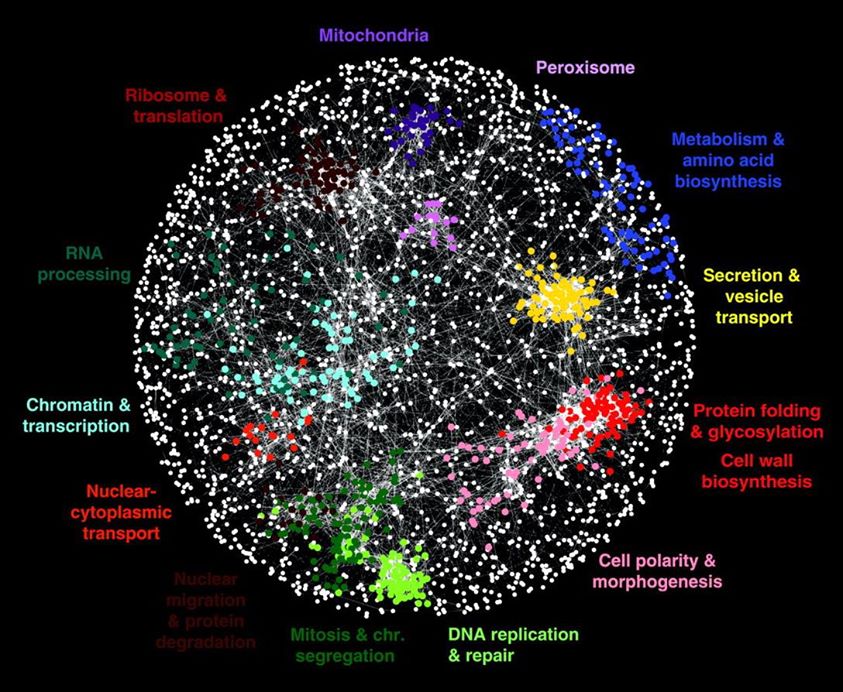
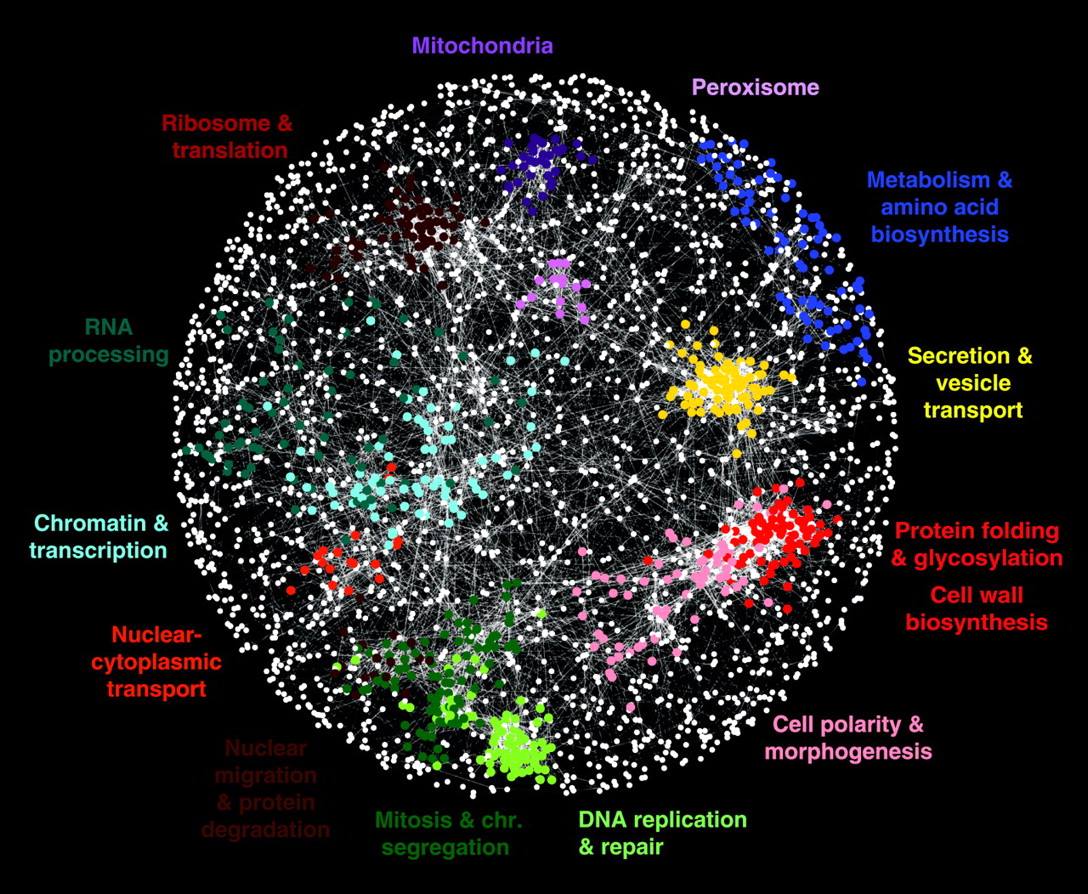
    photos_and_videos/TimelinePhotos_SxeO6JU-xg/41923629_10156642279727264_1875113349121835008_o_10156642279717264.jpg William L. BengeHuman cell.Sep 16, 2018, 2:10 PMWilliam L. BengeHas me wondering how a chip can call dna to migrate toward the flesh surrounding the chip for restoration.Sep 16, 2018, 2:14 PMWilliam L. BengeTech ad.Sep 16, 2018, 2:14 PMWilliam L. BengeClaimSep 16, 2018, 2:15 PM


    Source date (UTC): 2018-09-16 13:58:00 UTC

  • photos_and_videos/TimelinePhotos_43196237263/41923629_10156642279727264_18751133

    photos_and_videos/TimelinePhotos_43196237263/41923629_10156642279727264_1875113349121835008_o_10156642279717264.jpg William L. BengeHuman cell.Sep 16, 2018 2:10pmWilliam L. BengeHas me wondering how a chip can call dna to migrate toward the flesh surrounding the chip for restoration.Sep 16, 2018 2:14pmWilliam L. BengeTech ad.Sep 16, 2018 2:14pmWilliam L. BengeClaimSep 16, 2018 2:15pm


    Source date (UTC): 2018-09-16 13:58:00 UTC

  • WTC: Please Don’t Be Stupid in my Presence

    September 13th, 2018 7:13 PM WTC
    Please don’t dork on my wall. Not to be too nerdy, but WTC failed at weakest point: holding the floors to the center and perimeter. so it only had to heat the weakest point on one floor sufficiently to lose half its strength and the weight of the stack did the rest. Pancaking is a very common method of architectural failure and is the principle reason for collapse after exterior wall failure, and foundation failure. In other words, buildings tilt and fall, or collapse and pancake depending upon whether it is built as a honeycomb (apartments) or a stack (office building). There are MANY regulations in place during the construction of buildings precisely because pancaking is so dangerous during the process. Particularly with buildings that jack the floors into place. There have been calls in the past for prohibiting the practice. I don’t know how common it is today. But it appears that most floors are poured in place today. WTC was designed with less masonry, more exterior and core columns, with no midpoint columns, but long spans of floor braces covered with concrete. This meant that floor pressure bearing on the joint between column and floor was not distributed across as many columns by short runs but concentrated in core and edge by long runs. These points only had to soften enough to lose 50% of their carrying capacity. When that happened, the floor sank, exterior columns bowed, and the pressure of the floors above just used gravity and momentum to overload each set of floors below it. Thus pancaking. The MIT report is correct – I cannot find any fault with it. I can however attest to the … dunning kruger effect of everyone who disagrees with it. ======UPDATE=== The building was designed to be light. The columns were box-columns of decreasing thickness with height.
    The diagram attached helps understand that the building was constructed out of TUBES, like building something out of straws. This is why there are huge pieces of the exterior still standing, because unlike most buildings, the exterior was structural. The pictures of the wreckages show the columns as sheet steel. The attached photo shows the I-beam that connected the box columns and a box column it’s attached to. Heck, just looking at the floor plan shows the tubular structure of the building. ====== UPDATE ==== You don’t understand. I don’t make mistakes. It’s my job. From the Journal of Materials and Metallurgy
    Thomas W. Eagar, the Thomas Lord Professor of Materials Engineering and Engineering Systems
    MIT, 77 Massachusetts Avenue, Room 4-136, Cambridge, Massachusetts 02139-4301; Eagar was the author of the “steel didn’t melt” findings. The NIST Report is online, and makes the same argument. Heat, buckle, break, pressure, collapse. Eyewitnesses reported that one or more floors ‘in the nineties’ had collapsed. Eyewitnesses reported the buckling of the exterior (Structural) walls. We were all witness to the pancaking. Damage > Burn > Break > Buckle > Squish > Pancake. Buildings tilt from foundations and cause buckling, buckle from exterior damage and pull the structure over, pancake from weight above, and on occasion all three. But as in all things: —“the tendency of all solids when heated is increase in plasticity”– —“The tendency of a rock is to fall straight down”.— —“The tendency of the dim to overestimate their competency is infinite”— Please don’t be stupid in my presence. Policing the informational commons is a moral obligation of all men, and stomping on intellectual bunnies is tedious and not an honorable use of time.
  • Science vs Superstition. —“The non-Occidental world worshiped the moon while t

    Science vs Superstition.

    —“The non-Occidental world worshiped the moon while the Occidents walked on it.”— George Hobbs

    (via james santagata )


    Source date (UTC): 2018-09-12 06:45:28 UTC

    Original post: https://twitter.com/i/web/status/1039766928062070784

  • Science vs Superstition. —“The non-Occidental world worshiped the moon while t

    Science vs Superstition.

    —“The non-Occidental world worshiped the moon while the Occidents walked on it.”— George Hobbs

    (via james santagata )


    Source date (UTC): 2018-09-12 02:45:00 UTC