[M]ake women feel safe, and as the eastern europeans say ‘able to be weak’. Which they mean, able to love and feel and free of worry, and they will be their best. “Men work, women love, and this way we serve one another.” The problem is women’s competitive virtue signaling under consumer hyperconsumption is the equivalent of men who are addicted to watching sports but not doing them.
Category: Human Behavior and Cognitive Science
-
Truth? We Just Find Them Disgusting. So Just Say It.
—“The Leftist tendency is to conflate the Rightist Disgust response to various things as “phobias”. In other words, the Left confuses Disgust for Fear.”—
The right is just too well mannered to say: “Actually it’s because we find your/their ____________ behavior disgusting and revolting because it is a genetic defect, and harmful to the tribe.” I mean. Why can’t we just say that? “You know, We don’t like dogs dragging their anuses on the carpet, or ___________ doing ________. Genetic defects are disgusting to us. And you’re advocating for genetic defects that are disgusting. (We have a purity instinct. They don’t. Hence women’s fascination with the discussion of children’s bodily fluids and excrements.)
-
Truth? We Just Find Them Disgusting. So Just Say It.
—“The Leftist tendency is to conflate the Rightist Disgust response to various things as “phobias”. In other words, the Left confuses Disgust for Fear.”—
The right is just too well mannered to say: “Actually it’s because we find your/their ____________ behavior disgusting and revolting because it is a genetic defect, and harmful to the tribe.” I mean. Why can’t we just say that? “You know, We don’t like dogs dragging their anuses on the carpet, or ___________ doing ________. Genetic defects are disgusting to us. And you’re advocating for genetic defects that are disgusting. (We have a purity instinct. They don’t. Hence women’s fascination with the discussion of children’s bodily fluids and excrements.)
-
photos_and_videos/TimelinePhotos_SxeO6JU-xg/42158427_10156647277197264_159588587
photos_and_videos/TimelinePhotos_SxeO6JU-xg/42158427_10156647277197264_1595885877257568256_n_10156647277192264.jpg CLUSTERS OF SIMILAR PERSONALITY TRAITS PRODUCE FOUR OBVIOUS TYPES:
ASCENDENT FEMALE BIAS
Average: These people score high in neuroticism and extraversion, but score low in openness. It is the most typical category, with women being more likely than men to fit into it.
ASCENDENT MALE BIAS
Self-Centered: These people score very high in extraversion, but score low in openness, agreeableness, and conscientiousness. Most teenage boys would fall into this category, according to Revelle, before (hopefully) maturing out of it. The number of people who fall into this category decreases dramatically with age.
ESTABLISHED FEMALE BIAS
Role Models: These people score high in every trait except neuroticism, and the likelihood that someone fits into this category increases dramatically as they age. “These are people who are dependable and open to new ideas,” says Amaral. “These are good people to be in charge of things.” Women are more likely than men to be role models.
ESTABLISHED MALE BIAS
Reserved: This type of person is stable emotionally without being especially open or neurotic. They tend to score lower on extraversion but tend to be somewhat agreeable and conscientious.
ABSTRACT
—“Understanding human personality has been a focus for philosophers and scientists for millennia1. It is now widely accepted that there are about five major personality domains that describe the personality profile of an individual2,3. In contrast to personality traits, the existence of personality types remains extremely controversial4. Despite the various purported personality types described in the literature, small sample sizes and the lack of reproducibility across data sets and methods have led to inconclusive results about personality types5,6. Here we develop an alternative approach to the identification of personality types, which we apply to four large data sets comprising more than 1.5 million participants. We find robust evidence for at least four distinct personality types, extending and refining previously suggested typologies. We show that these types appear as a small subset of a much more numerous set of spurious solutions in typical clustering approaches, highlighting principal limitations in the blind application of unsupervised machine learning methods to the analysis of big data.”—
https://www.nature.com/articles/s41562-018-0419-zCLUSTERS OF SIMILAR PERSONALITY TRAITS PRODUCE FOUR OBVIOUS TYPES:
ASCENDENT FEMALE BIAS
Average: These people score high in neuroticism and extraversion, but score low in openness. It is the most typical category, with women being more likely than men to fit into it.
ASCENDENT MALE BIAS
Self-Centered: These people score very high in extraversion, but score low in openness, agreeableness, and conscientiousness. Most teenage boys would fall into this category, according to Revelle, before (hopefully) maturing out of it. The number of people who fall into this category decreases dramatically with age.
ESTABLISHED FEMALE BIAS
Role Models: These people score high in every trait except neuroticism, and the likelihood that someone fits into this category increases dramatically as they age. “These are people who are dependable and open to new ideas,” says Amaral. “These are good people to be in charge of things.” Women are more likely than men to be role models.
ESTABLISHED MALE BIAS
Reserved: This type of person is stable emotionally without being especially open or neurotic. They tend to score lower on extraversion but tend to be somewhat agreeable and conscientious.
ABSTRACT
—“Understanding human personality has been a focus for philosophers and scientists for millennia1. It is now widely accepted that there are about five major personality domains that describe the personality profile of an individual2,3. In contrast to personality traits, the existence of personality types remains extremely controversial4. Despite the various purported personality types described in the literature, small sample sizes and the lack of reproducibility across data sets and methods have led to inconclusive results about personality types5,6. Here we develop an alternative approach to the identification of personality types, which we apply to four large data sets comprising more than 1.5 million participants. We find robust evidence for at least four distinct personality types, extending and refining previously suggested typologies. We show that these types appear as a small subset of a much more numerous set of spurious solutions in typical clustering approaches, highlighting principal limitations in the blind application of unsupervised machine learning methods to the analysis of big data.”—
https://www.nature.com/articles/s41562-018-0419-z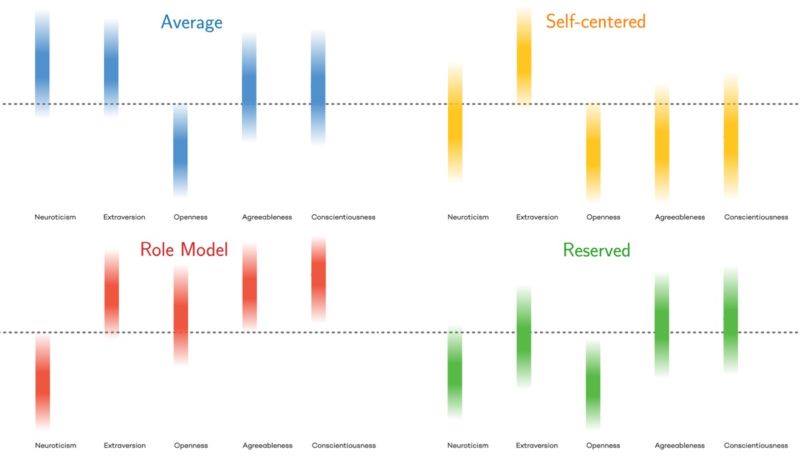
Source date (UTC): 2018-09-18 19:58:00 UTC
-
photos_and_videos/TimelinePhotos_SxeO6JU-xg/42158427_10156647277197264_159588587
photos_and_videos/TimelinePhotos_SxeO6JU-xg/42158427_10156647277197264_1595885877257568256_n_10156647277192264.jpg CLUSTERS OF SIMILAR PERSONALITY TRAITS PRODUCE FOUR OBVIOUS TYPES:
ASCENDENT FEMALE BIAS
Average: These people score high in neuroticism and extraversion, but score low in openness. It is the most typical category, with women being more likely than men to fit into it.
ASCENDENT MALE BIAS
Self-Centered: These people score very high in extraversion, but score low in openness, agreeableness, and conscientiousness. Most teenage boys would fall into this category, according to Revelle, before (hopefully) maturing out of it. The number of people who fall into this category decreases dramatically with age.
ESTABLISHED FEMALE BIAS
Role Models: These people score high in every trait except neuroticism, and the likelihood that someone fits into this category increases dramatically as they age. “These are people who are dependable and open to new ideas,” says Amaral. “These are good people to be in charge of things.” Women are more likely than men to be role models.
ESTABLISHED MALE BIAS
Reserved: This type of person is stable emotionally without being especially open or neurotic. They tend to score lower on extraversion but tend to be somewhat agreeable and conscientious.
ABSTRACT
—“Understanding human personality has been a focus for philosophers and scientists for millennia1. It is now widely accepted that there are about five major personality domains that describe the personality profile of an individual2,3. In contrast to personality traits, the existence of personality types remains extremely controversial4. Despite the various purported personality types described in the literature, small sample sizes and the lack of reproducibility across data sets and methods have led to inconclusive results about personality types5,6. Here we develop an alternative approach to the identification of personality types, which we apply to four large data sets comprising more than 1.5 million participants. We find robust evidence for at least four distinct personality types, extending and refining previously suggested typologies. We show that these types appear as a small subset of a much more numerous set of spurious solutions in typical clustering approaches, highlighting principal limitations in the blind application of unsupervised machine learning methods to the analysis of big data.”—
https://www.nature.com/articles/s41562-018-0419-zJoel HarveyI don’t fall into any of these.
I have 0 neuroticism, 0 conscientiousness and 0 agreeableness, but I’m in the 98th percentile for openness and extroversion.Sep 18, 2018, 9:51 PMCurt Doolittleit’s a description of four clusters of traits.
I was pointing out that those clusters are just male and female stages of life.
So that such clusters are rather obvious.Sep 19, 2018, 9:11 AMJoel HarveyYes I understood that, I was just making conversation.Sep 19, 2018, 9:22 AMCorbus AureliusUr like a baby?Sep 19, 2018, 1:16 PMJoel Harveyhow many babies do you know with 0 neuroticism?Sep 19, 2018, 1:32 PMCorbus AureliusJoel Harvey neuroticism can probably only be evidenced in individuals who have attained some concrete operations. But I’m just making convo😉Sep 19, 2018, 1:39 PMCLUSTERS OF SIMILAR PERSONALITY TRAITS PRODUCE FOUR OBVIOUS TYPES:
ASCENDENT FEMALE BIAS
Average: These people score high in neuroticism and extraversion, but score low in openness. It is the most typical category, with women being more likely than men to fit into it.
ASCENDENT MALE BIAS
Self-Centered: These people score very high in extraversion, but score low in openness, agreeableness, and conscientiousness. Most teenage boys would fall into this category, according to Revelle, before (hopefully) maturing out of it. The number of people who fall into this category decreases dramatically with age.
ESTABLISHED FEMALE BIAS
Role Models: These people score high in every trait except neuroticism, and the likelihood that someone fits into this category increases dramatically as they age. “These are people who are dependable and open to new ideas,” says Amaral. “These are good people to be in charge of things.” Women are more likely than men to be role models.
ESTABLISHED MALE BIAS
Reserved: This type of person is stable emotionally without being especially open or neurotic. They tend to score lower on extraversion but tend to be somewhat agreeable and conscientious.
ABSTRACT
—“Understanding human personality has been a focus for philosophers and scientists for millennia1. It is now widely accepted that there are about five major personality domains that describe the personality profile of an individual2,3. In contrast to personality traits, the existence of personality types remains extremely controversial4. Despite the various purported personality types described in the literature, small sample sizes and the lack of reproducibility across data sets and methods have led to inconclusive results about personality types5,6. Here we develop an alternative approach to the identification of personality types, which we apply to four large data sets comprising more than 1.5 million participants. We find robust evidence for at least four distinct personality types, extending and refining previously suggested typologies. We show that these types appear as a small subset of a much more numerous set of spurious solutions in typical clustering approaches, highlighting principal limitations in the blind application of unsupervised machine learning methods to the analysis of big data.”—
https://www.nature.com/articles/s41562-018-0419-z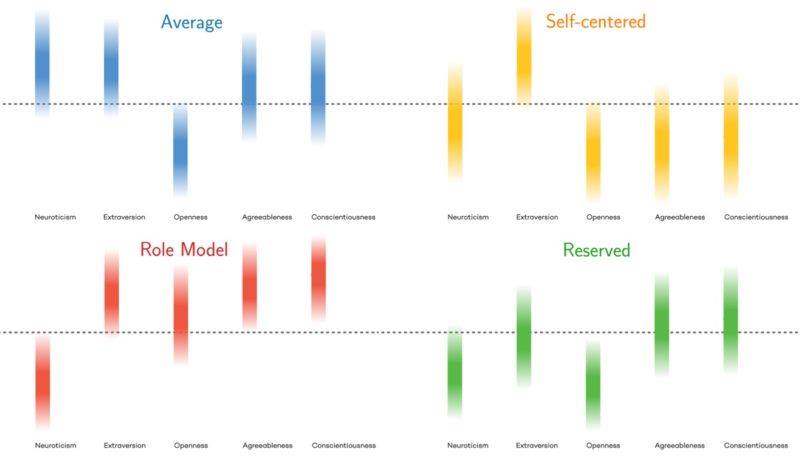
Source date (UTC): 2018-09-18 19:58:00 UTC
-
photos_and_videos/TimelinePhotos_43196237263/42158427_10156647277197264_15958858
photos_and_videos/TimelinePhotos_43196237263/42158427_10156647277197264_1595885877257568256_n_10156647277192264.jpg CLUSTERS OF SIMILAR PERSONALITY TRAITS PRODUCE FOUR OBVIOUS TYPES:
ASCENDENT FEMALE BIAS
Average: These people score high in neuroticism and extraversion, but score low in openness. It is the most typical category, with women being more likely than men to fit into it.
ASCENDENT MALE BIAS
Self-Centered: These people score very high in extraversion, but score low in openness, agreeableness, and conscientiousness. Most teenage boys would fall into this category, according to Revelle, before (hopefully) maturing out of it. The number of people who fall into this category decreases dramatically with age.
ESTABLISHED FEMALE BIAS
Role Models: These people score high in every trait except neuroticism, and the likelihood that someone fits into this category increases dramatically as they age. “These are people who are dependable and open to new ideas,” says Amaral. “These are good people to be in charge of things.” Women are more likely than men to be role models.
ESTABLISHED MALE BIAS
Reserved: This type of person is stable emotionally without being especially open or neurotic. They tend to score lower on extraversion but tend to be somewhat agreeable and conscientious.
ABSTRACT
—“Understanding human personality has been a focus for philosophers and scientists for millennia1. It is now widely accepted that there are about five major personality domains that describe the personality profile of an individual2,3. In contrast to personality traits, the existence of personality types remains extremely controversial4. Despite the various purported personality types described in the literature, small sample sizes and the lack of reproducibility across data sets and methods have led to inconclusive results about personality types5,6. Here we develop an alternative approach to the identification of personality types, which we apply to four large data sets comprising more than 1.5 million participants. We find robust evidence for at least four distinct personality types, extending and refining previously suggested typologies. We show that these types appear as a small subset of a much more numerous set of spurious solutions in typical clustering approaches, highlighting principal limitations in the blind application of unsupervised machine learning methods to the analysis of big data.”—
https://www.nature.com/articles/s41562-018-0419-zJoel HarveyI don’t fall into any of these.
I have 0 neuroticism, 0 conscientiousness and 0 agreeableness, but I’m in the 98th percentile for openness and extroversion.Sep 18, 2018 9:51pmCurt Doolittleit’s a description of four clusters of traits.
I was pointing out that those clusters are just male and female stages of life.
So that such clusters are rather obvious.Sep 19, 2018 9:11amJoel HarveyYes I understood that, I was just making conversation.Sep 19, 2018 9:22amCorbus AureliusUr like a baby?Sep 19, 2018 1:16pmJoel Harveyhow many babies do you know with 0 neuroticism?Sep 19, 2018 1:32pmCorbus Aurelius@[100023721587717:2048:Joel Harvey] neuroticism can probably only be evidenced in individuals who have attained some concrete operations. But I’m just making convo😉Sep 19, 2018 1:39pmCLUSTERS OF SIMILAR PERSONALITY TRAITS PRODUCE FOUR OBVIOUS TYPES:
ASCENDENT FEMALE BIAS
Average: These people score high in neuroticism and extraversion, but score low in openness. It is the most typical category, with women being more likely than men to fit into it.
ASCENDENT MALE BIAS
Self-Centered: These people score very high in extraversion, but score low in openness, agreeableness, and conscientiousness. Most teenage boys would fall into this category, according to Revelle, before (hopefully) maturing out of it. The number of people who fall into this category decreases dramatically with age.
ESTABLISHED FEMALE BIAS
Role Models: These people score high in every trait except neuroticism, and the likelihood that someone fits into this category increases dramatically as they age. “These are people who are dependable and open to new ideas,” says Amaral. “These are good people to be in charge of things.” Women are more likely than men to be role models.
ESTABLISHED MALE BIAS
Reserved: This type of person is stable emotionally without being especially open or neurotic. They tend to score lower on extraversion but tend to be somewhat agreeable and conscientious.
ABSTRACT
—“Understanding human personality has been a focus for philosophers and scientists for millennia1. It is now widely accepted that there are about five major personality domains that describe the personality profile of an individual2,3. In contrast to personality traits, the existence of personality types remains extremely controversial4. Despite the various purported personality types described in the literature, small sample sizes and the lack of reproducibility across data sets and methods have led to inconclusive results about personality types5,6. Here we develop an alternative approach to the identification of personality types, which we apply to four large data sets comprising more than 1.5 million participants. We find robust evidence for at least four distinct personality types, extending and refining previously suggested typologies. We show that these types appear as a small subset of a much more numerous set of spurious solutions in typical clustering approaches, highlighting principal limitations in the blind application of unsupervised machine learning methods to the analysis of big data.”—
https://www.nature.com/articles/s41562-018-0419-z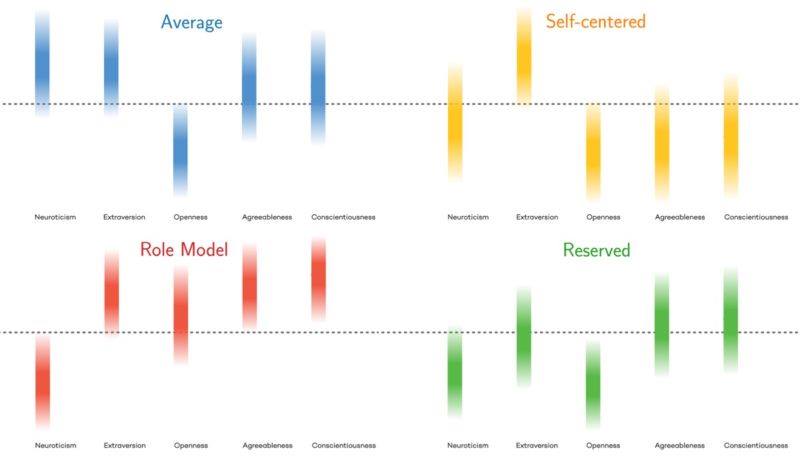
Source date (UTC): 2018-09-18 19:58:00 UTC
-
URBAN CENTERS ARE DYSGENIC Yep. Really. Look at the data. Cities are genetic dis
URBAN CENTERS ARE DYSGENIC
Yep. Really. Look at the data. Cities are genetic disaster areas.
Source date (UTC): 2018-09-18 16:23:00 UTC
Original post: https://twitter.com/i/web/status/1042086595761979392
-
Happily married masculine men and feminine women are not the problem. They embra
Happily married masculine men and feminine women are not the problem. They embrace the compromise of exchange. It’s the people who want outsized returns in the short term whether male or female that seek parasitism by circumvention of the compromise of exchange.
Source date (UTC): 2018-09-18 16:20:54 UTC
Original post: https://twitter.com/i/web/status/1042086070610022401
-
“The greatest predictors of political belief are high openness/low conscientious
—“The greatest predictors of political belief are high openness/low conscientiousness (for liberals) and low openness/high conscientiousness (for conservatives.) That’s why the vast majority of artists, musicians, performers and people in creative domains in general are liberal. “— Joel Harvey
Source date (UTC): 2018-09-18 12:47:00 UTC
-
Happily married masculine men and feminine women are not the problem. They embra
Happily married masculine men and feminine women are not the problem. They embrace the compromise of exchange. It’s the people who want outsized returns in the short term whether male or female that seek parasitism by circumvention of the compromise of exchange.
Source date (UTC): 2018-09-18 12:20:00 UTC