Category: Commentary, Critique, and Response

  • Yessir. Happy to be there. I have these interviews back to back all day today fo

    Yessir. Happy to be there. I have these interviews back to back all day today for some reason… lol. See you tonight. -cheers


    Source date (UTC): 2018-05-25 14:20:12 UTC

    Original post: https://twitter.com/i/web/status/1000018702560047104

  • Yessir. Happy to be there. I have these interviews back to back all day today fo

    Yessir. Happy to be there. I have these interviews back to back all day today for some reason… lol. See you tonight. -cheers


    Source date (UTC): 2018-05-25 10:20:00 UTC

  • Untitled

    https://www.quora.com/How-are-society-culture-and-politics-interrelated-with-each-other/answer/Curt-Doolittle?share=8ef31fdc&srid=u4Qv

    Source date (UTC): 2018-05-25 10:05:00 UTC

  • Pilpul Everywhere

    by Bob Moran The intellectual dishonesty is amazing. 1. “Why did you ban me?” 2. Gives Compliments to open a dialogue 3. Tries to insert himself/herself as relevant or an equal with empty credentials 4. Acts surprised (avoid guilt; “What I did was normal”) 5. Shames (your followers can’t handle being *moderately* uncomfortable) 6. Mis-categorizes (lying or being wrong as “dissenting views and novel ideas”)
    May 24, 2018 8:20am
  • Pilpul Everywhere

    by Bob Moran The intellectual dishonesty is amazing. 1. “Why did you ban me?” 2. Gives Compliments to open a dialogue 3. Tries to insert himself/herself as relevant or an equal with empty credentials 4. Acts surprised (avoid guilt; “What I did was normal”) 5. Shames (your followers can’t handle being *moderately* uncomfortable) 6. Mis-categorizes (lying or being wrong as “dissenting views and novel ideas”)
    May 24, 2018 8:20am
  • I dont understand?

    I dont understand?


    Source date (UTC): 2018-05-24 21:48:20 UTC

    Original post: https://twitter.com/i/web/status/999769088078569472

    Reply addressees: @VishnuZehn

    Replying to: https://twitter.com/i/web/status/999733726308421633


    IN REPLY TO:

    Original post on X

    Original tweet unavailable — we could not load the text of the post this reply is addressing on X. That usually means the tweet was deleted, the account is protected, or X does not expose it to the account used for archiving. The Original post link below may still open if you view it in X while signed in.

    Original post: https://twitter.com/i/web/status/999733726308421633

  • An Informational Approach to Stoicism.

    by Moritz Bierling from December 2, 2016 (repost) An Informational Approach to Stoicism Stoicism is essentially a software fix to a hardware fact: humans tend to emphasize or experience negative thoughts more strongly by roughly a factor of 2. Daniel Kahneman’s research into what is now codified under the term “behavioral economics” has shown this to be the case. When confronted with loss, whether potential or actual, we react much more strongly than when faced with a gain of equal size. Of course this makes perfect sense from an evolutionary, game-theoretical perspective. In order to be able to lose something, an organism must first have gained it through expenditure of a non-trivial amount of energy. If it were to give up easily on its “property”, conveniently defined here as “that which an organism defends”, it may very well not get another chance to acquire new food or mating partners, and consequently exit the gene pool and thus “the game” entirely. And since we humans are still here, and since we exist as biological creatures the ancestors of which have lived through extremely adverse environmental conditions, we too defend that which we have an interest in maintaining. Stoicism then, properly understood as the practice of mental discipline in the face of adversity, asks one to front-load the negative experiences that will inevitably intrude upon our day, and consequently allows one to prime one’s mental machinery such that tones down its reaction to actual adversity by taking advantage of the involuntary mechanism of comparing present experience to recent memory of similar nature. This practice, if coupled with training automatic responses to imagined adversity, allows one to benefit from the compressed version of a considered response, which tends to incorporate greater amounts of information about consequences and causal relations, and even superior processing of these factors into the outcome it generates. In a very real sense the Stoics were the first scientists. They systematically used greater amounts of information that they “updated” and refactored constantly through daily practice of mental discipline, and applied it to the problems they faced. They committed themselves and their fortune to the empirical study of human nature through constant self examination and continuous experimentation. They were the original “Agile developers” of their own internal software. Of course they didn’t do all of this “just for the fun of it”. Students of the discipline, and especially professors of philosophy – or so-called “intellectual-yet-idiots” – often forget that the whole point of this practice is to actually gain the upside. What use is all of this discipline if the reward is zero? As Taleb points out, Seneca, at the time the wealthiest man in the world, “wanted to keep the upside and not be hurt by the downside.” By choosing to experience extreme loss on a daily basis like the good Stoic he was, he avoided more often than not the actual losses heaped on him by fate. And when he did experience a loss he got right back to work to “transform fear into prudence, pain into transformation, mistakes into initiation, and desire into undertaking.” Because what else is there to do? Notice here that the practicing Stoic, unlike the idle student of Stoicism, assimilates information from the environment in order to use it. He recognizes the nascent value in adopting this way of life and intends, nay! decides to capture it. In effect he, or rather the series of men he will become by constantly killing off a series of lesser versions of himself that attempt to protect unproductive attachments, evolves on the psycho-spiritual rather than genetic level. He uses a never-ending series of ever greater attachments to motivate his psychological and neuromuscular machinery into action that will yield superior strength and optionality, which in turn generates greater vision and broader fields of possible and profitable paths of action. He self-creates. Through the acquisition of greater amounts of information and their integration into his operational machinery (quasi permanent structures on the habitual, neuronal, neuromuscular, physical levels) he gains the ability to put greater amounts of resources (stored in various forms of capital: informational, relationships, tools, etc) to the extant (or “greatest-utility-yielding”) path of action, thereby strengthening his dominion over more parts of nature, including himself. One may even be tempted to say that the most informationally complete or integrated structure, on whatever level, will tend to influence everything around it in outward circles on all levels: sub- and superstrata.
    May 24, 2018 4:48pm
  • An Informational Approach to Stoicism.

    by Moritz Bierling from December 2, 2016 (repost) An Informational Approach to Stoicism Stoicism is essentially a software fix to a hardware fact: humans tend to emphasize or experience negative thoughts more strongly by roughly a factor of 2. Daniel Kahneman’s research into what is now codified under the term “behavioral economics” has shown this to be the case. When confronted with loss, whether potential or actual, we react much more strongly than when faced with a gain of equal size. Of course this makes perfect sense from an evolutionary, game-theoretical perspective. In order to be able to lose something, an organism must first have gained it through expenditure of a non-trivial amount of energy. If it were to give up easily on its “property”, conveniently defined here as “that which an organism defends”, it may very well not get another chance to acquire new food or mating partners, and consequently exit the gene pool and thus “the game” entirely. And since we humans are still here, and since we exist as biological creatures the ancestors of which have lived through extremely adverse environmental conditions, we too defend that which we have an interest in maintaining. Stoicism then, properly understood as the practice of mental discipline in the face of adversity, asks one to front-load the negative experiences that will inevitably intrude upon our day, and consequently allows one to prime one’s mental machinery such that tones down its reaction to actual adversity by taking advantage of the involuntary mechanism of comparing present experience to recent memory of similar nature. This practice, if coupled with training automatic responses to imagined adversity, allows one to benefit from the compressed version of a considered response, which tends to incorporate greater amounts of information about consequences and causal relations, and even superior processing of these factors into the outcome it generates. In a very real sense the Stoics were the first scientists. They systematically used greater amounts of information that they “updated” and refactored constantly through daily practice of mental discipline, and applied it to the problems they faced. They committed themselves and their fortune to the empirical study of human nature through constant self examination and continuous experimentation. They were the original “Agile developers” of their own internal software. Of course they didn’t do all of this “just for the fun of it”. Students of the discipline, and especially professors of philosophy – or so-called “intellectual-yet-idiots” – often forget that the whole point of this practice is to actually gain the upside. What use is all of this discipline if the reward is zero? As Taleb points out, Seneca, at the time the wealthiest man in the world, “wanted to keep the upside and not be hurt by the downside.” By choosing to experience extreme loss on a daily basis like the good Stoic he was, he avoided more often than not the actual losses heaped on him by fate. And when he did experience a loss he got right back to work to “transform fear into prudence, pain into transformation, mistakes into initiation, and desire into undertaking.” Because what else is there to do? Notice here that the practicing Stoic, unlike the idle student of Stoicism, assimilates information from the environment in order to use it. He recognizes the nascent value in adopting this way of life and intends, nay! decides to capture it. In effect he, or rather the series of men he will become by constantly killing off a series of lesser versions of himself that attempt to protect unproductive attachments, evolves on the psycho-spiritual rather than genetic level. He uses a never-ending series of ever greater attachments to motivate his psychological and neuromuscular machinery into action that will yield superior strength and optionality, which in turn generates greater vision and broader fields of possible and profitable paths of action. He self-creates. Through the acquisition of greater amounts of information and their integration into his operational machinery (quasi permanent structures on the habitual, neuronal, neuromuscular, physical levels) he gains the ability to put greater amounts of resources (stored in various forms of capital: informational, relationships, tools, etc) to the extant (or “greatest-utility-yielding”) path of action, thereby strengthening his dominion over more parts of nature, including himself. One may even be tempted to say that the most informationally complete or integrated structure, on whatever level, will tend to influence everything around it in outward circles on all levels: sub- and superstrata.
    May 24, 2018 4:48pm
  • photos_and_videos/TimelinePhotos_43196237263/33489296_10156377793937264_36071029

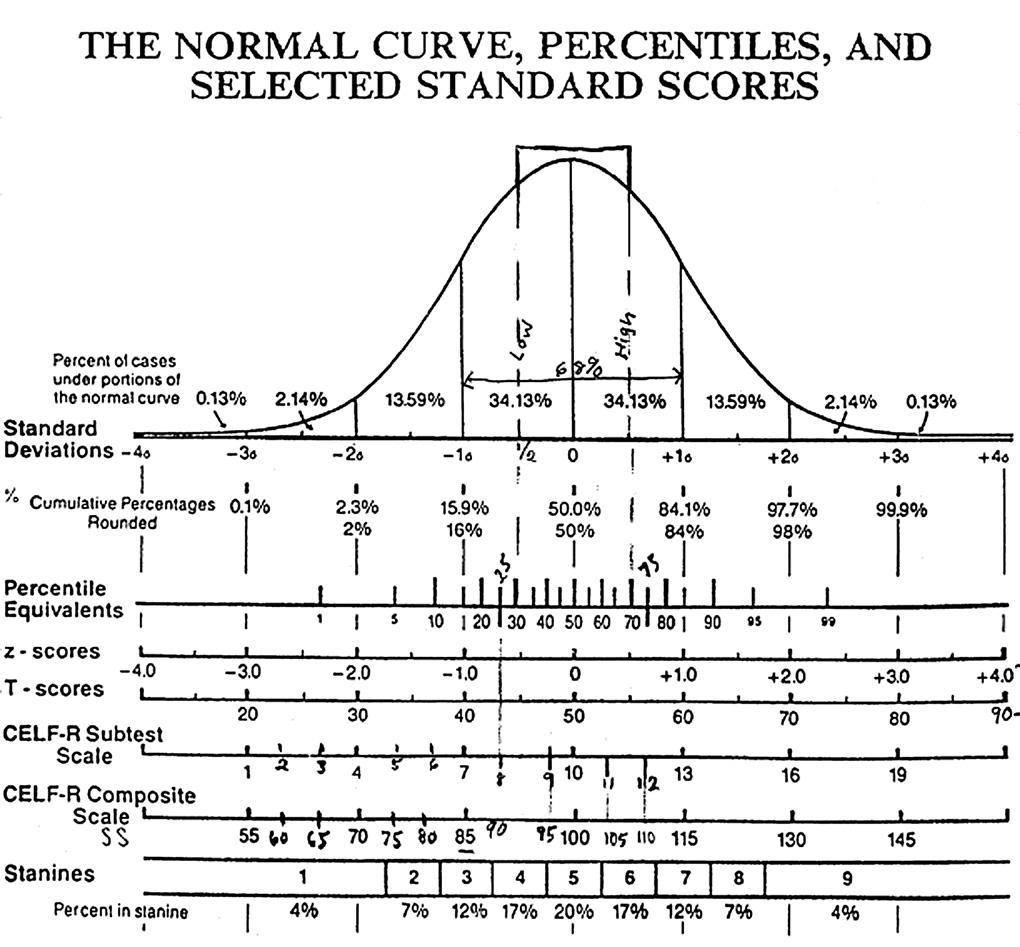
    photos_and_videos/TimelinePhotos_43196237263/33489296_10156377793937264_3607102990483193856_o_10156377793932264.jpg Nick HeywoodThanks for that.

    Having left school at 14?

    I miss a lot of the technical explanations & applicationsMay 24, 2018 10:39pmDavin EastleyI don’t know any of the stuff below T-scores. Any idea on that?May 25, 2018 12:37am

    Source date (UTC): 2018-05-24 19:58:00 UTC

  • Is it legal? (not really). Does it seem like everyone has access to one? (yes –

    Is it legal? (not really). Does it seem like everyone has access to one? (yes – makarov’s are ubiquitous).


    Source date (UTC): 2018-05-24 14:02:27 UTC

    Original post: https://twitter.com/i/web/status/999651845739044865

    Reply addressees: @Mrthundaro

    Replying to: https://twitter.com/i/web/status/999650471894757376


    IN REPLY TO:

    Original post on X

    Original tweet unavailable — we could not load the text of the post this reply is addressing on X. That usually means the tweet was deleted, the account is protected, or X does not expose it to the account used for archiving. The Original post link below may still open if you view it in X while signed in.

    Original post: https://twitter.com/i/web/status/999650471894757376