Category: Civilization, History, and Anthropology

  • In response to this question, I wrote this one: Meaning that almost all evolutio

    In response to this question, I wrote this one:
    https://t.co/laRDTNQGjp
    Meaning that almost all evolution of institutions is additive, and that I’m pretty certain we are entering the post-industrial age, where the age is defined by the social organization of the means of production.

    So, yes. I am not sure it’s a form of consensus but that might be another frame for it. I explain religon as developing a system of weights and measures that advance a group evolutionary strategy, by training the intuition rather than reason.


    Source date (UTC): 2024-03-11 18:15:13 UTC

    Original post: https://twitter.com/i/web/status/1767252957840433153

  • LIKELY DIRECTION OF HUMAN DEVELOPMENT From hunting and gathering to subsistence

    LIKELY DIRECTION OF HUMAN DEVELOPMENT
    From hunting and gathering to subsistence (consumption).
    From subsistence to economy (production).
    From economy to commons (capitalization).
    The general direction is the motion of people from zero to majority participation in the production of commons (capital)
    I’m against giving money for nothing. It will only make matters worse. But directing people to the production of commons will reverse the alienation of industrialization and consumerism.


    Source date (UTC): 2024-03-11 17:42:59 UTC

    Original post: https://twitter.com/i/web/status/1767244846840848384

  • No. Perhaps your definition of west african is different from the norm. North af

    No. Perhaps your definition of west african is different from the norm. North af

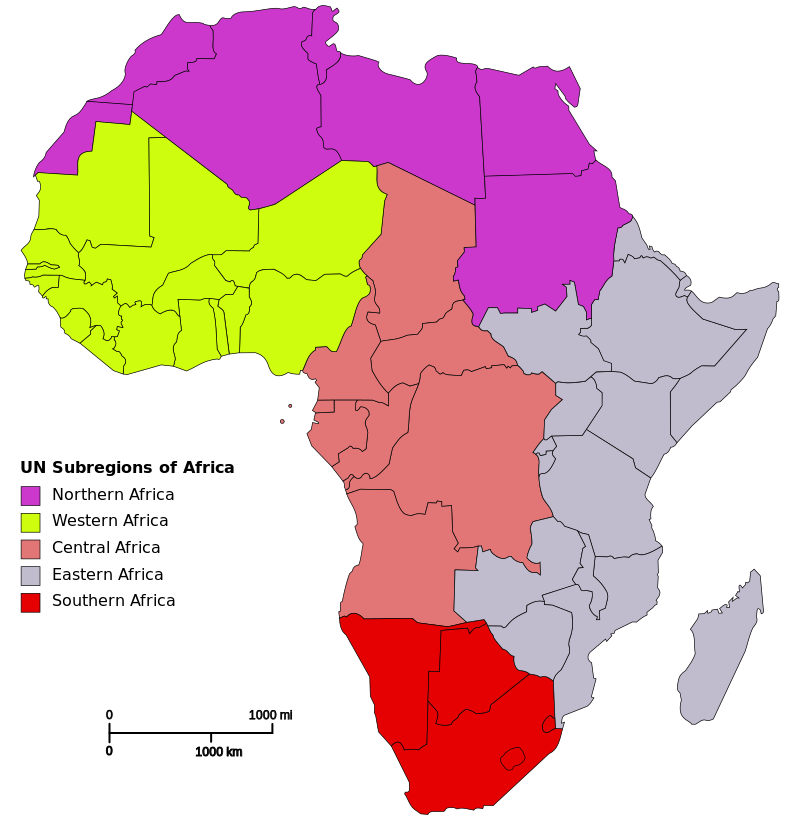
    No. Perhaps your definition of west african is different from the norm. North africans are iranic-semitic origin and west subsaharan africans are of african origin. https://t.co/6te3nrVVmc


    Source date (UTC): 2024-03-11 16:56:32 UTC

    Original post: https://twitter.com/i/web/status/1767233157097509348

    Reply addressees: @madrr342785 @99MO23

    Replying to: https://twitter.com/i/web/status/1767198098143515116

  • RT @toodarkmark: The economist will easily forfeit your nation, culture, and civ

    RT @toodarkmark: The economist will easily forfeit your nation, culture, and civilization for jobs.

    When property is only defined in physi…


    Source date (UTC): 2024-03-09 20:03:47 UTC

    Original post: https://twitter.com/i/web/status/1766555504132665592

  • (Technically speaking, French civilization is Latin and Feminine. German is Germ

    (Technically speaking, French civilization is Latin and Feminine. German is Germanic and masculine, and Russian is an admixture of Slavic and Mongol masculine brutality. The native religion of the french region of europe was a venus cult.)


    Source date (UTC): 2024-03-08 14:30:08 UTC

    Original post: https://twitter.com/i/web/status/1766109148327055412

    Reply addressees: @AndThird70475 @matteo_pilgrim

    Replying to: https://twitter.com/i/web/status/1766104681196183704

  • The Industrial Revolution and the events leading up to it contributed to the dec

    The Industrial Revolution and the events leading up to it contributed to the decline of empires and the rise of nation-states in several ways:

    Shifting economic power: The Industrial Revolution led to the rise of a new class of wealthy industrialists and a growing middle class, which challenged the traditional power structures of aristocracy and monarchy that were the backbone of empires.
    Nationalism: The Age of Enlightenment and the French Revolution popularized ideas of individual rights, self-determination, and national identity. This fueled the desire for people to govern themselves as nation-states rather than be ruled by distant empires.
    Technological advancements: Improvements in communication and transportation (e.g., printing press, railways, telegraphs) made it easier for people to spread ideas, organize, and challenge central authority, thus weakening the control of empires.
    Changing warfare: Industrialization led to advancements in weaponry and changes in military tactics, which made it more difficult for empires to maintain control over vast territories and diverse populations.
    Economic strain: The costs of maintaining empire became increasingly burdensome, especially as colonies began to demand more autonomy and resist imperial control. The Industrial Revolution also disrupted traditional economic systems, further weakening the foundations of empires.
    Self-determination movements: As education spread and people became more politically aware, there were growing calls for self-governance and independence from imperial rule. This led to a wave of revolutions and independence movements in the 19th and 20th centuries.
    Competition among industrial powers: As nations like Britain, France, Germany, and the United States industrialized, they began to compete for global influence and resources, leading to a scramble for colonies and a shift towards nation-state rivalries.

    Over time, these factors combined to weaken the traditional imperial model and give rise to the modern nation-state system, although the process was gradual and varied across different regions of the world.

    Reply addressees: @OrganBuxtehude


    Source date (UTC): 2024-03-08 01:23:25 UTC

    Original post: https://twitter.com/i/web/status/1765911163924000768

    Replying to: https://twitter.com/i/web/status/1765909847889813916

  • “Q: What’s the difference between a civilization state and an empire?”– The con

    –“Q: What’s the difference between a civilization state and an empire?”–

    The concepts of a “civilization state” and an “empire” represent two different ways of organizing and understanding political, cultural, and social entities on a large scale. While there is some overlap in how these terms can be applied historically and contemporarily, they are distinct in several key aspects:

    Civilization State
    Definition: A civilization state is a concept where the state’s identity, legitimacy, and organizational principles are deeply rooted in the long-standing cultural, historical, and civilizational identity of a specific group or society. It emphasizes a shared civilization as the core of its national identity, rather than just political boundaries or governance structures.

    Cultural Unity: In a civilization state, there is a strong emphasis on cultural unity and continuity. The state sees itself as the custodian of a particular civilization’s heritage, values, and traditions, which transcend current political and geographical boundaries.

    Homogeneity: Although a civilization state is characterized by a dominant culture or civilization, it can be inclusive of various ethnic, linguistic, and cultural groups within its territory, provided these groups identify with or assimilate into the primary civilization narrative.

    Modern Examples: China is often cited as a modern example of a civilization state, with its leaders emphasizing the country’s 5,000-year history and civilization as central to its national identity and statecraft.

    Empire
    Definition: An empire is a political entity characterized by the extensive territorial or colonial dominion controlled by a single sovereign authority, usually an emperor or a monarch. Empires are defined by their expansionist tendencies, conquests, and the subjugation of diverse peoples.

    Political and Military Power: Empires are typically established and maintained through military conquest and the exercise of political power over conquered territories. The central authority imposes control, often integrating or assimilating various peoples into the empire’s administrative and governance structures.

    Heterogeneity Through Conquest: While empires can encompass a wide range of cultures, languages, and ethnic groups, this diversity is usually a result of conquest and annexation rather than a shared civilizational identity. The cohesion of an empire is often maintained through force, administration, and the central authority’s power, rather than a voluntary shared identity.

    Historical Examples: Historical examples of empires include the Roman Empire, the British Empire, and the Ottoman Empire. These entities expanded through military conquest and exerted control over diverse peoples and territories.

    Key Differences
    Basis of Unity: Civilization states are united by a shared civilizational identity, whereas empires are often held together by political and military power.
    Expansion: Empires typically expand through conquest, while civilization states emphasize cultural and historical continuity within their existing boundaries.
    Identity: In a civilization state, the identity is rooted in historical and cultural commonality. In contrast, an empire’s identity may be more closely tied to the power and reach of its ruling authority.

    Reply addressees: @OrganBuxtehude

    Source date (UTC): 2024-03-08 01:19:25 UTC

    Original post: https://twitter.com/i/web/status/1765910159417544704

    Replying to: https://twitter.com/i/web/status/1765909085172404722

  • My understanding of history is that the industrial revolution made impossible th

    My understanding of history is that the industrial revolution made impossible the preservation of empires – and that nation states and federations of those states would become standards of modernity.
    Russia was not able to create a civilization state out of multiple ethnicities… https://twitter.com/Prune602/status/1765889177537700030


    Source date (UTC): 2024-03-08 00:09:19 UTC

    Original post: https://twitter.com/i/web/status/1765892518627975479

  • Untitled

    https://www.bing.com/search?q=ashkenazi+genetic+origins+in+italy

    Source date (UTC): 2024-03-07 16:07:07 UTC

    Original post: https://twitter.com/i/web/status/1765771166679977996

    Reply addressees: @CarmelloM @PepeOfJustice

    Replying to: https://twitter.com/i/web/status/1765758008020070844

  • (This chart is particularly helpful in identifying ethnic groups with little to

    (This chart is particularly helpful in identifying ethnic groups with little to no political spin.)


    Source date (UTC): 2024-03-07 01:19:06 UTC

    Original post: https://twitter.com/i/web/status/1765547692082540955

    Reply addressees: @AsianJesusAmigo @niggler_di40081 @FrankWhiteman5 @VirtusEtVeritas @HotepSquidward @BeefBroth6 @NoticerJohn2024 @Wecanfixitup @OldButNotThatO1 @Portsanddox2023 @ConciergeMthly @coltello2024 @Implicitmuch @AndrewPodm38954 @MightyHeid1 @dcxlr8 @AmalekMax @crustyshaklefrd @Jonsis_bow @grandpa_gunner @FedjeSvein @GillesPoul25556 @thommy770ab @AnaCasas712000 @pete_skillman @jovanjovan6 @DameBrooklyn @DaveRace59 @ALLTRADELTD @RDM34801299 @MarkSmi31659381 @GroypTradition @moriarty_watson @KLCobbJr1 @DaughteryTeddy @GohanSbstnBach @vanishtech01 @KeiferStreet @DoulosDS @SaintEllee @exanxc

    Replying to: https://twitter.com/i/web/status/1765546902177910912