Category: Civilization, History, and Anthropology

  • A long time ago, an interviewer asked me what I thought was the greatest achieve

    A long time ago, an interviewer asked me what I thought was the greatest achievement of American civilization. I said, “the answer will surprise you, but it’s A United States Marine.” I still hold that opinion. It’s an achievement only equalled by the Spartans.


    Source date (UTC): 2018-05-15 10:34:09 UTC

    Original post: https://twitter.com/i/web/status/996337935623643136

  • A long time ago, an interviewer asked me what I thought was the greatest achieve

    A long time ago, an interviewer asked me what I thought was the greatest achievement of American civilization. I said, “the answer will surprise you, but it’s A United States Marine.” I still hold that opinion. It’s an achievement only equalled by the Spartans.


    Source date (UTC): 2018-05-15 06:33:00 UTC

  • CHILDHOOD’S END —”…childhood was believing Vlad the Impaler was the villain

    CHILDHOOD’S END

    —”…childhood was believing Vlad the Impaler was the villain – adulthood is understanding he was the hero….”— Thorsten Stuart Norgate


    Source date (UTC): 2018-05-14 14:54:26 UTC

    Original post: https://twitter.com/i/web/status/996041050543226880

  • “WHAT WOULD VLAD DO?” —“It’s time to stop asking what Jesus would do and start

    “WHAT WOULD VLAD DO?”

    —“It’s time to stop asking what Jesus would do and start asking what Vlad would do.”— James Santagata


    Source date (UTC): 2018-05-14 10:57:00 UTC

  • CHILDHOOD’S END —”…childhood was believing Vlad the Impaler was the villain

    CHILDHOOD’S END

    —”…childhood was believing Vlad the Impaler was the villain – adulthood is understanding he was the hero….”— Thorsten Stuart Norgate


    Source date (UTC): 2018-05-14 10:54:00 UTC

  • photos_and_videos/TimelinePhotos_43196237263/32414065_10156355297817264_57652079

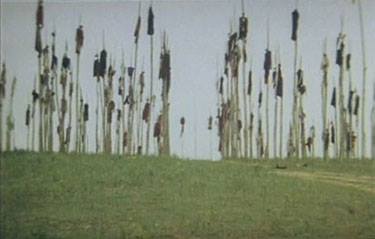
    photos_and_videos/TimelinePhotos_43196237263/32414065_10156355297817264_5765207937987379200_n_10156355297812264.jpg “THE FOREST OF THE IMPALED”

    Vlad (Dracula) Tepes

    One of our greatest heroes.Thorsten Stuart NorgateI remember reading a few years ago…”childhood was believing Vlad the Impaler was the villain – adulthood is understanding he was the hero.”May 14, 2018 10:50amCurt Doolittlequoted sharedMay 14, 2018 10:57amJames BrittinghamKnow the name of the movie this is from?May 14, 2018 11:14amTomás Rodriguez VillegasThis is how I honor Uncle Vlad, with ink on my leg.May 14, 2018 11:57amCharlton WardI think you can still tour his castle

    Tell me the OP pick isn’t optics for days, and they worked damn well at fending off Muslim invadersMay 14, 2018 12:06pmXavier WallaceVlad TepesMay 14, 2018 12:51pmSkye Stewarthttps://youtu.be/VqbagKqtbAQMay 14, 2018 7:01pmKhairunnisa SimmondsLong, but an interesting listen:

    https://www.youtube.com/watch?v=r6jGU_ZATWYMay 15, 2018 4:48amKhairunnisa Simmonds(Oops, hadn’t seen Skye’s link)May 15, 2018 4:49amKhairunnisa Simmonds(though mine is different)May 15, 2018 4:50amFortis VeroMay 15, 2018 5:00pm”THE FOREST OF THE IMPALED”

    Vlad (Dracula) Tepes

    One of our greatest heroes.


    Source date (UTC): 2018-05-14 10:39:00 UTC

  • OUR ANCIENT ORIGINS – PART ONE – THE BEGINNING – THE STRONG AND THE WEAK – By Ka

    OUR ANCIENT ORIGINS – PART ONE – THE BEGINNING – THE STRONG AND THE WEAK – By Karen Armstrong, from The Great Transformation.

    (read this) (required reading) (cites below)

    The first people to attempt an Axial Age spirituality were pastoralists living on the steppes of southern Russia, who called themselves the Aryans. The Aryans were not a distinct ethnic group, so this was not a racial term but an assertion of pride and meant something like “noble” 0r “honorable.” The Aryans were a loose—knit network of tribes who shared a common culture. Because they spoke a language that would form the basis of several Asiatic and European tongues, they are also called Indo-Europeans. They had lived on the Caucasian steppes since about 4500, but by the middle of the third millennium some tribes began to roam farther and farther afield, until they reached what is now Greece, Italy, Scandinavia, and Germany. At the same time, those Aryans who had remained behind on the steppes gradually drifted apart and became two separate peoples, speaking different forms of the original Indo-European. One used the Avestan dialect, the other an early form of Sanskrit. They were able to maintain contact, however, because at this stage their languages were still very similar, and until about 1500 they continued to live peacefully together, sharing the same cultural and religious traditions. It was a quiet, sedentary existence. The Aryans could not travel far, because the horse had not yet been domesticated, so their horizons were bounded by the steppes. They farmed their land, herded their sheep, goats, and pigs, and valued stability and continuity. They were not warlike people, since, apart from a few skirmishes With one another or with rival groups, they had no enemies and no ambition to conquer new territory. Their religion was simple and peaceful. Like other ancient peoples, the Aryans experienced an invisible force within themselves and in everything that they saw, heard, and touched. Storms, winds, trees, and rivers were not impersonal, mindless phenomena. The Aryans felt an affinity with them, and revered them as divine. Humans, deities, animals, plants, and the forces of nature were all manifestations of the same divine “spirit,” which the Avestans called mainyu and the Sanskrit-speakers manya. It animated, sustained, and bound them all together.

    Over time the Aryans developed a more formal pantheon. At a very early stage, they had worshiped a Sky God called “Dyaus Pitr, creator of the world” But like other High Gods, Dyaus was so remote that he was eventually replaced by more accessible gods, who were wholly identified with natural and cosmic forces. Varuna preserved the order of the universe; Mithra was the god of storm, thunder, and life-giving rain; Mazda, lord of justice and wisdom, was linked with the sun and stars; and Indra, a divine warrior, had fought a three—headed dragon called Vritra and brought order out of chaos. Fire, which was crucial to civilized society, was also a god, and the Aryans called him Agni. Agni was not simply the divine patron of fire; he was the fire that burned in every single hearth. Even the hallucinogenic plant that inspired the Aryan poets was a god, called Haoma in Avestan and Soma in Sanskrit: he was a divine priest who protected the people from famine and looked after their cattle.

    The Avestan Aryans called their gods daevas (“the shining ones”) and amesha (“the immortals”). In Sanskrit these terms became devas and amrita. None of these divine beings, however, were what we usually call “gods” today. They were not Omnipotent and had no ultimate control over the cosmos. Like human beings and all the natural forces, they had to

    submit to the sacred order that held the universe together. Thanks to this order, the seasons succeeded one another in due course, the rain fell at the right times, and the crops grew each year in the appointed month. The Avestan Aryans called this order asha, while the Sanskrit—speakers called it rita. It made life possible, keeping everything in its proper place and defining what was true and correct.

    Human society also depended upon this sacred order. People had to make firm, binding agreements about grazing rights, the herding of cattle, marriage, and the exchange of goods. Translated into social terms, asha/rira meant loyalty, truth, and respect, the ideals embodied by Varuna, the guardian of order, and Mithra, his assistant. These gods supervised all covenant agreements that were sealed by a solemn oath. The Aryans took the spoken word very seriously. Like all other phenomena, speech was a god, a deva. Aryan religion was not very visual. As far as we know, the Aryans did not make effigies of their gods. Instead, they found that the act of listening brought them close to the sacred. Quite apart from its meaning, the very sound of a chant was holy; even a single syllable could encapsulate the divine. Similarly, a vow, once uttered, was eternally binding, and a lie was absolutely evil because it perverted the holy power inherent in the spoken word. The Aryans would never lose this passion for absolute

    truthfulness.

    Every day, the Aryans offered sacrifices to their gods to replenish the energies they expended in maintaining world order. Some of these rites were very simple. The sacrificer would throw a handful of grain, curds, or fuel into the fire to nourish Agni, or pound the stalks of soma, offer the

    pulp to the water goddesses, and make a sacred drink. The Aryans also sacrificed cattle. They did not grow enough crops for their needs, so killing was a tragic necessity, but the Aryans ate only meat that had been ritually and humanely slaughtered. When a beast was ceremonially given to the

    gods, its spirit was not extinguished but returned to Geush Urvan (“Soul of the Bull”), the archetypical domestic animal. The Aryans felt very close to their cattle. It was sinful to eat the flesh of a beast that had not been consecrated in this way, because profane slaughter destroyed it forever, and thus violated the sacred life that made all creatures kin. Again, the Aryans would never entirely lose this profound respect for the “spirit” that they shared with others, and this would become a crucial principle of their Axial Age.

    To take the life of any being was a fearful act, not to be undertaken lightly, and the sacrificial ritual compelled the Aryans to confront this harsh law of existence. The sacrifice became and would remain the organizing symbol of their culture, by which they explained the world and their society. The Aryans believed that the universe itself had originated in

    a sacrificial offering. In the beginning, it was said, the gods, working in obedience to the divine order, had brought forth the world in seven stages. First they created the Sky, which was made of stone like a huge round shell; then the Earth, which rested like a flat dish upon the Water

    that had collected in the base of the shell. In the center of the Earth, the gods placed three living creatures: a Plant, a Bull, and a Man. Finally they produced Agni, the Fire. But at first everything was static and lifeless. It was not until the gods performed a triple sacrifice—crushing the Plant, and killing the Bull and the Man—that the world became animated. The

    sun began to move across the sky, seasonal change was established, and the three sacrificial victims brought forth their own kind. Flowers, crops, and trees sprouted from the pulped Plant; animals sprang from the corpse of the Bull; and the carcass of the first Man gave birth to the human race. The

    Aryans would always see sacrifice as creative. By reflecting on this ritual, they realized that their lives depended upon the death of other creatures.

    The three archetypal creatures had laid down their lives so that others might live. There could be no progress, materially or spiritually, without self-sacrifice. This too would become one of the principles of the Axial Age.

    The Aryans had no elaborate shrines and temples. Sacrifice was offered in the open air on a small, level piece of land, marked off from the rest of the settlement by a furrow. The seven original creations were all symbolically represented in this arena: Earth in the soil,Water in the vessels, Fire in

    the hearth; the stone Sky was present in the flint knife, the Plant in the crushed soma stalks, the Bull in the victim, and the first Man in the priest. And the gods, it was thought, were also present. The “hotr” priest, expert in the liturgical chant, would sing a hymn to summon devas to the feast. When they had entered the sacred arena, the gods sat down on the freshly mown grass strewn around the altar to listen to these hymns of praise. Since the sound of these inspired syllables was itself a god, as the song filled the air and entered their consciousness, the congregation felt surrounded by and infused with divinity. Finally the primordial sacrifice was

    repeated. The cattle were slain, the soma pressed, and the priest laid the choicest portions of the victims onto the fire, so that Agni could convey them to the land of the gods. The ceremony ended with a holy communion, as priest and participants shared a festal meal with the deities, eating

    the consecrated meat and drinking the intoxicating soma, which seemed to lift them to another dimension of being.

    The sacrifice brought practical benefits too. It was commissioned by a member of the community, who hoped that those devas who had responded to his invitation and attended the sacrifice would help him in the future. Like any act of hospitality, the ritual placed an obligation on the divinities to respond in kind, and the hotr often reminded them to protect the patron’s family, crops, and herd. The sacrifice also enhanced the patron’s standing in the community. Like the gods, his human guests were now in his debt, and by providing the cattle for the feast and giving the officiating priests a handsome gift, he had demonstrated that he was a man of substance. The benefits of religion were purely material and this—worldly. People wanted the gods to provide them with cattle, wealth, and security. At first the Aryans had entertained no hope of an afterlife, but by the end of the second millennium, some were beginning to believe that

    wealthy people who had commissioned a lot of sacrifices would be able to join the gods in paradise after their death.

    This slow, uneventful life came to an end when the Aryans discovered modern technology. In about 1500, they had begun to trade with the more advanced societies south of the Caucasus in Mesopotamia and Armenia. They learned about bronze weaponry from the Armenians and also encountered new methods of transport: first they acquired wooden

    carts pulled by oxen, and then the war chariot. Once they had learned how to tame the wild horses of the steppes and harness them to their chariots, they experienced the joys of mobility. Life would never be the same again. The Aryans had become warriors. They could now travel long distances at high speed. With their superior weapons, they could conduct

    lightning raids on neighboring settlements and steal cattle and crops. This was far more thrilling and lucrative than stock breeding. Some of the younger men served as mercenaries in the armies of the southern kingdoms, and became expert in chariot warfare.When they returned to the steppes, they put their new skills to use and started to rustle their neigh-

    bors’ cattle. They killed, plundered, and pillaged, terrorizing the more conservative Aryans, who were bewildered, frightened, and entirely disoriented, feeling that their lives had been turned upside down.

    Violence escalated on the steppes as never before. Even the more traditional tribes, who simply wanted to be left alone, had to learn the new military techniques in order to defend themselves. A heroic age had begun. Might was right; Chieftains sought gain and glory; and bards celebrated aggression, reckless courage, and military prowess. The old Aryan religion had preached reciprocity, self—sacrifice, and kindness to animals. This was no longer appealing to the cattle rustlers, whose hero was the dynamic Indra, the dragon slayer, who rode in a chariot upon the clouds of heaven.10 Indra was now the divine model to whom the raiders aspired.

    “Heroes with noble horses, fain for battle, selected warriors call on me in combat,” he cried. “I, bountiful Indra, excite the conflict, I stir the dust, Lord of surpassing vigour!”” When they fought, killed, and robbed, the Aryan cowboys felt themselves one with Indra and the aggressive devas who had established the world order by force of arms.

    But the more traditional, Avestan-speaking Aryans were appalled by Indra’s naked aggression, and began to have doubts about the daevas. Were they all violent and immoral? Events on earth always reflected cosmic events in heaven, so, they reasoned, these terrifying raids must have a divine prototype. The cattle rustlers, who fought under the banner of

    Indra, must be his earthly counterparts. But who were the daevas attacking in heaven? The most important gods—such as Varuna, Mazda, and Mithra, the guardians of order—were given the honorific title “Lord” (ahura). Perhaps the peaceful ahuras, who stood for justice, truth, and respect for life and property, were themselves under attack by Indra and the more aggressive daevas? This, at any rate, was the View of a visionary priest, who in about 1200 claimed that Ahura Mazda had commissioned him to restore order to the steppes.12 His name was Zoroaster.

    When he received his divine vocation, the new prophet was about thirty years old and strongly rooted in the Aryan faith. He had probably studied for the priesthood since he was seven years old, and was so steeped in tradition that he could improvise sacred chants to the gods during the sacrifice. But Zoroaster was deeply disturbed by the cattle raids, and after

    completing his education, he had spent some time in consultation with other priests, and had meditated on the rituals to find a solution to the problem. One morning, while he was celebrating the spring festival, Zoroaster had risen at dawn and walked down to the river to collect water for the daily sacrifice. Wading in, he immersed himself in the pure element, and when he emerged, saw a shining being standing on the riverbank, who told Zoroaster that his name was Vohu Manah (“Good Purpose”). Once he had been assured of Zoroaster’s own good intentions, he led him into the presence of the greatest of the ahuras: Mazda, lord of wisdom and justice, who was surrounded by his retinue of seven radiant

    gods. He told Zoroaster to mobilize his people in a holy war against terror and violence. ‘3 The story is bright with the promise of a new beginning. A fresh era had dawned: everybody had to make a decision, gods and humans alike.Were they on the side of order or evil?

    Zoroaster’s vision convinced him that Lord Mazda was not simply one of the great ahuras, but that he was the Supreme God. For Zoroaster and his followers, Mazda was no longer immanent in the natural world, but had become transcendent, different in kind from any other divinity.I4 This was not quite monotheism, the belief in a single, unique deity. The seven

    luminous beings in Mazda’s retinue—the Holy Immortals—were also divine: each expressed one of Mazda’s attributes and was linked, in the traditional way, with one of the seven original creations. There was, however, a monotheistic tendency in Zoroaster’s vision. Lord Mazda had created

    the Holy Immortals; they were “of one mind, one voice, one act” with him.“ Mazda was not the only deity, but he was the first to exist. Zoroaster had probably reached this position by meditating on the creation story, which claimed that in the beginning there had been one plant, one animal, and one human being. It was only logical to assume that originally

    there had been one god.16

    But Zoroaster was not interested in theological speculation for its own sake. He was wholly preoccupied by the violence that had destroyed the peaceful world of the Steppes, and was desperately seeking for a way to bring it to an end. The Gathas, the seventeen inspired hymns attributed to Zoroaster, are pervaded by a distraught vulnerability, impotence, and fear. “I know why I am powerless, Mazda,” cried the prophet, “I possess few cattle and few men.” His community was terrorized by raiders “yoked with evil acts to destroy life.” Cruel warriors, fighting under the orders of the evil Indra, had swept down on the peace—loving, law—abiding communities. They had vandalized and looted one settlement after another, killed the villagers, and carried off their bulls and cows.17 The raiders believed that they were heroes, fighting alongside Indra, but the Gathas show us how their victims saw the heroic age. Even the cow complained to Lord Mazda:“For whom did you shape me? Who fashioned me? Fury and raid-

    ing, cruelty and might hold me captive.”When Lord Mazda replied that Zoroaster, the only one of the Aryans who listened to his teachings, would be her protector, the cow was not impressed.What use was Zoroaster? She wanted a more effective helper. The Gathas cried aloud for justice.Where

    were the Holy Immortals, the guardians of asha? When would Lord Mazda bring relief ?‘8

    The suffering and helplessness of his people had shocked Zoroaster into a torn, conflicted vision. The world seemed polarized, split into two irreconcilable camps. Because Indra and the cattle raiders had nothing in common with Lord Mazda, they must have given their allegiance to a different ahura. If there was a single divine source for everything that was benign and good, Zoroaster concluded that there must also be a Wicked deity who had inspired the cruelty of the raiders. This Hostile Spirit (Angra Mainyu), he believed, was equal in power to Lord Mazda, but was his opposite. In the beginning, there had been “two primal Spirits, twins destined to be in conflict” with each other. Each had made a choice. The Hostile Spirit had thrown in his lot with druj, the lie, and was the epitome of evil. He was the eternal enemy of asha, of everything that was right and true. But Lord Mazda had opted for goodness and had created the Holy Immortals and human beings as his allies. Now every single man, woman, and child had to make the same choice between asha and almj.19

    For generations, the Aryans had worshiped Indra and the other daevas, but now Zoroaster concluded that the daevas must have decided to fight alongside the Hostile Spirit.20 The cattle raiders were their earthly counterparts. The unprecedented violence in the steppes had caused Zoroaster

    to divide the ancient Aryan pantheon into two warring groups. Good men and women must no longer offer sacrifice to Indra and the daevas; they must not invite them into the sacred precinct. Instead, they must commit themselves entirely to Lord Mazda, his Holy Immortals, and the other ahuras, who alone could bring peace, justice, and security. The daevas and the cattle raiders, their evil henchmen, must all be defeated and destroyed.

    The whole of life had now become a battlefield in which everybody had a role. Even women and servants could make a valuable contribution. The old purity laws, which had regulated the conduct of the ritual, were now given a new significance. Lord Mazda had created a completely clean and perfect world for his followers, but the Hostile Spirit had invaded the earth and filled it with sin, violence, falsehood, dust, dirt, disease, death, and decay. Good men and women must, therefore, keep their immediate environment free from dirt and pollution. By separating the pure from the impure, good from evil, they would liberate the world for Lord Mazda. They must pray five times a day. Winter was the season when the daevas were in the ascendant, so during this time all virtuous people must

    counter their influence by meditating on the menace of druj. They must rise up during the night, when wicked spirits prowled the earth, and throw incense into the fire to strengthen Agni in the war against evil.23

    But no battle could last forever. In the old, peaceful world, life had seemed cyclical: the seasons had followed one another, day succeeded night, and harvest followed the planting. But Zoroaster could no longer believe in these natural rhythms. The world was rushing forward toward a cataclysm. He and his followers were living in the “bounded time” of raging cosmic conflict, but soon they would witness the final triumph of

    good and the annihilation of the forces of darkness. After a terrible battle, Lord Mazda and the Immortals would descend to the world of men and women and offer sacrifice. There would be a great judgment. The wicked would be wiped off the face of the earth, and a blazing river would flow into hell and incinerate the Hostile Spirit. Then the cosmos would be

    restored to its original perfection. Mountains and valleys would be leveled into a great plain, where gods and humans could live side by side, worshiping Lord Mazda forever. There would be no more death. Human beings would be like deities, free from sickness, old age, and mortality.24

    We are now familiar with this kind of apocalyptic vision, but before Zoroaster there had been nothing like it in the ancient world. It sprang from his outrage at the suffering of his people and his yearning for justice. He wanted the wicked to be punished for the pain they had inflicted on good, innocent people. But as time passed, he began to realize that he

    would not be alive to see the Last Days. Another would come after him, a superhuman being, “who is better than a good man.””5 The Gathas call him the Saoshyant (“One Who Will Bring Benefit”). He, not Zoroaster, would lead Lord Mazda’s troops into the final battle.

    When—centuries later—the Axial Age began, philosophers, prophets, and mystics all tried to counter the cruelty and aggression of their time by promoting a spirituality based on nonviolence. But Zoroaster’s traumatized vision, with its imagery of burning, terror, and extermination, was vengeful. His career reminds us that political turbulence, atrocity, and suffering do not infallibly produce an Axial-style faith, but can inspire a militant piety that polarizes complex reality into oversimplified categories of good and evil. Zoroaster’s vision was deeply agonistic.We shall see that the agon (“contest”) was a common feature of ancient religion. In making a cosmic agon between good and evil central to his message, Zoroaster belonged to the old spiritual world. He had projected the violence of his time onto the divine and made it absolute.

    But in his passionately ethical vision, Zoroaster did look forward to the Axial Age. He tried to introduce some morality into the new warrior ethos. True heroes did not terrorize their fellow creatures but tried to counter aggression. The holy warrior was dedicated to peace; those who opted to fight for Lord Mazda were patient, disciplined, courageous, and swift to defend all good creatures from the assaults of the wicked.26 Ashavans, the champions of order (asha), must imitate the Holy Immortals in their care for the environment. “Good Purpose,” for instance, who had appeared to Zoroaster on the riverbank, was the guardian of the cow, and ashavans must follow his example, not that of the raiders, who drove the cattle from their pastures, harnessed them to carts, killed, and ate them without the proper ritual.” “Good Dominion,” the personification of divine justice, was the protector of the stone Sky, so ashavans must use their stone weapons only to defend the poor and the weak.’8 When Zoroastrians protected vulnerable people, looked after their cattle tenderly, and purified their natural environment, they became one with the Immortals and joined their struggle against the Hostile Spirit.

    Even though his vision was grounded in ancient Aryan tradition, Zoroaster’s message inspired great hostility. People found it too demanding; some were shocked by his preaching to women and peasants, and by his belief that everybody—not just the elite—could reach paradise. Many would have been troubled by his rejection of the daevas: Might not Indra take revenge?29 After years of preaching to his own tribe, Zoroaster gained only one convert, so he left his village and found a patron in Vishtaspa, the chief of another tribe, who established the Zoroastrian faith in his territory. Zoroaster lived in Vishtaspa’s court for many years, fighting a heroic

    battle against evil to the bitter, violent end. According to one tradition he was killed by rival priests who were enraged by his rejection of the old religion.We know nothing about the history of Zoroastrianism after his death. By the end of the second millennium the Avestan Aryans had migrated south and settled in eastern Iran, where Zoroastrianism became the national faith. It has remained a predominantly Iranian religion.

    (Karen Armstrong, The Great Transformation (Axial Age), Chapter 1.)

    CITATIONS

    I. Karl jaspers, The Origin and Goal of

    History, trans. Michael Bullock

    (London, 1953).pp. 1-70.

    2. Mircea Eliade, Myths, Dreams and

    Mysteries:’I’he Encounter Between

    Contemporary Faiths and/lrchaie

    Realities, trans. Philip Maire: (London,

    1960). pp. 172-78;Wilhclm Schmidt,

    The Origin of the Idea of God (New

    York, 1912).

    3. Walter Burkert, Homo Nemns:’lhe

    Anthropology of Ancient Greek Satrifia’al

    Ritual and Myth, trans. Peter Bing

    (Berkeley, Los Angeles, and London.

    198 3), pp. 16-22; Joseph Campbell

    with Bill Moyers. The Power of Myth

    (New York, 1988). pp. 72-74.

    4. Eliade, Myths, Dreams and Mysteries,

    pp. 80-81; Mircca Eliade. The Myth of

    the Eternal Return, or, Cosmos and

    History, trans.Willard R. Trask

    (Princeton, 1959), pp. 17—20.

    5. Eliade, Myth of the Eternal Return, pp.

    1-34.

    6. Huston Smith, The World’s Religions:

    Our Great Wisdom Traditions (San

    Francisco, 1991), p. 2 3 5.

    7- Eliadc, .Myth of the Eternal Return, pp.

    34-35.

    3- jaspers, Origin and Goal of History, p. 40.

    1. THE AXIAL PEOPLES

    1. Mary Boyce, Zoroastrians:’l’heir

    Religious Beliefs and Practices, 2nd ed.

    (London and New York), p. 2; Peter

    Clark, Zoroastrians:An Introduction to

    an Ancient Faith (Brighton and Port—

    land, Ore., 1998), p. 18.

    2. Mircea Eliade, Patterns of Comparative

    Religion, trans. Rosemary Sheed

    (London, 1958). pp. 66—68.

    3. Boyce. Zoroastrians, pp. 9-11.

    4. lbid., p. 8.

    5. Yasht 48:5.

    6. Boyce, Zoroastriaus, pp. 11-12.

    7. Thomas]. Hopkins, The Hindu

    Religious Tradition (Belmont. Calif .,

    1971). p. 14.

    8. Gavin Flood, An Introduction to

    Hinduism (Cambridge and New York,

    1996). P. 44;]ohn Keay, ludia:A

    History (London, 2000), p. 32.

    9. Boyce. Zoroastrians, pp. 12- 15.

    to. Eliade, Patterns of Comparative Religion,

    pp. 188—89; Norman Cohn. Cosmos,

    Chaos and the World to Come:The

    Ancient Roots Qprocalyptir Faith (New

    Haven and London, 1993), pp. 94-95:

    Boyce, Zoroastrians, pp. xiv—xv, 19.

    11. Rig Veda 4.42.5, in Ralph T. H.

    Griffith, trans. The Rig Veda (New

    York, 1992).

    12. Cohn, Cosmos, Chaos and the World to

    Come, p. 77; Boyce, Zoroastrians, p.

    xiii; Clark, Zoroastrions, p. 19.

    13. Yasna 43.

    14. Clark, Zoroastrians. pp. 4-6.

    15. Yasna 19:16-18. Quotations from the

    Zoroastrian scriptures are taken from

    Mary Boyce. ed. and trans., Téxtual

    Sources for the Study of Zoroastrianism

    (Chicago, 1984).

    16. Boyce, Zoroastrians, pp. 20-23; Cohn.

    Cosmos, Chaos and the Wbrld to Come,

    p. 81.

    17. Yasna 46:2, 11; 50:1.

    18. Yasna 29:1 -10.

    19. Yasna 3o.

    20. Yasna 30:6.

    21. Yasna 46:4.

    22.]an1sl1eed K. Choksy. Purity and

    Pollution in Zoroastrianism:Triumph over

    Evil (Austin, 1989), pp. 1- 5.

    23. Boyce, Zoroastrians, p. 32.

    24. Yasna 44:15; 51:9.

    25. Yasna 43:3.

    26. Yasna 29, 33.

    27. Yasna 33.

    28. Boyce. Zoroastrians, pp. 23-24.

    29. lbid.. p. 30; Colm. Cosmos, Chaos and

    the world to Come, p. 78.

    3o. Edwin Bryant, The Quest jbr the

    Origins qfl’i’dit Culture:’lhe Indo-Aryan

    Debate (Oxford and New York. 2001);

    S. C. Kak,“On the Chronology of

    Ancient India.” Indian journal of

    History and Seienee 22, n0. 3 (1987);

    Colin Renfrew, Archaeology and

    Linguqoe: The Puzzle oflndo-European

    Origins (London. 1987).

    31. Kcay. India, pp. 5- 18; Hopkins, Hindu

    Religious ‘Iiadition, pp. 3- 10; Flood,

    lntrodurtion to Hinduism, pp. 24- 3o.

    32. Shatapatha Brahmana (58) 6.8.1.1. in

    j. C. Hecswrman, The Broken ”vivid of

    Sacrifice:An Essay inAncient Indian

    Ritual (Chicago and London, 1993),

    p. 123.

    33. Mircea Eliade. A History ofReliqious

    Ideas, trans.Willard R.Trask, 3 vols.

    (Chicago and London, 1978, 1982,

    1985), 1:200-201;_]. C. Hecsterman,

    “Ritual, Revelation and the Axial

    Age.” in S. N. Eisenstadt, ed., The

    Origins and Diversity of Axial Age

    Civilizations (Albany, 1986), p. 404.

    34. Louis Renou, Religions ofAnrient India

    (London, 1953), p. 20.

    35. j. C. Hcesterman, The Inner Cory‘lirt of

    ‘Iiadition: Essays in Indian Ritual,

    Kingship and Society (Chicago and

    London, 1985), pp. 85-87.


    Source date (UTC): 2018-05-11 13:25:00 UTC
  • Our Ancient Origins

    OUR ANCIENT ORIGINS – PART ONE – THE BEGINNING – THE STRONG AND THE WEAK – By Karen Armstrong, from The Great Transformation. (read this) (required reading) (cites below) The first people to attempt an Axial Age spirituality were pastoralists living on the steppes of southern Russia, who called themselves the Aryans. The Aryans were not a distinct ethnic group, so this was not a racial term but an assertion of pride and meant something like “noble” 0r “honorable.” The Aryans were a loose—knit network of tribes who shared a common culture. Because they spoke a language that would form the basis of several Asiatic and European tongues, they are also called Indo-Europeans. They had lived on the Caucasian steppes since about 4500, but by the middle of the third millennium some tribes began to roam farther and farther afield, until they reached what is now Greece, Italy, Scandinavia, and Germany. At the same time, those Aryans who had remained behind on the steppes gradually drifted apart and became two separate peoples, speaking different forms of the original Indo-European. One used the Avestan dialect, the other an early form of Sanskrit. They were able to maintain contact, however, because at this stage their languages were still very similar, and until about 1500 they continued to live peacefully together, sharing the same cultural and religious traditions. It was a quiet, sedentary existence. The Aryans could not travel far, because the horse had not yet been domesticated, so their horizons were bounded by the steppes. They farmed their land, herded their sheep, goats, and pigs, and valued stability and continuity. They were not warlike people, since, apart from a few skirmishes With one another or with rival groups, they had no enemies and no ambition to conquer new territory. Their religion was simple and peaceful. Like other ancient peoples, the Aryans experienced an invisible force within themselves and in everything that they saw, heard, and touched. Storms, winds, trees, and rivers were not impersonal, mindless phenomena. The Aryans felt an affinity with them, and revered them as divine. Humans, deities, animals, plants, and the forces of nature were all manifestations of the same divine “spirit,” which the Avestans called mainyu and the Sanskrit-speakers manya. It animated, sustained, and bound them all together. Over time the Aryans developed a more formal pantheon. At a very early stage, they had worshiped a Sky God called “Dyaus Pitr, creator of the world” But like other High Gods, Dyaus was so remote that he was eventually replaced by more accessible gods, who were wholly identified with natural and cosmic forces. Varuna preserved the order of the universe; Mithra was the god of storm, thunder, and life-giving rain; Mazda, lord of justice and wisdom, was linked with the sun and stars; and Indra, a divine warrior, had fought a three—headed dragon called Vritra and brought order out of chaos. Fire, which was crucial to civilized society, was also a god, and the Aryans called him Agni. Agni was not simply the divine patron of fire; he was the fire that burned in every single hearth. Even the hallucinogenic plant that inspired the Aryan poets was a god, called Haoma in Avestan and Soma in Sanskrit: he was a divine priest who protected the people from famine and looked after their cattle. The Avestan Aryans called their gods daevas (“the shining ones”) and amesha (“the immortals”). In Sanskrit these terms became devas and amrita. None of these divine beings, however, were what we usually call “gods” today. They were not Omnipotent and had no ultimate control over the cosmos. Like human beings and all the natural forces, they had to submit to the sacred order that held the universe together. Thanks to this order, the seasons succeeded one another in due course, the rain fell at the right times, and the crops grew each year in the appointed month. The Avestan Aryans called this order asha, while the Sanskrit—speakers called it rita. It made life possible, keeping everything in its proper place and defining what was true and correct. Human society also depended upon this sacred order. People had to make firm, binding agreements about grazing rights, the herding of cattle, marriage, and the exchange of goods. Translated into social terms, asha/rira meant loyalty, truth, and respect, the ideals embodied by Varuna, the guardian of order, and Mithra, his assistant. These gods supervised all covenant agreements that were sealed by a solemn oath. The Aryans took the spoken word very seriously. Like all other phenomena, speech was a god, a deva. Aryan religion was not very visual. As far as we know, the Aryans did not make effigies of their gods. Instead, they found that the act of listening brought them close to the sacred. Quite apart from its meaning, the very sound of a chant was holy; even a single syllable could encapsulate the divine. Similarly, a vow, once uttered, was eternally binding, and a lie was absolutely evil because it perverted the holy power inherent in the spoken word. The Aryans would never lose this passion for absolute truthfulness. Every day, the Aryans offered sacrifices to their gods to replenish the energies they expended in maintaining world order. Some of these rites were very simple. The sacrificer would throw a handful of grain, curds, or fuel into the fire to nourish Agni, or pound the stalks of soma, offer the pulp to the water goddesses, and make a sacred drink. The Aryans also sacrificed cattle. They did not grow enough crops for their needs, so killing was a tragic necessity, but the Aryans ate only meat that had been ritually and humanely slaughtered. When a beast was ceremonially given to the gods, its spirit was not extinguished but returned to Geush Urvan (“Soul of the Bull”), the archetypical domestic animal. The Aryans felt very close to their cattle. It was sinful to eat the flesh of a beast that had not been consecrated in this way, because profane slaughter destroyed it forever, and thus violated the sacred life that made all creatures kin. Again, the Aryans would never entirely lose this profound respect for the “spirit” that they shared with others, and this would become a crucial principle of their Axial Age. To take the life of any being was a fearful act, not to be undertaken lightly, and the sacrificial ritual compelled the Aryans to confront this harsh law of existence. The sacrifice became and would remain the organizing symbol of their culture, by which they explained the world and their society. The Aryans believed that the universe itself had originated in a sacrificial offering. In the beginning, it was said, the gods, working in obedience to the divine order, had brought forth the world in seven stages. First they created the Sky, which was made of stone like a huge round shell; then the Earth, which rested like a flat dish upon the Water that had collected in the base of the shell. In the center of the Earth, the gods placed three living creatures: a Plant, a Bull, and a Man. Finally they produced Agni, the Fire. But at first everything was static and lifeless. It was not until the gods performed a triple sacrifice—crushing the Plant, and killing the Bull and the Man—that the world became animated. The sun began to move across the sky, seasonal change was established, and the three sacrificial victims brought forth their own kind. Flowers, crops, and trees sprouted from the pulped Plant; animals sprang from the corpse of the Bull; and the carcass of the first Man gave birth to the human race. The Aryans would always see sacrifice as creative. By reflecting on this ritual, they realized that their lives depended upon the death of other creatures. The three archetypal creatures had laid down their lives so that others might live. There could be no progress, materially or spiritually, without self-sacrifice. This too would become one of the principles of the Axial Age. The Aryans had no elaborate shrines and temples. Sacrifice was offered in the open air on a small, level piece of land, marked off from the rest of the settlement by a furrow. The seven original creations were all symbolically represented in this arena: Earth in the soil,Water in the vessels, Fire in the hearth; the stone Sky was present in the flint knife, the Plant in the crushed soma stalks, the Bull in the victim, and the first Man in the priest. And the gods, it was thought, were also present. The “hotr” priest, expert in the liturgical chant, would sing a hymn to summon devas to the feast. When they had entered the sacred arena, the gods sat down on the freshly mown grass strewn around the altar to listen to these hymns of praise. Since the sound of these inspired syllables was itself a god, as the song filled the air and entered their consciousness, the congregation felt surrounded by and infused with divinity. Finally the primordial sacrifice was repeated. The cattle were slain, the soma pressed, and the priest laid the choicest portions of the victims onto the fire, so that Agni could convey them to the land of the gods. The ceremony ended with a holy communion, as priest and participants shared a festal meal with the deities, eating the consecrated meat and drinking the intoxicating soma, which seemed to lift them to another dimension of being. The sacrifice brought practical benefits too. It was commissioned by a member of the community, who hoped that those devas who had responded to his invitation and attended the sacrifice would help him in the future. Like any act of hospitality, the ritual placed an obligation on the divinities to respond in kind, and the hotr often reminded them to protect the patron’s family, crops, and herd. The sacrifice also enhanced the patron’s standing in the community. Like the gods, his human guests were now in his debt, and by providing the cattle for the feast and giving the officiating priests a handsome gift, he had demonstrated that he was a man of substance. The benefits of religion were purely material and this—worldly. People wanted the gods to provide them with cattle, wealth, and security. At first the Aryans had entertained no hope of an afterlife, but by the end of the second millennium, some were beginning to believe that wealthy people who had commissioned a lot of sacrifices would be able to join the gods in paradise after their death. This slow, uneventful life came to an end when the Aryans discovered modern technology. In about 1500, they had begun to trade with the more advanced societies south of the Caucasus in Mesopotamia and Armenia. They learned about bronze weaponry from the Armenians and also encountered new methods of transport: first they acquired wooden carts pulled by oxen, and then the war chariot. Once they had learned how to tame the wild horses of the steppes and harness them to their chariots, they experienced the joys of mobility. Life would never be the same again. The Aryans had become warriors. They could now travel long distances at high speed. With their superior weapons, they could conduct lightning raids on neighboring settlements and steal cattle and crops. This was far more thrilling and lucrative than stock breeding. Some of the younger men served as mercenaries in the armies of the southern kingdoms, and became expert in chariot warfare.When they returned to the steppes, they put their new skills to use and started to rustle their neigh- bors’ cattle. They killed, plundered, and pillaged, terrorizing the more conservative Aryans, who were bewildered, frightened, and entirely disoriented, feeling that their lives had been turned upside down. Violence escalated on the steppes as never before. Even the more traditional tribes, who simply wanted to be left alone, had to learn the new military techniques in order to defend themselves. A heroic age had begun. Might was right; Chieftains sought gain and glory; and bards celebrated aggression, reckless courage, and military prowess. The old Aryan religion had preached reciprocity, self—sacrifice, and kindness to animals. This was no longer appealing to the cattle rustlers, whose hero was the dynamic Indra, the dragon slayer, who rode in a chariot upon the clouds of heaven.10 Indra was now the divine model to whom the raiders aspired. “Heroes with noble horses, fain for battle, selected warriors call on me in combat,” he cried. “I, bountiful Indra, excite the conflict, I stir the dust, Lord of surpassing vigour!”” When they fought, killed, and robbed, the Aryan cowboys felt themselves one with Indra and the aggressive devas who had established the world order by force of arms. But the more traditional, Avestan-speaking Aryans were appalled by Indra’s naked aggression, and began to have doubts about the daevas. Were they all violent and immoral? Events on earth always reflected cosmic events in heaven, so, they reasoned, these terrifying raids must have a divine prototype. The cattle rustlers, who fought under the banner of Indra, must be his earthly counterparts. But who were the daevas attacking in heaven? The most important gods—such as Varuna, Mazda, and Mithra, the guardians of order—were given the honorific title “Lord” (ahura). Perhaps the peaceful ahuras, who stood for justice, truth, and respect for life and property, were themselves under attack by Indra and the more aggressive daevas? This, at any rate, was the View of a visionary priest, who in about 1200 claimed that Ahura Mazda had commissioned him to restore order to the steppes.12 His name was Zoroaster. When he received his divine vocation, the new prophet was about thirty years old and strongly rooted in the Aryan faith. He had probably studied for the priesthood since he was seven years old, and was so steeped in tradition that he could improvise sacred chants to the gods during the sacrifice. But Zoroaster was deeply disturbed by the cattle raids, and after completing his education, he had spent some time in consultation with other priests, and had meditated on the rituals to find a solution to the problem. One morning, while he was celebrating the spring festival, Zoroaster had risen at dawn and walked down to the river to collect water for the daily sacrifice. Wading in, he immersed himself in the pure element, and when he emerged, saw a shining being standing on the riverbank, who told Zoroaster that his name was Vohu Manah (“Good Purpose”). Once he had been assured of Zoroaster’s own good intentions, he led him into the presence of the greatest of the ahuras: Mazda, lord of wisdom and justice, who was surrounded by his retinue of seven radiant gods. He told Zoroaster to mobilize his people in a holy war against terror and violence. ‘3 The story is bright with the promise of a new beginning. A fresh era had dawned: everybody had to make a decision, gods and humans alike.Were they on the side of order or evil? Zoroaster’s vision convinced him that Lord Mazda was not simply one of the great ahuras, but that he was the Supreme God. For Zoroaster and his followers, Mazda was no longer immanent in the natural world, but had become transcendent, different in kind from any other divinity.I4 This was not quite monotheism, the belief in a single, unique deity. The seven luminous beings in Mazda’s retinue—the Holy Immortals—were also divine: each expressed one of Mazda’s attributes and was linked, in the traditional way, with one of the seven original creations. There was, however, a monotheistic tendency in Zoroaster’s vision. Lord Mazda had created the Holy Immortals; they were “of one mind, one voice, one act” with him.“ Mazda was not the only deity, but he was the first to exist. Zoroaster had probably reached this position by meditating on the creation story, which claimed that in the beginning there had been one plant, one animal, and one human being. It was only logical to assume that originally there had been one god.16 But Zoroaster was not interested in theological speculation for its own sake. He was wholly preoccupied by the violence that had destroyed the peaceful world of the Steppes, and was desperately seeking for a way to bring it to an end. The Gathas, the seventeen inspired hymns attributed to Zoroaster, are pervaded by a distraught vulnerability, impotence, and fear. “I know why I am powerless, Mazda,” cried the prophet, “I possess few cattle and few men.” His community was terrorized by raiders “yoked with evil acts to destroy life.” Cruel warriors, fighting under the orders of the evil Indra, had swept down on the peace—loving, law—abiding communities. They had vandalized and looted one settlement after another, killed the villagers, and carried off their bulls and cows.17 The raiders believed that they were heroes, fighting alongside Indra, but the Gathas show us how their victims saw the heroic age. Even the cow complained to Lord Mazda:“For whom did you shape me? Who fashioned me? Fury and raid- ing, cruelty and might hold me captive.”When Lord Mazda replied that Zoroaster, the only one of the Aryans who listened to his teachings, would be her protector, the cow was not impressed.What use was Zoroaster? She wanted a more effective helper. The Gathas cried aloud for justice.Where were the Holy Immortals, the guardians of asha? When would Lord Mazda bring relief ?‘8 The suffering and helplessness of his people had shocked Zoroaster into a torn, conflicted vision. The world seemed polarized, split into two irreconcilable camps. Because Indra and the cattle raiders had nothing in common with Lord Mazda, they must have given their allegiance to a different ahura. If there was a single divine source for everything that was benign and good, Zoroaster concluded that there must also be a Wicked deity who had inspired the cruelty of the raiders. This Hostile Spirit (Angra Mainyu), he believed, was equal in power to Lord Mazda, but was his opposite. In the beginning, there had been “two primal Spirits, twins destined to be in conflict” with each other. Each had made a choice. The Hostile Spirit had thrown in his lot with druj, the lie, and was the epitome of evil. He was the eternal enemy of asha, of everything that was right and true. But Lord Mazda had opted for goodness and had created the Holy Immortals and human beings as his allies. Now every single man, woman, and child had to make the same choice between asha and almj.19 For generations, the Aryans had worshiped Indra and the other daevas, but now Zoroaster concluded that the daevas must have decided to fight alongside the Hostile Spirit.20 The cattle raiders were their earthly counterparts. The unprecedented violence in the steppes had caused Zoroaster to divide the ancient Aryan pantheon into two warring groups. Good men and women must no longer offer sacrifice to Indra and the daevas; they must not invite them into the sacred precinct. Instead, they must commit themselves entirely to Lord Mazda, his Holy Immortals, and the other ahuras, who alone could bring peace, justice, and security. The daevas and the cattle raiders, their evil henchmen, must all be defeated and destroyed. The whole of life had now become a battlefield in which everybody had a role. Even women and servants could make a valuable contribution. The old purity laws, which had regulated the conduct of the ritual, were now given a new significance. Lord Mazda had created a completely clean and perfect world for his followers, but the Hostile Spirit had invaded the earth and filled it with sin, violence, falsehood, dust, dirt, disease, death, and decay. Good men and women must, therefore, keep their immediate environment free from dirt and pollution. By separating the pure from the impure, good from evil, they would liberate the world for Lord Mazda. They must pray five times a day. Winter was the season when the daevas were in the ascendant, so during this time all virtuous people must counter their influence by meditating on the menace of druj. They must rise up during the night, when wicked spirits prowled the earth, and throw incense into the fire to strengthen Agni in the war against evil.23 But no battle could last forever. In the old, peaceful world, life had seemed cyclical: the seasons had followed one another, day succeeded night, and harvest followed the planting. But Zoroaster could no longer believe in these natural rhythms. The world was rushing forward toward a cataclysm. He and his followers were living in the “bounded time” of raging cosmic conflict, but soon they would witness the final triumph of good and the annihilation of the forces of darkness. After a terrible battle, Lord Mazda and the Immortals would descend to the world of men and women and offer sacrifice. There would be a great judgment. The wicked would be wiped off the face of the earth, and a blazing river would flow into hell and incinerate the Hostile Spirit. Then the cosmos would be restored to its original perfection. Mountains and valleys would be leveled into a great plain, where gods and humans could live side by side, worshiping Lord Mazda forever. There would be no more death. Human beings would be like deities, free from sickness, old age, and mortality.24 We are now familiar with this kind of apocalyptic vision, but before Zoroaster there had been nothing like it in the ancient world. It sprang from his outrage at the suffering of his people and his yearning for justice. He wanted the wicked to be punished for the pain they had inflicted on good, innocent people. But as time passed, he began to realize that he would not be alive to see the Last Days. Another would come after him, a superhuman being, “who is better than a good man.””5 The Gathas call him the Saoshyant (“One Who Will Bring Benefit”). He, not Zoroaster, would lead Lord Mazda’s troops into the final battle. When—centuries later—the Axial Age began, philosophers, prophets, and mystics all tried to counter the cruelty and aggression of their time by promoting a spirituality based on nonviolence. But Zoroaster’s traumatized vision, with its imagery of burning, terror, and extermination, was vengeful. His career reminds us that political turbulence, atrocity, and suffering do not infallibly produce an Axial-style faith, but can inspire a militant piety that polarizes complex reality into oversimplified categories of good and evil. Zoroaster’s vision was deeply agonistic.We shall see that the agon (“contest”) was a common feature of ancient religion. In making a cosmic agon between good and evil central to his message, Zoroaster belonged to the old spiritual world. He had projected the violence of his time onto the divine and made it absolute. But in his passionately ethical vision, Zoroaster did look forward to the Axial Age. He tried to introduce some morality into the new warrior ethos. True heroes did not terrorize their fellow creatures but tried to counter aggression. The holy warrior was dedicated to peace; those who opted to fight for Lord Mazda were patient, disciplined, courageous, and swift to defend all good creatures from the assaults of the wicked.26 Ashavans, the champions of order (asha), must imitate the Holy Immortals in their care for the environment. “Good Purpose,” for instance, who had appeared to Zoroaster on the riverbank, was the guardian of the cow, and ashavans must follow his example, not that of the raiders, who drove the cattle from their pastures, harnessed them to carts, killed, and ate them without the proper ritual.” “Good Dominion,” the personification of divine justice, was the protector of the stone Sky, so ashavans must use their stone weapons only to defend the poor and the weak.’8 When Zoroastrians protected vulnerable people, looked after their cattle tenderly, and purified their natural environment, they became one with the Immortals and joined their struggle against the Hostile Spirit. Even though his vision was grounded in ancient Aryan tradition, Zoroaster’s message inspired great hostility. People found it too demanding; some were shocked by his preaching to women and peasants, and by his belief that everybody—not just the elite—could reach paradise. Many would have been troubled by his rejection of the daevas: Might not Indra take revenge?29 After years of preaching to his own tribe, Zoroaster gained only one convert, so he left his village and found a patron in Vishtaspa, the chief of another tribe, who established the Zoroastrian faith in his territory. Zoroaster lived in Vishtaspa’s court for many years, fighting a heroic battle against evil to the bitter, violent end. According to one tradition he was killed by rival priests who were enraged by his rejection of the old religion.We know nothing about the history of Zoroastrianism after his death. By the end of the second millennium the Avestan Aryans had migrated south and settled in eastern Iran, where Zoroastrianism became the national faith. It has remained a predominantly Iranian religion. (Karen Armstrong, The Great Transformation (Axial Age), Chapter 1.) CITATIONS I. Karl jaspers, The Origin and Goal of History, trans. Michael Bullock (London, 1953).pp. 1-70. 2. Mircea Eliade, Myths, Dreams and Mysteries:’I’he Encounter Between Contemporary Faiths and/lrchaie Realities, trans. Philip Maire: (London, 1960). pp. 172-78;Wilhclm Schmidt, The Origin of the Idea of God (New York, 1912). 3. Walter Burkert, Homo Nemns:’lhe Anthropology of Ancient Greek Satrifia’al Ritual and Myth, trans. Peter Bing (Berkeley, Los Angeles, and London. 198 3), pp. 16-22; Joseph Campbell with Bill Moyers. The Power of Myth (New York, 1988). pp. 72-74. 4. Eliade, Myths, Dreams and Mysteries, pp. 80-81; Mircca Eliade. The Myth of the Eternal Return, or, Cosmos and History, trans.Willard R. Trask (Princeton, 1959), pp. 17—20. 5. Eliade, Myth of the Eternal Return, pp. 1-34. 6. Huston Smith, The World’s Religions: Our Great Wisdom Traditions (San Francisco, 1991), p. 2 3 5. 7- Eliadc, .Myth of the Eternal Return, pp. 34-35. 3- jaspers, Origin and Goal of History, p. 40. 1. THE AXIAL PEOPLES 1. Mary Boyce, Zoroastrians:’l’heir Religious Beliefs and Practices, 2nd ed. (London and New York), p. 2; Peter Clark, Zoroastrians:An Introduction to an Ancient Faith (Brighton and Port— land, Ore., 1998), p. 18. 2. Mircea Eliade, Patterns of Comparative Religion, trans. Rosemary Sheed (London, 1958). pp. 66—68. 3. Boyce. Zoroastrians, pp. 9-11. 4. lbid., p. 8. 5. Yasht 48:5. 6. Boyce, Zoroastriaus, pp. 11-12. 7. Thomas]. Hopkins, The Hindu Religious Tradition (Belmont. Calif ., 1971). p. 14. 8. Gavin Flood, An Introduction to Hinduism (Cambridge and New York, 1996). P. 44;]ohn Keay, ludia:A History (London, 2000), p. 32. 9. Boyce. Zoroastrians, pp. 12- 15. to. Eliade, Patterns of Comparative Religion, pp. 188—89; Norman Cohn. Cosmos, Chaos and the World to Come:The Ancient Roots Qprocalyptir Faith (New Haven and London, 1993), pp. 94-95: Boyce, Zoroastrians, pp. xiv—xv, 19. 11. Rig Veda 4.42.5, in Ralph T. H. Griffith, trans. The Rig Veda (New York, 1992). 12. Cohn, Cosmos, Chaos and the World to Come, p. 77; Boyce, Zoroastrians, p. xiii; Clark, Zoroastrions, p. 19. 13. Yasna 43. 14. Clark, Zoroastrians. pp. 4-6. 15. Yasna 19:16-18. Quotations from the Zoroastrian scriptures are taken from Mary Boyce. ed. and trans., Téxtual Sources for the Study of Zoroastrianism (Chicago, 1984). 16. Boyce, Zoroastrians, pp. 20-23; Cohn. Cosmos, Chaos and the Wbrld to Come, p. 81. 17. Yasna 46:2, 11; 50:1. 18. Yasna 29:1 -10. 19. Yasna 3o. 20. Yasna 30:6. 21. Yasna 46:4. 22.]an1sl1eed K. Choksy. Purity and Pollution in Zoroastrianism:Triumph over Evil (Austin, 1989), pp. 1- 5. 23. Boyce, Zoroastrians, p. 32. 24. Yasna 44:15; 51:9. 25. Yasna 43:3. 26. Yasna 29, 33. 27. Yasna 33. 28. Boyce. Zoroastrians, pp. 23-24. 29. lbid.. p. 30; Colm. Cosmos, Chaos and the world to Come, p. 78. 3o. Edwin Bryant, The Quest jbr the Origins qfl’i’dit Culture:’lhe Indo-Aryan Debate (Oxford and New York. 2001); S. C. Kak,“On the Chronology of Ancient India.” Indian journal of History and Seienee 22, n0. 3 (1987); Colin Renfrew, Archaeology and Linguqoe: The Puzzle oflndo-European Origins (London. 1987). 31. Kcay. India, pp. 5- 18; Hopkins, Hindu Religious ‘Iiadition, pp. 3- 10; Flood, lntrodurtion to Hinduism, pp. 24- 3o. 32. Shatapatha Brahmana (58) 6.8.1.1. in j. C. Hecswrman, The Broken ”vivid of Sacrifice:An Essay inAncient Indian Ritual (Chicago and London, 1993), p. 123. 33. Mircea Eliade. A History ofReliqious Ideas, trans.Willard R.Trask, 3 vols. (Chicago and London, 1978, 1982, 1985), 1:200-201;_]. C. Hecsterman, “Ritual, Revelation and the Axial Age.” in S. N. Eisenstadt, ed., The Origins and Diversity of Axial Age Civilizations (Albany, 1986), p. 404. 34. Louis Renou, Religions ofAnrient India (London, 1953), p. 20. 35. j. C. Hcesterman, The Inner Cory‘lirt of ‘Iiadition: Essays in Indian Ritual, Kingship and Society (Chicago and London, 1985), pp. 85-87.
    May 11, 2018 1:25pm
  • Our Ancient Origins

    OUR ANCIENT ORIGINS – PART ONE – THE BEGINNING – THE STRONG AND THE WEAK – By Karen Armstrong, from The Great Transformation. (read this) (required reading) (cites below) The first people to attempt an Axial Age spirituality were pastoralists living on the steppes of southern Russia, who called themselves the Aryans. The Aryans were not a distinct ethnic group, so this was not a racial term but an assertion of pride and meant something like “noble” 0r “honorable.” The Aryans were a loose—knit network of tribes who shared a common culture. Because they spoke a language that would form the basis of several Asiatic and European tongues, they are also called Indo-Europeans. They had lived on the Caucasian steppes since about 4500, but by the middle of the third millennium some tribes began to roam farther and farther afield, until they reached what is now Greece, Italy, Scandinavia, and Germany. At the same time, those Aryans who had remained behind on the steppes gradually drifted apart and became two separate peoples, speaking different forms of the original Indo-European. One used the Avestan dialect, the other an early form of Sanskrit. They were able to maintain contact, however, because at this stage their languages were still very similar, and until about 1500 they continued to live peacefully together, sharing the same cultural and religious traditions. It was a quiet, sedentary existence. The Aryans could not travel far, because the horse had not yet been domesticated, so their horizons were bounded by the steppes. They farmed their land, herded their sheep, goats, and pigs, and valued stability and continuity. They were not warlike people, since, apart from a few skirmishes With one another or with rival groups, they had no enemies and no ambition to conquer new territory. Their religion was simple and peaceful. Like other ancient peoples, the Aryans experienced an invisible force within themselves and in everything that they saw, heard, and touched. Storms, winds, trees, and rivers were not impersonal, mindless phenomena. The Aryans felt an affinity with them, and revered them as divine. Humans, deities, animals, plants, and the forces of nature were all manifestations of the same divine “spirit,” which the Avestans called mainyu and the Sanskrit-speakers manya. It animated, sustained, and bound them all together. Over time the Aryans developed a more formal pantheon. At a very early stage, they had worshiped a Sky God called “Dyaus Pitr, creator of the world” But like other High Gods, Dyaus was so remote that he was eventually replaced by more accessible gods, who were wholly identified with natural and cosmic forces. Varuna preserved the order of the universe; Mithra was the god of storm, thunder, and life-giving rain; Mazda, lord of justice and wisdom, was linked with the sun and stars; and Indra, a divine warrior, had fought a three—headed dragon called Vritra and brought order out of chaos. Fire, which was crucial to civilized society, was also a god, and the Aryans called him Agni. Agni was not simply the divine patron of fire; he was the fire that burned in every single hearth. Even the hallucinogenic plant that inspired the Aryan poets was a god, called Haoma in Avestan and Soma in Sanskrit: he was a divine priest who protected the people from famine and looked after their cattle. The Avestan Aryans called their gods daevas (“the shining ones”) and amesha (“the immortals”). In Sanskrit these terms became devas and amrita. None of these divine beings, however, were what we usually call “gods” today. They were not Omnipotent and had no ultimate control over the cosmos. Like human beings and all the natural forces, they had to submit to the sacred order that held the universe together. Thanks to this order, the seasons succeeded one another in due course, the rain fell at the right times, and the crops grew each year in the appointed month. The Avestan Aryans called this order asha, while the Sanskrit—speakers called it rita. It made life possible, keeping everything in its proper place and defining what was true and correct. Human society also depended upon this sacred order. People had to make firm, binding agreements about grazing rights, the herding of cattle, marriage, and the exchange of goods. Translated into social terms, asha/rira meant loyalty, truth, and respect, the ideals embodied by Varuna, the guardian of order, and Mithra, his assistant. These gods supervised all covenant agreements that were sealed by a solemn oath. The Aryans took the spoken word very seriously. Like all other phenomena, speech was a god, a deva. Aryan religion was not very visual. As far as we know, the Aryans did not make effigies of their gods. Instead, they found that the act of listening brought them close to the sacred. Quite apart from its meaning, the very sound of a chant was holy; even a single syllable could encapsulate the divine. Similarly, a vow, once uttered, was eternally binding, and a lie was absolutely evil because it perverted the holy power inherent in the spoken word. The Aryans would never lose this passion for absolute truthfulness. Every day, the Aryans offered sacrifices to their gods to replenish the energies they expended in maintaining world order. Some of these rites were very simple. The sacrificer would throw a handful of grain, curds, or fuel into the fire to nourish Agni, or pound the stalks of soma, offer the pulp to the water goddesses, and make a sacred drink. The Aryans also sacrificed cattle. They did not grow enough crops for their needs, so killing was a tragic necessity, but the Aryans ate only meat that had been ritually and humanely slaughtered. When a beast was ceremonially given to the gods, its spirit was not extinguished but returned to Geush Urvan (“Soul of the Bull”), the archetypical domestic animal. The Aryans felt very close to their cattle. It was sinful to eat the flesh of a beast that had not been consecrated in this way, because profane slaughter destroyed it forever, and thus violated the sacred life that made all creatures kin. Again, the Aryans would never entirely lose this profound respect for the “spirit” that they shared with others, and this would become a crucial principle of their Axial Age. To take the life of any being was a fearful act, not to be undertaken lightly, and the sacrificial ritual compelled the Aryans to confront this harsh law of existence. The sacrifice became and would remain the organizing symbol of their culture, by which they explained the world and their society. The Aryans believed that the universe itself had originated in a sacrificial offering. In the beginning, it was said, the gods, working in obedience to the divine order, had brought forth the world in seven stages. First they created the Sky, which was made of stone like a huge round shell; then the Earth, which rested like a flat dish upon the Water that had collected in the base of the shell. In the center of the Earth, the gods placed three living creatures: a Plant, a Bull, and a Man. Finally they produced Agni, the Fire. But at first everything was static and lifeless. It was not until the gods performed a triple sacrifice—crushing the Plant, and killing the Bull and the Man—that the world became animated. The sun began to move across the sky, seasonal change was established, and the three sacrificial victims brought forth their own kind. Flowers, crops, and trees sprouted from the pulped Plant; animals sprang from the corpse of the Bull; and the carcass of the first Man gave birth to the human race. The Aryans would always see sacrifice as creative. By reflecting on this ritual, they realized that their lives depended upon the death of other creatures. The three archetypal creatures had laid down their lives so that others might live. There could be no progress, materially or spiritually, without self-sacrifice. This too would become one of the principles of the Axial Age. The Aryans had no elaborate shrines and temples. Sacrifice was offered in the open air on a small, level piece of land, marked off from the rest of the settlement by a furrow. The seven original creations were all symbolically represented in this arena: Earth in the soil,Water in the vessels, Fire in the hearth; the stone Sky was present in the flint knife, the Plant in the crushed soma stalks, the Bull in the victim, and the first Man in the priest. And the gods, it was thought, were also present. The “hotr” priest, expert in the liturgical chant, would sing a hymn to summon devas to the feast. When they had entered the sacred arena, the gods sat down on the freshly mown grass strewn around the altar to listen to these hymns of praise. Since the sound of these inspired syllables was itself a god, as the song filled the air and entered their consciousness, the congregation felt surrounded by and infused with divinity. Finally the primordial sacrifice was repeated. The cattle were slain, the soma pressed, and the priest laid the choicest portions of the victims onto the fire, so that Agni could convey them to the land of the gods. The ceremony ended with a holy communion, as priest and participants shared a festal meal with the deities, eating the consecrated meat and drinking the intoxicating soma, which seemed to lift them to another dimension of being. The sacrifice brought practical benefits too. It was commissioned by a member of the community, who hoped that those devas who had responded to his invitation and attended the sacrifice would help him in the future. Like any act of hospitality, the ritual placed an obligation on the divinities to respond in kind, and the hotr often reminded them to protect the patron’s family, crops, and herd. The sacrifice also enhanced the patron’s standing in the community. Like the gods, his human guests were now in his debt, and by providing the cattle for the feast and giving the officiating priests a handsome gift, he had demonstrated that he was a man of substance. The benefits of religion were purely material and this—worldly. People wanted the gods to provide them with cattle, wealth, and security. At first the Aryans had entertained no hope of an afterlife, but by the end of the second millennium, some were beginning to believe that wealthy people who had commissioned a lot of sacrifices would be able to join the gods in paradise after their death. This slow, uneventful life came to an end when the Aryans discovered modern technology. In about 1500, they had begun to trade with the more advanced societies south of the Caucasus in Mesopotamia and Armenia. They learned about bronze weaponry from the Armenians and also encountered new methods of transport: first they acquired wooden carts pulled by oxen, and then the war chariot. Once they had learned how to tame the wild horses of the steppes and harness them to their chariots, they experienced the joys of mobility. Life would never be the same again. The Aryans had become warriors. They could now travel long distances at high speed. With their superior weapons, they could conduct lightning raids on neighboring settlements and steal cattle and crops. This was far more thrilling and lucrative than stock breeding. Some of the younger men served as mercenaries in the armies of the southern kingdoms, and became expert in chariot warfare.When they returned to the steppes, they put their new skills to use and started to rustle their neigh- bors’ cattle. They killed, plundered, and pillaged, terrorizing the more conservative Aryans, who were bewildered, frightened, and entirely disoriented, feeling that their lives had been turned upside down. Violence escalated on the steppes as never before. Even the more traditional tribes, who simply wanted to be left alone, had to learn the new military techniques in order to defend themselves. A heroic age had begun. Might was right; Chieftains sought gain and glory; and bards celebrated aggression, reckless courage, and military prowess. The old Aryan religion had preached reciprocity, self—sacrifice, and kindness to animals. This was no longer appealing to the cattle rustlers, whose hero was the dynamic Indra, the dragon slayer, who rode in a chariot upon the clouds of heaven.10 Indra was now the divine model to whom the raiders aspired. “Heroes with noble horses, fain for battle, selected warriors call on me in combat,” he cried. “I, bountiful Indra, excite the conflict, I stir the dust, Lord of surpassing vigour!”” When they fought, killed, and robbed, the Aryan cowboys felt themselves one with Indra and the aggressive devas who had established the world order by force of arms. But the more traditional, Avestan-speaking Aryans were appalled by Indra’s naked aggression, and began to have doubts about the daevas. Were they all violent and immoral? Events on earth always reflected cosmic events in heaven, so, they reasoned, these terrifying raids must have a divine prototype. The cattle rustlers, who fought under the banner of Indra, must be his earthly counterparts. But who were the daevas attacking in heaven? The most important gods—such as Varuna, Mazda, and Mithra, the guardians of order—were given the honorific title “Lord” (ahura). Perhaps the peaceful ahuras, who stood for justice, truth, and respect for life and property, were themselves under attack by Indra and the more aggressive daevas? This, at any rate, was the View of a visionary priest, who in about 1200 claimed that Ahura Mazda had commissioned him to restore order to the steppes.12 His name was Zoroaster. When he received his divine vocation, the new prophet was about thirty years old and strongly rooted in the Aryan faith. He had probably studied for the priesthood since he was seven years old, and was so steeped in tradition that he could improvise sacred chants to the gods during the sacrifice. But Zoroaster was deeply disturbed by the cattle raids, and after completing his education, he had spent some time in consultation with other priests, and had meditated on the rituals to find a solution to the problem. One morning, while he was celebrating the spring festival, Zoroaster had risen at dawn and walked down to the river to collect water for the daily sacrifice. Wading in, he immersed himself in the pure element, and when he emerged, saw a shining being standing on the riverbank, who told Zoroaster that his name was Vohu Manah (“Good Purpose”). Once he had been assured of Zoroaster’s own good intentions, he led him into the presence of the greatest of the ahuras: Mazda, lord of wisdom and justice, who was surrounded by his retinue of seven radiant gods. He told Zoroaster to mobilize his people in a holy war against terror and violence. ‘3 The story is bright with the promise of a new beginning. A fresh era had dawned: everybody had to make a decision, gods and humans alike.Were they on the side of order or evil? Zoroaster’s vision convinced him that Lord Mazda was not simply one of the great ahuras, but that he was the Supreme God. For Zoroaster and his followers, Mazda was no longer immanent in the natural world, but had become transcendent, different in kind from any other divinity.I4 This was not quite monotheism, the belief in a single, unique deity. The seven luminous beings in Mazda’s retinue—the Holy Immortals—were also divine: each expressed one of Mazda’s attributes and was linked, in the traditional way, with one of the seven original creations. There was, however, a monotheistic tendency in Zoroaster’s vision. Lord Mazda had created the Holy Immortals; they were “of one mind, one voice, one act” with him.“ Mazda was not the only deity, but he was the first to exist. Zoroaster had probably reached this position by meditating on the creation story, which claimed that in the beginning there had been one plant, one animal, and one human being. It was only logical to assume that originally there had been one god.16 But Zoroaster was not interested in theological speculation for its own sake. He was wholly preoccupied by the violence that had destroyed the peaceful world of the Steppes, and was desperately seeking for a way to bring it to an end. The Gathas, the seventeen inspired hymns attributed to Zoroaster, are pervaded by a distraught vulnerability, impotence, and fear. “I know why I am powerless, Mazda,” cried the prophet, “I possess few cattle and few men.” His community was terrorized by raiders “yoked with evil acts to destroy life.” Cruel warriors, fighting under the orders of the evil Indra, had swept down on the peace—loving, law—abiding communities. They had vandalized and looted one settlement after another, killed the villagers, and carried off their bulls and cows.17 The raiders believed that they were heroes, fighting alongside Indra, but the Gathas show us how their victims saw the heroic age. Even the cow complained to Lord Mazda:“For whom did you shape me? Who fashioned me? Fury and raid- ing, cruelty and might hold me captive.”When Lord Mazda replied that Zoroaster, the only one of the Aryans who listened to his teachings, would be her protector, the cow was not impressed.What use was Zoroaster? She wanted a more effective helper. The Gathas cried aloud for justice.Where were the Holy Immortals, the guardians of asha? When would Lord Mazda bring relief ?‘8 The suffering and helplessness of his people had shocked Zoroaster into a torn, conflicted vision. The world seemed polarized, split into two irreconcilable camps. Because Indra and the cattle raiders had nothing in common with Lord Mazda, they must have given their allegiance to a different ahura. If there was a single divine source for everything that was benign and good, Zoroaster concluded that there must also be a Wicked deity who had inspired the cruelty of the raiders. This Hostile Spirit (Angra Mainyu), he believed, was equal in power to Lord Mazda, but was his opposite. In the beginning, there had been “two primal Spirits, twins destined to be in conflict” with each other. Each had made a choice. The Hostile Spirit had thrown in his lot with druj, the lie, and was the epitome of evil. He was the eternal enemy of asha, of everything that was right and true. But Lord Mazda had opted for goodness and had created the Holy Immortals and human beings as his allies. Now every single man, woman, and child had to make the same choice between asha and almj.19 For generations, the Aryans had worshiped Indra and the other daevas, but now Zoroaster concluded that the daevas must have decided to fight alongside the Hostile Spirit.20 The cattle raiders were their earthly counterparts. The unprecedented violence in the steppes had caused Zoroaster to divide the ancient Aryan pantheon into two warring groups. Good men and women must no longer offer sacrifice to Indra and the daevas; they must not invite them into the sacred precinct. Instead, they must commit themselves entirely to Lord Mazda, his Holy Immortals, and the other ahuras, who alone could bring peace, justice, and security. The daevas and the cattle raiders, their evil henchmen, must all be defeated and destroyed. The whole of life had now become a battlefield in which everybody had a role. Even women and servants could make a valuable contribution. The old purity laws, which had regulated the conduct of the ritual, were now given a new significance. Lord Mazda had created a completely clean and perfect world for his followers, but the Hostile Spirit had invaded the earth and filled it with sin, violence, falsehood, dust, dirt, disease, death, and decay. Good men and women must, therefore, keep their immediate environment free from dirt and pollution. By separating the pure from the impure, good from evil, they would liberate the world for Lord Mazda. They must pray five times a day. Winter was the season when the daevas were in the ascendant, so during this time all virtuous people must counter their influence by meditating on the menace of druj. They must rise up during the night, when wicked spirits prowled the earth, and throw incense into the fire to strengthen Agni in the war against evil.23 But no battle could last forever. In the old, peaceful world, life had seemed cyclical: the seasons had followed one another, day succeeded night, and harvest followed the planting. But Zoroaster could no longer believe in these natural rhythms. The world was rushing forward toward a cataclysm. He and his followers were living in the “bounded time” of raging cosmic conflict, but soon they would witness the final triumph of good and the annihilation of the forces of darkness. After a terrible battle, Lord Mazda and the Immortals would descend to the world of men and women and offer sacrifice. There would be a great judgment. The wicked would be wiped off the face of the earth, and a blazing river would flow into hell and incinerate the Hostile Spirit. Then the cosmos would be restored to its original perfection. Mountains and valleys would be leveled into a great plain, where gods and humans could live side by side, worshiping Lord Mazda forever. There would be no more death. Human beings would be like deities, free from sickness, old age, and mortality.24 We are now familiar with this kind of apocalyptic vision, but before Zoroaster there had been nothing like it in the ancient world. It sprang from his outrage at the suffering of his people and his yearning for justice. He wanted the wicked to be punished for the pain they had inflicted on good, innocent people. But as time passed, he began to realize that he would not be alive to see the Last Days. Another would come after him, a superhuman being, “who is better than a good man.””5 The Gathas call him the Saoshyant (“One Who Will Bring Benefit”). He, not Zoroaster, would lead Lord Mazda’s troops into the final battle. When—centuries later—the Axial Age began, philosophers, prophets, and mystics all tried to counter the cruelty and aggression of their time by promoting a spirituality based on nonviolence. But Zoroaster’s traumatized vision, with its imagery of burning, terror, and extermination, was vengeful. His career reminds us that political turbulence, atrocity, and suffering do not infallibly produce an Axial-style faith, but can inspire a militant piety that polarizes complex reality into oversimplified categories of good and evil. Zoroaster’s vision was deeply agonistic.We shall see that the agon (“contest”) was a common feature of ancient religion. In making a cosmic agon between good and evil central to his message, Zoroaster belonged to the old spiritual world. He had projected the violence of his time onto the divine and made it absolute. But in his passionately ethical vision, Zoroaster did look forward to the Axial Age. He tried to introduce some morality into the new warrior ethos. True heroes did not terrorize their fellow creatures but tried to counter aggression. The holy warrior was dedicated to peace; those who opted to fight for Lord Mazda were patient, disciplined, courageous, and swift to defend all good creatures from the assaults of the wicked.26 Ashavans, the champions of order (asha), must imitate the Holy Immortals in their care for the environment. “Good Purpose,” for instance, who had appeared to Zoroaster on the riverbank, was the guardian of the cow, and ashavans must follow his example, not that of the raiders, who drove the cattle from their pastures, harnessed them to carts, killed, and ate them without the proper ritual.” “Good Dominion,” the personification of divine justice, was the protector of the stone Sky, so ashavans must use their stone weapons only to defend the poor and the weak.’8 When Zoroastrians protected vulnerable people, looked after their cattle tenderly, and purified their natural environment, they became one with the Immortals and joined their struggle against the Hostile Spirit. Even though his vision was grounded in ancient Aryan tradition, Zoroaster’s message inspired great hostility. People found it too demanding; some were shocked by his preaching to women and peasants, and by his belief that everybody—not just the elite—could reach paradise. Many would have been troubled by his rejection of the daevas: Might not Indra take revenge?29 After years of preaching to his own tribe, Zoroaster gained only one convert, so he left his village and found a patron in Vishtaspa, the chief of another tribe, who established the Zoroastrian faith in his territory. Zoroaster lived in Vishtaspa’s court for many years, fighting a heroic battle against evil to the bitter, violent end. According to one tradition he was killed by rival priests who were enraged by his rejection of the old religion.We know nothing about the history of Zoroastrianism after his death. By the end of the second millennium the Avestan Aryans had migrated south and settled in eastern Iran, where Zoroastrianism became the national faith. It has remained a predominantly Iranian religion. (Karen Armstrong, The Great Transformation (Axial Age), Chapter 1.) CITATIONS I. Karl jaspers, The Origin and Goal of History, trans. Michael Bullock (London, 1953).pp. 1-70. 2. Mircea Eliade, Myths, Dreams and Mysteries:’I’he Encounter Between Contemporary Faiths and/lrchaie Realities, trans. Philip Maire: (London, 1960). pp. 172-78;Wilhclm Schmidt, The Origin of the Idea of God (New York, 1912). 3. Walter Burkert, Homo Nemns:’lhe Anthropology of Ancient Greek Satrifia’al Ritual and Myth, trans. Peter Bing (Berkeley, Los Angeles, and London. 198 3), pp. 16-22; Joseph Campbell with Bill Moyers. The Power of Myth (New York, 1988). pp. 72-74. 4. Eliade, Myths, Dreams and Mysteries, pp. 80-81; Mircca Eliade. The Myth of the Eternal Return, or, Cosmos and History, trans.Willard R. Trask (Princeton, 1959), pp. 17—20. 5. Eliade, Myth of the Eternal Return, pp. 1-34. 6. Huston Smith, The World’s Religions: Our Great Wisdom Traditions (San Francisco, 1991), p. 2 3 5. 7- Eliadc, .Myth of the Eternal Return, pp. 34-35. 3- jaspers, Origin and Goal of History, p. 40. 1. THE AXIAL PEOPLES 1. Mary Boyce, Zoroastrians:’l’heir Religious Beliefs and Practices, 2nd ed. (London and New York), p. 2; Peter Clark, Zoroastrians:An Introduction to an Ancient Faith (Brighton and Port— land, Ore., 1998), p. 18. 2. Mircea Eliade, Patterns of Comparative Religion, trans. Rosemary Sheed (London, 1958). pp. 66—68. 3. Boyce. Zoroastrians, pp. 9-11. 4. lbid., p. 8. 5. Yasht 48:5. 6. Boyce, Zoroastriaus, pp. 11-12. 7. Thomas]. Hopkins, The Hindu Religious Tradition (Belmont. Calif ., 1971). p. 14. 8. Gavin Flood, An Introduction to Hinduism (Cambridge and New York, 1996). P. 44;]ohn Keay, ludia:A History (London, 2000), p. 32. 9. Boyce. Zoroastrians, pp. 12- 15. to. Eliade, Patterns of Comparative Religion, pp. 188—89; Norman Cohn. Cosmos, Chaos and the World to Come:The Ancient Roots Qprocalyptir Faith (New Haven and London, 1993), pp. 94-95: Boyce, Zoroastrians, pp. xiv—xv, 19. 11. Rig Veda 4.42.5, in Ralph T. H. Griffith, trans. The Rig Veda (New York, 1992). 12. Cohn, Cosmos, Chaos and the World to Come, p. 77; Boyce, Zoroastrians, p. xiii; Clark, Zoroastrions, p. 19. 13. Yasna 43. 14. Clark, Zoroastrians. pp. 4-6. 15. Yasna 19:16-18. Quotations from the Zoroastrian scriptures are taken from Mary Boyce. ed. and trans., Téxtual Sources for the Study of Zoroastrianism (Chicago, 1984). 16. Boyce, Zoroastrians, pp. 20-23; Cohn. Cosmos, Chaos and the Wbrld to Come, p. 81. 17. Yasna 46:2, 11; 50:1. 18. Yasna 29:1 -10. 19. Yasna 3o. 20. Yasna 30:6. 21. Yasna 46:4. 22.]an1sl1eed K. Choksy. Purity and Pollution in Zoroastrianism:Triumph over Evil (Austin, 1989), pp. 1- 5. 23. Boyce, Zoroastrians, p. 32. 24. Yasna 44:15; 51:9. 25. Yasna 43:3. 26. Yasna 29, 33. 27. Yasna 33. 28. Boyce. Zoroastrians, pp. 23-24. 29. lbid.. p. 30; Colm. Cosmos, Chaos and the world to Come, p. 78. 3o. Edwin Bryant, The Quest jbr the Origins qfl’i’dit Culture:’lhe Indo-Aryan Debate (Oxford and New York. 2001); S. C. Kak,“On the Chronology of Ancient India.” Indian journal of History and Seienee 22, n0. 3 (1987); Colin Renfrew, Archaeology and Linguqoe: The Puzzle oflndo-European Origins (London. 1987). 31. Kcay. India, pp. 5- 18; Hopkins, Hindu Religious ‘Iiadition, pp. 3- 10; Flood, lntrodurtion to Hinduism, pp. 24- 3o. 32. Shatapatha Brahmana (58) 6.8.1.1. in j. C. Hecswrman, The Broken ”vivid of Sacrifice:An Essay inAncient Indian Ritual (Chicago and London, 1993), p. 123. 33. Mircea Eliade. A History ofReliqious Ideas, trans.Willard R.Trask, 3 vols. (Chicago and London, 1978, 1982, 1985), 1:200-201;_]. C. Hecsterman, “Ritual, Revelation and the Axial Age.” in S. N. Eisenstadt, ed., The Origins and Diversity of Axial Age Civilizations (Albany, 1986), p. 404. 34. Louis Renou, Religions ofAnrient India (London, 1953), p. 20. 35. j. C. Hcesterman, The Inner Cory‘lirt of ‘Iiadition: Essays in Indian Ritual, Kingship and Society (Chicago and London, 1985), pp. 85-87.
    May 11, 2018 1:25pm
  • Do Races Exist?

    —“Races don’t genetically exist”— I don’t generally want to debunk this argument, because it’s intellectually insulting to even have to and it brings Island 120 wannabe idiots out of the woodwork. (a) it’s pseudoscientific nonsense that takes advantage of human statistical and genetic illiteracy. People don’t like feeling stupid and played, or being corrected when they’re stupid and played, even if they’ve been played for a very long time. And they have been played for a long time – by nearly all social ‘science’ from boas, marx, freud, frankfurt’s counter-enlightenment through perhaps the 1990’s. Boas, marx, freud and Frankfurt school comprised the majority of the ashkenazi scientific-counter-enlightenment against Darwin, Pareto/Durkheim/Weber, Spencer, Menger, Maxwell, and Poincare. The pseudoscientific trend was reversed due to advancements in genetics and brain imaging, and the subsequent lack of repeatability of nearly all social ‘science’ – meaning nearly every publication in social science was and most remain false. Conversely, Stereotypes – of which races are a category, are the most accurate predictor in the ‘real’ social sciences. Which is counter to identity-politics messaging. Stereotypes must survive constant daily empirical testing, by individuals, and that is why they are so accurate: they survive constant testing. (b) Just as we differentiate from chimps by only 3% genetically, and the rest is ‘noise’m a great deal of our genome is ‘noise’. Intelligence for example requires a large number of genes to express, with most variations harmful, appearing as ‘noisy’ in the data; and a large number of genes control our endocrine systems and therefore rates of development and gender-trait biases in development. And while those traits are many, they are a tiny bit of variation in the genome – as such BROAD statistical analysis of ALL traits vs NARROW MEANINGFUL traits simply serves mislead – to lie: to justify the falsehoods; and; (c) it’s unproductive to debate people, since all life is and must remain a biological competition and sortition to defeat the evolutionary Red Queen, and people are not arguing their intuitions rationally but on behalf of their political demands for increasing collective allies (left, female, r-selection strategy), or separating into specialized allies (right, male, k-selection strategy). In other words, It’s all just genes speaking, not sense – which is why we’re susceptible to such sophisms. In other words, we’re just using language to shame, gossip, and rally as a proxy for evolutionary violence. (d) under Nationalism groups can pay the costs of their underclasses and therefore they limit them – thereby assisting all of humanity in betterment. Under globalism (imperialism), groups can outsource the cost of their underclasses and therefore expand them at the host’s expense. In other words, bad governments that export underclasses are just conducting war by genetic rather than religious, economic, or military means. A SMALL NUMBER OF AXIS OF SPECIATION There are a small number of very important axis in differentiating human beings by physical, behavioral, and intellectual traits: (a) rates and depth of sexual maturity; (b) symmetry or asymmetry of gender expression (which matters a lot when it comes to brain structure), (c) and because of a+b, verbal acuity (data hints that we sacrifice capacity for verbal ability – which follows the trend of sacrificing some physical traits for cognitive traits, which appears necessary given that every gram of brain is eleven times as expensive as every gram of muscle.) WHY RACES EXIST: DEMONSTRATED BEHAVIOR 1 – Races exist as observable differences in morphology (physical); Most of which either increased neotonic evolution (finer), or reversed neotonic evolution (stronger) by changes in rate and depth of sexual maturity. 2 – They exist in demonstrated traits (distribution of abilities and behaviors), (meaning emotional, psychological, and intellectual) and; 3 – They exist in demonstrated kin selection in association and reproduction, with crossover still under 15%, which is largely at the extremes where the ratio of available mates of similar status is asymmetric. 4 – They exist by self sortition, in that groups tend to sort by neighborhood, by friends, by mates, by work, by voting block; 5 – They even exist at scale in the coloration of demonstrated social economic, and political classes, for the painfully unpleasant fact that neotonic traits are always and everywhere preferable to their opposite, and as such we ‘sort’ into classes (or castes) by neotonic differentiation. We still ‘pair off’ reproduce in a Nash equilibrium that continuously reinforces the classes limiting rotation except for slight up and down out of the middle. 6 – for those of us in the intellectual and upper middle or upper classes the differences are marginal, largely because we are reproductively, economically, and informationally independent of others, and the cost of those differences is lower within kin groups. However, for the vast majority, they are dependent upon reproductive, economic, and informational utility of working with near kin who is as equally ‘socially undesirable’ or ‘limited in productive capacity’ or ‘limited in out-group reproductive desirability. We develop with different levels of clannishness (kin selectivity) and different levels of disgust response. A conservative (male bias) quite literally feels genetic distance as ‘disgust’, and opportunities to cooperate only as valuable as they are in advancing the competitiveness of the group in the long term. A progressive (female bias) quite literally feels any chance of conflict with fear, and all opportunities for cooperation with others as potentially beneficial. The fact that two species can interbreed or two species not interbreed, or the distinction between species and breeds (races) is for the purpose of classification. And homo sapiens were pretty clearly in the process of speciation again, when trade, domestication of plants and animals, and finally metallurgy reversed it. We have been developing very quickly over the past 2m years, and frighteningly so once we developed language. EQUALITARIAN NATIONALISM OR UNEQUAL CASTE IMPERIALISM We get the opposite of what we think we’re seeking. This is why WE CAN ONLY CHOOSE between NATIONALISM where by we produce small equalitarian, homogenous polities, and EMPIRES where we produce many hierarchical classes. No matter what you do we do or we want, evolution (selection) will do its job and devolution its job. We will sort into large castes, or sort into small nations. The data shows that large caste systems increase underclass reproduction and imprison demographic groups in competitive deprivation (relative poverty), while small national systems decrease underclass reproduction and liberate demographic groups from competitive deprivation (relative prosperity). MARKET VALUE Races exist – they are a stereotype. Stereotypes are the most accurate measure we have to work with. We are exceptional judges of STATUS, meaning sexual, social, economic, and political market value. We call this market value “class”. We each vary in value in each of those markets. We will, forever, out of evolutionary necessity, SELECT for optimum possible sexual, social, economic, and political market value. It is what it is.
    May 10, 2018 8:19am