Category: AI, Computation, and Technology

  • Why wouldn’t the government just create a monolithic distributed property regist

    Why wouldn’t the government just create a monolithic distributed property registry and transaction ledger that like the banking system provided instantaneous transactions, zero interest consumer loans, and redistribution of money supply directly to citizens and outlaw all others?


    Source date (UTC): 2019-12-17 19:32:35 UTC

    Original post: https://twitter.com/i/web/status/1207020784419557379

    Reply addressees: @CitizenZ_1000 @PeterSchiff

    Replying to: https://twitter.com/i/web/status/1207019081251065856


    IN REPLY TO:

    @CitizenZ_1000

    @curtdoolittle @PeterSchiff I’m only 18 so I have a naive mind when it comes to how the world works, but bitcoin in my eyes is the future of money and government. I haven’t seen a good argument against it yet. It really solves the problems of traditional money and government.

    Original post: https://twitter.com/i/web/status/1207019081251065856

  • No in Google, not even with your name. The Tweet shows up. Not the video. Yes in

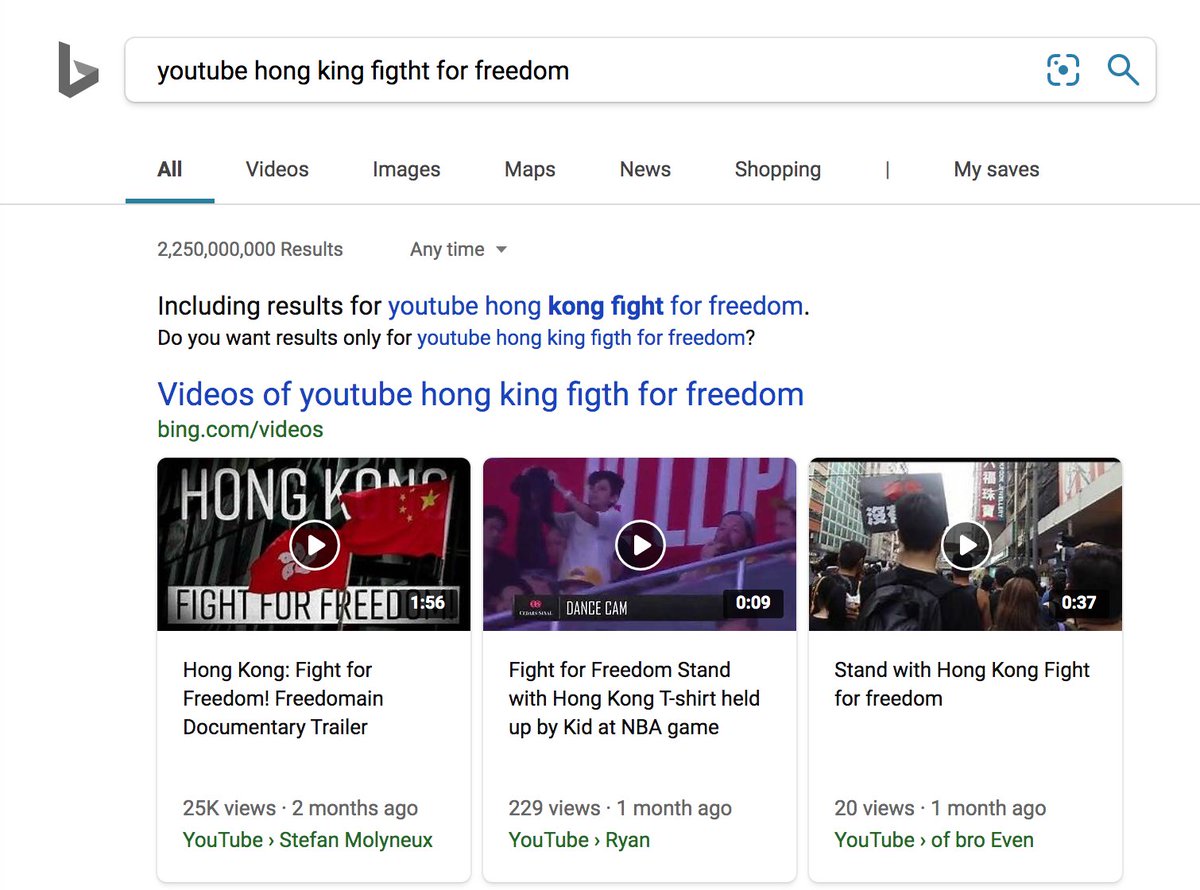
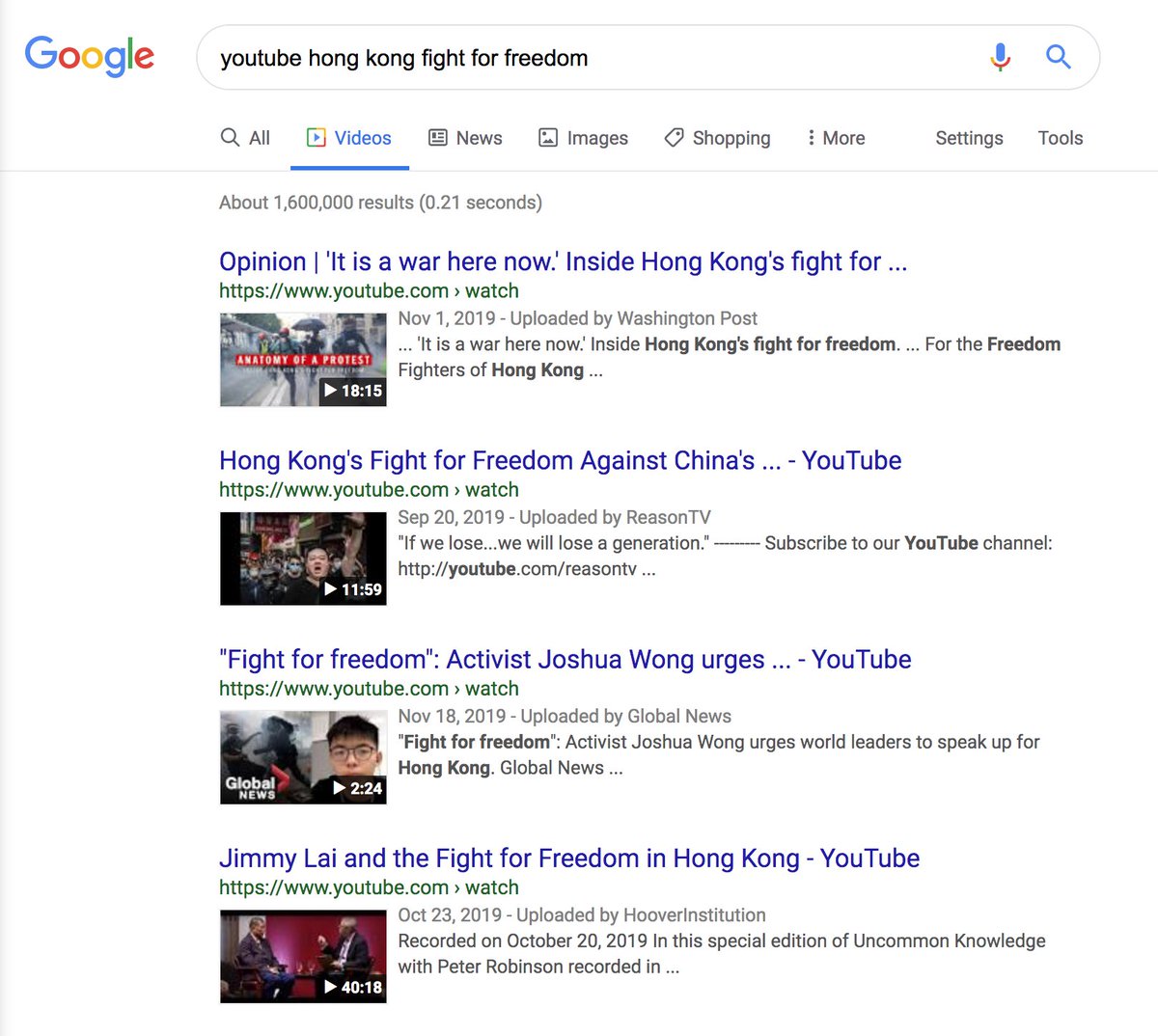
    No in Google, not even with your name. The Tweet shows up. Not the video. Yes in

    No in Google, not even with your name.
    The Tweet shows up. Not the video.

    Yes in Bing, 1st position in Bing.
    That’s why I use Bing, not Google. https://t.co/ucqyGq9yqA


    Source date (UTC): 2019-12-12 11:23:14 UTC

    Original post: https://twitter.com/i/web/status/1205085698925170689

    Reply addressees: @StefanMolyneux

    Replying to: https://twitter.com/i/web/status/1204987004750094337


    IN REPLY TO:

    @StefanMolyneux

    This is a bit odd – I recently released a documentary called “Hong Kong: Fight for Freedom.”

    Maybe it’s just here in Canada, but a kind listener pointed out that when you search for that exact phrase on YouTube, it doesn’t show up – do you mind giving it a try please?

    Original post: https://twitter.com/i/web/status/1204987004750094337

  • Computer science appears to have made it possible for us to imagine ourselves co

    Computer science appears to have made it possible for us to imagine ourselves correctly: “why doesn’t it understand or “why doesn’t it know” was a common question in the first generation of… https://www.facebook.com/permalink.php?story_fbid=522512795012282&id=100017606988153


    Source date (UTC): 2019-12-05 20:12:52 UTC

    Original post: https://twitter.com/i/web/status/1202682269753860096

  • Computer science appears to have made it possible for us to imagine ourselves co

    Computer science appears to have made it possible for us to imagine ourselves correctly: “why doesn’t it understand or “why doesn’t it know” was a common question in the first generation of computer users. Today, every generation knows it’s just a machine and needs explicit instructions on its own terms.

    Programming had the same effect. Databases even more so. And the current ‘pseudo-ai-tools’ have reached the point of producing design patterns “organizations that fulfill purposes”: the grammars of software whether relational database, hierarchical database, Text-Index, Bayesian (“ai”), Object, Functional, Script, Speech, Touch, Text, punc- card, or Switch.

    So it is far easier for our generations to understand the brain as a computational device and the mind as our introspection upon it.

    But it is still difficult for us to understand that we have surprisingly little agency until we develop sufficient introspection — if we can at all.

    The principle difference in my thought is that I see mankind as largely consisting of semi-conscious beings riding an unconscious elephant, with a very, very, few of us able to look in the mental mirror and recognize the driver…isn’t us.


    Source date (UTC): 2019-12-05 15:12:00 UTC

  • YES, WELL, THERE ISN’T A LOT OF DIFFERENCE BETWEEN A 3D VIDEO GAME ARCHITECTURE

    YES, WELL, THERE ISN’T A LOT OF DIFFERENCE BETWEEN A 3D VIDEO GAME ARCHITECTURE AND THE BRAIN, EXCEPT A SINGLE LAYER OF ABSTRACTION

    I am a bit ‘burned out’ right now on constitution and… https://www.facebook.com/permalink.php?story_fbid=521633958433499&id=100017606988153


    Source date (UTC): 2019-12-04 16:11:50 UTC

    Original post: https://twitter.com/i/web/status/1202259223498960897

  • Don’t get your hopes up. Not looking very good right now. A car on a highway is

    Don’t get your hopes up. Not looking very good right now. A car on a highway is one thing. “Last mile” problem.


    Source date (UTC): 2019-12-03 15:00:51 UTC

    Original post: https://twitter.com/i/web/status/1201878970687533057

    Reply addressees: @natrolleon

    Replying to: https://twitter.com/i/web/status/1201878396281729027


    IN REPLY TO:

    Original post on X

    Original tweet unavailable — we could not load the text of the post this reply is addressing on X. That usually means the tweet was deleted, the account is protected, or X does not expose it to the account used for archiving. The Original post link below may still open if you view it in X while signed in.

    Original post: https://twitter.com/i/web/status/1201878396281729027

  • (from elsewhere) === Questions I agree that the problem exists (and frustrates m

    (from elsewhere)
    ===
    Questions

    I agree that the problem exists (and frustrates me daily), and I want a solution to the problem, but I’ve been in this (tech) business a long time (four… https://www.facebook.com/permalink.php?story_fbid=518773628719532&id=100017606988153


    Source date (UTC): 2019-11-30 19:46:38 UTC

    Original post: https://twitter.com/i/web/status/1200863730353000449

  • FaceBook (communication), Google (directory), Youtube (publication), Twitter (ne

    FaceBook (communication), Google (directory), Youtube (publication), Twitter (news) are all as infrastructure as the internet itself. They’re involuntary infrastructure and we just either nationalize them, regulate them, copy them or shut them down.
    … So that’s what we’ll do.


    Source date (UTC): 2019-11-30 18:06:06 UTC

    Original post: https://twitter.com/i/web/status/1200838429086568450

  • (from elsewhere) === Questions I agree that the problem exists (and frustrates m

    (from elsewhere)

    ===

    Questions

    I agree that the problem exists (and frustrates me daily), and I want a solution to the problem, but I’ve been in this (tech) business a long time (four decades) – and the literature (evidence) is pretty clear, on what works and doesn’t work, and why it doesn’t work. (Starting with HP’s and USG’s most interesting research).

    I hope this is digestible. If not ask and I’ll explain. (edited)

    1 – Technology vs Application. I don’t understand this strategy. History says that prototype solutions are more important than the standards embedded in them. Otherwise, the kind of person that develops a solution and the kind of work they produce tends to rapid failure, while content creators have no interest in the platform investment. (Conflicting incentives.) Content producers and developers have opposing interests. So I don’t get this strategy unless the result is a platform. And I’ve read your posts so far (that I can find) I just don’t get it.

    2 – The Market problem of Knowledge Supply. The problem with wiki as with all KB’s, as with any democratic (market) system, is that (a) transaction costs are high without some incentive (b) it drives to the lowest common denominator of the demographic that is interested in the content (knowledge product), and (c) that NPOV doesn’t demonstrably exist outside of a narrow range of the physical sciences, and (cd that humans demand empathic (occult), rational (philosophical), and empirical (scientific and judicial) solutions based upon their personality, intelligence, and education. … This market functions as a game where contributors and editors gain signal value (status, self-worth, entertainment), but that the truth (parsimony) is in conflict (as always) … wiki, facebook, google, twitter, and the hundreds of tech, biz and gov’t KB’s I’ve seen, all tend toward market maximums (limiting disapproval rather than merit) until like all human systems they face the innovator’s dilemma (shocks) and fail. Which is what I assume you’re up to correct. The question is, how to correct it?

    3 – The Consumer Problem of Knowledge Demand. My understanding of the current problem of information is that while referents (concepts) evolve toward parsimony (uniqueness, ratio-empirical-operational, scientific explanation), there are only three dimensions to differences: (a) moral (equalitarian-herd/consumptive/using-undermining, individual/productive/using-exchange, hierarchical-pack/conservative/using-force), (b) Group, Culture, Civilizational Value: there are only so many means of mindfulness, including history, myths, rituals, practices, and entire religions but people (strangely to me and man others) very, very, much depend upon them and have zero tolerance for disputation of them; and (c) a spectrum of arguments (opinions) from the empathic to the purely mathematical. And while these two tend to overlap, decidability (regardless of opinion) increase along that spectrum

    4 – The Incentive Problem: Curated knowledge bases always produce superior results, not because of the curators, but because the reward ‘game’ exists (status, self-image, entertainment, socialization), but there is no standard of curation by the two dimensions of differences in supply and demand. There can be and that’s the game we all want to play. In other words, the competition between our frames of reference is what is most interesting, not the SUPPRESSION of competition between our frames of reference.

    5 – Gamification: So why not create a ‘game’ around established concepts (index) with competing (a) moral-political, (b) national-cultural, and (c) form of persuasive narrative, and foster resolution of conflict between dimensions rather than attempt the impossible NPOV on one end, or to create low-value disparate expensive, and low-game-value individual solutions? Why not give everyone a voice, but referee categorizations of the three dimensions of the argument? this has the added benefit of creating a worldwide framework for mutual understanding, rather than monopoly authoritarianism (wiki) or your plan for market anarchism (Which I’m almost certain can’t succeed).

    If this makes any sense I’ll work on it. I did work on it in around ’09-’10. If it doesn’t then I won’t. I have plenty of other work to do.

    -cheers (edited)


    Source date (UTC): 2019-11-30 14:46:00 UTC
  • Keep hope alive. The fantasy promotes investment in solving the problems with th

    Keep hope alive. The fantasy promotes investment in solving the problems with the original tech. It’s a bubble but bubbles produce interesting externalities.;) No chance that it will compete with centralised and redundant bank or treasury offering instant and reversible xactions.


    Source date (UTC): 2019-11-28 21:08:40 UTC

    Original post: https://twitter.com/i/web/status/1200159596553424897

    Reply addressees: @Outsideness

    Replying to: https://twitter.com/i/web/status/1200112522667294720


    IN REPLY TO:

    @Outsideness

    Got to admit there’s a degree of An-Cap sadness to thinking as long as Bitcoin is above US$7k there’s a chance. But that’s where I am.

    Original post: https://twitter.com/i/web/status/1200112522667294720