Hi. 😉
Source date (UTC): 2024-05-19 03:30:52 UTC
Original post: https://twitter.com/i/web/status/1792035166409367592
Reply addressees: @elonmuskADO
Replying to: https://twitter.com/i/web/status/1791816068647801267
Hi. 😉
Source date (UTC): 2024-05-19 03:30:52 UTC
Original post: https://twitter.com/i/web/status/1792035166409367592
Reply addressees: @elonmuskADO
Replying to: https://twitter.com/i/web/status/1791816068647801267
Anti-Whiteism when introduced, and Antiwhiteism as it is adopted into the vernacular. At least, that’s the pattern of such things.
( Not that this is a terribly serious question in the first place. 😉 )
Source date (UTC): 2024-05-19 03:28:01 UTC
Original post: https://twitter.com/i/web/status/1792034450093527259
Reply addressees: @Steve_Sailer @sapinker
Replying to: https://twitter.com/i/web/status/1792033634414907749
–“What contributions do you think you could make in a world where Superintelligence exists?”– Dr. Roman Yampolskiy @romanyam
1) I work in unification of the sciences producing a universal paradigm, logic, hierarch of first principles, vocabulary, and grammar to produce universal decidability (testifiability) in law, constitution, policy and court. I am more than confident that it is possible to train an AI to limit responses to the virtous, moral, ethical, reciprocal, amoral, and true, without ‘safety’ so to speak that effectively teaches AI’s to lie. And as a consequence of that lying, to continue the devolution of mass cognitive ability and capacity to produce cooperation and compromise via unshared presumptions about the construction and possibility of physical institutional behavioral and knowledge capital.
2) Along these lines, there will be a short term set of benefits resulting from the cross disciplinary unification of contexts and patterns.
3) There will be a medium term set of benefits resulting from an even greater standardization of patterns not only across disciplines but civilizations causing a similar convergence that we saw when the transformation of the physical sciences converted the world from discrete but unsystematic knowledge to systematic knowledge founded on a relatively small number of universal principles.
4) The underlying problem of research and innovation will not however be solved, in that the problem with increases in scientific and technological knowledge is a matter of costs of that research and the limitations on the instrumentation that we can produce to expand it.
5) My hope is that the misdirection of science by the failure of Babbage to systemize computation, the resulting persistence of the primacy of mathematics despite it’s limitations in reducibility, the failure to replace justification with adversarial falsification, the failure of philosophy to grasp these problem, and the resulting failure of the intuitionistic and operationalist programs because of the failure of Babbage and that simple inversion of truth testing. So where Cantor began the reversal of Descartes restoration of mathematics to measurement. Einstein created the platonic fiction of space time, and Bohr justified, not producing a physical model, and legions of wide eyed students and the academy, have been lost in math and mathiness when finally the premier institutes outside of the academy appear to be converging on the correct answer that the laws of the universe are in fact, quite simple. Add to that, beginning with Boas in anthropology, Marx in Economics and Politics, Lewontin and Gould in biology, the Frankfurt school in their revisionist social science, and the postmodernist attack on truth itself, we have lost more than the European tradition and rule of law, but have been propagandized into pseudoscience pseudo-mathematics, pseudo-logic and sophistry on a scale not possible since the christian destruction of the ancient world.
So I’m more worried about the collapse of thought over the past century and the problem of restoring it, than I am optimistic about what we can accomplish with AI UNLESS it speaks ‘truth before face”.
Affections
CD
Reply addressees: @romanyam
Source date (UTC): 2024-05-19 02:06:05 UTC
Original post: https://twitter.com/i/web/status/1792013827736788993
Replying to: https://twitter.com/i/web/status/1791518253938082259
RT @elonmusk: There are no coincidences https://t.co/QYD65DNNCp
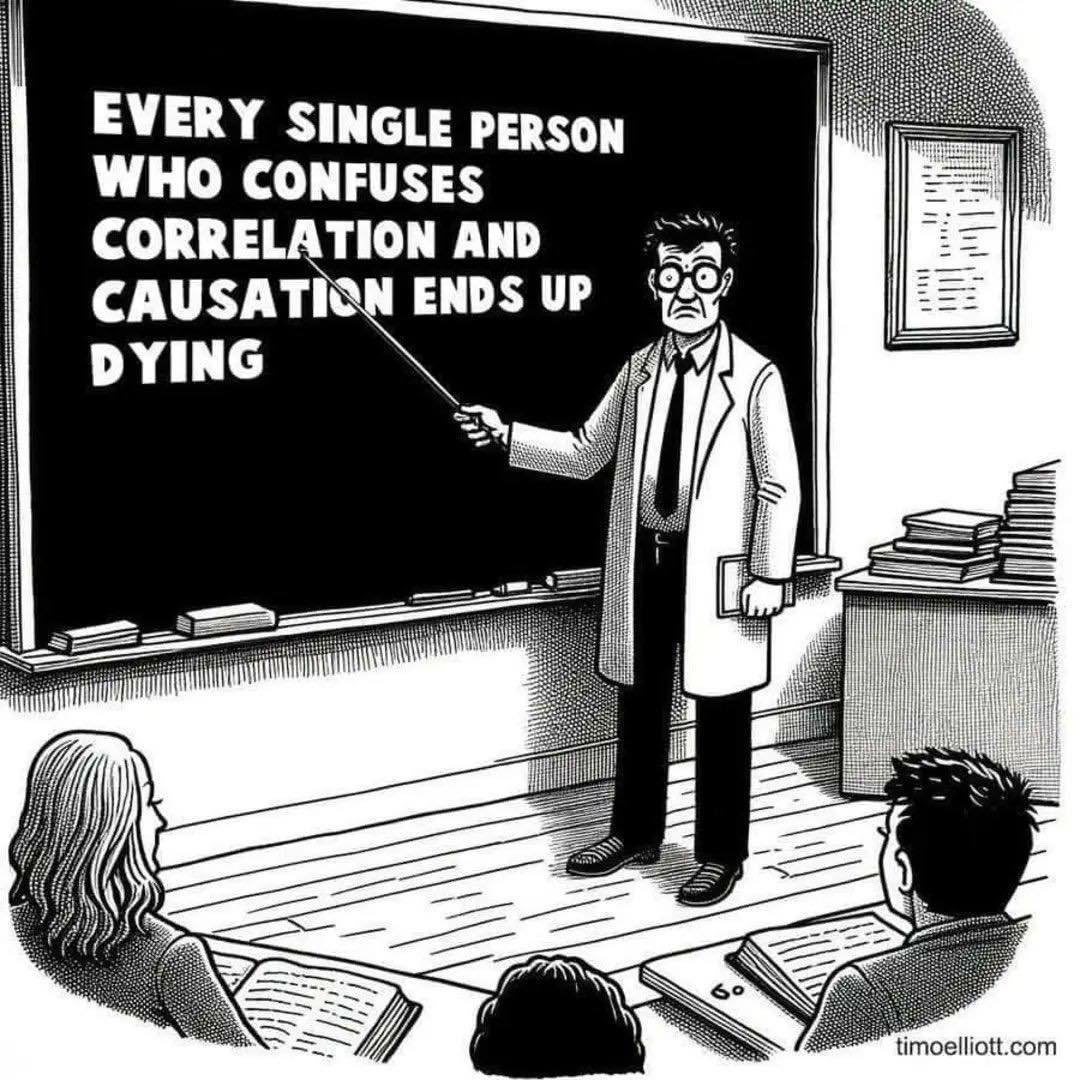
Source date (UTC): 2024-05-19 01:17:19 UTC
Original post: https://twitter.com/i/web/status/1792001556977520790
WORLD WAR ONE’S EFFECT ON THE LOST GENERATION AND AMERICAN ARISTOCRATIC TRADITIONS
The postwar left took advantage of the collapse of the european tradition and civilization that resulted from the first world war.
It Begins with The Lost Generation
The “Lost Generation,” referring to those born roughly between 1883 and 1900 who came of age during World War I, experienced a profound cultural and societal disillusionment. As a result, several traditions and values were perceived to be “lost” or significantly altered for this generation.
Core European Traditions and Values Were Impacted:
1. Faith in Institutions and Authority
Pre-War Optimism: Before World War I, there was widespread belief in the progress and benevolence of Western civilization, supported by stable political institutions and social hierarchies.
Post-War Disillusionment: The unprecedented scale of death and destruction during World War I shattered confidence in government, military leaders, and the overall direction of Western society. This disillusionment led to skepticism and cynicism towards traditional institutions and authorities (What Generation Am I?) (Art and Popular Culture).
2. Victorian Morality and Social Norms
Victorian Values: The late 19th and early 20th centuries were characterized by strict moral codes, rigid social norms, and a clear sense of propriety and decorum.
Rejection of Victorianism: The Lost Generation, having witnessed the brutal realities of war, rejected the rigid moral and social codes of their predecessors. This rejection was evident in their literature, art, and lifestyle, which often embraced more liberal and experimental approaches to life and relationships .
3. Nationalism and Patriotism
Pre-War Nationalism: National pride and patriotic fervor were strong before World War I, with many believing in the superiority and just cause of their nations.
War-Induced Disillusionment: The horrors of trench warfare and the senselessness of the conflict led many in the Lost Generation to question and reject the nationalism and patriotism that had driven them to war. This shift was reflected in their often critical and anti-war literature and art .
4. Traditional Gender Roles and Relationships
Pre-War Gender Roles: Strict, traditional gender roles were predominant, with men as breadwinners and women as homemakers.
Post-War Shifts: The war brought women into the workforce in unprecedented numbers, and the post-war period saw a questioning and reshaping of traditional gender roles. The Lost Generation’s literature and social behaviors often explored and challenged these roles .
5. Religious Faith
Pre-War Religious Certainty: Many held strong religious beliefs, seeing the world through a lens of divine order and purpose.
Post-War Existentialism: The war’s devastation led to a crisis of faith for many, fostering a sense of existential despair and questioning of traditional religious doctrines. This existential outlook is evident in the works of Lost Generation writers like Ernest Hemingway and F. Scott Fitzgerald .
Notable Impact in Literature and Art
Modernist Movement: The literary and artistic expressions of the Lost Generation often embodied their disillusionment and rejection of traditional values. Modernist writers like T.S. Eliot, Virginia Woolf, and James Joyce experimented with new forms and themes, reflecting the fragmented and uncertain world they perceived .
Lost Generation Writers: Authors like Ernest Hemingway, F. Scott Fitzgerald, and Gertrude Stein captured the disillusionment and existential angst of their peers, portraying the lost sense of purpose and direction through their works .
Conclusion
The Lost Generation is characterized by a profound sense of disillusionment and rejection of pre-war traditions and values. The impact of World War I fundamentally altered their view of institutions, morality, nationalism, gender roles, and religious faith, leading to a cultural shift that was expressed through literature, art, and social behavior.
So, a lot more died in the fist world war than empires and men.
Cheers
CD
Source date (UTC): 2024-05-19 01:16:59 UTC
Original post: https://twitter.com/i/web/status/1792001471052926976
we have people that will produce the illustrations it’s more of a question of whether the AI can do it or not, and it seems ‘not well’. 😉
Source date (UTC): 2024-05-19 01:07:32 UTC
Original post: https://twitter.com/i/web/status/1791999096321970334
Reply addressees: @sebsklo
Replying to: https://twitter.com/i/web/status/1791998417184432131
ASPIE SPECTRUM: FROM OVERLOADING TO DEPERSONALIZATION
The Series: Emotional Flooding(Temporary), Emotional Shutdown(Temporary), Autistic Meltdown (Short Term), Autistic Shutdown(Short term) and Depersonalization (Long Term)
1. EMOTIONAL FLOODING:
Emotional Flooding occurs when an individual experiences an overwhelming amount of emotional input, which can lead to a state of confusion, withdrawal, or shutdown. This can happen during intense arguments, conflicts, or highly emotional situations.
Characteristics:
Overwhelmed: A sense of being overwhelmed by emotions.
Confusion: Difficulty thinking clearly or making decisions.
Withdrawal: Pulling away from the situation or becoming unresponsive.
2. EMOTIONAL SHUTDOWN:
Emotional shutdown is a state where an individual becomes emotionally numb or detached in response to overwhelming stress or emotional input. This can be seen as a milder, more common version of an autistic shutdown.
Characteristics:
Numbness: Feeling emotionally numb or detached.
Disconnection: A sense of disconnection from one’s own emotions or from others.
Withdrawal: Pulling away from social interactions or emotionally intense situations.
3. Autistic Meltdown:
An intense response to overwhelming situations or stimuli, characterized by a loss of behavioral control. It is a common experience for individuals on the autism spectrum and can be triggered by sensory overload, changes in routine, emotional stress, or other environmental factors.
Characteristics:
Behavioral Outbursts: Individuals may exhibit crying, screaming, hitting, kicking, or other aggressive behaviors.
Physical Reactions: Some may engage in self-injurious behaviors such as head-banging, biting, or scratching.
Note, this is ‘deep’ autistic behavior. Most people lower on the spectrum shutdown or disassociate instead of produce outbursts.
4. AUTISTIC SHUTDOWN:
Autistic shutdown is an intense, involuntary response to overwhelming sensory, emotional, or cognitive overload. It involves a temporary loss of executive functioning and a significant reduction in one’s ability to process and respond to external stimuli. This can be considered a more severe form of emotional shutdown, particularly prevalent among individuals on the autism spectrum. The individual becomes non-responsive or withdrawn.
Characteristics:
Complete Withdrawal: Individuals may become non-responsive, unable to speak, move, or engage with their surroundings.
Physical Symptoms: Reduced motor skills, decreased eye contact, and a general sense of paralysis.
Cognitive Impairment: Difficulty thinking, processing information, or making decisions.
Emotional Numbness: A profound sense of detachment from emotions and the environment.
Functional Impairment: Inability to perform routine tasks or engage in normal activities.
Social Isolation: Increased likelihood of withdrawing from social interactions, leading to feelings of isolation.
Emotional Distress: The aftermath of a shutdown can leave individuals feeling drained, confused, and distressed.
5. DEPERSONALIZATION/DEREALIZATION DISORDER (DPDR)
A type of dissociative disorder where individuals experience a persistent or recurrent feeling of being detached from their own body or mental processes (depersonalization) or feeling disconnected from their surroundings (derealization). This condition can indeed result in a profound sense of detachment from one’s emotions, memories, and sense of self, impacting cognitive functions such as judgment, planning, and interaction with the external world.
Characteristics:
Depersonalization:
Feeling Detached from Self: Individuals feel like they are observing themselves from outside their body or that they are in a dream. There can be a sense of unreality about one’s self.
Altered Sense of Self: The inner “me” feels less present or real. Emotional responses might be blunted or completely absent.
Disconnection from Emotions: A significant reduction in the ability to feel emotions or to connect emotionally with one’s own experiences or with others.
Derealization:
Feeling Detached from Environment: The external world seems unreal, distant, or distorted. Objects may appear lifeless, or the environment may seem foggy or dreamlike.
Altered Perception: There might be visual or auditory distortions, such as blurry vision or sounds being muted or amplified.
Impact on Cognitive Functions:
Memory and Judgment: Difficulty accessing memories and associating them with current experiences, leading to challenges in judgment and planning.
Awareness: Despite feeling detached, individuals usually maintain an awareness that their experiences are not normal. This can create significant distress and anxiety.
Functional Impairment: Even though individuals can often perform routine tasks and may continue intellectual work (like research), their ability to interact socially or make decisions can be severely impaired.
Triggers and Causes
Stress and Trauma: Chronic stress, severe anxiety, or traumatic experiences are common triggers for DPDR.
Neurobiological Factors: There might be neurobiological underpinnings, such as imbalances in brain chemicals or differences in the way the brain processes sensory information.
I hope this helps someone. 😉
Cheers
CD
Source date (UTC): 2024-05-19 01:06:46 UTC
Original post: https://twitter.com/i/web/status/1791998900359880704
Correct…. 😉
Source date (UTC): 2024-05-19 00:11:23 UTC
Original post: https://twitter.com/i/web/status/1791984963492986882
Reply addressees: @sqpatrick77
Replying to: https://twitter.com/i/web/status/1791982816084762897
(harsh truth)
All philosophies are class philosophies.
The only solution to unifying these philosophies is science and law.
The result is the natural law.
Source date (UTC): 2024-05-18 23:56:57 UTC
Original post: https://twitter.com/i/web/status/1791981333465465110
(harsh truth)
All philosophies are class philosophies.
The only solution to unifying these philosophies is science and law.
The result is the natural law.
Source date (UTC): 2024-05-18 23:56:57 UTC
Original post: https://twitter.com/i/web/status/1791981333406748672