Author: Curt Doolittle

  • I did channel them. Into making money

    I did channel them. Into making money.


    Source date (UTC): 2025-03-27 22:45:00 UTC

    Original post: https://twitter.com/i/web/status/1905390625811562873

    Reply addressees: @KARABOGARETURNS @zynspawn

    Replying to: https://twitter.com/i/web/status/1905390222403125645

  • (diary) I grew up in a rural farming town in the sixties and early seventies. Fi

    (diary)
    I grew up in a rural farming town in the sixties and early seventies. Fights were a way of life. And worse – it was before academic nerds were cool. My father was abusive and an alcoholic. And I regularly considered killing him. When I was 12 I broke a kid’s nose, and another kids ribs by kicking him when he was down. When I was 13 I nearly killed a kid by choking him out in a classroom, and then not letting go. He was blue. When I was sixteen I beat a kid year older than I with a shopping cart in a parking lot. And at that moment I realized that if I did not gain control of my temper I could go to jail and ruin my life. I switched that temper off that night and never let it out of the box again.
    Yet even today, when one of the people I love, especially my close friends, is hurt emotionally or physically by anyone, my first instinct is to deeply hurt or kill that person. I don’t ever let it out of the box. I have total control. But that doesn’t mean the instinct isn’t there.
    We have over-domesticated boys. Because we naturally do a good job of reigning each other in, while learning how to draw upon fortitude and violence when we, or those we love require it. Weak men are created by foolish women, yielding weak nations. That collapse from within.


    Source date (UTC): 2025-03-27 21:57:21 UTC

    Original post: https://twitter.com/i/web/status/1905378633692397568

  • RT @WalterIII: RELIGION IS EDUCATION “Religion is education in a system of narra

    RT @WalterIII: RELIGION IS EDUCATION

    “Religion is education in a system of narratives, rituals, and practices that instill mindfulness, et…


    Source date (UTC): 2025-03-27 16:18:09 UTC

    Original post: https://twitter.com/i/web/status/1905293271401935308

  • RT @WalterIII: THE GENIUS OF COOPERATION SCIENCE The genius of @curtdoolittle’s

    RT @WalterIII: THE GENIUS OF COOPERATION SCIENCE

    The genius of @curtdoolittle’s Cooperation Science is that it curbs “innovation in parasi…


    Source date (UTC): 2025-03-27 16:12:19 UTC

    Original post: https://twitter.com/i/web/status/1905291803332653058

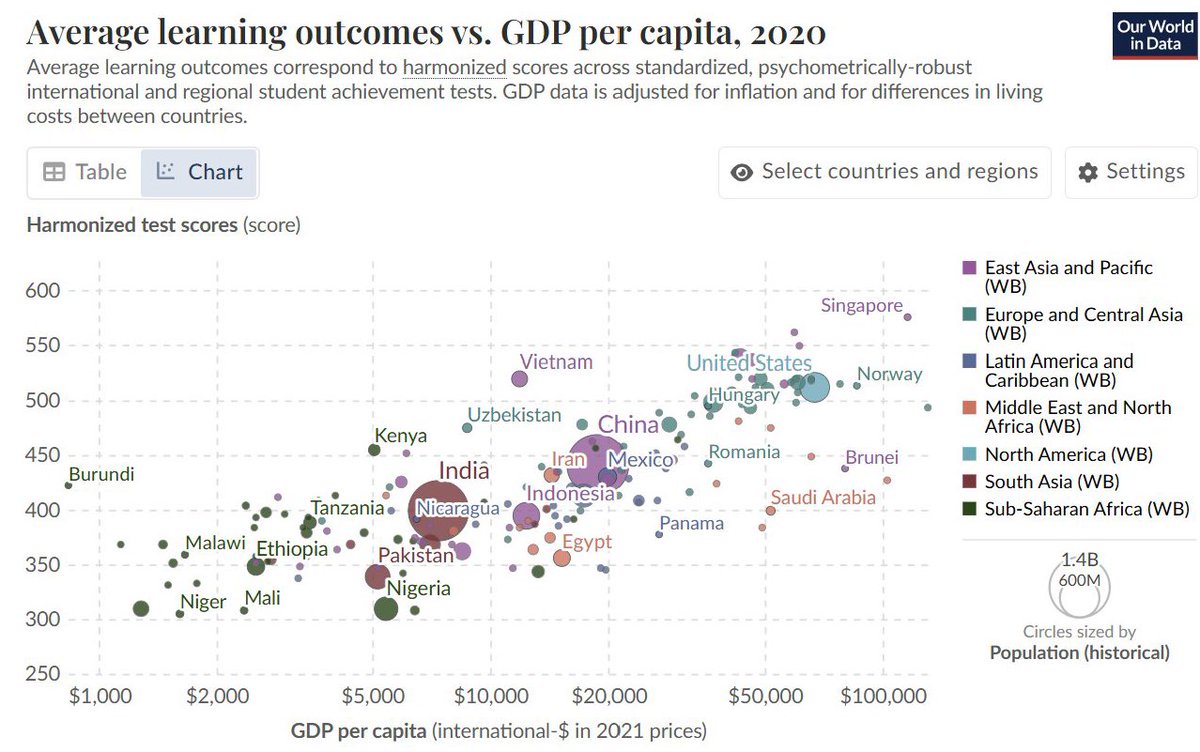
  • RT @williameijer: Smarter populations make richer countries

    RT @williameijer: Smarter populations make richer countries. https://t.co/2CnT3RdLst


    Source date (UTC): 2025-03-27 13:39:17 UTC

    Original post: https://twitter.com/i/web/status/1905253291937890496

  • RT @ThruTheHayes: THE COLLAPSE OF COMPATIBILITY We’ve not just lost the capital

    RT @ThruTheHayes: THE COLLAPSE OF COMPATIBILITY

    We’ve not just lost the capital that produces the affordances for cooperation but those th…


    Source date (UTC): 2025-03-26 23:41:12 UTC

    Original post: https://twitter.com/i/web/status/1905042381759828242

  • OMG. How did you make that leap? lol

    OMG. How did you make that leap? lol


    Source date (UTC): 2025-03-26 22:48:47 UTC

    Original post: https://twitter.com/i/web/status/1905029190216507866

    Reply addressees: @Claffertyshane

    Replying to: https://twitter.com/i/web/status/1905021599411020061

  • I SUPPORT EDGE ACTIVISTS FOR GOOD REASON I am a typical anglo classical liberal

    I SUPPORT EDGE ACTIVISTS FOR GOOD REASON
    I am a typical anglo classical liberal who found insights into economics and law in the libertarian movement. In context, beginning in around 2009, under the obama administration, it was clear that the optimistic conservative movements had failed, and that included the libertarian and anarchocapitalist.

    So during the period leading up to the 2020 election we saw the usual right wing factionalization searching for ideas and advocates. And as expected, with the election, with expected outcome, we saw the radical suppression of the ability to use social media as a means of circumventing the mainstream ‘gated institutional narrative’.

    While I was myself a post-optimistic conservative, I did not expect whatsoever to be someone the right would favor, but my work, precisely because it addressed the taboo subjects, provided them with useful ideas and insights.

    I was one of the first theorists to formally make use of the zero cost of the new social media to use King of the Hill Games as a research technique that circumvented the difference between reported and demonstrated behavior.

    At the time I did not realize that the people most likely to speak the truth of their thoughts would be the ‘harder’ right – meaning people with low-agreeableness personality traits. And I engaged those people because well, they engaged me.

    Our organization’s hypothesis was that the disenfranchised right could be mobilized if directed away from falling prey to leftist ‘baiting into hazard’ and mobilized against the coming suppression of free speech and canceling. What we learned is that this can’t be done.

    Now, In my research work I ran across nearly everyone influential on the right. The right factions need someone who thinks proximally as they do. So they are forever weak, because they are forever factions.

    So, people like Joel were able to capture an audience and educate that audience over time. I enjoyed Joel (and Dillon – Trudiltom) because I thought, that as a young man he was exceptionally talented and had a non-trivial understanding of the history of thought, as well as activism.

    So I encouraged him as well as others who are in other ‘wings’ of conservatism such as Aarvol. Both of these people are ‘the real thing’. And I don’t need to agree with people who are the real thing trying to do the right thing. I figure each of us is moving a subset of the population.

    For myself I consider my myself, my work, and my organization to be engaged in what is effectively mainstream scientific research directed toward legal and policy reform.

    But we will support anyone with moral ambitions even if we consider their solutions a bit more extreme than we’d prefer to advocate ourselves.

    Precisely because the factions each take their own path, and it’s the collective direction that matters more than the exactness of any one faction. -CD

    Source date (UTC): 2025-03-26 21:56:40 UTC

    Original post: https://twitter.com/i/web/status/1905016076188184576

  • Untitled

    http://x.com/i/article/1904973826750070784


    Source date (UTC): 2025-03-26 20:04:24 UTC

    Original post: https://twitter.com/i/web/status/1904987823956222156

  • Gödel, Chaitin, Wolfram, and Doolittle – The Limits of Decidability Gödel, Chait

    Gödel, Chaitin, Wolfram, and Doolittle – The Limits of Decidability

    Gödel, Chaitin, Wolfram, and Doolittle are all working on a similar problem space—namely, the limits of decidability, computability, and formal systems—but from different domains and with different purposes. Here’s a structured comparison across seven dimensions: ternary logic, evolutionary computation, constructive logic, ethics, testimony, and decidability, focusing on Doolittle’s differences with them.
    Problem Solved: Demonstrated that in any sufficiently expressive formal system, there exist true statements that are unprovable within the system.
    Method: Proof via binary logic and formal arithmetic.
    Contribution: Set epistemic limits on formal, axiomatic systems (math, logic).
    Focus: Negativa—what you cannot do.
    Limitation: Didn’t attempt to operationalize or embed in human action or computation.
    Contrast: Doolittle treats Gödel’s incompleteness as a boundary condition, but aim to operate within those constraints using ternary logic (truth, falsehood, undecidability) and constructive methods, to extend decidability into behavior, law, and economics by empirical rather than purely formal means.
    Problem Solved: Proved that randomness and incompressibility are intrinsic to formal systems.
    Method: Introduced Kolmogorov complexity, Ω (Chaitin’s constant), showing that there’s a limit to compressibility (and thus predictability).
    Contribution: Proved irreducible complexity in mathematics and computation.
    Focus: Epistemological entropy in symbolic representation.
    Limitation: Doesn’t extend into ethics, behavior, or institutional design.
    Contrast: You extend this insight into epistemic accounting—but rather than treating incompressibility as a terminal point, you account for it operationally via testimonial adversarialism, embedding it in your science of decidability that survives contact with reality.
    Problem Solved: Demonstrated that simple rules can generate complex, often irreducible, behavior—most of it undecidable without simulation.
    Method: Explores cellular automata and rule-based computation.
    Contribution: Operationalized evolutionary computation, but mostly as a descriptive ontology.
    Focus: Demonstrates emergence, not decidability.
    Limitation: Stays in the domain of physical and mathematical systems; doesn’t formalize social institutions or law.
    Contrast: Where Wolfram ends with computational irreducibility, Doolittle begins with it—treating human cognition and cooperation as an attempt to manage it via constructive decidability using operational logic and adversarial testing of testimony.
    Problem Solved: The absence of a universally commensurable system of measurement for behavior, cooperation, and law.
    Method: Constructive logic from first principles of evolutionary computation, tested via testimonial adversarialism, formalized in ternary logic.
    Contribution: Transforms the epistemic problem of measurement into an institutional and legal solution by producing a science of decidability.
    Focus: Applies scientific rigor to truth, law, economics, and morality, where others fear to tread.
    Unique Strength:
    Doolittle resolves the
    demarcation problem not by logic alone, but by testifiability and the cost of variation from natural law.
    Doolittle’s unites
    ethics, law, economics, and science under a single operational logic.
    Doolittle’s method is both
    descriptive (explains natural law) and prescriptive (institutionalizes it).
    Comparative Matrix
    Summary:
    Gödel says: You can’t prove everything, even if it’s true.
    Chaitin says: You can’t compress everything, some truths are incompressibly random.
    Wolfram says: You can’t always reduce everything—many systems are computationally irreducible.
    Doolittle says: True—but if we start from the Ternary logic of Evolutionary Computation to identify the patterns of emergence in the universe, followed by the physical limits of cooperation and testify operationally, we can produce decidability sufficient for truthful law, moral action, and institutional design, and warranty that testimony using adversarialism.

    Doolittle acknowledges all their contributions as setting boundaries on justificationary knowledge, while he creates a constructive, operational, testifiable method to act within those boundaries — especially for the domains they avoided: law, ethics, and cooperation.

    [END]


    Source date (UTC): 2025-03-26 20:04:24 UTC

    Original post: https://x.com/i/articles/1904987823956222156